
Polygon PoS: What It Is, How It Works, and Why It Matters in Crypto
When you send a transaction on Polygon PoS, a proof-of-stake blockchain built to scale Ethereum with low fees and high speed. Also known as Polygon Mumbai in its testnet form, it’s not a replacement for Ethereum—it’s a sidekick that makes Ethereum work better. While Ethereum struggles with slow speeds and high gas fees during peaks, Polygon PoS steps in to handle the heavy lifting. It’s where DeFi apps, NFT marketplaces, and Web3 games go when they need to move fast without breaking the bank.
Polygon PoS isn’t just a technical fix—it’s a practical one. It uses a network of validators who stake MATIC tokens to secure the chain, which makes it more energy-efficient than Bitcoin or early Ethereum. Unlike sidechains that operate in isolation, Polygon PoS connects back to Ethereum for security, so your assets stay protected even if the sidechain gets messy. This hybrid model is why big names like Reddit, Nike, and Starbucks use it for their digital collectibles and loyalty programs. It’s not hype—it’s adoption.
What makes Polygon PoS different from other scaling tools? It doesn’t require you to learn new rules. If you’ve used MetaMask on Ethereum, you can use it on Polygon PoS with just a few clicks. You can swap tokens, stake, or play games—all for pennies. And because it’s built on Ethereum’s compatibility standards, developers don’t need to rebuild their apps from scratch. That’s why over 2,000 projects are live on it, from DeFi protocols like Aave and QuickSwap to NFT platforms like OpenSea’s Polygon integration.
But it’s not perfect. Polygon PoS trades some decentralization for speed. Its validator set is smaller than Ethereum’s, which means it’s more centralized by design. That’s okay for most users, but if you’re looking for maximum censorship resistance, you might still prefer Ethereum mainnet. Still, for everyday use—buying an NFT, swapping tokens, or joining a yield farm—it’s hard to beat.
Behind the scenes, Polygon PoS runs on a combination of Plasma, PoS, and Ethereum’s security layer. That’s why it’s sometimes called a “multi-chain system.” It’s not just one chain—it’s a framework that lets teams build their own chains on top, all anchored to Ethereum. Think of it like a highway system where Ethereum is the main interstate, and Polygon PoS is the local road that gets you to your destination without traffic jams.
And the token? MATIC, now simply called POLY, powers everything. You use it to pay for transactions, stake to earn rewards, and vote on upgrades. It’s not a speculative gamble—it’s the fuel. And with over $10 billion in total value locked across its ecosystem, it’s clear people aren’t just testing it—they’re relying on it.
Below, you’ll find real-world reviews and deep dives into projects running on Polygon PoS. Some are thriving. Others are dead. Some promise big returns. Others are outright scams. We cut through the noise to show you what’s working, what’s not, and why it matters for your wallet.
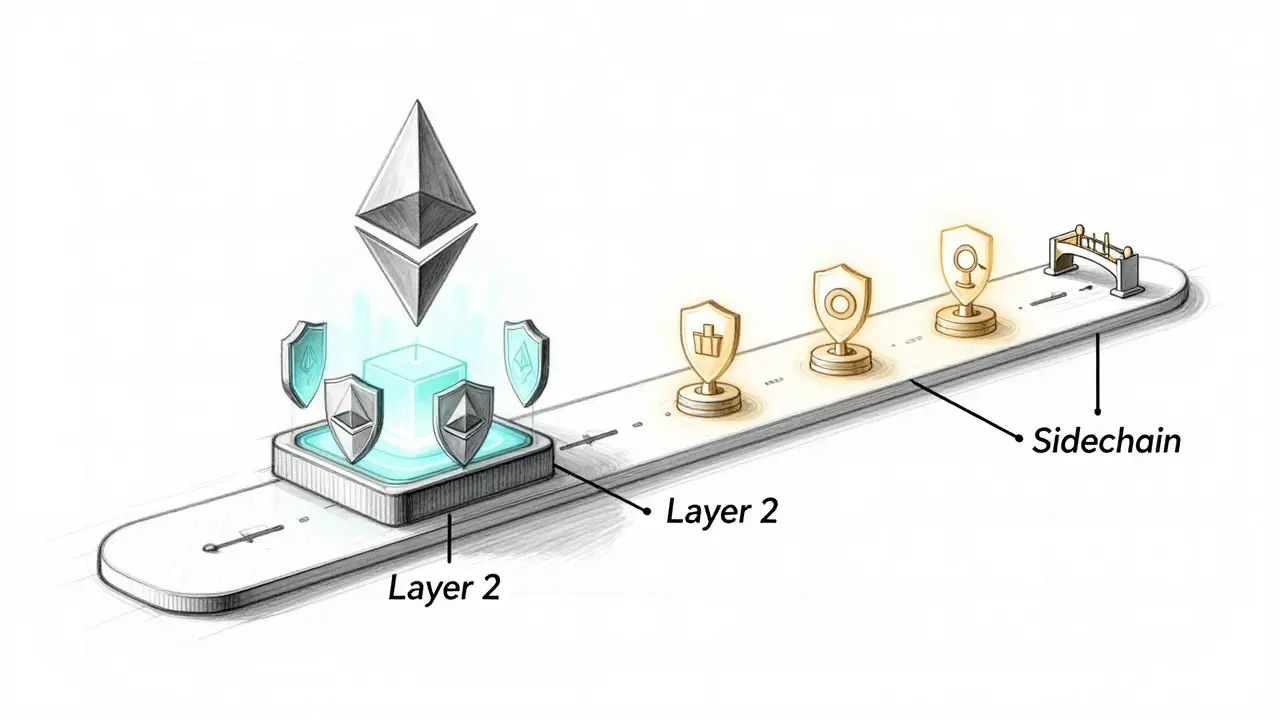
Sidechains vs Layer 2: Which Scalability Solution Fits Your Blockchain Project?
Sidechains and Layer 2 solutions both solve Ethereum's scaling issues, but they work in very different ways. Learn which one is right for your project based on security, speed, cost, and use case.