
Optimism Blockchain: What It Is and Why It Matters in Crypto
When you hear Optimism, a Layer 2 scaling solution for Ethereum that reduces fees and speeds up transactions. Also known as Optimistic Rollup, it lets users interact with Ethereum apps without paying $50 in gas fees every time they swap tokens. It’s not a new coin. It’s a quiet engine running under the hood of hundreds of DeFi apps, NFT marketplaces, and gaming platforms that want to work like Ethereum but feel like Web2.
Optimism doesn’t compete with Ethereum—it fixes its biggest problem: cost. On Ethereum mainnet, sending a simple token transfer can cost more than a coffee. On Optimism, it’s a few cents. That’s why projects like Synthetix, a decentralized derivatives platform that moved to Optimism to handle thousands of trades daily, and Uniswap, the largest decentralized exchange, which now routes most of its volume through Optimism chose it over other chains. It’s not about being faster than Solana or Avalanche. It’s about being the most trusted upgrade to Ethereum, with security backed by the same network that holds trillions in value.
And it’s not just for traders. Developers build on Optimism because it’s easy to port existing Ethereum smart contracts. No need to rewrite code. No need to learn a new language. You just deploy it, and suddenly your app works for 90% less. That’s why so many airdrops—like the one that gave away $OP tokens to early users of DeFi apps on Optimism—are tied to this chain. People didn’t get paid for holding a token. They got paid for using real apps, making trades, or locking up funds. The value wasn’t hype. It was usage.
If you’ve ever waited 10 minutes for a transaction to confirm, or paid $20 to mint an NFT, you know why Optimism matters. It’s the bridge between Ethereum’s security and the real-world need for speed and affordability. You won’t see flashy ads for it. No celebrities. No memes. But if you’re using DeFi, trading NFTs, or playing a Web3 game today, there’s a good chance you’re already on it—and paying less than you think.
Below, you’ll find real reviews, airdrop guides, and deep dives into projects built on Optimism—not theory, not promises. Just what’s working, what’s dead, and what’s worth your time.
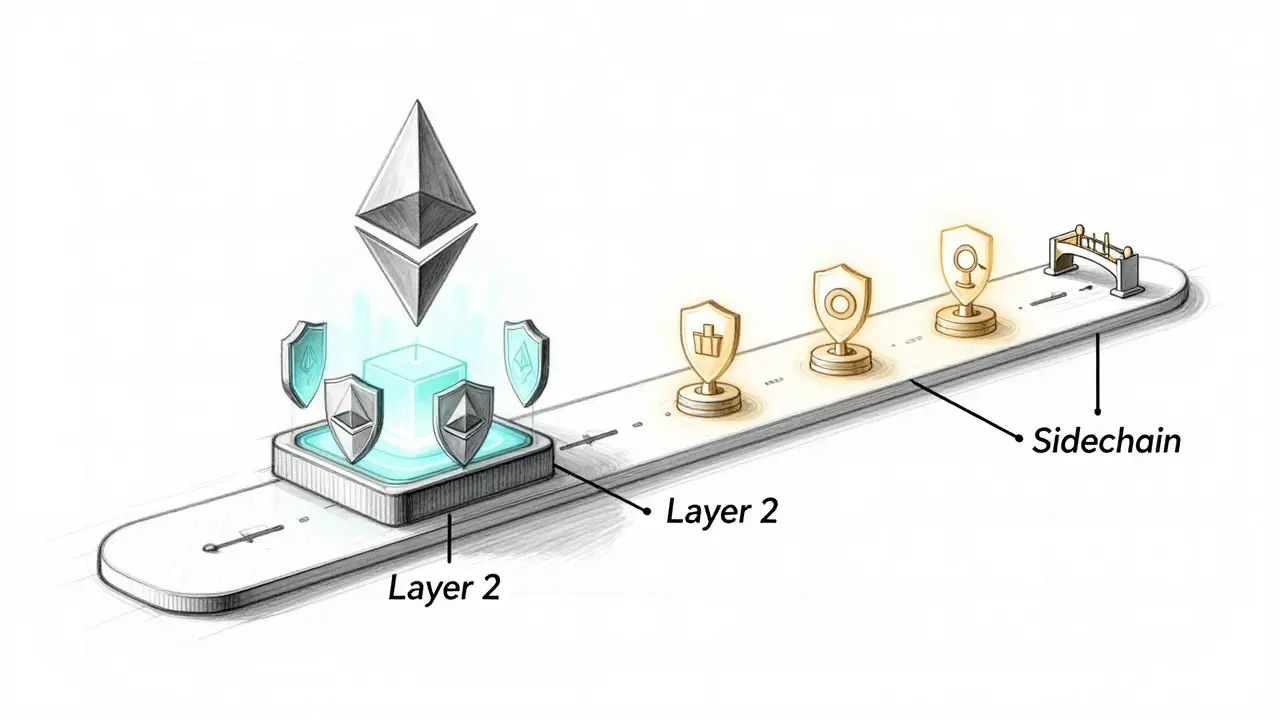
Sidechains vs Layer 2: Which Scalability Solution Fits Your Blockchain Project?
Sidechains and Layer 2 solutions both solve Ethereum's scaling issues, but they work in very different ways. Learn which one is right for your project based on security, speed, cost, and use case.