
Layer 2 Explained: What It Is and Why It Matters for Crypto and Blockchain
When you hear Layer 2, a scaling solution built on top of a main blockchain to handle more transactions faster and cheaper. Also known as secondary network, it’s what keeps crypto networks like Ethereum from grinding to a halt when everyone tries to trade at once. Without Layer 2, sending a simple token transfer could cost $50 and take minutes. With it, you can do hundreds of trades for less than a dollar, in seconds.
Layer 2 isn’t just a tech buzzword—it’s the backbone of modern DeFi, NFTs, and Web3 apps. Think of it like adding express lanes to a highway. The main road (Layer 1, like Ethereum) still handles security and final settlement, but most of the traffic moves on the faster side roads. Projects like Base, a Layer 2 network built by Coinbase that supports low-cost transactions and upcoming token airdrops, and Cronos, a blockchain optimized for DeFi with its own Layer 2-style infrastructure, are built this way because users won’t stick around if fees are too high or transactions are slow.
Most of the posts you’ll see here focus on real-world Layer 2 use cases. You’ll find reviews of exchanges running on these networks, like MM Finance on Cronos or Base’s upcoming token drop. You’ll also see warnings about dead projects—like Nerve Finance or PaintSwap—that failed not because of bad tech, but because they didn’t solve real user problems. Layer 2 only works if people actually use it. If a network has no activity, no liquidity, and no community, it’s just code sitting idle.
What you won’t find here are hype cycles or empty promises. This collection is about what’s real: who’s building, who’s using, and who’s getting left behind. You’ll learn how to spot a Layer 2 project that’s actually growing versus one that’s just a rebrand of a failed idea. You’ll see how airdrops on Base or Swash depend on real on-chain behavior, not just signing up. And you’ll understand why some exchanges, like Asproex or WenX, prioritize security over speed—because Layer 2 doesn’t mean you can skip safety.
Layer 2 isn’t about replacing blockchains. It’s about making them usable. Whether you’re trading on BNB Chain, holding NFTs on Solana, or waiting for a token drop on Base, you’re already using Layer 2 tech—even if you don’t realize it. The next time you hear someone say "Ethereum is too slow," ask them: which Layer 2 are they using? Because the answer might surprise you.
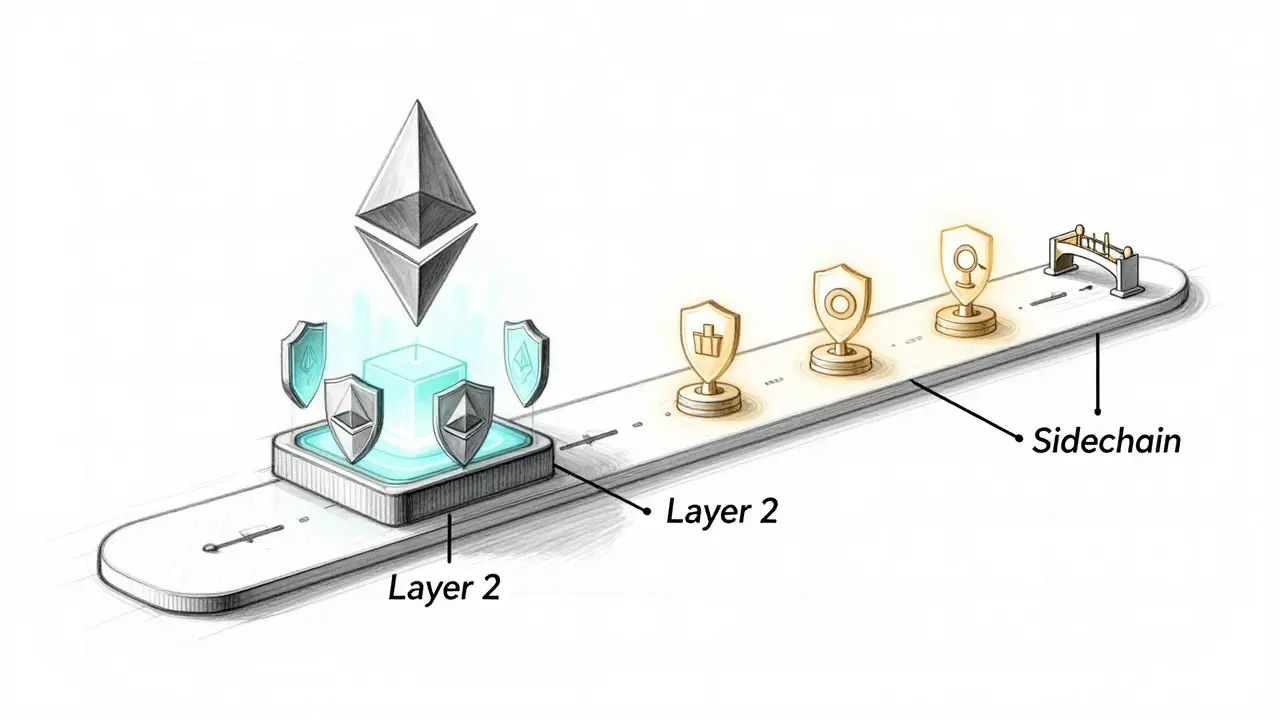
Sidechains vs Layer 2: Which Scalability Solution Fits Your Blockchain Project?
Sidechains and Layer 2 solutions both solve Ethereum's scaling issues, but they work in very different ways. Learn which one is right for your project based on security, speed, cost, and use case.