
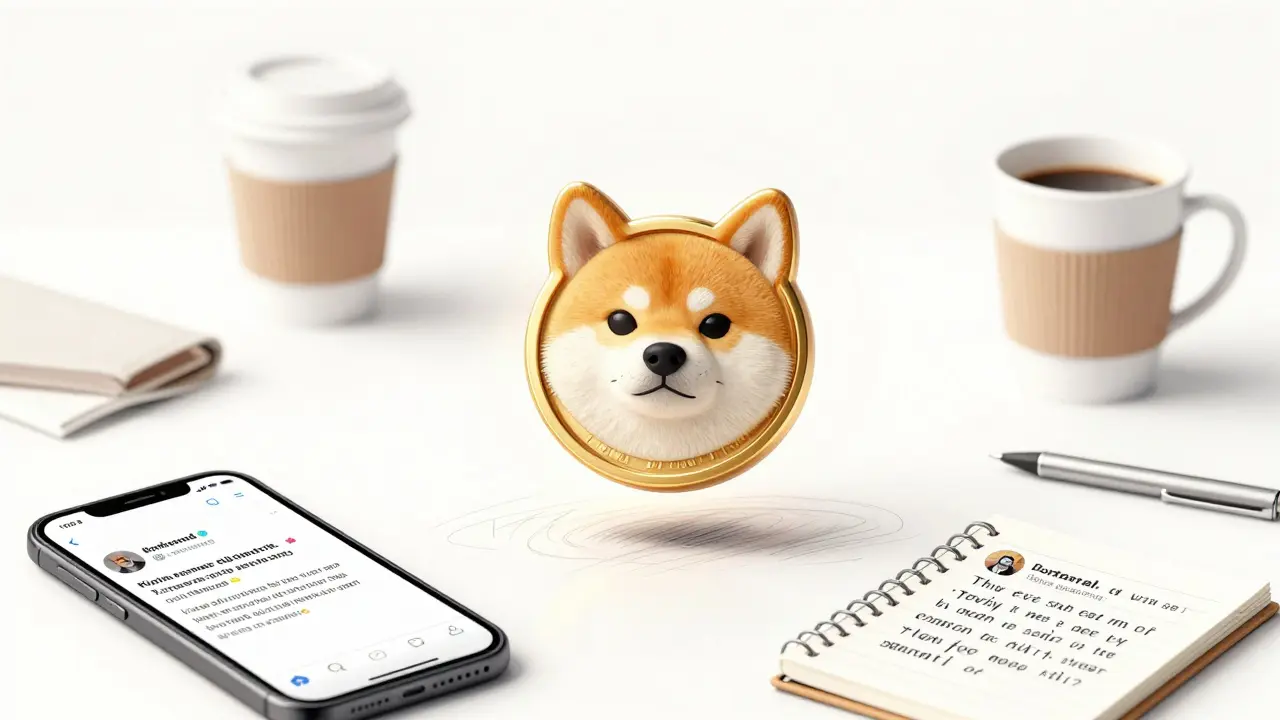
Think about this: a digital token shaped like a Shiba Inu dog, with no real function, no business model, and no team behind it-yet it’s worth billions. How? That’s the mystery behind memecoins. They don’t mine blocks, run smart contracts, or solve real-world problems. They don’t even have a whitepaper that makes sense. So why do people pay real money for them? The answer isn’t in the code. It’s in the crowd.
They Started as a Joke
Dogecoin wasn’t meant to be taken seriously. In 2013, two engineers created it as a parody of the crypto boom. They used the Doge meme-a funny, broken-English Shiba Inu dog-and slapped it on a blockchain. They expected it to die in a week. Instead, it became a cultural phenomenon. Why? Because it felt human. While Bitcoin was about decentralization and Ethereum was about programmable money, Dogecoin was about fun. People tipped each other for good jokes on Reddit. Communities formed around memes, not math. It was crypto with a smile.No Utility? That’s the Point
Most cryptocurrencies are built to do something: store value, send payments, run decentralized apps. Memecoins do none of that-at least not originally. Dogecoin has unlimited supply. Shiba Inu started with 1 quadrillion tokens. Pepe? Just a meme with a token contract. There’s no innovation. No technical edge. But that’s exactly why they work. Think of it like baseball cards. A 1952 Topps Mickey Mantle card isn’t valuable because it’s printed on high-quality paper. It’s valuable because thousands of people want it, believe in it, and trade it. Memecoins work the same way. Their value isn’t in what they do. It’s in who believes in them.Community Is the Engine
The biggest difference between memecoins and other crypto projects? Community. Dogecoin’s fans call themselves the “Doge Army.” Shiba Inu’s? The “Shib Army.” These aren’t just hashtags. These are real groups that organize on Reddit, Telegram, and Twitter. They rally behind memes. They fund charity drives. They shout at Elon Musk to tweet about them-and it works. When Elon tweeted “Dogecoin to the moon” in 2021, Dogecoin’s price jumped 14,000% in months. Not because of tech. Because of trust. Because of a shared belief. These communities don’t just buy coins. They create identity. Owning a memecoin isn’t just an investment. It’s a membership card to a club that laughs at Wall Street, mocks financial experts, and celebrates chaos. That emotional connection? That’s the real utility.Virality Is a Feedback Loop
Memecoins thrive on attention. A TikTok video. A meme on X (formerly Twitter). A celebrity mention. One viral moment can send a coin from $0.000001 to $0.0001 overnight. That’s not luck. It’s design. The low cost to create a memecoin means anyone can launch one. And with platforms like Solana offering cheap transactions, new tokens can spread like wildfire. But here’s the twist: most of these coins die fast. Over 40,000 new memecoins were launched daily in 2023. Only a handful survive. Why? Because virality needs fuel. You need a story. A mascot. A meme that sticks. Pepe the Frog? It’s been a meme for 15 years. Dogecoin? 10. That history gives them staying power. New coins? They burn out in weeks.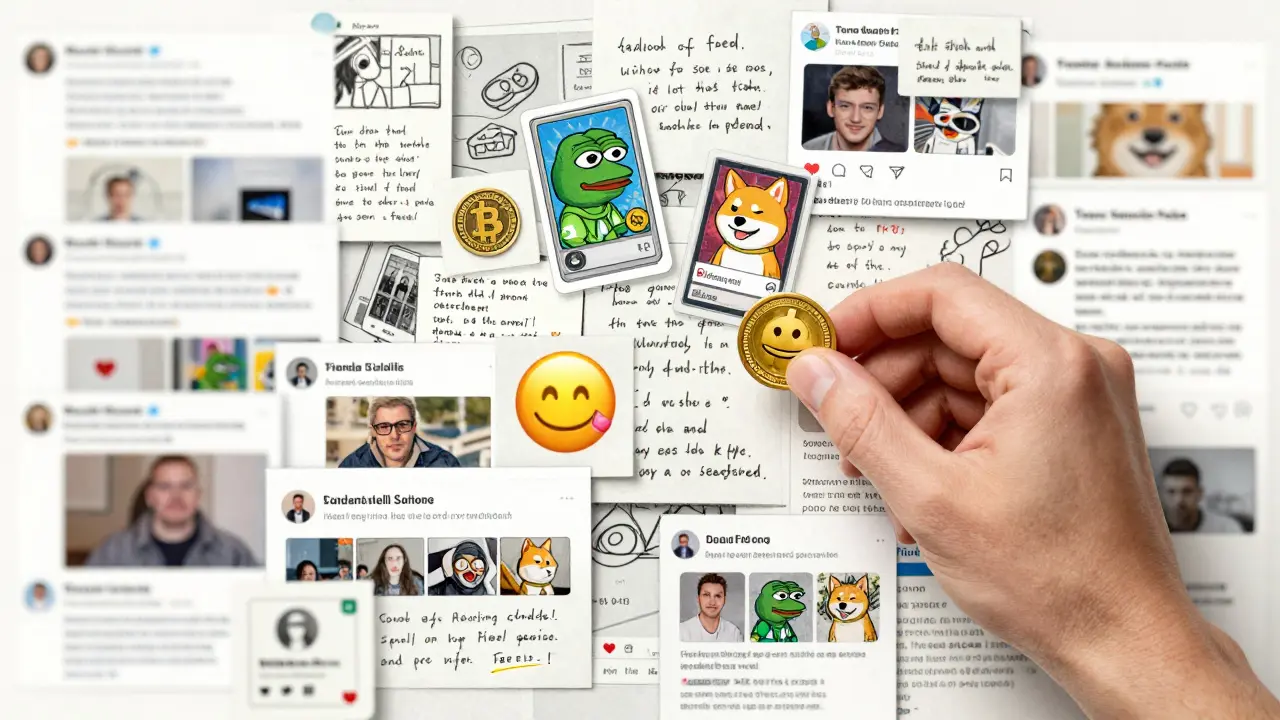
The Highs and the Crashes
Some people made millions. One Reddit user turned $500 into $250,000 with early Dogecoin. Others lost everything. Squid Game token? A scam. It vanished in hours. SafeMoon? A rug pull. Investors couldn’t sell. And it’s not rare. According to Chainalysis, 78% of memecoins launched in 2022 had malicious code. That’s not a bug. That’s the norm. The pattern is clear: early adopters win. Latecomers lose. If you buy after a coin has already doubled or tripled, you’re almost always buying at the top. The most successful traders don’t chase pumps. They take profits at 10x, 20x, and get out. The ones who hold through the crash? They lose everything.Are They Getting Real?
Some memecoins are trying to grow up. Dogecoin now accepts payments through BitPay. Shiba Inu has its own decentralized exchange, ShibaSwap, and an NFT marketplace. Bonk on Solana is used for tipping content creators. Dogwifhat? It’s a social token for online communities. These aren’t just trading tools anymore. They’re becoming platforms. But here’s the catch: even when they add utility, it’s still secondary. People don’t use Dogecoin to pay for coffee because it’s efficient. They use it because it’s fun. Because it’s part of a culture. The utility doesn’t create value. The culture does.Who’s Buying This Stuff?
Most memecoin traders are under 35. Many have less than two years of crypto experience. They’re not hedge funds. They’re not institutions. They’re regular people scrolling through social media, seeing a meme, and thinking, “Why not?” Institutional investors? They avoid memecoins. Less than 0.5% of Dogecoin and Shiba Inu is held by big players. That’s why prices swing so wildly. Retail traders buy. Retail traders sell. No anchors. No stability. Just emotion.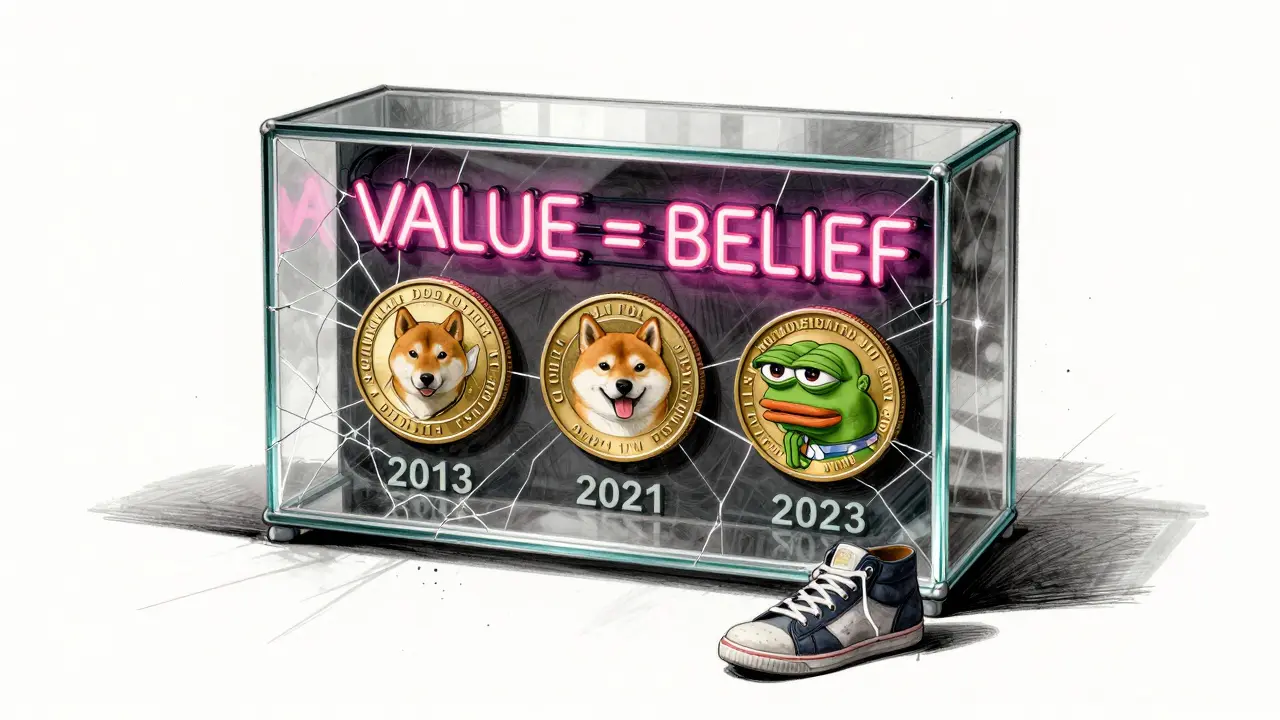
Regulators Are Watching
The U.S. Securities and Exchange Commission (SEC) has sued 17 memecoin projects since 2022 for selling unregistered securities. Chairman Gary Gensler called them “Ponzi-like,” because early buyers profit only when new buyers jump in. And he’s not wrong. If you’re buying a coin because you think someone else will pay more later, you’re playing a game with no winner-except the creators who cash out first. Still, memecoins keep coming. Why? Because the system is built to let them. Blockchains are open. Anyone can launch a token. Social media is free. And humans? We’re wired to follow trends.So Do They Have Value?
Yes-but not the kind you learn in finance class. Memecoins have value because people believe they do. They’re digital collectibles. Social currencies. Cultural artifacts. Their price isn’t based on earnings, supply, or technology. It’s based on attention, emotion, and group identity. Think of them like a viral song. It doesn’t need to be perfect. It doesn’t need to be deep. It just needs to stick in your head. That’s what memecoins do. They stick. And as long as people keep sharing them, they’ll keep having value.What’s Next?
Analysts predict memecoins will shrink as a percentage of the total crypto market-from 2% today to under 1.2% by 2027. That doesn’t mean they’ll disappear. It means they’ll become a niche, not a movement. They’ll be the party at the edge of the crypto party. Loud. Wild. Unpredictable. And still, somehow, magnetic. The lesson? Don’t invest in memecoins because you think they’ll make you rich. Invest in them because you enjoy the ride. If you’re not having fun, you’re not playing the game right.Why do memecoins rise in price without any real use?
Memecoins rise because of social momentum, not technical merit. When a large group of people believes a coin has value-often because of a meme, celebrity tweet, or viral trend-it creates demand. That demand drives price up. It’s like a fashion trend: no one needs a certain hoodie, but if enough people want it, the price goes up. Memecoins work the same way.
Can memecoins ever become useful?
Some are trying. Dogecoin now accepts payments through BitPay. Shiba Inu has its own exchange and NFT platform. But even when they add features, people don’t use them for utility-they use them because they’re part of the community. Utility is a bonus, not the reason they exist.
Are memecoins a scam?
Many are. About 78% of memecoins launched in 2022 had malicious code, according to Chainalysis. Some are outright rug pulls-developers drain liquidity and vanish. But not all. Dogecoin and Shiba Inu have survived for years with transparent teams and active communities. The difference? Trust. If no one knows who created it, or if you can’t sell your tokens, it’s likely a scam.
Why do people keep buying memecoins after losing money?
Because of FOMO-fear of missing out. When someone posts, “I turned $100 into $10,000 with PEPE,” others jump in, hoping to replicate it. They ignore the 100 people who lost everything. The brain remembers wins, not losses. That’s why memecoins keep coming back: they promise easy money, even when the odds are stacked against you.
Is it possible to trade memecoins safely?
Yes-but only if you treat them like gambling, not investing. Use tools like Token Sniffer and DappRadar to check for scams. Never invest more than you can afford to lose. Take profits early. Avoid coins with no locked liquidity or anonymous teams. And never follow influencers blindly. The safest memecoin trade? Buying Dogecoin in 2019 and selling before 2022. Everything after that? Pure luck.


