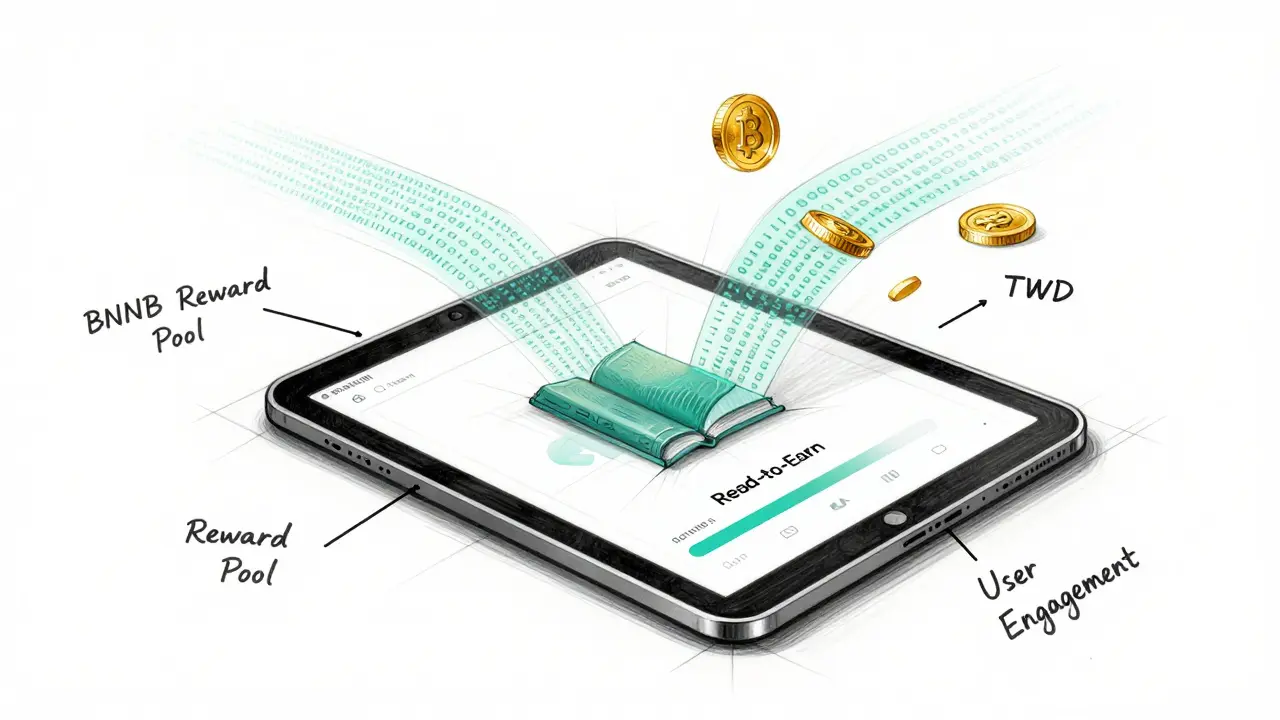
You’ve probably seen the term "read-to-earn" pop up in your crypto feeds. It sounds like a dream: get paid to read books. But when you look closer at THE WORD TOKEN (TWD), it’s not just about passive income. It’s a specific utility token built on the Binance Smart Chain network designed to incentivize global reading culture through a decentralized e-library and publishing platform. If you are wondering whether this project is a legitimate opportunity or just another speculative meme coin, you need to understand how the mechanics actually work before you risk any capital.
The core idea behind TWD is simple but ambitious. The developers, a team split between Nigeria and the United Kingdom, partnered with SMC DAO to create an ecosystem where readers, writers, and investors all have a stake. You buy books using TWD, you earn rewards for reading, and writers get paid when their work is consumed. It attempts to bridge the gap between traditional publishing and Web3 economics. However, the reality of trading this token involves navigating significant volatility, complex tokenomics, and security nuances that aren’t always obvious at first glance.
How the Read-to-Earn Ecosystem Works
To understand the value of TWD, you have to look at its utility. Unlike tokens that exist solely for speculation, TWD is designed to be spent within its own platform. The primary feature is a Web3-enabled e-library. Here is how the cycle works for different users:
- Readers: You use TWD to purchase or rent digital books. As you read, you climb a leadership board. Top performers receive monthly rewards distributed in BNB (Binance Coin). This creates a direct link between engagement and financial return.
- Writers and Publishers: Authors upload their work to the platform. They earn TWD tokens every time a reader buys or rents their book. This provides a new revenue stream for creators who might struggle on traditional platforms.
- Investors: You can hold TWD or stake it. Staking TWD allows you to earn WIKI CAT, which is the main token of the parent organization, SMC DAO. This cross-token incentive encourages long-term holding rather than quick flipping.
This structure tries to solve a common problem in crypto: lack of real-world usage. By tying the token to a tangible activity-reading-the project aims to create consistent demand. If more people want to read to earn BNB, they need to buy TWD. If more writers join, they need to accept TWD as payment. It’s a closed-loop economy, which can be stable if adoption grows, but fragile if user interest drops.
Tokenomics: Supply, Burns, and Taxes
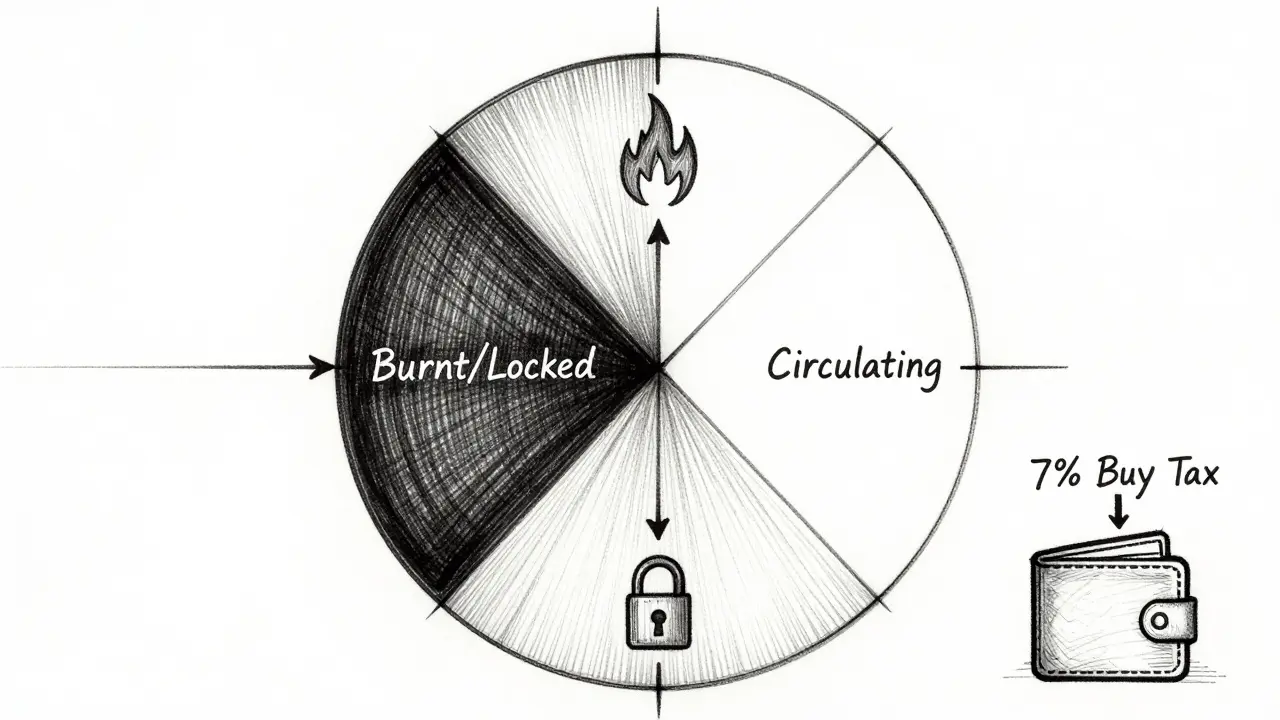
The economic model of a cryptocurrency is often more important than its marketing hype. For TWD, the numbers tell a story of deflationary pressure mixed with high transaction costs. The total supply is fixed at 100 billion TWD tokens. How that supply is distributed matters significantly for price stability.
| Allocation Category | Percentage | Status/Notes |
|---|---|---|
| Token Holders | 33% | In circulation for trading and utility |
| Burnt Tokens | 31% | Permanently removed from supply (deflationary) |
| Locked Tokens | 30% | Locked for 7 years; burnt annually over this period |
| Liquidity Provision | 6% | Ensures market liquidity on exchanges |
Notice that 61% of the total supply is either already burnt or locked for future burning. This means only about 40% of the tokens are actively circulating. In theory, this scarcity should support the price. However, there is a catch: the transaction taxes. Buying TWD incurs a 7% tax, and selling incurs a 6% tax. These fees are likely used to fund the reward pools for readers and writers, or to add to the burn mechanism. While this discourages day-trading, it makes entering and exiting positions expensive. You need the price to move significantly just to break even on a single trade.
Price Performance and Market Reality
If you are looking at TWD as an investment, you need to face the hard data. Cryptocurrency prices are volatile, but TWD has shown extreme swings. As of May 2026, the price varies wildly depending on which aggregator you check, which is a red flag for liquidity issues. Some sources list it around $0.00000154 USD, while others show higher figures due to differing data reporting methods or illiquid pairs.
The all-time high was recorded back in March 2024 at approximately $0.00000428 USD. Since then, the token has dropped by roughly 64%. This decline is typical for early-stage projects that fail to maintain momentum after their initial launch hype. The market cap hovers between $155,000 and $250,000 USD, placing it firmly in the micro-cap category. At this level, large trades can cause massive price slippage. You might try to sell 1,000 dollars worth of TWD and end up receiving significantly less because there isn’t enough buyer depth in the order book.
Trading volume is also inconsistent. Some days see thousands of dollars in volume; other days, it’s nearly zero. This lack of consistent activity means you could find yourself stuck with tokens you can’t easily sell without crashing the price further. Always check the current liquidity pool status on PancakeSwap before making any moves.
Security Concerns and Contract Risks
This is the section most casual investors skip, but it’s the most critical. Security audits are not just paperwork; they are your insurance policy against rug pulls. TWD operates on the Binance Smart Chain (BEP20 standard). The smart contract address is publicly available, which is good for transparency. However, security analysis tools like GoPlus have flagged a significant issue: the contract is a "proxy contract."
What does that mean? A proxy contract allows the owner to upgrade or change the underlying code of the token. Even though the project claims ownership has been "renounced," the technical structure suggests that certain administrative functions might still be accessible. Specifically, reports indicate the contract owner could potentially disable sells. This is a major centralization risk. In a truly decentralized token, no one should have the power to stop you from selling your assets. If the team retains this backdoor, they theoretically could freeze the market during a downturn or manipulate the token’s behavior.
Additionally, the liquidity pool is locked through Pinksale, which is a positive sign. It prevents the developers from pulling all the money out instantly. But locking liquidity doesn’t protect you from malicious code changes in the proxy contract. Always verify the latest audit reports directly from independent security firms, not just the project’s website.
Where to Trade TWD
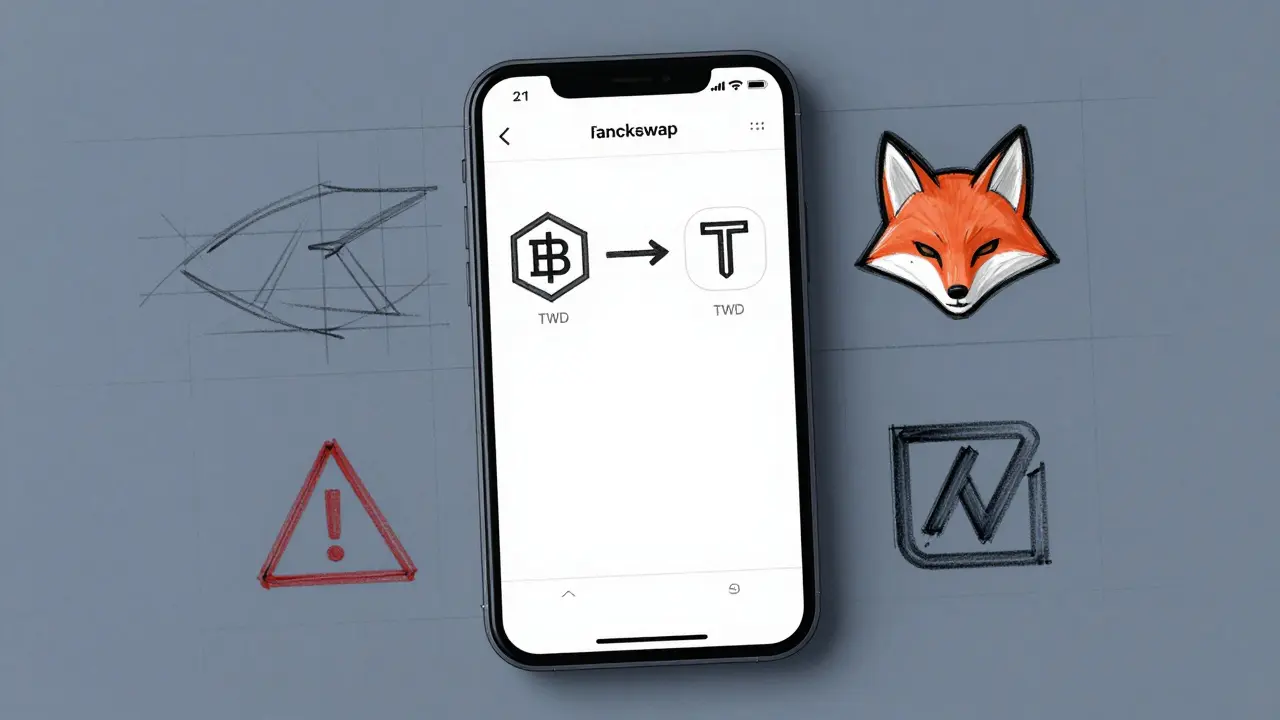
You won’t find TWD on major centralized exchanges like Binance or Coinbase Pro for direct spot trading. In fact, Binance explicitly states that TWD is not listed for trading services on their platform. This limits accessibility for beginners who rely on these trusted interfaces.
Instead, TWD is traded primarily on decentralized exchanges (DEXs), with PancakeSwap (v2) being the most popular venue. To trade here, you need:
- A non-custodial wallet like MetaMask or Trust Wallet.
- BNB (Binance Coin) to pay for gas fees and swap into TWD.
- The correct contract address:
0xf00cD9366A13e725AB6764EE6FC8Bd21dA22786e.
Using a DEX gives you more control but requires more technical knowledge. You must ensure you are connecting to the legitimate contract address to avoid phishing scams. Copying the address from unofficial Telegram channels can lead to losing your funds to fake tokens.
Is TWD Worth Your Attention?
THE WORD TOKEN occupies a unique niche. It’s not trying to be the next Bitcoin or Ethereum. It’s a specialized utility token for a specific community-driven ecosystem. If you are passionate about literature, want to support independent authors, and believe in the concept of gamified reading, TWD offers a novel way to participate. The deflationary tokenomics and staking rewards provide some incentives to hold.
However, the risks are substantial. The low market cap, high transaction taxes, and potential centralization risks in the smart contract make it a highly speculative asset. It is not suitable for conservative investors or those who cannot afford to lose their entire investment. The price history shows a clear downward trend from its peak, and recovery is not guaranteed.
Before buying, ask yourself: Are you investing because you believe in the long-term vision of a Web3 library, or are you chasing a quick pump? If it’s the latter, the 7% buy tax and illiquidity will likely hurt you more than help. If it’s the former, start small, understand the tech, and monitor the security updates closely. In the world of crypto, curiosity is good, but caution is essential.
What is the main purpose of THE WORD TOKEN (TWD)?
The main purpose of TWD is to serve as the utility currency for a read-to-earn ecosystem. Users spend TWD to buy or rent digital books on the platform's e-library, while readers earn rewards (in BNB) and writers earn TWD for their published works.
Is TWD listed on Binance or Coinbase?
No, TWD is not currently listed for trading on major centralized exchanges like Binance or Coinbase. It is primarily traded on decentralized exchanges such as PancakeSwap on the Binance Smart Chain network.
What are the buy and sell taxes for TWD?
There is a 7% tax on buying TWD and a 6% tax on selling it. These fees are typically used to fund the reward pools for the ecosystem and potentially contribute to token burns.
Is THE WORD TOKEN secure?
Security is mixed. While liquidity is locked via Pinksale, security audits have flagged the contract as a proxy contract, which may allow the owner to modify code or disable sells. This presents a centralization risk despite claims of renounced ownership.
How can I earn rewards with TWD?
You can earn rewards by reading books on the platform to climb the leaderboard for BNB payouts, by writing/publishing books to earn TWD sales, or by staking TWD to earn WIKI CAT tokens from the SMC DAO ecosystem.
What is the total supply of TWD?
The total supply of THE WORD TOKEN is 100 billion. Approximately 31% has been burnt, 30% is locked for annual burning over 7 years, 33% is allocated to holders, and 6% is for liquidity.