
Have you ever seen a cryptocurrency promise that sounds too good to be true? Maybe it claims to revolutionize artificial intelligence while offering massive revenue shares to holders. That’s exactly where Tao Ceτi, known by its ticker symbol CETI, enters the picture. It positions itself as the backbone of a decentralized AI infrastructure ecosystem on the Ethereum blockchain. But when you look past the flashy marketing and Greek letter styling, what do you actually find?
The short answer is caution. While CETI launched with big ambitions in March 2024, current data from late 2025 suggests it has largely stalled. This guide breaks down what Tao Ceτi really is, how its tokenomics work, and why experts are raising red flags about its viability.
The Core Concept: Decentralized AI Infrastructure
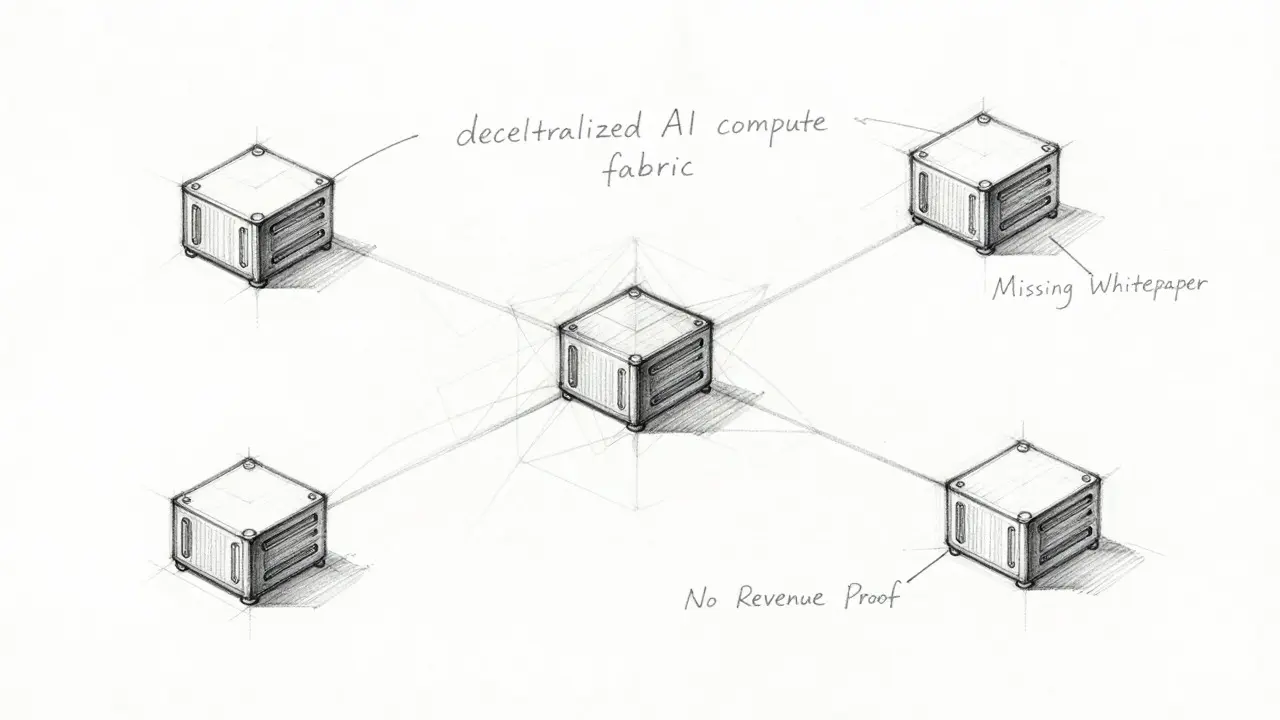
To understand CETI, you first need to grasp the problem it claims to solve. The AI boom requires massive computing power. Traditional cloud providers like AWS or Google Cloud are expensive and centralized. Projects like Render Token and Fetch.ai have tried to decentralize this compute power. Tao Ceτi aims to join this space by creating a "decentralized AI compute fabric."
The project’s official documentation states that 100% of net revenue earned from the ceτi AI project will go to a revenue share system for token holders. In theory, you hold CETI, the network generates income from providing AI compute services, and you get paid. It sounds like a passive income dream. However, there is a critical missing piece: verifiable proof that this infrastructure actually exists or generates any revenue.
The name itself is a clue to its strategy. By using the Greek letter tau (τ) in "Ceτi," the creators visually link the brand to TAO, the successful native token of the Bittensor network. This branding choice attempts to borrow credibility from an established player, even though no formal partnership or technical integration with Bittensor has been verified by independent sources as of December 2025.
Tokenomics and Supply Issues
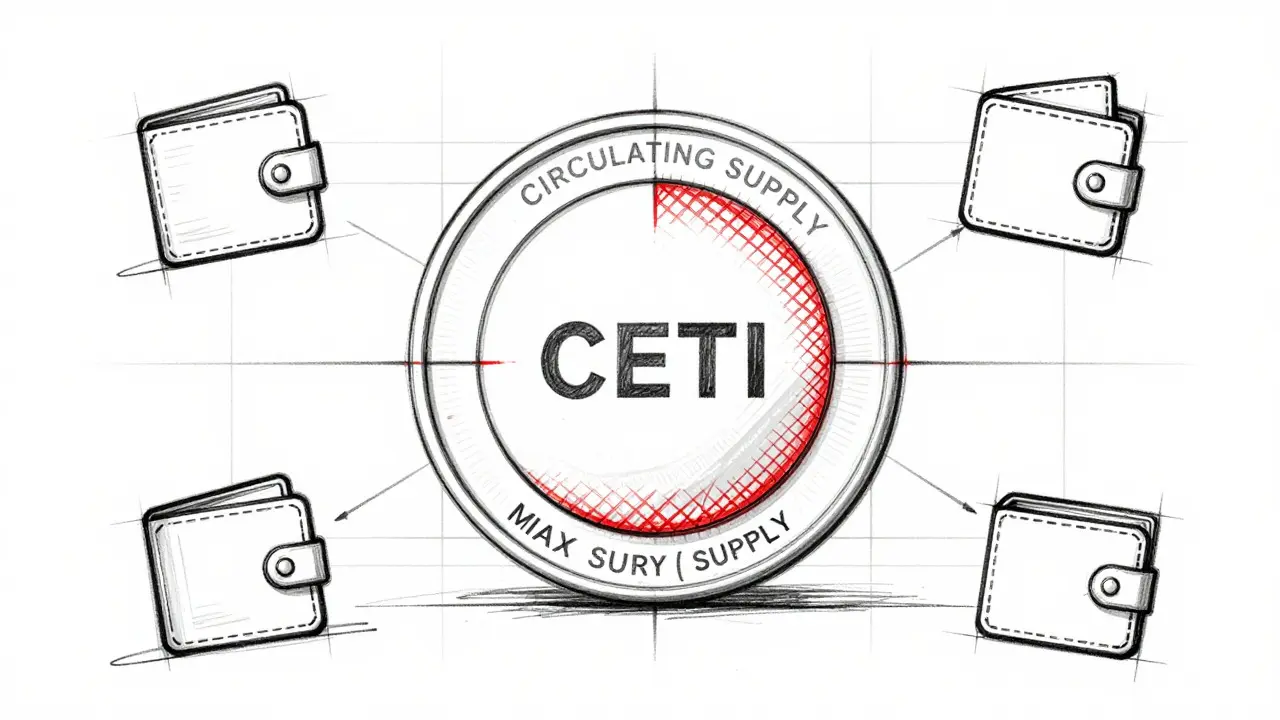
Let’s look at the numbers, because they tell a worrying story. CETI operates as an ERC-20 token on Ethereum. The project claims a fixed maximum supply of 21,000,000 tokens. Yet, data from Holder.io reported in November 2024 showed a circulating supply of 21,014,181 tokens. Yes, the circulating supply exceeds the maximum supply.
Why does this matter? Blockchain auditor firm SlowMist identified this discrepancy as a potential "red flag for tokenomics integrity" in their December 2024 report. When a project can’t keep its own supply metrics straight, it raises questions about basic competence or worse, hidden minting mechanisms.
Here is a breakdown of the key token attributes:
| Attribute | Value / Status |
|---|---|
| Blockchain | Ethereum (ERC-20) |
| Max Supply | 21,000,000 (Claimed) |
| Circulating Supply | ~21,014,181 (Exceeds Max) |
| Market Cap (Dec 2025) | ~$1.18 Million |
| Primary Exchange | Uniswap v2 (DEX only) |
| Whitepaper Status | Unreleased / Missing |
The tokenomics model also mentions "tax reserves" earmarked to be sold during market expansions to fund infrastructure growth. The rates are adjustable to "ensure we never run out of taxes." This vague language lacks specific percentages or implementation details, leaving investors guessing about how much value might be extracted from every trade.
Liquidity Crisis and Trading Realities
If you decide to buy CETI, you won’t find it on major centralized exchanges like Binance or Coinbase. All trading activity is concentrated exclusively on Uniswap v2. This limitation severely restricts accessibility and liquidity.
Liquidity refers to how easily you can buy or sell an asset without affecting its price. For CETI, liquidity is dangerously low. CoinGecko data from December 2025 shows a 24-hour trading volume of just $538.30. To put that in perspective, legitimate AI tokens often see millions in daily volume. With such thin liquidity, even a small sell order can crash the price.
User reports confirm this nightmare scenario. On Bitget’s user forum, trader 'EthereumTrader42' reported trying to sell 50,000 CETI tokens, only to see the price drop 40% before execution due to slippage. Slippage is the difference between the expected price of a trade and the price at which the trade is executed. High slippage means you lose money instantly upon selling. A Blockspot.io survey found that 92% of users experienced extreme price slippage (35-45%) for trades over $100.
This lack of depth makes CETI highly susceptible to price manipulation. A single whale holding a significant portion of the supply could dump their tokens, wiping out retail investors who cannot exit quickly enough.
The Verdict: Vaporware or Hidden Gem?
By late 2025, the consensus among analysts and users leans heavily toward "vaporware." Vaporware refers to products announced but never released or delivered. Here is why CETI fits this description:
- No Whitepaper: Despite promises on taoceti.ai that details would be provided "soon," no comprehensive whitepaper was available for public review through December 2025. Blockchain security analyst Maria Chen of CertiK noted that projects promising revolutionary tech without releasing technical documentation typically fail to deliver.
- Dead Development: The project’s GitHub repository shows no code commits since March 2024. If the team were building AI infrastructure, you would expect regular updates to the codebase. Silence usually means abandonment.
- Negative Sentiment: Social media sentiment analysis by LunarCrush showed 100% negative sentiment across Twitter mentions in Q4 2024. Common complaints focused on unfulfilled promises and suspected pump-and-dump activity.
- Regulatory Risk: The U.S. SEC’s December 2024 guidance classified tokens with "revenue sharing promises without registered securities status" as potential unregistered securities. Since CETI’s core pitch is revenue sharing, it sits squarely in a regulatory danger zone.
Compare CETI to established players. Fetch.ai has a market cap of $1.3 billion and Render Token sits at $2.1 billion. CETI’s $1.18 million market cap represents a difference of three orders of magnitude. It occupies the bottom 0.5% of all cryptocurrencies by market presence according to LiveCoinWatch rankings.

How to Check for Yourself
You don’t have to take my word for it. You can verify these risks yourself using free tools. Here is a quick checklist:
- Check Etherscan: Look up the CETI contract address. See how many unique holders exist. As of December 2025, there were only 1,842 unique wallets. Compare this to thousands or millions for healthy projects.
- Review GitHub Activity: Find the project’s repository. Is there recent activity? If the last commit was months ago, development has likely stopped.
- Analyze Liquidity on Uniswap: Go to Uniswap and simulate a sell order. Use the slippage tolerance settings to see how much price impact your trade would have. If it’s high, walk away.
- Search for News: Look for recent announcements. If the website hasn’t updated since July 2024, the team may have moved on.
Conclusion: Proceed with Extreme Caution
Tao Ceτi (CETI) started with a bold vision of decentralized AI infrastructure. However, nearly two years after its launch, the evidence points to stagnation. The combination of missing documentation, zero development activity, toxic liquidity conditions, and regulatory headwinds makes it a high-risk asset. Delphi Digital projects a 92% probability of CETI becoming completely worthless within 18 months. For most investors, especially beginners, the safest move is to avoid it entirely and focus on established AI crypto projects with transparent teams and active ecosystems.
Is Tao Ceτi (CETI) a scam?
While not officially labeled a scam by regulators yet, CETI exhibits many characteristics of failed projects or vaporware. These include an anonymous team, a missing whitepaper, no code updates since 2024, and circulating supply exceeding max supply. Users have reported significant losses due to slippage and lack of liquidity.
Where can I buy CETI tokens?
CETI is primarily traded on Uniswap v2, a decentralized exchange on the Ethereum blockchain. It is not listed on major centralized exchanges like Binance or Coinbase. Trading requires an Ethereum wallet (like MetaMask) and ETH to pay for gas fees.
Does CETI actually provide AI computing power?
As of late 2025, there is no verifiable evidence that CETI provides actual AI computing power. The project claims to build a "decentralized AI compute fabric," but no hardware deployment or revenue generation has been proven. Industry analysts consider the infrastructure claims unsubstantiated.
Why is the CETI price so volatile?
The volatility stems from extremely low liquidity. With daily trading volumes often under $1,000, small buy or sell orders can cause massive price swings. This makes the token prone to manipulation and high slippage costs for traders.
Is CETI related to Bittensor (TAO)?
There is no formal partnership or technical integration between Tao Ceτi and Bittensor. The use of the Greek letter tau (τ) in the name appears to be a branding tactic to create a visual association with TAO, but independent sources have verified no direct connection.


