
Have you ever looked at a crypto portfolio and seen a token with a confusing name like slisBNBx? It sounds technical, maybe even intimidating. But if you are digging into the world of decentralized finance (DeFi) on the BNB Chain, this token is more than just a random string of letters. It is a key piece of the puzzle for people who want to earn yield on their assets without selling them.
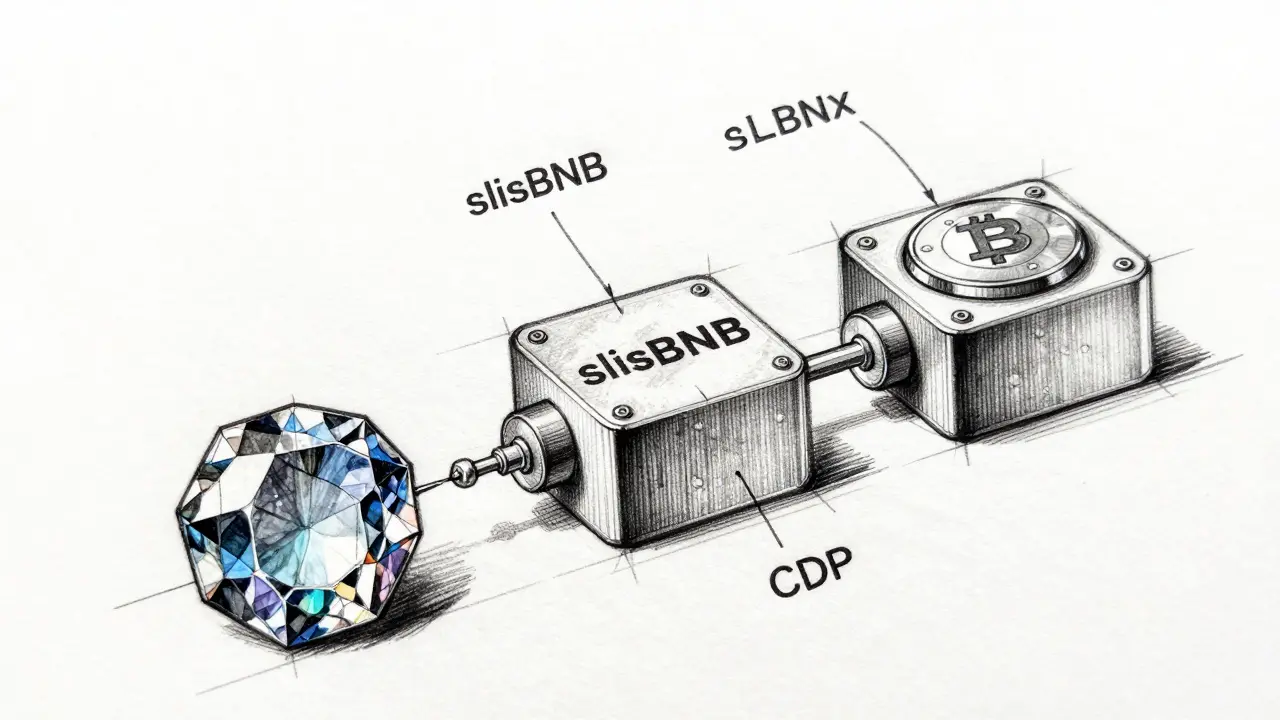
In short, slisBNBx is a collateralized debt position (CDP) token issued by Lista DAO. It allows users to borrow against their staked BNB while keeping their exposure to the underlying asset. If you have heard of its older name, clisBNB, don't worry-they are the same thing. The project simply rebranded to reflect its current architecture.
The Story Behind the Name: From clisBNB to slisBNBx
Confusion often starts with names in crypto. You might see data for "clisBNB" on one exchange and "slisBNBx" on another. This isn't two different coins; it is one evolving product. Lista DAO originally launched the token under the ticker clisBNB. As the protocol matured and integrated deeper into the BNB liquid staking ecosystem, they rebranded it to slisBNBx to better align with the naming convention of its parent token, slisBNB.
Think of it like a software update. The core function remains the same, but the interface and branding get a refresh to be clearer. Major platforms like CoinMarketCap and Coinbase track both tickers, ensuring that your historical data connects seamlessly with current prices. When you look at market caps or trading volumes, you are looking at the same underlying asset, regardless of which label is used on your screen.
How slisBNBx Actually Works
To understand slisBNBx, you first need to understand what it sits on top of. It does not exist in a vacuum. It is part of a layered financial structure built on the BNB Smart Chain (BSC).
Here is the step-by-step flow:
- Stake BNB: You start with native BNB. Instead of locking it up in a traditional validator, you deposit it into Lista DAO’s liquid staking protocol.
- Receive slisBNB: In return, you get slisBNB tokens. These represent your staked BNB plus any rewards earned. They are liquid, meaning you can trade or use them elsewhere.
- Mint slisBNBx: Now comes the interesting part. You can take those slisBNB tokens and deposit them into a Collateralized Debt Position (CDP) smart contract managed by Lista DAO.
- Get Value: By locking up your slisBNB as collateral, you mint new slisBNBx tokens. These tokens can then be used to borrow stablecoins like lisUSD or held as an asset representing your leveraged position.
This process turns a static stake into a dynamic financial tool. You keep earning staking rewards on your underlying BNB via slisBNB, while simultaneously unlocking liquidity through the CDP mechanism.
The Minting Ratio: Why It Isn't 1:1
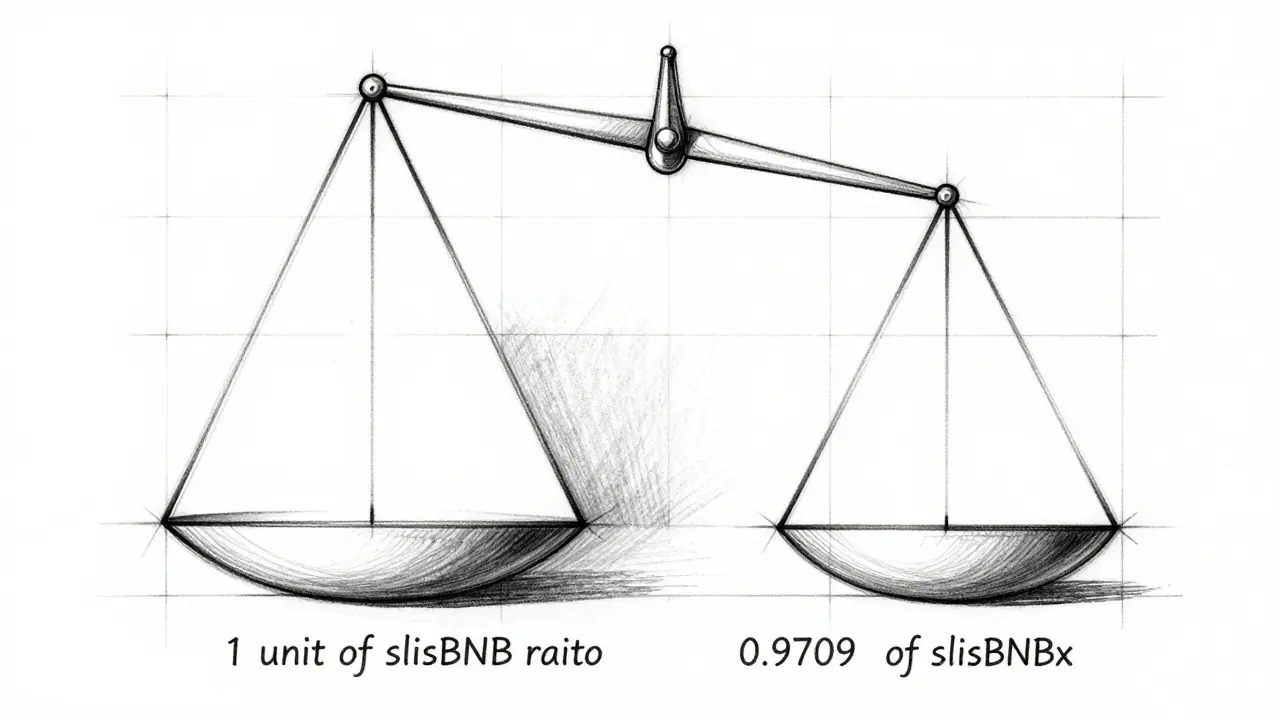
If you dive into the technical documentation provided by Lista DAO, you will notice a specific number that matters: 0.9709. This is the minting ratio.
When you deposit 1 unit of slisBNB to open a CDP, you do not receive 1 unit of slisBNBx. Instead, you receive exactly 0.9709 slisBNBx. Where did the rest go?
This differential acts as a safety buffer. In DeFi, risk management is everything. If the price of BNB crashes, the protocol needs protection to ensure it can cover the debts owed by borrowers. That missing 0.0291 represents a built-in over-collateralization requirement. It ensures that the system remains solvent even during volatile market swings. It is not a fee taken by the developers; it is a structural safeguard for the entire ecosystem.
| Feature | slisBNBx | Standard BNB |
|---|---|---|
| Blockchain | BNB Smart Chain (BEP-20) | BNB Beacon Chain / Smart Chain |
| Primary Function | Collateral for CDPs / Borrowing | Gas fees / Store of Value |
| Yield Source | Indirect (via underlying slisBNB) | None (unless staked manually) |
| Liquidity | High (Listed on Binance, Coinbase) | Very High |
| Risk Profile | Medium-High (Smart Contract + Market Risk) | Low-Medium (Market Risk Only) |
Market Performance and Valuation
Numbers tell a story about trust and adoption. As of mid-2026, slisBNBx has established itself as a significant player in the DeFi space. Data from major aggregators shows a market capitalization hovering around $484 million USD. This places it firmly in the top tier of specialized DeFi tokens, ranking near position 35 globally among all tracked assets.
The price action reflects both strength and volatility typical of the sector. Recent snapshots show trading prices around $635 USD per token. However, history shows it has reached highs near $792 USD. Seeing a drawdown of roughly 23% from those peaks is normal in crypto cycles. What stands out is the volume. With daily trading volumes often exceeding half a million dollars, there is enough liquidity for most retail investors to enter and exit positions without causing massive slippage.
It is also worth noting the fully diluted valuation (FDV). Some metrics suggest an FDV approaching $92 billion, which highlights the difference between circulating supply and total potential issuance. Always check the circulating supply-currently estimated between 600,000 and 760,000 units depending on the data source-to get a true sense of scarcity.
Where Can You Buy or Trade slisBNBx?
You have two main paths to get your hands on slisBNBx:
1. Centralized Exchanges (CEXs): This is the easiest route for beginners. Platforms like Binance and Coinbase list the token. On Binance, you can even see live conversions against fiat currencies like the Moroccan Dirham (MAD), showing global accessibility. Using a CEX means you benefit from familiar interfaces, customer support, and instant settlement.
2. On-Chain Minting: For advanced users comfortable with wallets like MetaMask, you can interact directly with Lista DAO’s smart contracts on the BNB Smart Chain. This requires you to already hold slisBNB. You deposit your slisBNB into the CDP interface, and the protocol mints slisBNBx directly to your wallet. This method avoids exchange fees but requires you to manage gas costs and private keys securely.

Why Does slisBNBx Matter?
In the broader context of DeFi, slisBNBx solves a specific problem: capital efficiency. Most people stake BNB to earn rewards, but their money is stuck until they unstake. Liquid staking (slisBNB) fixes this by giving you a tradable token. But Lista DAO goes a step further with slisBNBx.
By allowing you to use your staked assets as collateral for borrowing, it enables complex strategies. You can borrow lisUSD (Lista’s stablecoin) against your slisBNBx to buy more assets, hedge against downturns, or simply access cash without selling your long-term holdings. It transforms passive income into active leverage.
However, leverage cuts both ways. The same mechanisms that allow you to amplify gains also expose you to liquidation risks if the value of your collateral drops too quickly. Understanding the 0.9709 minting ratio and maintaining healthy collateralization levels is crucial for anyone using slisBNBx beyond simple holding.
Is slisBNBx Safe?
No crypto asset is risk-free. slisBNBx carries three main types of risk:
- Smart Contract Risk: Like all DeFi protocols, Lista DAO relies on code. While audits are standard practice, bugs can happen. Always verify contract addresses from official sources.
- Market Volatility: Since slisBNBx is tied to BNB, a crash in BNB’s price directly impacts the value of your collateral. If the price falls below certain thresholds, your position could be liquidated.
- Protocol Governance: Lista DAO is a decentralized autonomous organization. Changes to interest rates, fees, or collateral ratios are decided by voters. Keep an eye on governance proposals if you hold large amounts.
The presence of slisBNBx on major exchanges like Coinbase suggests it has passed rigorous compliance and security checks required for listing. This adds a layer of confidence compared to obscure tokens found only on decentralized pools.
Is slisBNBx the same as clisBNB?
Yes. clisBNB was the original ticker symbol for this token. Lista DAO rebranded it to slisBNBx to better reflect its role within the liquid staking ecosystem. Both tickers refer to the exact same underlying asset on the BNB Smart Chain.
How do I mint slisBNBx?
You cannot mint slisBNBx from nothing. You must first hold slisBNB (the liquid staking token). Then, you deposit slisBNB into Lista DAO’s CDP smart contract. For every 1 slisBNB you deposit, you receive 0.9709 slisBNBx due to the required collateral buffer.
What blockchain is slisBNBx on?
slisBNBx operates on the BNB Smart Chain (BSC). It is a BEP-20 compatible token, which means it works with any wallet or platform that supports BSC networks, such as Trust Wallet, MetaMask, or PancakeSwap.
Can I lose my slisBNBx?
Yes. If you use slisBNBx as part of a borrowing strategy and the value of your underlying collateral (slisBNB) drops significantly, your position may face liquidation. Additionally, general market volatility affects the USD value of the token.
Where can I buy slisBNBx?
You can buy slisBNBx on major centralized exchanges like Binance and Coinbase. Alternatively, advanced users can mint it directly through the Lista DAO website by depositing slisBNB into their CDP protocol.