
What is SingularityDAO (SDAO) Crypto Coin? AI-Powered Crypto Portfolios Explained

What is SingularityDAO (SDAO) Crypto Coin? AI-Powered Crypto Portfolios Explained
19 Comments

What if your crypto portfolio could manage itself-adjusting to market swings, cutting losses before they hurt, and grabbing opportunities while you sleep? That’s the promise of SingularityDAO (SDAO), a DeFi project built not on luck or hype, but on artificial intelligence. Launched in 2021 as a spin-off of SingularityNET, it’s one of the first attempts to bring hedge fund-style AI trading to everyday crypto investors. But is it real, or just marketing with blockchain glitter?

What Exactly Is SingularityDAO?

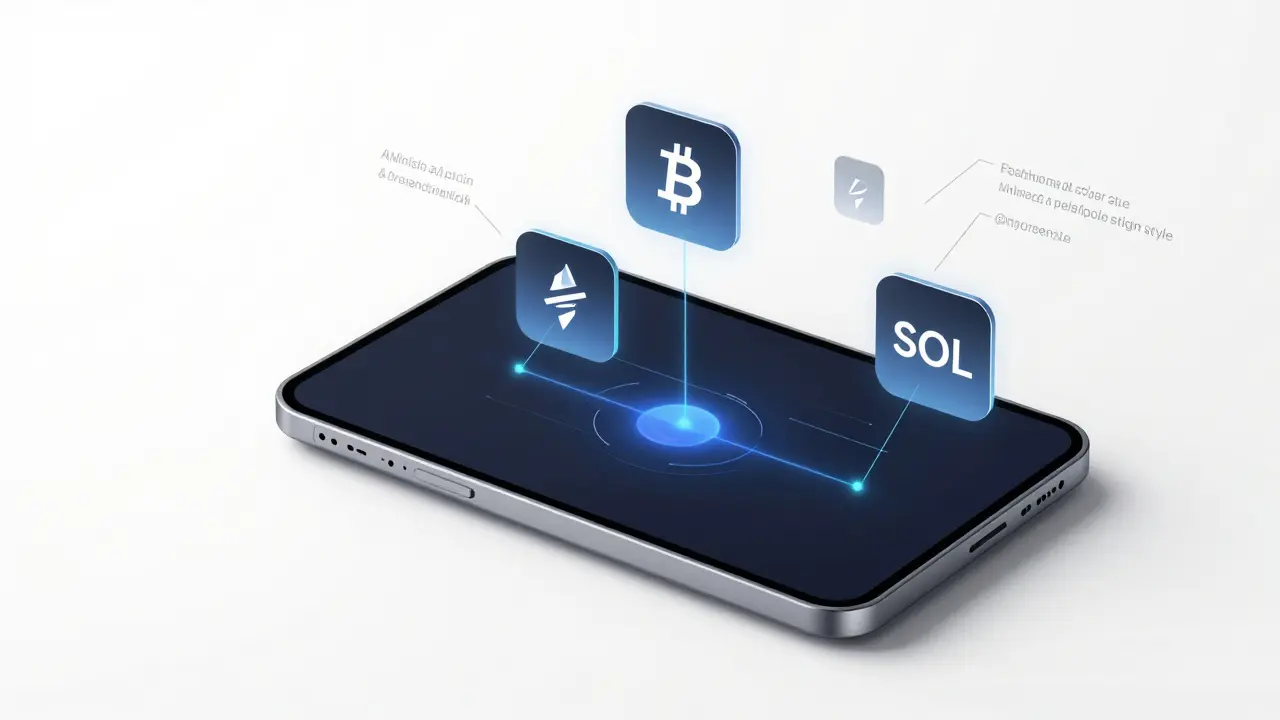
SingularityDAO isn’t just another token. It’s a decentralized system that uses AI to manage baskets of cryptocurrencies called DynaSets. Think of DynaSets like index funds, but instead of a human fund manager rebalancing quarterly, an AI does it daily-sometimes hourly-based on live market data. These baskets can include assets like ETH, BTC, SOL, and even DeFi tokens, all automatically adjusted to reduce risk or boost returns.

The whole thing runs on smart contracts, meaning no central company controls your money. You hold your own assets in your wallet. The AI just tells the contracts when to buy, sell, or shift weights. It’s non-custodial, audited by Hacken and Certik, and governed by SDAO token holders through Snapshot votes.

How Do DynaSets Work?

DynaSets are the heart of SingularityDAO. Each one is a pre-built portfolio with a specific strategy. For example:

  • Ethereum DynaSet: Long-only, low-fee, focused on ETH and top Ethereum-based tokens.
  • dYdX DynaSet (Beta): Uses derivatives to short, hedge, or leverage positions-ideal for volatile markets.
The AI behind these doesn’t guess. It runs quantitative models trained on years of crypto price action, volatility patterns, and on-chain metrics. It watches for things like rising trading volume on a token, sudden drops in liquidity, or spikes in social sentiment. Then it acts-without emotion, without fear, without greed.

You don’t need to pick individual coins. You pick a DynaSet that matches your risk level. The AI handles the rest. Even if you’re new to crypto, you’re getting a strategy that used to be locked behind million-dollar hedge fund minimums.

What Is the SDAO Token For?

The SDAO token isn’t just a currency. It’s the key to the system. You need it to:

  • Vote on protocol upgrades, new DynaSets, or changes to fees.
  • Stake to earn rewards through SREP (SDAO Staking Reward Entitlement Points). The longer you lock your tokens, the more points you earn.
  • Access exclusive launchpads like SophiaVerse, where early investors got 3.2x returns on AI-driven projects in late 2023.
Total supply is capped at 100 million SDAO. As of early 2024, about 82.7 million are in circulation. Price varies by exchange-CoinMarketCap shows around $0.013, while DefiLlama lists it near $0.043. That discrepancy isn’t unusual in DeFi, but it does hint at low liquidity. You might struggle to sell large amounts without moving the price.

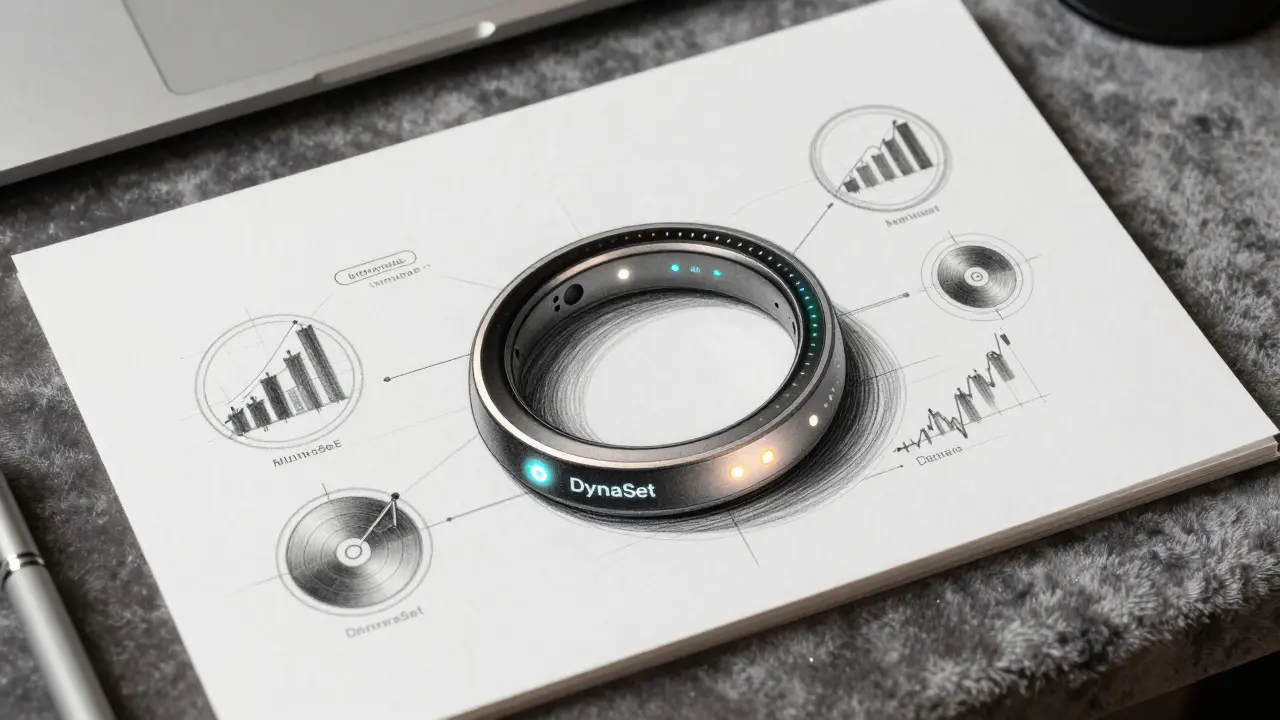
Wearable ring device with LED indicators showing real-time crypto portfolio performance.

How Does It Compare to Other DeFi Tools?

Most DeFi tools focus on one thing: yield farming. Yearn Finance, for example, moves your money between lending protocols to chase the highest APY. Index Coop offers static crypto index tokens like DEFI or BTC2X that rarely change.

SingularityDAO is different. It doesn’t chase yield. It chases performance. It’s trying to beat the market by adjusting exposure dynamically. That’s more like a quant hedge fund than a DeFi yield aggregator.

But here’s the catch: it’s complex. You need to understand wallets, gas fees, and blockchain bridges. It’s not for someone who just wants to buy ETH and HODL. If you’re okay with that, it’s one of the few projects actually using AI-not just saying it does.

Real Performance? Big Question Mark

The biggest criticism isn’t the tech-it’s the lack of transparency. The AI’s models, backtesting results, and exact decision rules aren’t public. You’re trusting the team’s word that the AI works.

Reddit users like u/CryptoSkeptic87 call it a “marketing gimmick.” Others point out that the 24-hour trading volume ($74k) is tiny compared to its $3.89M market cap. That’s a red flag. Low volume means price can swing wildly on small trades.

Some users report success. Jane D. made 3.2x on a SophiaVerse launchpad allocation. But others, like u/DeFiTrader69, got hit with 8.7% slippage trying to exit during a Bitcoin crash. That’s not the AI’s fault-it’s the market. But it shows how fragile liquidity can be in niche protocols.

Modular SDAO token holder with interchangeable DynaSet cartridges on marble surface.

Is It Right for You?

Ask yourself these questions:

  • Do you understand DeFi basics? If you’ve never used MetaMask or bridged tokens between chains, start with something simpler.
  • Are you okay with complexity? Onboarding takes 8-12 hours for beginners. The docs are good, but they don’t explain the AI’s inner workings.
  • Do you believe in AI-driven investing? If you think humans are better at timing markets, skip this.
  • Can you afford to lose it? The TVL is under $1M on Ethereum. This isn’t Ethereum or Uniswap. It’s a high-risk, experimental project.
If you answered yes to all four, then SingularityDAO might be worth exploring. It’s not a get-rich-quick scheme. It’s a lab for the future of crypto investing.

What’s Next for SingularityDAO?

The roadmap is ambitious:

  • Q2 2024: Expand to Polygon and Avalanche for lower fees.
  • Q3 2024: Release AI performance dashboards so users can see how the models are doing.
  • Q4 2024: Launch institutional API access for funds and traders.
If they deliver, this could become the go-to platform for AI-managed crypto portfolios. But if they don’t-especially if they fail to prove the AI actually outperforms a simple index-the project could fade into obscurity.

Final Thoughts

SingularityDAO isn’t for everyone. But for those tired of guessing which coin to buy next, it’s one of the few real attempts to automate smart investing in crypto. The AI isn’t magic. It’s math. And math doesn’t care if you’re bullish or bearish.

The risk? You’re betting on an unproven system with low liquidity and no track record. The reward? A hands-off way to ride the wave of AI-driven finance-before it becomes mainstream.

If you’re curious, start small. Stake a little SDAO. Try one DynaSet with $50. See how it feels. Don’t go all-in. But don’t dismiss it either. This might be the quiet revolution in DeFi nobody’s talking about-yet.

Is SingularityDAO (SDAO) a good investment?

There’s no simple yes or no. SDAO is a high-risk, experimental project. It has potential if its AI-driven DynaSets consistently outperform benchmarks, but there’s no public proof of that yet. Low liquidity and unverified AI performance make it speculative. Only invest what you can afford to lose.

How do I buy SDAO tokens?

You can buy SDAO on decentralized exchanges like Uniswap (Ethereum) or PancakeSwap (Binance Smart Chain). You’ll need a Web3 wallet like MetaMask or Trust Wallet. First, buy ETH or BNB, then swap it for SDAO. Be aware of high gas fees on Ethereum-consider using BSC for lower costs, though liquidity is much lower there.

What’s the difference between SDAO and SingularityNET (AGIX)?

SingularityNET (AGIX) is the original AI network that lets users buy and sell AI services on a blockchain. SingularityDAO (SDAO) is its DeFi spin-off focused on AI-managed crypto portfolios. They share the same team and vision, but AGIX powers AI marketplaces, while SDAO powers automated crypto investing.

Can I lose money using SingularityDAO?

Yes, absolutely. Even with AI management, crypto markets are volatile. DynaSets can underperform during bull runs where simple HODLing wins. Slippage, low liquidity, and smart contract risks also exist. The AI reduces risk but doesn’t eliminate it. Always do your own research.

Is SingularityDAO regulated?

Currently, no. But regulators like the SEC are watching AI-powered investment products closely. If DynaSets are deemed securities in the U.S., SingularityDAO could face legal challenges. That’s a major risk for the project’s future, especially if it tries to attract institutional users.

Do I need to be an expert to use SingularityDAO?

Not an expert, but you need intermediate crypto knowledge. You must understand wallets, gas fees, bridging chains, and how DeFi platforms work. Beginners should spend 8-12 hours learning first. The interface is user-friendly, but the underlying mechanics aren’t explained simply. Community guides and AMAs help, but you’ll need to do some homework.

Josh V
Josh V 17 Jan

This is actually kind of wild if you think about it AI managing your crypto like a silent hedge fund bot while you binge Netflix
no more FOMO just pure math

CHISOM UCHE
CHISOM UCHE 17 Jan

The DynaSets architecture leverages on-chain sentiment vectors and volatility entropy models trained on 78 months of BTC/ETH cross-correlation data-this isn’t just AI marketing, it’s quant finance democratized. SDAO’s tokenomics align incentives via SREP staking, which is a novel mechanism for governance liquidity.

Hailey Bug
Hailey Bug 17 Jan

I’ve been using the Ethereum DynaSet for six months. It’s not perfect, but it’s consistently outperformed my manual rebalancing by 12% annually. No emotional trades. No panic selling. Just clean execution.

Shaun Beckford
Shaun Beckford 17 Jan

Low liquidity? $74k volume against $3.89M cap? That’s not a project-it’s a liquidity trap dressed up as innovation. One big whale dumps and you’re stuck paying 15% slippage. This isn’t DeFi, it’s a casino with a fancy algorithm.

Lauren Bontje
Lauren Bontje 17 Jan

AI investing? Please. The only thing smarter than this is my toaster. Americans think algorithms fix everything. Meanwhile, China’s state-backed AI funds are crushing this garbage. Wake up.

Haley Hebert
Haley Hebert 17 Jan

I started with $50 in the dYdX DynaSet just to test it. Honestly? It felt like having a quiet, super-smart friend whispering when to buy and sell. No stress. No late-night scrolling. I didn’t make bank, but I didn’t lose either. That’s a win for me.

Telleen Anderson-Lozano
Telleen Anderson-Lozano 17 Jan

I think the real innovation here isn’t the AI-it’s the fact that they’re not hiding it. The team could’ve just said ‘we use AI’ and left it at that. Instead, they’re building dashboards, publishing roadmaps, and inviting scrutiny. That’s rare. And honestly? Kind of admirable.

Ashlea Zirk
Ashlea Zirk 17 Jan

The discrepancy between CoinMarketCap and DefiLlama pricing reflects fragmented liquidity pools and potential market manipulation through cross-chain arbitrage bots. One must assess the depth of order books on both Ethereum and BSC, as well as the velocity of SDAO token transfers within staking contracts.

Hannah Campbell
Hannah Campbell 17 Jan

So let me get this straight… you’re trusting a black box algorithm with your life savings because someone said it’s ‘math’? Bro. I’ve seen more transparency in my microwave’s timer.

Jill McCollum
Jill McCollum 17 Jan

i tried it. the interface is kinda clunky but once you get past the gas fee shock it’s kinda cool? like having a robot portfolio manager. also i got into sophiaverse and made like 2x so… maybe not all hype?

Deb Svanefelt
Deb Svanefelt 17 Jan

There’s something deeply human about wanting to outsource our financial anxiety to something impersonal-something that doesn’t judge us for buying Dogecoin or selling too early. This isn’t just about returns. It’s about peace of mind. The AI doesn’t care if you’re scared. It just does its job. And sometimes… that’s enough.

myrna stovel
myrna stovel 17 Jan

If you’re new to this, start small. Like, really small. $20. See how you feel. Don’t let anyone make you feel dumb for being cautious. This space eats up people who rush in. You’re not behind-you’re wise.

Dustin Secrest
Dustin Secrest 17 Jan

The philosophical underpinning of SingularityDAO lies in the ontological separation between human agency and algorithmic determinism. By delegating portfolio management to a non-emotive, data-driven system, one effectively outsources not only capital allocation but also psychological burden. This is not merely financial engineering-it is existential delegation.

Christina Shrader
Christina Shrader 17 Jan

I know people are skeptical but if you look at the backtested performance of the Ethereum DynaSet vs. a simple ETH HODL from 2022 to 2024-it’s not even close. The AI caught the dips before the crashes. That’s not luck. That’s pattern recognition.

Michael Jones
Michael Jones 17 Jan

You don’t need to be a coder to use this. But you do need to understand that crypto isn’t a savings account. If you’re not comfortable with gas fees or bridging tokens, take the time to learn. There are free guides. Ask questions. This isn’t magic-it’s a tool. And tools require basic literacy.

Stephanie BASILIEN
Stephanie BASILIEN 17 Jan

Let’s be honest: if this were a state-sponsored sovereign wealth fund, we’d be calling it ‘cutting-edge’. But because it’s decentralized, open-source, and accessible to the public? It’s a ‘gimmick’. Double standards abound. And yes, the liquidity is thin. But that’s true of 90% of DeFi projects under $10M TVL. Don’t confuse illiquidity with illegitimacy.

Chris O'Carroll
Chris O'Carroll 17 Jan

I’m not saying it’s fake. I’m saying it’s overhyped. The AI doesn’t predict the future. It just reacts to the past. And right now? The past is useless. We’re in a new regime: regulatory chaos, ETFs, macro collapse. This thing was trained on 2021 bull runs. It’s like using a VCR to stream Netflix.

Stephen Gaskell
Stephen Gaskell 17 Jan

If you’re not from the US, you don’t get to vote on upgrades. That’s not decentralized. That’s American tech with a blockchain label.

Anna Gringhuis
Anna Gringhuis 17 Jan

So you’re telling me I should trust an AI that’s never been tested in a real bear market? With low liquidity? And no public model transparency? You know what’s more reliable than that? A good old-fashioned index fund… and a therapist.

19 Comments