
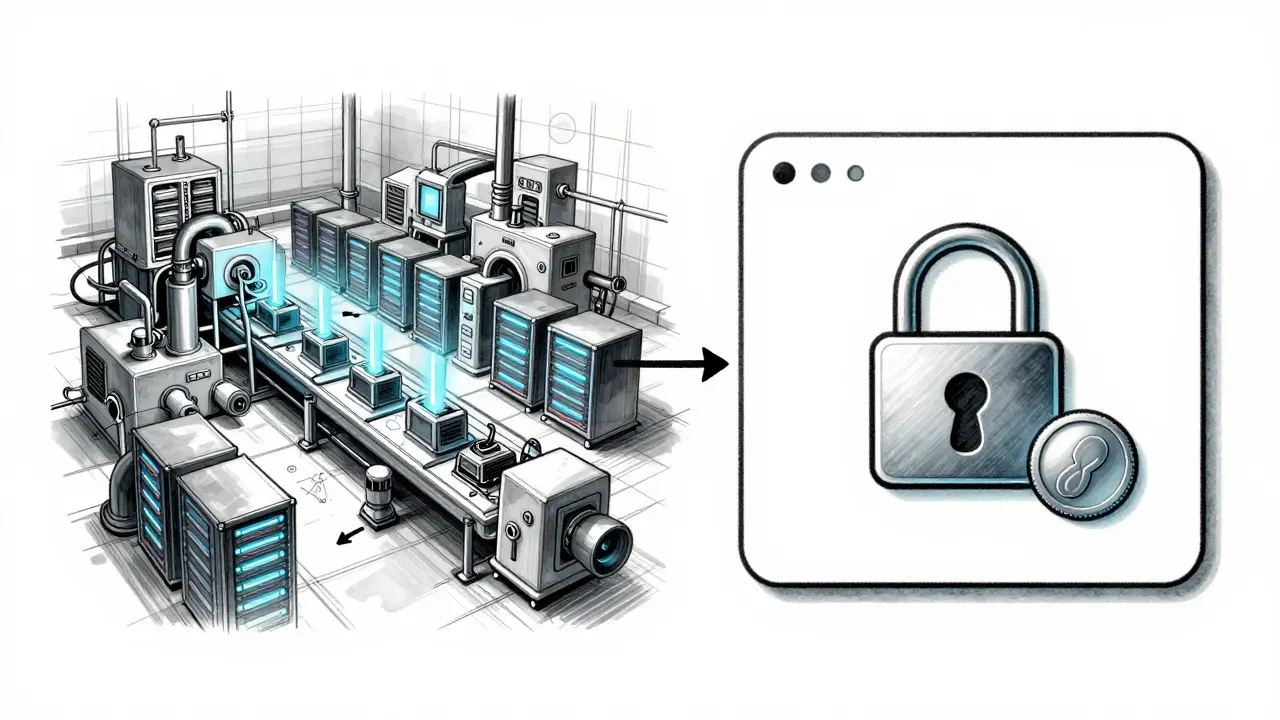
Imagine you want to verify a transaction on a blockchain. In the old days, that meant solving incredibly difficult math puzzles using powerful computers that guzzled electricity. That system was called Proof of Work. It worked, but it was expensive and energy-hungry. Enter Proof of Stake (PoS), which is a consensus mechanism where validators are chosen to create new blocks based on the amount of cryptocurrency they lock up as collateral rather than computational power. This shift changes how networks stay secure and who gets to run them.
You don't need to be a computer scientist to understand why this matters. PoS makes blockchains more efficient and accessible. Instead of buying expensive mining rigs, you just need to hold and lock up tokens. For many people, this turns holding crypto from a passive activity into an active way to earn rewards while helping the network function.
The Core Concept: Staking Your Money Where Your Mouth Is
At its heart, Proof of Stake relies on economic incentives. To become a validator, you must stake a specific amount of the network's native token. Think of this stake as a security deposit. If you do your job well-validating transactions honestly-you earn rewards. If you cheat or go offline, you risk losing part of that deposit through a process called slashing.
This creates a powerful motivation for honesty. Since your own money is at risk, you have a financial reason to keep the network running smoothly. The selection process isn't just about who has the most coins. Algorithms often consider how long you've been staking and use randomization to prevent a few wealthy players from dominating the network forever. For example, if ten validators each stake one coin, they each have a 10% chance of being picked. But if one person stakes three coins while others stake one, their odds jump significantly, showing how stake size influences probability.
How Validators Get Picked and Paid
The technical side involves a continuous cycle of selection, validation, and confirmation. When a new block of transactions needs to be added to the chain, the network algorithm selects a validator. This validator checks that all transactions in the block are valid, signs the block with their digital key, and broadcasts it to the network.
Other validators then look at this proposed block. If enough of them agree (attest) that the block is correct, it becomes part of the permanent blockchain record. The selected validator earns transaction fees and sometimes newly minted tokens as a reward. This compensation structure ensures that maintaining the network is profitable for those who put in the effort and capital.
| Feature | Proof of Work (PoW) | Proof of Stake (PoS) |
|---|---|---|
| Selection Method | Computational Power (Hashrate) | Economic Stake + Randomization |
| Energy Consumption | Very High | Low |
| Hardware Requirements | Expensive Mining Rigs (ASICs/GPUs) | Standard Computer/Server |
| Punishment for Errors | Lost Electricity/Hardware Costs | Slashing (Loss of Staked Tokens) |
| Barrier to Entry | High Capital for Hardware | Minimum Token Stake Requirement |

Why Switching to Proof of Stake Matters
The biggest win for PoS is efficiency. Bitcoin, which uses PoW, consumes massive amounts of electricity because miners compete globally to solve puzzles. PoS eliminates this race. You don't need to burn energy to prove you did work; you just need to prove you have skin in the game. This makes the network greener and cheaper to maintain.
Accessibility is another major factor. In PoW, small miners often get crushed by large industrial farms. In PoS, while wealth still matters, mechanisms like staking pools allow smaller holders to join forces. By pooling their resources, individual users can meet the minimum stake requirement without needing to own the full amount themselves. This democratizes participation, allowing everyday investors to earn yield on their holdings instead of letting them sit idle.
Risks and Challenges: It's Not All Free Money
Before you jump in, understand the risks. The primary fear is centralization. If the richest people control most of the stake, they could potentially manipulate the network. To counter this, developers use complex algorithms that favor longevity and randomness over pure wealth. However, the debate continues on whether these measures are sufficient.
Then there is the issue of slashing. If your validator node goes offline for too long or validates a fraudulent block, the network penalizes you by taking away some of your staked tokens. This requires careful management. Direct validation demands technical knowledge, constant uptime, and secure private key management. One mistake or server outage can cost you real money. This is why many users choose delegated staking through exchanges or specialized platforms, where professionals handle the technical heavy lifting.

Real-World Examples: Ethereum and Beyond
Ethereum is the most prominent example of a successful transition to PoS. Its move marked a turning point for the entire industry, proving that a major network could switch consensus mechanisms without breaking. To validate directly on Ethereum, you need exactly 32 ETH. This high bar pushes many users toward staking pools or exchange services that let them participate with smaller amounts.
Other networks like Cardano, Polkadot, and Solana also use variants of PoS, each with different rules for minimum stakes and reward structures. Some focus heavily on governance, allowing stakers to vote on protocol changes. Others prioritize speed and low fees. The variety shows that PoS isn't a single fixed recipe but a flexible framework that different projects adapt to their specific needs.
Getting Started: Your Options
If you want to start staking, you have two main paths. First, you can run your own validator node. This gives you full control but requires technical skill, reliable internet, and the minimum stake amount. Second, you can delegate your stake. Through an exchange or a staking pool, you hand over your tokens to a professional operator. They manage the hardware and software, and you receive a share of the rewards minus a small fee. For most beginners, delegation is the safer and simpler route.
Whichever path you choose, research the specific network's rules. Check the current annual percentage yield (APY), the lock-up periods (if any), and the slashing conditions. Understanding these details helps you make informed decisions about which assets to stake and how much risk you're comfortable taking.
Is Proof of Stake better than Proof of Work?
It depends on what you value. PoS is generally more energy-efficient and easier to enter, making it attractive for sustainability and retail investors. PoW is often seen as more battle-tested in terms of security due to the high cost of attacking the network. Most experts believe PoS is the future for scalability and environmental reasons, but PoW remains dominant in Bitcoin.
Do I need 32 ETH to stake on Ethereum?
Only if you want to run your own validator node. If you use a staking pool or delegate through an exchange, you can typically stake with much less than 32 ETH. These services aggregate funds from many users to meet the minimum requirement, splitting the rewards among participants.
What happens if my validator goes offline?
If you miss attestations or propose invalid blocks, you may face penalties. Short outages might just mean missed rewards, but prolonged downtime or malicious behavior can trigger slashing, where a portion of your staked tokens is burned or confiscated by the network.
Are staking rewards taxable?
In many jurisdictions, yes. Staking rewards are often treated as income when received. Keep detailed records of every reward payout, including the date and value at the time of receipt, to simplify your tax filing. Always consult a local tax professional for advice specific to your region.
Can I lose my principal stake?
Yes, though it's rare for honest validators. You can lose tokens through slashing if you act maliciously or have significant technical failures. Additionally, the market price of the token itself can drop, reducing the fiat value of your stake even if the token count remains the same.