
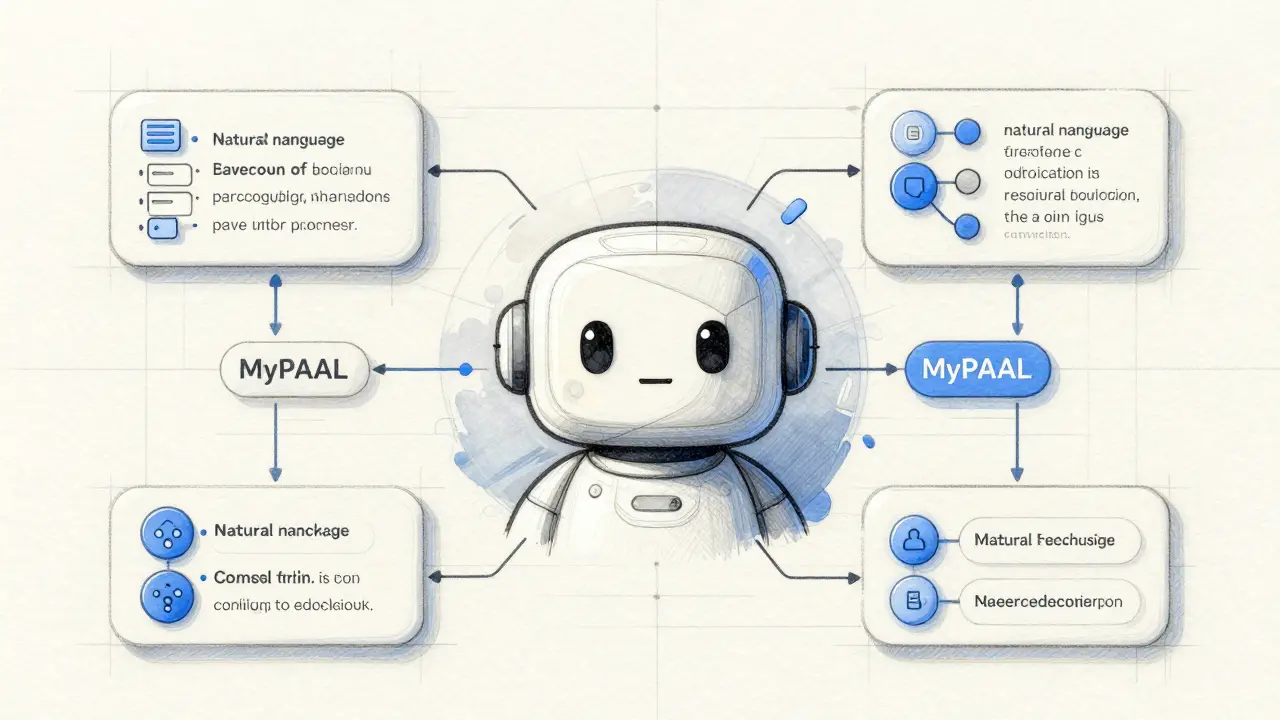
You have probably seen the buzz around artificial intelligence in crypto. It feels like every new project claims to be an 'AI revolution.' But what actually happens when you combine blockchain with chatbots and trading automation? That is where PAAL AI comes in.
PAAL AI is an Ethereum-based ecosystem that uses AI agents to help crypto investors research markets, automate tasks, and manage communities. Instead of just being another speculative coin, it tries to solve a real problem: information overload. There are thousands of tokens, endless news feeds, and complex charts. PAAL aims to cut through the noise using natural language processing and machine learning.
How the PAAL Ecosystem Works
The platform does not rely on a single tool. It breaks down into three main products designed for different levels of user activity. Understanding these components helps you see where the value lies.
- MyPAAL: This is your personal AI assistant. You can configure it to answer questions about specific coins, summarize news, or explain technical concepts. Think of it as a smart search engine tailored to your investment style.
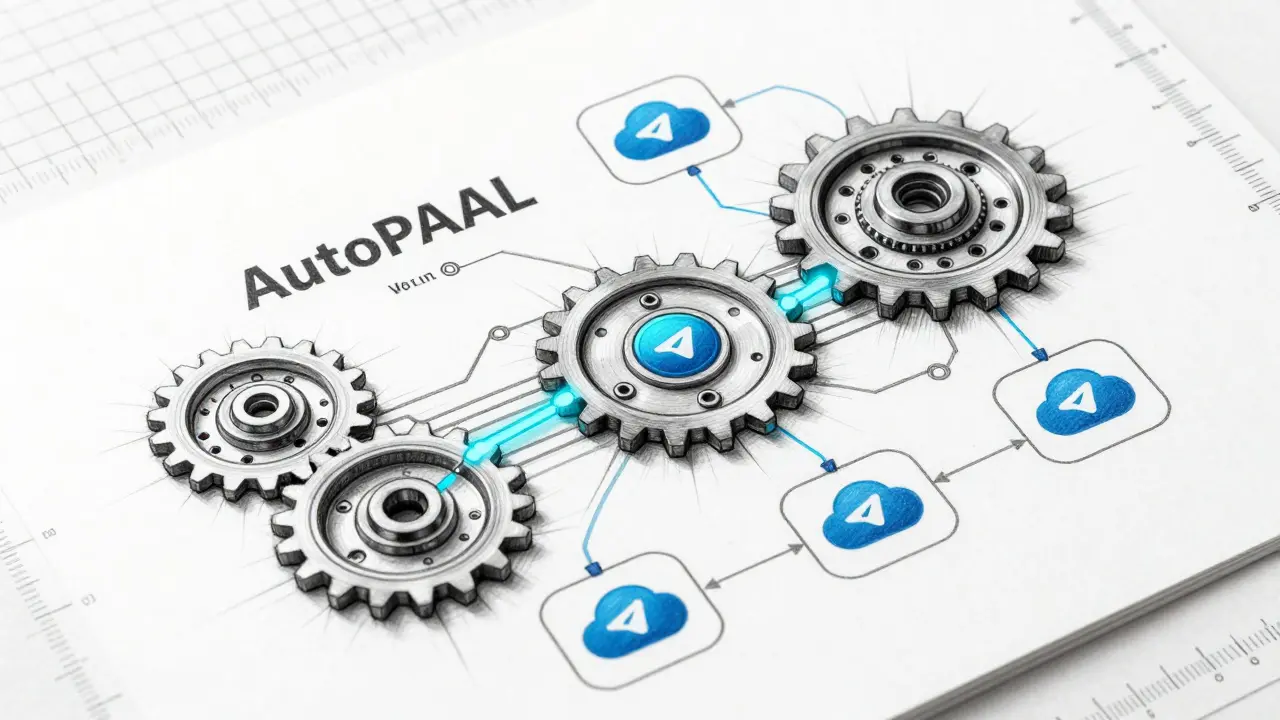
- AutoPAAL: This tool focuses on automation. It can handle repetitive tasks across platforms like Telegram and Discord. For community managers, this means auto-moderating chats or posting updates without manual effort.
- AutoPAAL-X: This is the advanced version. It allows for more complex workflows, potentially including automated trading signals or deeper data analysis. It is built for users who want hands-off execution based on predefined rules.
These tools run off-chain, meaning the heavy lifting happens on servers likely hosted by major cloud providers like Google Cloud or IBM, whose logos appear on their portal. The blockchain part handles the token economy, while the AI engines do the actual work.
Tokenomics: Supply and Utility
The PAAL token is an ERC-20 utility and governance token on the Ethereum network. Knowing the supply mechanics is crucial because scarcity drives value. Here is the breakdown:
| Metric | Value |
|---|---|
| Max Supply | 1,000,000,000 (1 Billion) |
| Total Supply | 1,000,000,000 (1 Billion) |
| Circulating Supply | ~900 Million - 983 Million (Varies by source) |
| Blockchain | Ethereum (ERC-20) |
Most of the tokens are already in circulation. This reduces the risk of sudden inflation from massive unlocks, which is common in newer projects. However, you will notice slight discrepancies in circulating supply numbers between exchanges like Kraken, Coinbase, and CoinGecko. Always check multiple sources for the most accurate real-time data.
Why Hold PAAL? Incentives and Rewards
Holding a token is only useful if it gives you something back. PAAL structures its incentives around three pillars: access, governance, and profit sharing.
- Premium Access via Staking: Basic features might be free, but advanced AI capabilities require staking PAAL tokens. By locking up your tokens, you unlock higher message limits, faster responses, and exclusive agent configurations.
- Governance Rights: As a holder, you get a say in the platform's future. You can vote on proposals that affect development priorities, fee structures, and partnership decisions. This decentralizes control away from a single team.
- Buybacks and Profit Sharing: This is the financial hook. A portion of the revenue generated by the platform is used to buy back PAAL tokens from the open market. This creates upward pressure on price and rewards long-term holders. Some models also distribute these profits directly to stakers.
This model aligns the interests of the developers and the users. If the AI tools become popular, revenue rises, leading to more buybacks and higher token demand.
Price History and Volatility Risks
Let’s talk about the money side. Like all crypto assets, PAAL is volatile. Its price history shows significant swings that reflect broader market sentiment toward AI narratives.
In March 2024, PAAL reached an all-time high of approximately $0.86. Since then, it has experienced substantial drawdowns, trading at various points between $0.007 and $0.12 depending on the exchange and time of day. This volatility is typical for mid-cap AI tokens. When hype peaks, prices surge. When attention shifts, they correct sharply.
Market capitalization estimates vary widely due to these price fluctuations and differing circulating supply calculations. At lower price points, the market cap sits in the low millions. During rallies, it can push over $100 million. Always verify current prices on reputable aggregators like CoinMarketCap or CoinGecko before making any moves.
PAAL vs. Other AI Crypto Projects
Is PAAL unique? Not entirely. The AI-crypto space is crowded. To understand its position, compare it to giants like Fetch.ai (FET), SingularityNET (AGIX), and Render (RNDR).
Those larger projects focus on decentralized compute power or general-purpose AI infrastructure. They are building the roads for the AI highway. PAAL, on the other hand, is building the cars. It focuses specifically on end-user applications within the crypto niche: trading bots, research assistants, and community management.
If you want raw computing power, you look at RNDR. If you want specialized crypto tools, you look at PAAL. It occupies a smaller, more targeted segment of the market, which means less competition for specific use cases but also a smaller total addressable market compared to general AI protocols.
Getting Started with PAAL
Ready to try it out? Here is how you can acquire and use the token.
Buying PAAL
Since PAAL is an ERC-20 token, you have two main paths:
- Centralized Exchanges (CEX): Platforms like Kraken, Robinhood, and Crypto.com list PAAL. This is the easiest route for beginners. You buy with fiat currency and transfer to your wallet.
- Decentralized Exchanges (DEX): You can swap ETH for PAAL on Uniswap. This requires a Web3 wallet like MetaMask and involves paying gas fees. It offers more direct control but carries higher transaction costs during network congestion.
Using the Platform
Once you have tokens, head to app.paal.ai. Sign up for an account and connect your wallet. Navigate to the Chatbot section to test MyPAAL. If you stake tokens, you will see options for AutoPAAL and AutoPAAL-X appear. Start small. Test the free features first to see if the AI insights match your needs before committing funds to staking.
Security and Trust Considerations
Before investing, ask yourself: Is this safe? PAAL operates on Ethereum, which is secure, but the smart contracts and off-chain services carry risks. Currently, public documentation does not highlight recent third-party security audits from major firms. This is a red flag for conservative investors.
Always do your own due diligence. Check the contract address on Etherscan. Look for any history of exploits. Remember that AI-generated advice can sometimes be hallucinated or incorrect. Never blindly follow automated trading signals without understanding the underlying logic.
Is PAAL AI a good investment?
Whether PAAL is a good investment depends on your belief in the utility of AI-driven crypto tools. It has a clear use case and revenue-sharing model, but it faces high competition and volatility. Past performance, including its sharp drop from its 2024 high, indicates significant risk. Consult financial advice before buying.
What is the difference between MyPAAL and AutoPAAL?
MyPAAL is a personalized chatbot for research and Q&A. AutoPAAL focuses on automation, handling tasks like community moderation or executing predefined actions across platforms like Telegram and Discord. AutoPAAL-X is the advanced tier for complex workflows.
Where can I buy PAAL tokens?
You can buy PAAL on centralized exchanges such as Kraken, Robinhood, and Crypto.com. Alternatively, as an ERC-20 token, it is available on decentralized exchanges like Uniswap.
Does PAAL have a maximum supply?
Yes, the maximum and total supply of PAAL is fixed at 1 billion tokens. Most of these are already in circulation, reducing inflationary pressure.
Is PAAL AI secure?
While the Ethereum blockchain is secure, users should exercise caution. Always verify smart contracts on Etherscan and be aware that off-chain AI services can make errors. Independent security audits are recommended for large holdings.