
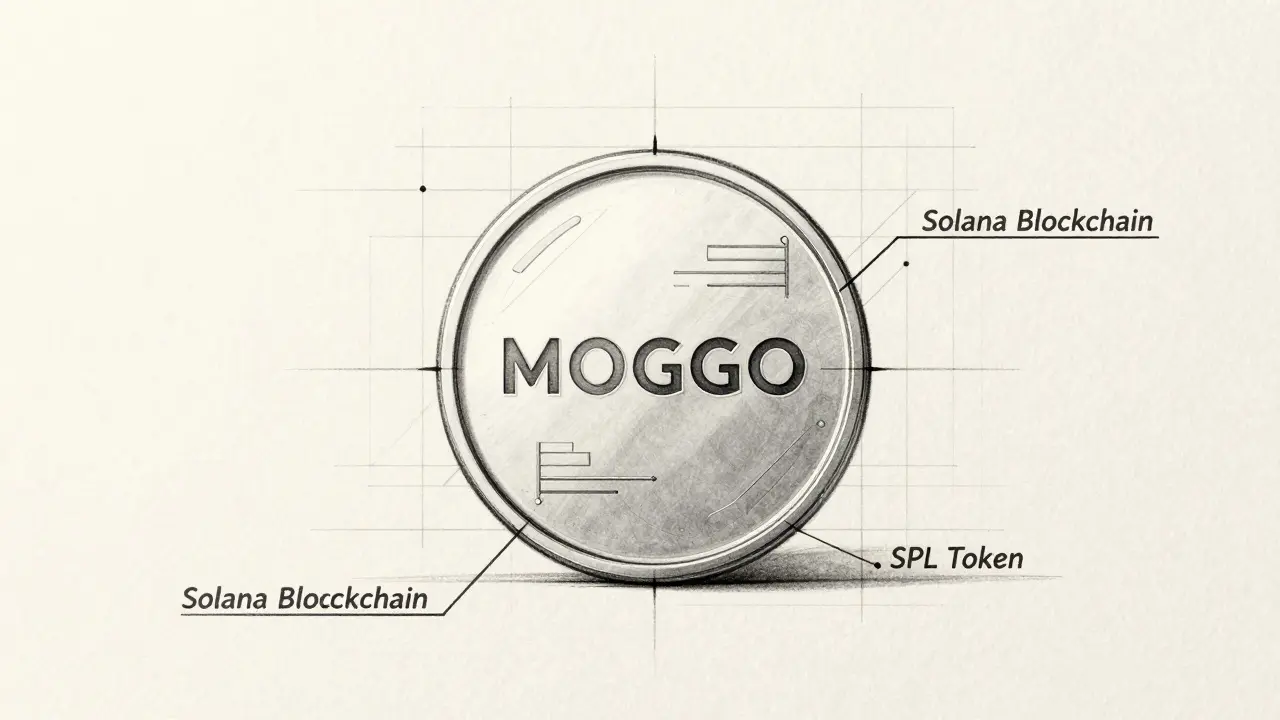
You’ve probably seen it pop up on your social media feed or a crypto tracking app. The name MOGGO sounds familiar, maybe even a bit like the more famous Mog Coin, but it’s a completely different beast. If you’re wondering what this token actually is, how risky it is, and whether that tiny price tag means it’s the next big thing, you are asking the right questions. Most people jump in without looking at the supply numbers or the trading volume, which is exactly how they lose money.
MOGGO is a small-cap, meme-inspired cryptocurrency built on the Solana blockchain. It doesn’t have a complex utility protocol, a decentralized application, or a revolutionary tech stack. Its main purpose is speculative trading within a community that rallies around its brand. That simplicity is both its appeal and its danger. Let’s break down what you’re actually holding when you buy MOGGO.
The Basics: What Is MOGGO?
MOGGO is a fungible token deployed on the Solana blockchain designed for fast, low-cost meme-token transactions and community engagement. Unlike Bitcoin, which aims to be digital gold, or Ethereum, which powers smart contracts, MOGGO exists primarily as a vehicle for speculation and social interaction among its holders.
Launched in 2024, MOGGO leverages Solana’s infrastructure. Why Solana? Because it’s fast and cheap. When you’re trading a meme coin where the price can swing wildly in minutes, you don’t want to pay $15 in gas fees just to move $10 worth of tokens. Solana allows for near-instant transfers with fractions of a cent in fees, making it the playground of choice for thousands of micro-cap meme coins.
However, being on Solana doesn’t automatically make a project good. It just makes it easy to create. MOGGO operates as a standard SPL token. There is no whitepaper detailing a grand roadmap, no audited smart contracts offering staking yields, and no governance mechanism. You are buying a piece of digital culture, hoping someone else values it more than you do later.
Tokenomics: The Supply Problem
This is where things get tricky. Tokenomics-the economic structure of the coin-is crucial for understanding potential value. For MOGGO, the data is fragmented, which is a red flag in itself.
- Total Supply: Fixed at 3,307,946 units. This is a very small number compared to major coins. Bitcoin has 21 million; Shiba Inu has quadrillions. A smaller supply can mean higher scarcity, but only if there is demand.
- Circulating Supply: This is where sources disagree. Some platforms report 0 circulating supply, implying a market cap of $0. Others, like CoinMarketCap, self-report approximately 2.97 million tokens in circulation. This discrepancy suggests that liquidity might be concentrated in a few wallets or that data aggregators haven’t synced properly.
- Market Cap: Depending on the source, MOGGO’s market capitalization ranges from effectively $0 to roughly $57,000 USD (fully diluted). Compare this to Mog Coin (MOG), which had a market cap over $1 billion in late 2024. MOGGO is a micro-cap asset.
With only about 3.3 million tokens total, even a small amount of buying pressure can spike the price. Conversely, one large holder selling can crash it. This is known as low liquidity, and it creates extreme volatility.
Price History and Volatility
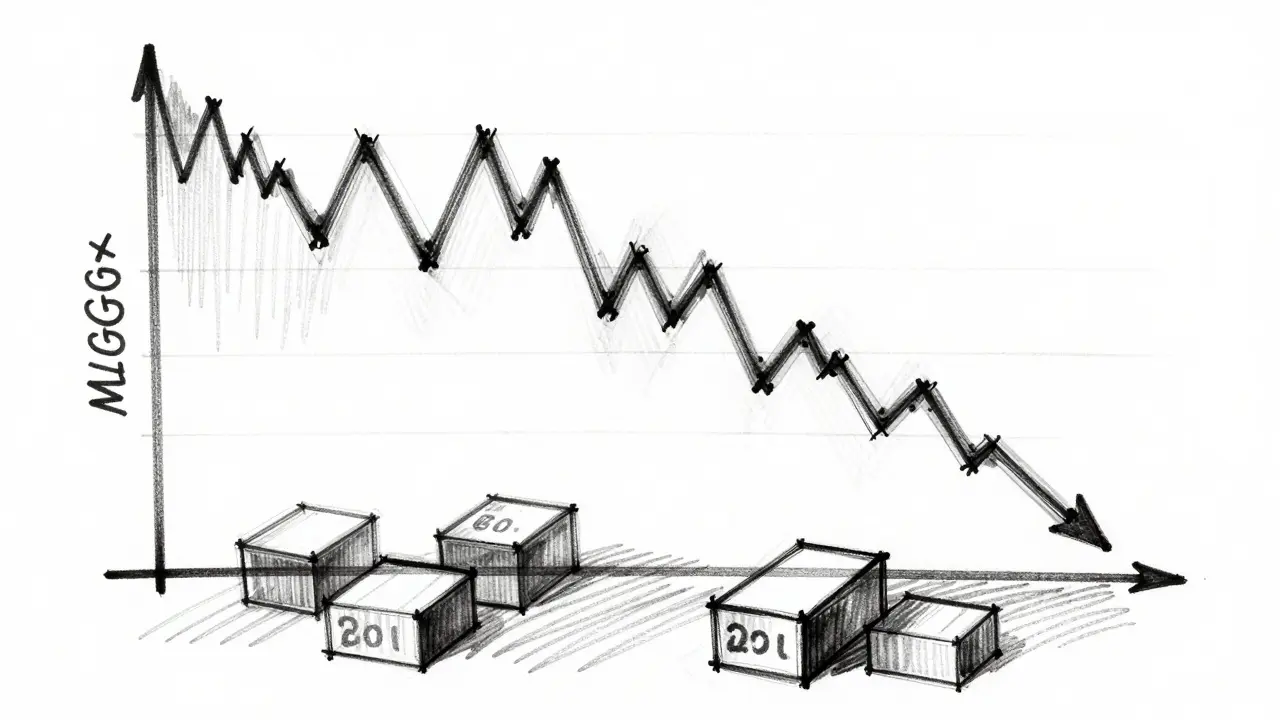
If you look at the charts for MOGGO, you’ll see wild swings. This isn’t an investment for the faint of heart. Here is what the data shows across various trackers as of mid-2025:
- All-Time High (ATH): Estimates vary between $0.20 and $0.56 per token, depending on the exchange data source.
- Current Price: Hovering around $0.017 to $0.022 USD.
- Drawdown: The token has fallen between 88% and 96% from its peak. That means if you bought at the top, you have lost nearly all your money.
- Trading Volume: Extremely low. Coinbase reported a 24-hour volume of just $26.89 USD. This indicates very few people are actively trading it daily.
Why does this matter? Low volume means high slippage. If you try to sell a significant amount of MOGGO, you might not find enough buyers at the current price, forcing you to sell at a much lower rate. It’s like trying to sell a rare collectible in a town with only two other collectors.
Where Can You Trade MOGGO?
One of the biggest frustrations for new investors is finding where to actually buy the coin. Major centralized exchanges often list price data for informational purposes but don’t allow trading.
| Platform | Status | Notes |
|---|---|---|
| Coinbase | Not Tradable | Shows price/volume data but explicitly states it is not listed for trading. |
| Crypto.com | Not Tradable Yet | Asset page exists, but trading is disabled. Volume shown as N/A. |
| Bitget | Limited/Info Only | Provides price forecasts and spot market info, but listing status is ambiguous or inactive. |
| MEXC | No Live Order Book | Template exists, but no live price or trading pair available. |
| Decentralized Exchanges (DEX) | Likely Available | Most trading likely happens on Solana-based DEXs like Raydium or Jupiter via wallet connection. |
This lack of presence on major retail exchanges like Coinbase or Crypto.com is a signal. These platforms have strict listing criteria regarding liquidity, compliance, and security. MOGGO hasn’t met them. To trade it, you likely need a non-custodial wallet (like Phantom or Solflare) and must swap directly on-chain using a Decentralized Exchange (DEX). This adds complexity and risk, such as interacting with unverified contract addresses.
MOGGO vs. Mog Coin (MOG): Don’t Get Confused
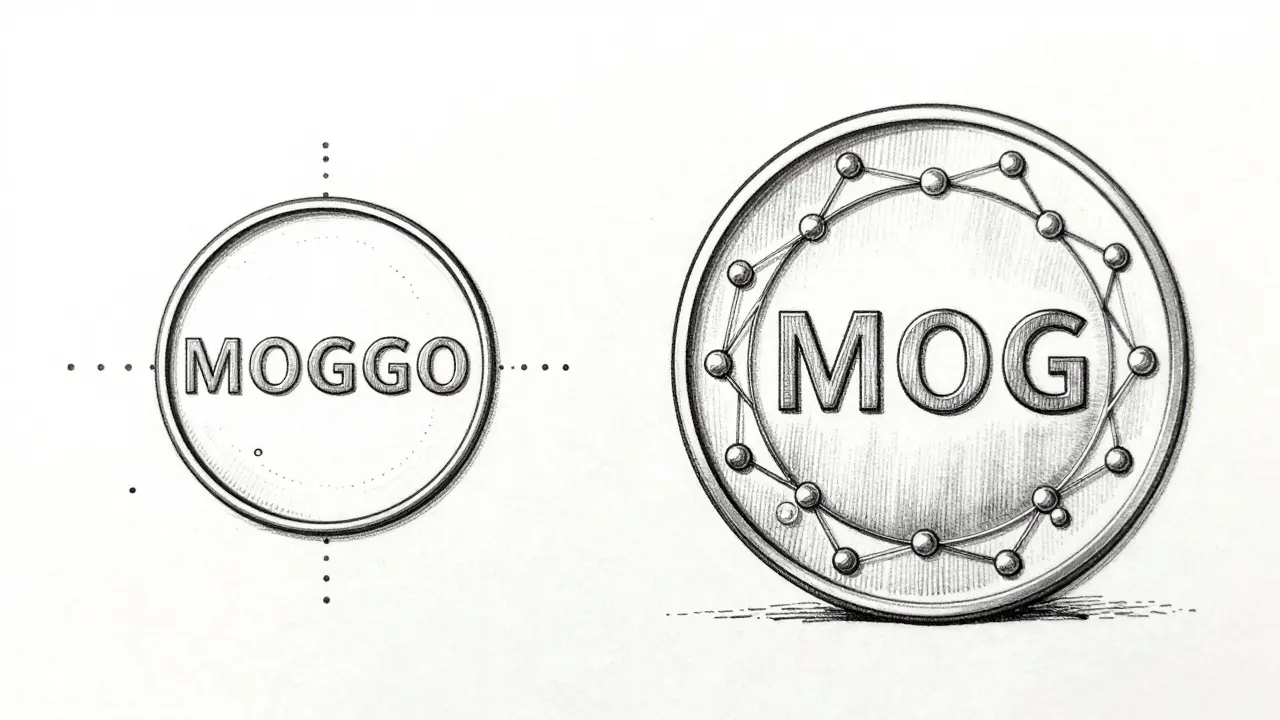
A common mistake is confusing MOGGO with Mog Coin (ticker: MOG). They sound similar, but they are worlds apart.
- Mog Coin (MOG): Launched on Ethereum in 2023. It reached a market cap of over $1.2 billion by late 2024. It has a massive community, high liquidity, and is ranked in the top 100 cryptocurrencies globally.
- MOGGO: Launched on Solana in 2024. Market cap under $60k. Ranked outside the top 6,000. Extremely low liquidity.
Mog Coin succeeded because it tapped into early Ethereum meme culture and achieved network effects. MOGGO is trying to replicate that success on Solana but lacks the scale, adoption, and institutional interest. Never assume that because one meme coin did well, another with a similar name will follow suit.
Is MOGGO a Good Investment?
Let’s be blunt. MOGGO is a high-risk, speculative asset. It does not generate revenue, offer dividends, or provide utility beyond peer-to-peer transfer. Its value is derived entirely from social sentiment-what people think it’s worth right now.
Here are the risks you need to weigh:
- Liquidity Risk: With daily volumes sometimes under $30, exiting your position quickly is difficult. You could be stuck holding the bag if the community loses interest.
- Concentration Risk: With a total supply of only 3.3 million, a small number of wallets likely hold a large percentage of the tokens. If one "whale" decides to sell, the price could drop vertically.
- Data Discrepancies: The fact that major trackers show conflicting circulating supplies and market caps suggests a lack of transparency or professional management behind the token’s distribution.
- No Fundamental Value: Unlike projects building real-world applications, MOGGO relies on hype. Hype fades. When the trend moves to the next shiny object, MOGGO could become irrelevant.
Some forecasting models, like those on Bitget, project modest growth to $0.01755 in 2026 or $0.05585 by 2031. However, these are mathematical extrapolations based on past volatility, not fundamental analysis. They assume the token survives and gains traction, which is far from guaranteed.
How to Approach MOGGO Safely
If you still want to participate in the MOGGO ecosystem, treat it like buying a lottery ticket, not investing in a company. Here is how to minimize damage:
- Use Small Amounts: Only allocate money you are fully prepared to lose. Think in terms of dollars, not hundreds.
- Use a Secure Wallet: Do not connect your main bank-linked exchange account directly to unknown DEX pools. Use a dedicated burner wallet for high-risk meme coin interactions.
- Verify Contracts: Before swapping, double-check the token contract address on multiple reputable sources. Scammers often create fake tokens with the same name to steal funds.
- Monitor Liquidity Pools: Check the size of the liquidity pool on the DEX. If it’s tiny, avoid large trades.
- Take Profits Early: If the price spikes due to a viral tweet or news, consider selling a portion immediately. Greed is the enemy in meme coin trading.
Final Thoughts
MOGGO represents the wild west of crypto. It’s cheap, it’s on a fast blockchain, and it has a fixed supply. But it also has almost no liquidity, conflicting data, and zero utility. It is not for beginners looking for stable growth. It is for experienced traders who understand how to navigate decentralized exchanges, manage extreme volatility, and cut losses quickly.
Before you buy, ask yourself: Am I doing this for fun, or am I expecting to get rich? If it’s the latter, you might want to look elsewhere. The gap between MOGGO and established coins like Mog Coin (MOG) or Bitcoin is vast, and bridging that gap requires more than just a catchy name.
What blockchain is MOGGO built on?
MOGGO is built on the Solana blockchain. This allows for fast transaction speeds and very low fees, which is ideal for the high-frequency trading typical of meme coins.
Can I buy MOGGO on Coinbase or Binance?
As of mid-2025, MOGGO is not tradable on major centralized exchanges like Coinbase or Crypto.com. While they may display price data, you cannot execute trades directly on their platforms. Trading likely occurs on decentralized exchanges (DEXs) connected to Solana wallets.
What is the total supply of MOGGO?
The total supply of MOGGO is fixed at 3,307,946 tokens. This is a relatively small supply compared to many other cryptocurrencies, which contributes to its high price sensitivity.
Is MOGGO the same as Mog Coin (MOG)?
No, they are completely different. Mog Coin (MOG) is an Ethereum-based token with a market cap over $1 billion. MOGGO is a Solana-based micro-cap token with a market cap under $60,000. Do not confuse the two.
Why is the circulating supply of MOGGO showing as 0 on some sites?
Data discrepancies are common for micro-cap tokens. Some aggregators may not have updated their circulating supply metrics, or the tokens may be held in locked treasury wallets that aren't yet recognized as "circulating" by certain algorithms. Always cross-reference multiple sources.


