
Imagine trading financial options without handing your money to a centralized broker. That is the promise of Ithaca Protocol, a non-custodial platform designed for decentralized finance (DeFi) users who want access to structured products and derivatives. The native token, ITHACA, powers this ecosystem on the Arbitrum blockchain.
If you are looking at ITHACA right now, you probably noticed its price is hovering in the low thousandths of a dollar. It is a micro-cap asset with high volatility. Before you buy or trade, you need to understand what the protocol actually does, how its unique auction engine works, and why it has dropped significantly from its all-time highs.
How Ithaca Protocol Works: The Auction Engine
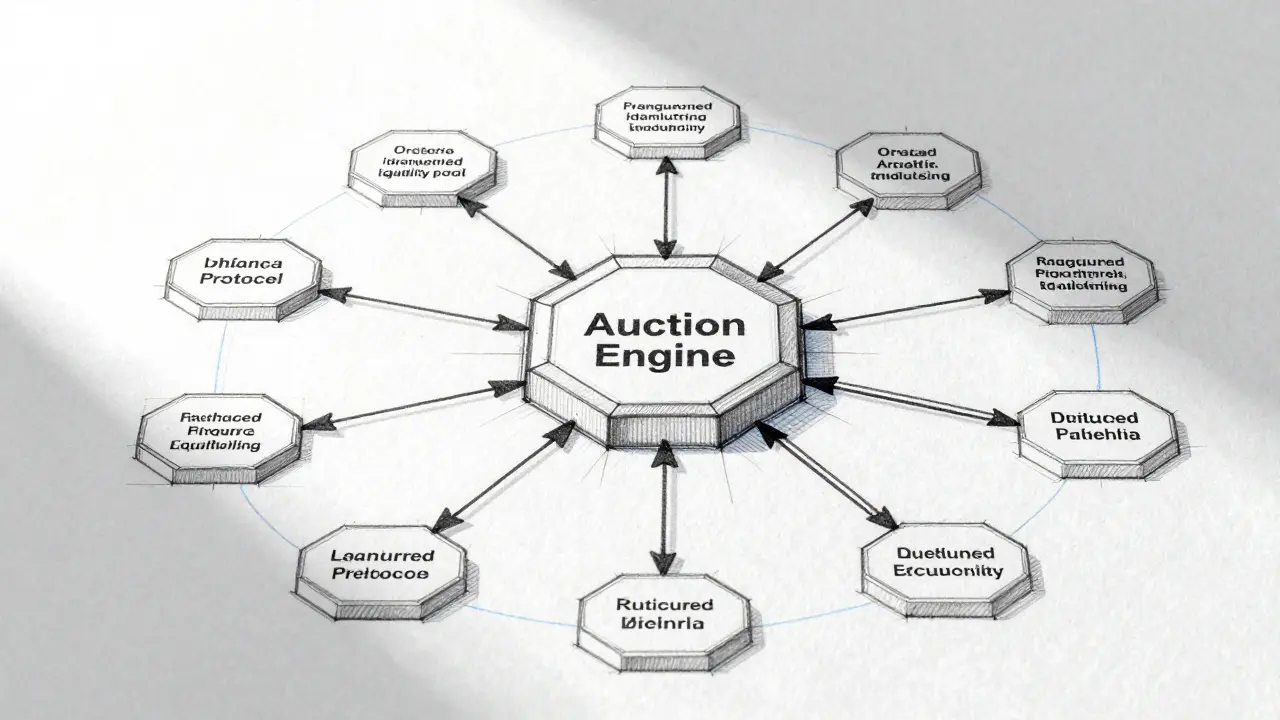
Most decentralized exchanges use an Automated Market Maker (AMM) model, where liquidity pools set prices based on formulas. Ithaca takes a different approach. It uses an auction-based matching engine. Instead of continuous order books, orders are aggregated and cleared through periodic auctions. The team claims this mechanism is "provably optimal," meaning it aims to mathematically ensure the fairest possible execution for traders.
This design addresses a major pain point in DeFi options: liquidity fragmentation. By batching trades, Ithaca attempts to provide better pricing efficiency than standard AMMs. Currently, the protocol is live on Arbitrum, an Ethereum Layer-2 network known for low fees and fast transactions. The roadmap includes imminent expansions to Base (Coinbase’s Layer-2) and Solana, aiming for cross-chain interoperability via partnerships like Axelar.
Core Components and Future Roadmap
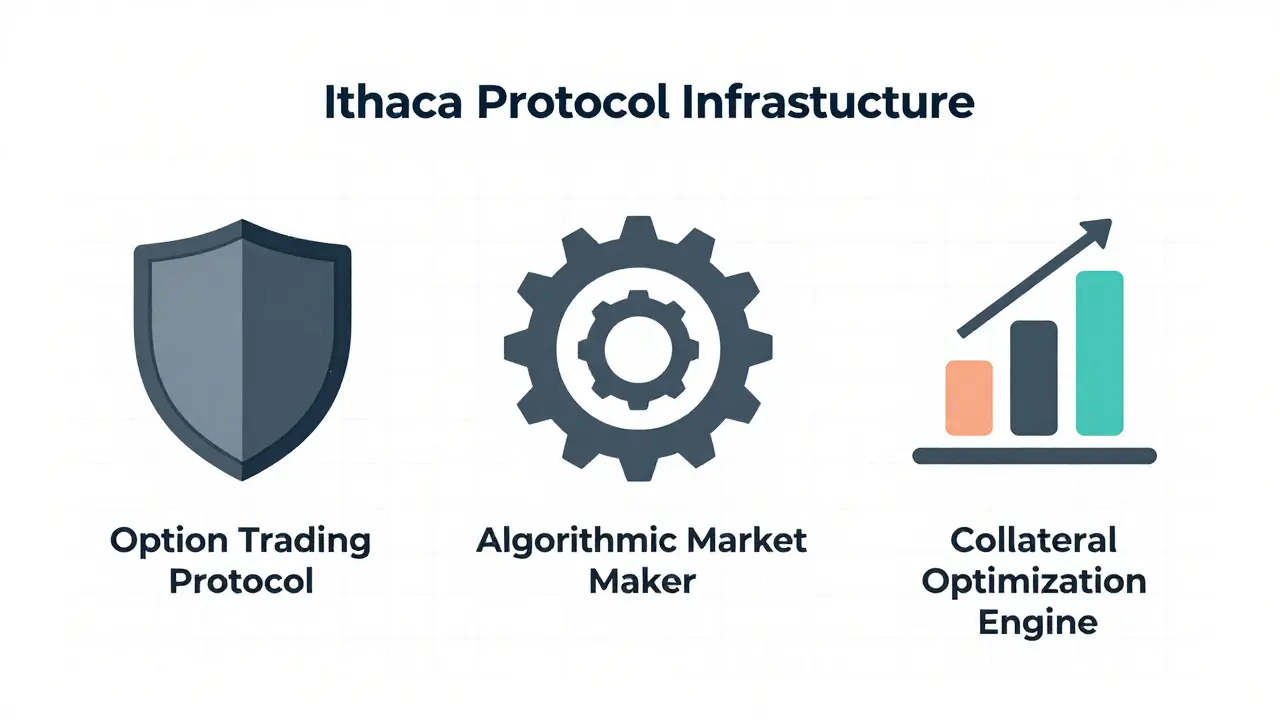
Ithaca is not just a simple options market. It is building a modular infrastructure consisting of three main pillars:
- Option Trading Protocol: The core marketplace for buying and selling call and put options.
- Algorithmic Market Maker: A system designed to supply on-chain liquidity automatically.
- Collateral Optimization Engine: Tools to help users manage their collateral more efficiently, reducing the capital needed to open positions.
The roadmap is ambitious. Beyond basic options, Ithaca plans to introduce perpetual futures, principal-protected strategies, and a full borrowing and lending framework with liquidation engines. This would transform it from a niche options platform into a comprehensive derivatives suite. However, as of mid-2026, these features are largely in development or early stages, not fully deployed products.
ITHACA Token: Supply, Utility, and Price Reality
The ITHACA token serves primarily as a governance tool. Holders can vote on protocol upgrades and changes. There is no public data confirming staking yields or fee-sharing mechanisms tied directly to holding the token, so its value proposition currently rests on governance rights and speculative growth potential.
| Metric | Value |
|---|---|
| Max Supply | 1,000,000,000 ITHACA |
| Circulating Supply | ~79.8 million (varies by source) |
| All-Time High (ATH) | $0.1843 (Dec 2024) |
| Current Price Range | $0.0018 - $0.0030 |
| Market Cap Rank | #2600+ (Micro-cap) |
Note that circulating supply figures vary across platforms like CoinGecko, CoinMarketCap, and CryptoRank, ranging from 79 million to over 228 million tokens. This discrepancy highlights the importance of checking multiple sources when evaluating micro-cap assets. The token has experienced extreme volatility, dropping nearly 99% from its December 2024 peak. This is typical for early-stage DeFi projects but represents significant risk for new investors.
Risks and Considerations
Ithaca Protocol is founded by individuals with backgrounds in traditional finance (ex-Goldman Sachs) and crypto venture capital (Amber Group). While this suggests strong technical expertise, it does not guarantee success. The project is still in its early phases. Key risks include:
- Liquidity Risk: As a micro-cap protocol, deep liquidity is not yet established. Slippage can be high during large trades.
- Smart Contract Risk: Like all DeFi protocols, Ithaca relies on code. While audits are standard practice, no specific audit reports were cited in recent public summaries. Always verify contract security independently.
- Regulatory Uncertainty: Derivatives trading faces increasing scrutiny globally. Changes in regulation could impact the protocol’s ability to operate or expand.
- Execution Risk: The roadmap includes complex features like perpetuals and lending. Delays or failures in launching these could affect user confidence and token value.
You should also note that major centralized exchanges like Coinbase and Crypto.com do not currently list ITHACA for trading. Access is primarily through decentralized venues or smaller exchanges like KuCoin. This limits accessibility for retail users who prefer centralized platforms.
Who Is Ithaca For?
Ithaca Protocol is not for beginners. It targets experienced DeFi users who understand options trading, collateral management, and the risks associated with leveraged positions. If you are comfortable using wallets like MetaMask on Arbitrum and want exposure to structured products without intermediaries, Ithaca offers a unique experimental platform. However, if you seek stable returns or easy-to-use interfaces, this may not be the right fit.
Is Ithaca Protocol safe to use?
Like any DeFi protocol, Ithaca carries smart contract and liquidity risks. It is non-custodial, meaning you control your funds, but bugs or exploits can occur. Always start with small amounts and verify current security audits before depositing significant capital.
Can I stake ITHACA tokens for rewards?
Currently, there is no public information confirming active staking yields or fee-sharing programs for ITHACA holders. The token’s primary utility is governance voting. Check the official documentation for any updates on reward mechanisms.
Which blockchains does Ithaca support?
Ithaca is currently live on Arbitrum. The team has announced plans to expand to Base and Solana soon, leveraging Axelar for cross-chain compatibility. Always check the official website for the latest supported networks.
Why did the ITHACA price drop so much?
The price drop reflects broader market trends for micro-cap DeFi tokens, including reduced liquidity, speculative cooling after initial hype, and general crypto market volatility. The token fell from ~$0.18 in late 2024 to under $0.003 in mid-2026, a common pattern for high-risk early-stage projects.
How do I buy ITHACA?
You can typically find ITHACA on decentralized exchanges on Arbitrum or select centralized exchanges like KuCoin. Since it is not listed on major platforms like Coinbase, you will need to transfer funds to compatible wallets and bridges. Always verify the correct contract address to avoid scams.