
Have you ever wondered why some crypto projects promise a whole universe of games while others just give you one pixelated sword? That’s exactly where GameFi.org comes in. Instead of building a single game, this platform acts as a massive hub-a central nervous system for the blockchain gaming world. It tries to connect players, developers, and investors all under one roof using its native currency, the GAFI token.
If you’ve seen the ticker GAFI popping up on exchanges like Gate.io or CoinGecko, you might be asking: Is this just another hype coin, or does it actually do something useful? The short answer is that it’s a utility token designed to manage access, rewards, and governance within a specific ecosystem. But before you buy any, you need to understand how the machine works, what the costs are, and whether the promised returns match reality.
The Core Concept: An Aggregator, Not a Game
Most people enter the GameFi space expecting to play Axie Infinity or build land in The Sandbox. GameFi.org takes a different approach. Think of it less like a video game store and more like a membership club combined with an investment launchpad. Founded in August 2021, the platform aims to solve a major problem in crypto gaming: fragmentation.
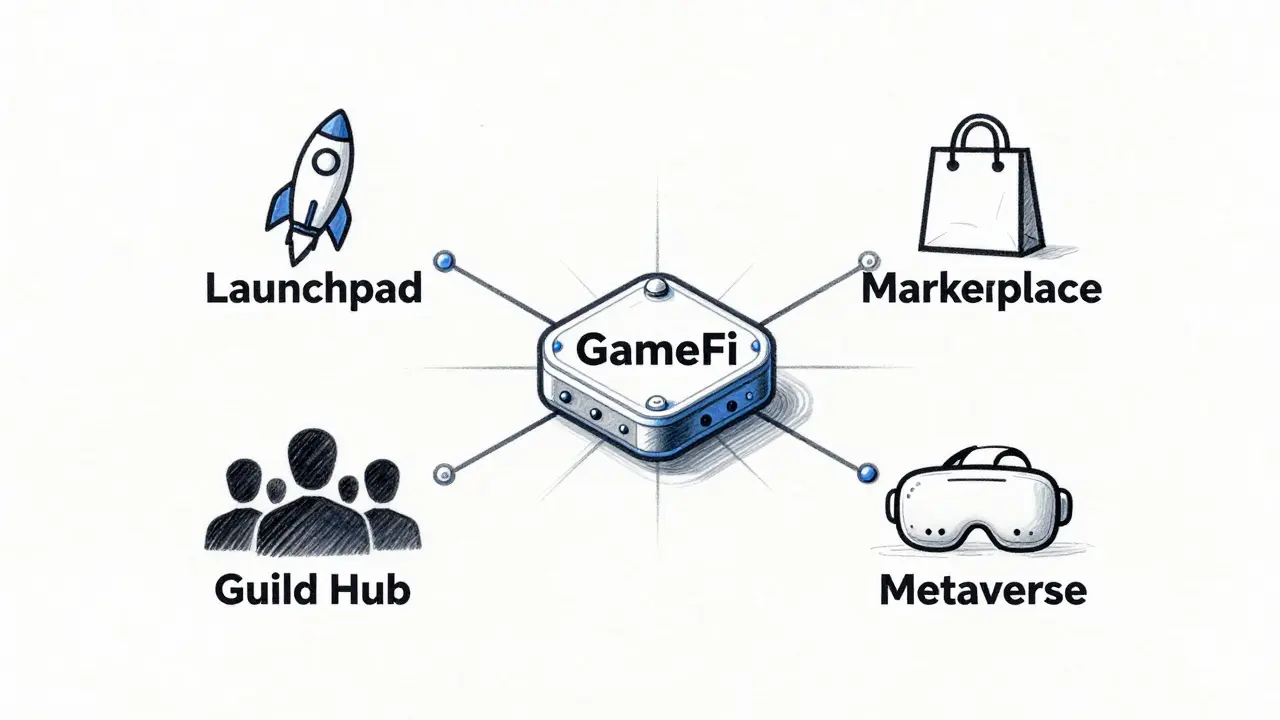
In the early days of Web3, your assets were stuck in one game. If you earned coins in Game A, you couldn’t use them in Game B. GameFi.org tries to fix this by offering four main pillars:
- The Launchpad: This allows new blockchain games to raise funds through Initial DEX Offerings (IDOs) and Initial NFT Offerings (INOs). Users stake GAFI tokens to get priority access to these sales.
- The Marketplace: A place to trade in-game assets and NFTs across different titles supported by the platform.
- The Guild Hub: Tools for managing communities and teams, helping groups coordinate their play-to-earn strategies.
- The Metaverse Component: An immersive layer intended to tie these experiences together visually.
The big idea here is efficiency. Instead of connecting your wallet to ten different websites to find good deals, GameFi.org wants to be the one stop shop. However, being an aggregator means they don’t own the popular games themselves-they rely on other developers to join their network. This creates both opportunity and risk, which we’ll dig into later.
Understanding the GAFI Token Economics
The GAFI token is the fuel that keeps this engine running. It’s not meant to be a speculative meme coin; rather, it’s a functional asset. You hold it to prove you’re serious about participating in the ecosystem. Let’s look at the hard numbers because they tell you a lot about scarcity and potential pressure on price.
| Metric | Value / Detail |
|---|---|
| Total Supply | 14,954,970 (Fixed) |
| Circulating Supply (approx.) | ~10.9 million units |
| Market Cap Rank | #1852 (as of late 2024 data) |
| Primary Use Cases | Staking, Governance, Launchpad Access |
| Blockchain Compatibility | EVM-compatible chains (e.g., Ethereum, BSC) |
A fixed supply of roughly 15 million tokens sounds attractive because it limits inflation. Unlike some projects that print billions of new coins every year, GAFI has a cap. However, a small supply can also mean low liquidity. If everyone tries to sell at once, there might not be enough buyers to absorb the shock without crashing the price. As of recent market data, GAFI trades with relatively modest daily volume compared to giants like $SAND or $AXS, which is something to keep in mind if you plan to move large amounts of money in or out.
The Staking Tiers: Your Ticket to Entry
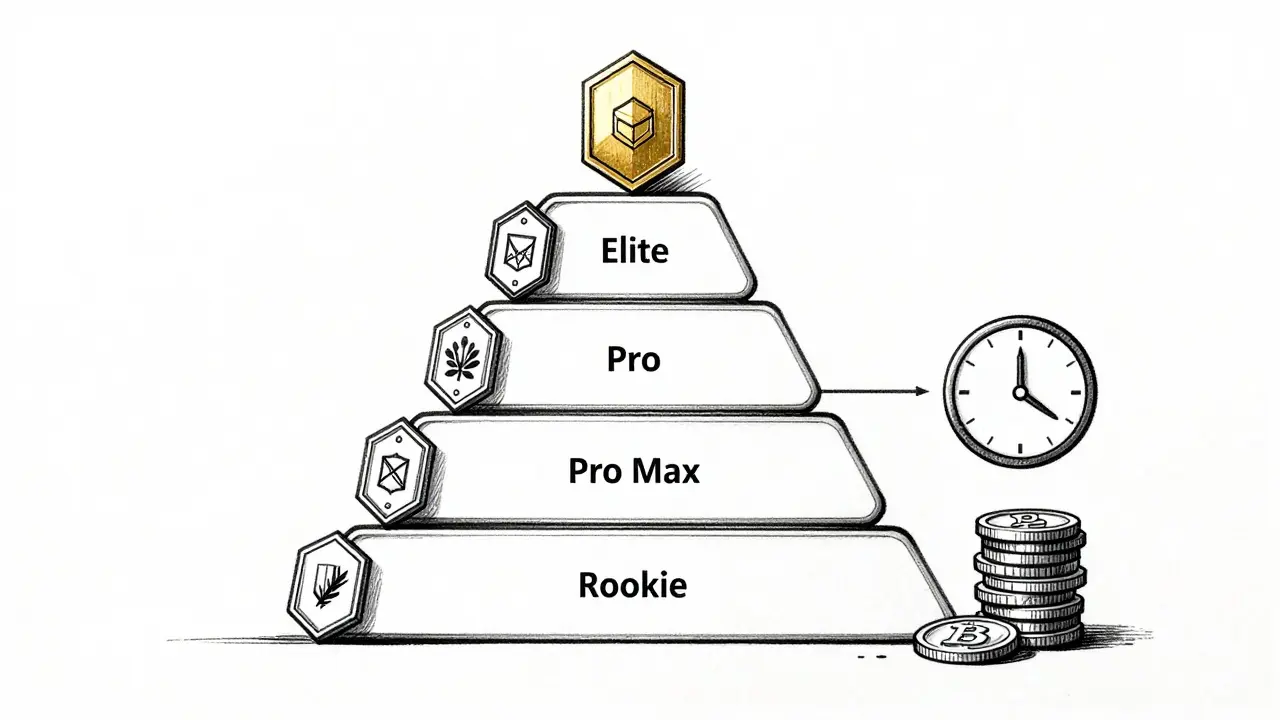
This is where most users hit the ground running-or stumbling. You can’t just walk into the VIP lounge of GameFi.org without showing your badge. That badge is your staked GAFI balance. The platform uses a tiered ranking system to distribute benefits. The higher your rank, the better your chances of getting into profitable IDOs and earning higher loyalty points.
Here is how the hierarchy generally breaks down:
- Rookie: The entry level. Low barriers, but limited access to premium launches.
- Elite: Requires a moderate stake. Better allocation sizes in token sales.
- Pro: Mid-tier status. More significant voting power and reward multipliers.
- Pro Max: High commitment. Priority support and substantial guaranteed allocations.
- Legend: The top tier. Reserved for whales who lock up massive amounts of GAFI for long periods.
The reward mechanism is straightforward but strict. You earn loyalty points calculated at 0.5% of your staked amount multiplied by the number of days you hold. These points determine your share of rewards from various campaigns. But here’s the catch: unstaking isn’t instant. There are cooldown periods-sometimes ranging from 12 hours to several days depending on your tier. If you need emergency cash, your GAFI might be temporarily frozen. This design encourages long-term holding but reduces flexibility.
How It Compares to the Giants
To really understand GAFI, you have to compare it to the established players. Imagine trying to start a new shopping mall when Amazon already exists. GameFi.org faces similar competition from platforms that already have millions of users.
| Feature | GameFi.org (GAFI) | The Sandbox ($SAND) | Axie Infinity ($AXS) |
|---|---|---|---|
| Model | Aggregator/Launchpad | Virtual World/Game | NFT Game Studio |
| Market Cap Scale | Small (~$9M) | Large (~$1.2B) | Medium (~$532M) |
| User Focus | Investors & Early Adopters | Casual Gamers & Creators | Scholars & Guilds |
| Main Value Prop | Access to new projects | Land ownership & creation | Battle gameplay & breeding |
The difference in scale is staggering. The Sandbox has over 100 times the market capitalization of GameFi.org. Why does this matter? Because larger ecosystems attract bigger brands, better developers, and more stable liquidity. GameFi.org’s advantage is niche focus. It doesn’t try to be the best game; it tries to be the best gateway. For sophisticated users who want to sniff out the next big thing before it hits mainstream exchanges, GAFI offers a structured way to do that. For casual gamers who just want to shoot aliens, it offers very little direct entertainment value.
Real-World User Experience and Risks
Let’s talk about what it feels like to actually use the platform. Setting up requires connecting an EVM-compatible wallet like MetaMask or Trust Wallet. The interface is clean, but the learning curve is real. According to internal user testing, expect to spend 3-5 hours just figuring out the basics if you’re new to crypto wallets and gas fees.
Community sentiment is mixed. On platforms like Trustpilot, ratings hover around 2.8 out of 5 stars. What do people love? The transparency of the tier system and the intuitive dashboard for tracking multiple assets. What frustrates them? The high minimum stakes required to reach meaningful tiers and the occasional lack of liquidity when trying to swap tokens.
One major red flag to watch for is the gap between promised APY (Annual Percentage Yield) and actual returns. Some users reported expectations of 25% APY only to see 8.3% after accounting for fees and market fluctuations. Always read the fine print on reward calculations. Additionally, the platform relies heavily on external factors. If the broader crypto market enters a bear phase, trading volumes dry up, and IDO profits vanish. GameFi.org is not immune to Bitcoin’s mood swings-in fact, smaller caps often fall harder during corrections.
Who Should Actually Care About GAFI?
Not every crypto investor needs GAFI in their portfolio. Here is a quick decision tree to help you figure out if this fits your strategy:
- You are a seasoned DeFi user: If you enjoy hunting for alpha in early-stage projects and understand the risks of locking up capital, GAFI provides a structured tool for that.
- You are a casual gamer: Probably skip it. You’d likely have more fun and better financial security playing established games or investing in blue-chip gaming tokens.
- You hate complexity: Avoid it. The staking tiers, cooldown periods, and KYC requirements for certain features add friction that beginners usually dislike.
- You believe in the aggregator model: If you think the future of Web3 gaming involves centralized hubs managing cross-chain assets, GAFI is a bet on that infrastructure.
Remember, the platform currently serves a tiny fraction of the global GameFi audience-about 0.03% of active users. Its success depends entirely on attracting more developers to its launchpad. Without exclusive, high-quality games launching there, the token’s utility diminishes.
Frequently Asked Questions
Is GameFi.org a safe platform to use?
Safety in crypto is relative. GameFi.org operates on public blockchains, meaning transactions are transparent. However, like any smart contract-based platform, it carries technical risks. Always verify contract addresses, use hardware wallets for large stakes, and never share your seed phrase. The platform has implemented KYC for certain high-value activities, which adds a layer of legitimacy but also privacy concerns.
Can I make money just by holding GAFI tokens?
Holding alone doesn't generate income unless you stake them. Staking earns you loyalty points and potentially a share of ecosystem rewards, but these are not guaranteed fixed interest payments. Past performance of IDOs varies wildly-some yield huge profits, others lose value. Treat staking rewards as volatile incentives, not a savings account.
What happens if I want to unstake my GAFI quickly?
You cannot withdraw instantly. The platform enforces cooldown periods that range from 12 hours to several days depending on your staking tier. This is designed to prevent panic selling and ensure stability, but it means you should only stake funds you can afford to lock away for at least a few weeks.
How does GameFi.org differ from The Sandbox or Axie Infinity?
The Sandbox and Axie Infinity are specific gaming worlds with their own economies. GameFi.org is an aggregator and launchpad. It doesn't host the games itself but provides tools for discovering, funding, and managing assets across various blockchain games. It's infrastructure, not entertainment.
Do I need to complete KYC to use GameFi.org?
Basic browsing and minor interactions may not require KYC, but participating in Initial Game Offerings (IGOs) and accessing higher-tier launchpad allocations typically requires identity verification. This is standard practice for regulatory compliance in many jurisdictions but excludes anonymous users from the most lucrative opportunities.