
The eBlockStock (EBSO) token was once presented as a utility coin tied to a blockchain validation platform called Natrix. But today, it’s not a coin you can trade, use, or rely on-it’s a ghost. If you’re wondering what EBSO is, the answer isn’t about potential or future promise. It’s about what happened after the hype faded.
What eBlockStock (EBSO) actually was
EBSO was launched in September 2021 as an ERC-20 token on the Ethereum blockchain. Its creators, a company called BlockBen, claimed it was the Ethereum version of another token, BlockStock (BSO), meant to power a hybrid blockchain system called Natrix. The idea? Holders of EBSO would earn rewards for validating transactions on Natrix.
It sounded simple. But from day one, there were red flags. No clear roadmap. No public development team. No GitHub activity. No real-world use case beyond a vague promise of "validation rewards." The token’s contract address, 0x866f8a50a64e68ca66e97e032c5da99538b3f942, is still live on Etherscan-but that’s just a digital tombstone. It shows the token was created, and that’s about all.
Supply, price, and the illusion of market activity
EBSO had a fixed maximum supply of 750 million tokens. But here’s where things got messy. Different platforms reported wildly different numbers. CoinGecko said only 8.7 million tokens were in circulation. CoinMarketCap claimed over 587 million were circulating. Which one was right? Neither, probably. The numbers didn’t add up, and no one could explain why.
Price data was just as unreliable. In September 2021, EBSO hit an all-time high of $0.1161. By October, it dropped to $0.08492. Then it kept falling. By December 2022, it crashed to $0.00009994-a 99.9% drop from its peak. Today, prices listed on different sites range from $0.013 to $0.019, but none of those prices mean anything because no one is trading it.
The death of liquidity
Here’s the hard truth: eBlockStock stopped trading on every exchange listed on CoinGecko about 20 days before this article was written. That’s not a temporary dip. That’s a full delisting. Trading volume? One site says $1,715 in 24 hours. Another says $293. That’s less than what a single Bitcoin whale spends in an hour.
Market cap numbers? Inconsistent. CoinMarketCap says $11.39 million. CoinGecko says data is unavailable. Why? Because without reliable trading, market cap is just a guess. And with only 730 known wallet holders, EBSO isn’t a cryptocurrency-it’s a spreadsheet entry.
Why no one talks about it anymore
You won’t find any recent articles about EBSO on CoinDesk, Cointelegraph, or The Block. No analysts mention it. No research firms track it. Even DropsTab, which lists a "Bullish" sentiment based on outdated price spikes, can’t hide the fact that the token hasn’t moved in weeks.
Community channels? Dead. No active Discord. No Telegram group. No Twitter account with more than 20 followers. Reddit has zero recent threads. The last meaningful discussion on Bitcointalk in November 2021 asked: "This seems like a token with no real utility beyond the initial hype."
That quote still stands.
Can you still use EBSO? No.
Technically, yes-you can add the contract address to MetaMask. But what then? You can’t sell it. You can’t swap it. You can’t stake it. There’s no dApp that accepts it. No exchange will list it. No wallet supports automatic tracking because there’s no demand.
Some people might still hold it, hoping for a revival. But there’s been zero communication from BlockBen since 2022. No updates. No blog posts. No GitHub commits. No team announcements. The project website, blockben.com, hasn’t been updated in over two years.
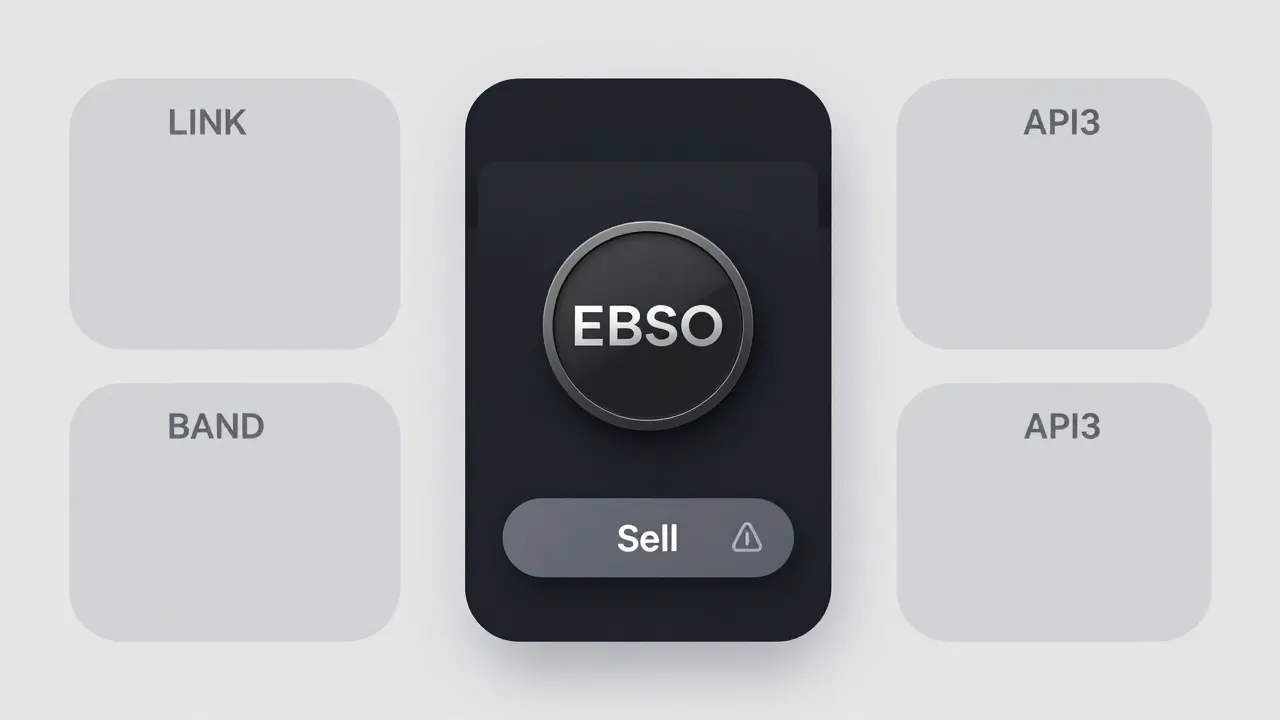
Where EBSO fits in the bigger picture
Back in 2021, validation tokens were hot. Projects like Chainlink and Band Protocol were building real infrastructure. EBSO tried to ride that wave, but it offered nothing new. No innovation. No partnerships. No transparency. It didn’t solve a problem-it just claimed to.
Today, the market has moved on. Oracle networks are decentralized. Data feeds are secure. Validation is handled by proven protocols. EBSO doesn’t fit anywhere. It’s not a competitor. It’s not a relic. It’s a footnote.
Final verdict: Is EBSO worth anything?
No.
Not as an investment. Not as a tool. Not as a piece of blockchain history worth preserving. It’s a classic example of a project that raised attention, then vanished. The token’s price might still show up on some websites, but those numbers are meaningless. The real value? Zero.
If you own EBSO, you own a digital artifact. If you’re thinking of buying it? Don’t. There’s no recovery path. No team to contact. No future. Just a contract address and a fading memory of what someone once promised.
Is eBlockStock (EBSO) still trading on any exchanges?
No. EBSO stopped trading on all exchanges listed on CoinGecko approximately 20 days before this article was written. It has been fully delisted and shows zero trading volume on every major platform. No exchange currently supports EBSO trading.
Can I still send or receive EBSO tokens?
Technically, yes-you can send and receive EBSO using any Ethereum wallet by manually adding the contract address (0x866f8a50a64e68ca66e97e032c5da99538b3f942). But since there’s no liquidity, no market, and no one buying or selling, transferring it serves no practical purpose. It’s like mailing a ticket to a concert that was canceled years ago.
What happened to the company behind EBSO, BlockBen?
BlockBen has gone silent. Their official website (blockben.com) hasn’t been updated since 2022. No blog posts, no team changes, no announcements. Their social media channels are inactive. There’s no evidence they’re working on Natrix, EBSO, or anything else. The company appears to have abandoned the project entirely.
Is EBSO a scam?
It’s not officially labeled a scam, but it fits the pattern of one. The project launched with vague promises, zero transparency, and no ongoing development. It gained a small price spike early on, then collapsed. The team disappeared. The token became untradeable. These are textbook signs of an abandoned project-often called a "rug pull" in crypto circles-even if no explicit fraud was proven.
Should I buy EBSO if it’s cheap?
Absolutely not. Even if you see EBSO priced at $0.001 or $0.005, it’s a trap. There’s no market to sell into. No one will take it. No exchange will list it. You’ll be stuck holding a token with zero utility and no future. The low price isn’t a bargain-it’s a warning sign.
Are there any similar tokens still active today?
Yes. If you’re interested in blockchain validation tokens, look at Chainlink (LINK), Band Protocol (BAND), or API3. These projects have real infrastructure, active development teams, partnerships with enterprises, and consistent trading volume. Unlike EBSO, they’re built to last.


