
Imagine uploading a photo to your favorite cloud service. You trust that company to keep it safe, private, and accessible forever. But what happens if their servers get hacked? Or if they decide to change their privacy policy overnight? Or worse, if a government forces them to hand over your data? In the traditional model, you’re handing your digital life over to a single entity. That’s exactly why decentralized storage is gaining traction.
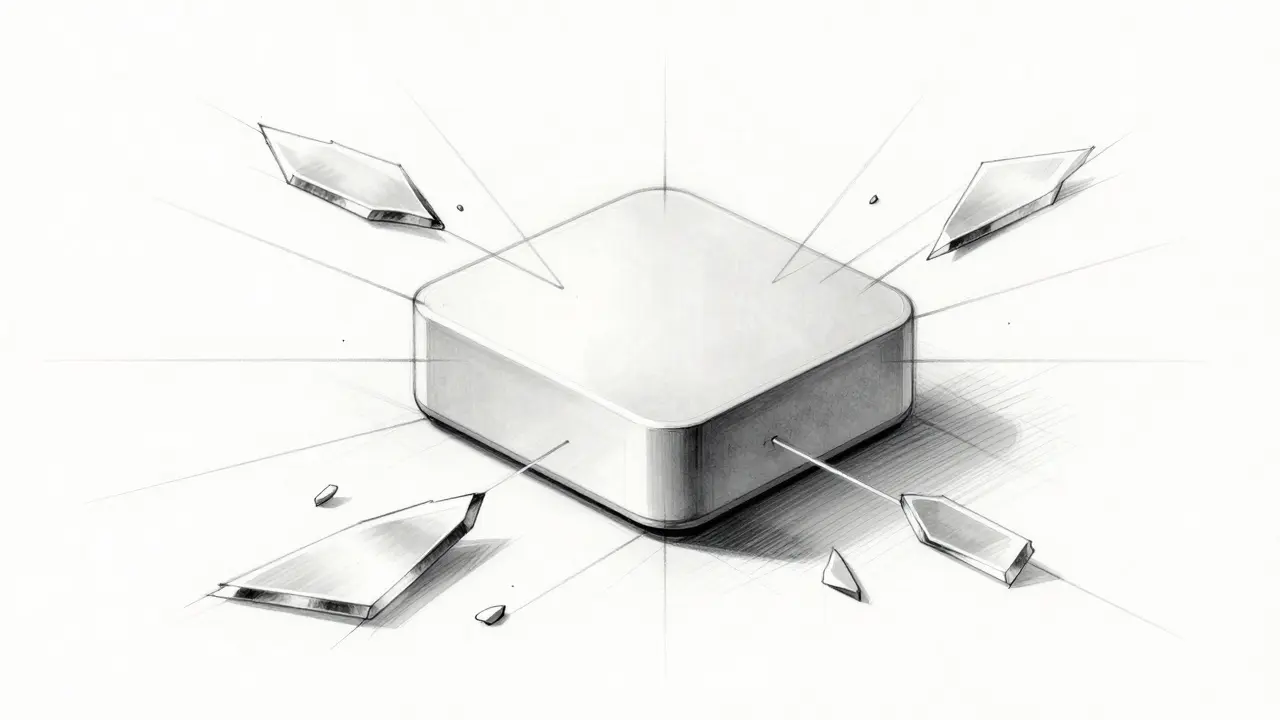
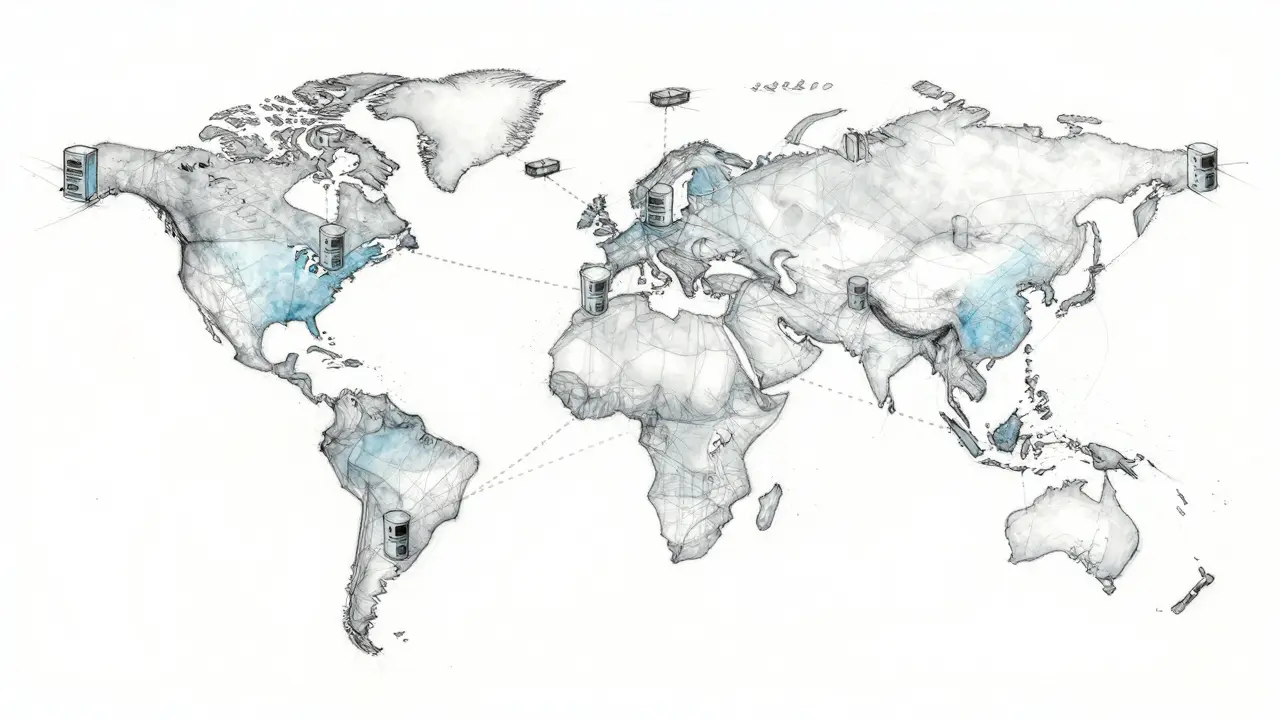
Decentralized storage isn’t just a buzzword; it’s a fundamental shift in how we handle data. Instead of storing your files on one massive server owned by a corporation like Google or Amazon, this technology breaks your files into tiny pieces, encrypts them, and scatters them across thousands of independent computers around the world. No single person-not even the platform operators-can see your full file. Only you hold the key to put it back together.
How Decentralized Storage Actually Works
To understand decentralized storage, you need to forget everything you know about saving files to a hard drive or a cloud folder. The process is more like shredding a document, locking each piece in its own safe, and mailing those safes to different cities.
Here is the step-by-step breakdown of what happens when you upload a file:
- Fragmentation (Sharding): Your file is broken down into smaller chunks called "shards." If you upload a 1GB video, it might be split into hundreds of small pieces.
- Encryption: Each shard is encrypted using strong cryptography. This happens on your device before anything leaves your computer. The encryption key stays with you.
- Distribution: These encrypted shards are sent to various nodes (computers) on the network. These nodes are run by independent users who have spare storage space.
- Redundancy: To ensure your data doesn’t disappear if a node goes offline, the system stores multiple copies of each shard on different machines.
When you want to retrieve your file, the network finds the necessary shards from different nodes and reassembles them. Crucially, this only works if you provide the correct decryption key. Without it, the shards are just useless gibberish.
Can anyone read my files on a decentralized network?
No. Because the data is encrypted on your device before it is uploaded, and the shards are distributed across many nodes, no single node operator can reconstruct or read your original file. They only hold an encrypted fragment that is meaningless without your private key.
The Key Players: IPFS, Filecoin, and Sia
While the concept sounds abstract, several platforms have built real-world infrastructure around it. Understanding these entities helps clarify how the technology operates in practice.
InterPlanetary File System (IPFS) is a peer-to-peer hypermedia protocol designed to make the web faster, open, and more secure. Launched in 2014, IPFS was one of the pioneers of decentralized storage. It introduces a new way to address content using cryptographic hashes rather than location-based URLs. Think of it as the underlying language that allows computers to find files regardless of where they are physically stored.
However, IPFS alone didn’t solve the economic problem: why would someone give up their hard drive space for free? This is where Filecoin comes in. Built on top of IPFS, Filecoin launched its mainnet in October 2020. It creates a marketplace where users can pay storage providers (often called miners) to store their data. Providers earn FIL tokens in exchange for renting out their unused storage capacity. It essentially adds an economic layer to the technical layer of IPFS.
Another major player is Sia, which connects users needing storage with hosts offering underutilized hard drives. Transactions on Sia use Siacoin (SC). Sia also launched Skynet in 2020, a platform for developers to build decentralized applications on top of the storage network. Since its inception, Sia software has been downloaded over one million times, showing significant adoption among tech enthusiasts.
Decentralized vs. Centralized Storage: The Real Difference
Most people use centralized storage services like Google Drive, Dropbox, or Amazon S3. These services are convenient, but they come with inherent risks. Let’s compare the two models side-by-side.
| Feature | Centralized Storage (e.g., Google Drive) | Decentralized Storage (e.g., Filecoin, IPFS) |
|---|---|---|
| Data Control | Provider controls access and can be forced to comply with subpoenas. | User holds encryption keys; provider cannot access or censor data. |
| Security Model | Single point of failure; large targets for hackers. | Distributed risk; no single point of failure. |
| Censorship Resistance | Low; providers can delete content based on policy or law. | High; content persists as long as at least one node stores it. |
| Cost Structure | Pricing set by corporate monopoly; often increases over time. | Market-driven pricing; competition among nodes can lower costs. |
| Uptime Reliability | Dependent on provider’s infrastructure stability. | High redundancy ensures availability even if some nodes fail. |
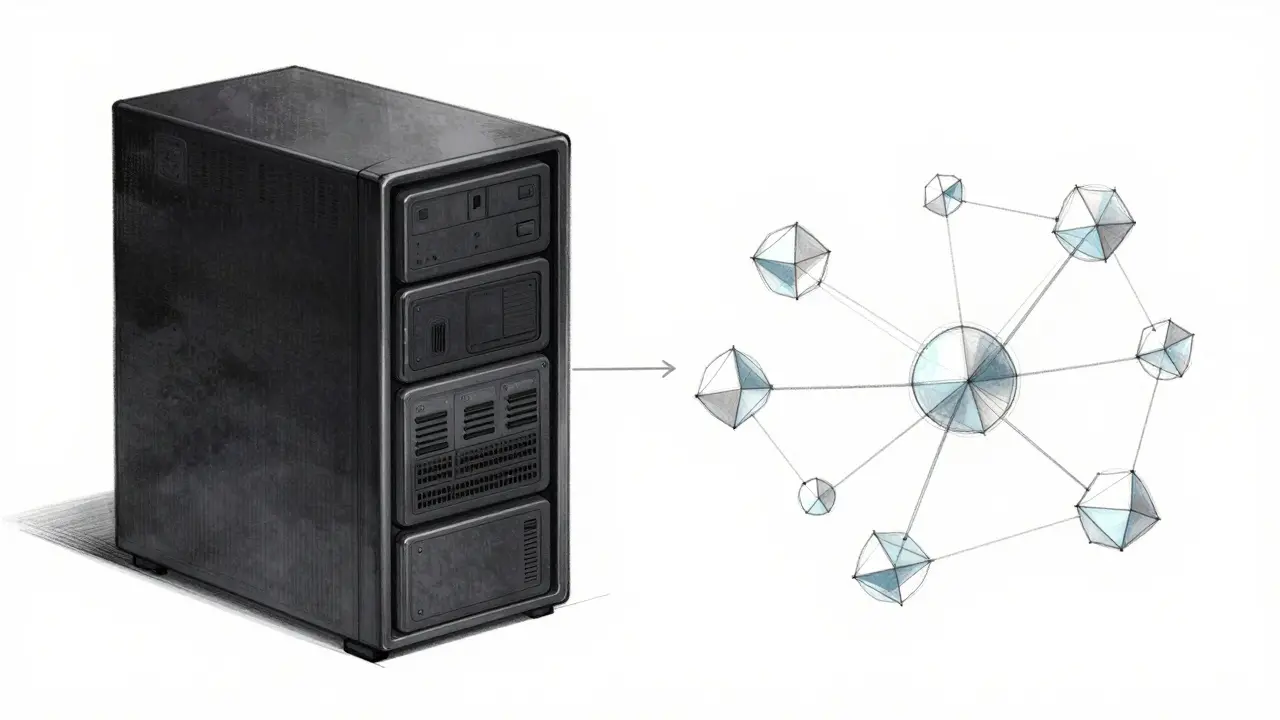
In a centralized system, if the server room floods or gets hacked, your data is gone or compromised. In a decentralized network, if one node fails, the data simply moves to another copy elsewhere. This resilience is why organizations dealing with sensitive or critical data are increasingly looking at decentralized options.
Why Security and Privacy Matter More Now
We live in an era of increasing data breaches and surveillance. Traditional cloud providers are attractive targets for cybercriminals because they house vast amounts of data in one place. Decentralized storage mitigates this risk through architecture.
First, there is no central database to hack. Attackers would need to compromise thousands of independent nodes simultaneously to steal meaningful data, which is practically impossible. Second, blockchain technology often underpins these networks. When a file is stored, the blockchain records a cryptographic hash-a unique digital fingerprint of the file. If anyone tries to tamper with the data, the hash changes, and the mismatch is instantly detected. This ensures data integrity.
Furthermore, censorship resistance is a powerful feature. In countries with strict internet regulations, or for journalists and activists sharing sensitive information, decentralized storage ensures that no single authority can easily remove or block access to the data. As long as someone is willing to host the shards, the information remains available.
The Economic Engine: Token Incentives
You might wonder: why would regular people rent out their hard drive space? The answer lies in cryptocurrency incentives. Platforms like Filecoin and Sia use native tokens to reward participants.
If you have an extra 500 gigabytes of unused space on your computer, you can join the network as a storage provider. You earn tokens (like FIL or SC) for storing data and keeping it available. This creates a self-sustaining ecosystem. Users pay for storage, and providers get paid for contributing resources. It turns idle hardware into productive infrastructure.
This model also keeps costs low. Because providers compete for business, prices tend to be lower than what traditional cloud giants charge. For businesses archiving large datasets, this can result in significant savings over time.
Real-World Use Cases
Decentralized storage isn’t just for crypto enthusiasts. Here are some practical scenarios where it shines:
- Legal Archives: Law firms can store contracts on blockchain-backed storage. Any attempt to alter a document will be flagged immediately due to hash mismatches, ensuring legal authenticity.
- Film Production: Filmmakers can distribute raw footage across decentralized nodes. Even if some nodes go offline during production, the blockchain ledger tracks where the remaining pieces are, ensuring no data loss.
- Passive Income: Freelancers or students with spare hard drives can lease space on Filecoin or Sia to earn passive income in cryptocurrency.
- Backup Solutions: Individuals seeking a "set and forget" backup that isn’t controlled by a single company can use decentralized storage for cold storage of personal memories.
Challenges and Limitations
Despite its advantages, decentralized storage isn’t perfect. It’s important to acknowledge the hurdles before adopting it.
Complexity: Setting up and managing decentralized storage is more complex than clicking "Sign Up" on Google Drive. You need to manage encryption keys carefully. If you lose your private key, your data is permanently inaccessible. There is no "Forgot Password" button.
Speed: Retrieving large files can sometimes be slower than centralized clouds because the data must be fetched from multiple nodes across the globe. However, improvements in protocols and caching are narrowing this gap.
Regulatory Uncertainty: Because decentralized storage resists censorship, it may attract scrutiny from governments. Regulatory frameworks for these technologies are still evolving, which could impact future operations.
Is Decentralized Storage Right for You?
If you prioritize absolute control over your data, censorship resistance, and high security against single-point failures, decentralized storage is a compelling option. It’s particularly valuable for businesses handling sensitive intellectual property, activists, and individuals who distrust centralized authorities.
However, if you need quick, easy access to files for everyday tasks like sharing photos with family or collaborating on documents in real-time, centralized cloud services still offer superior convenience. For many, the best approach is a hybrid model: use centralized storage for daily active files and decentralized storage for long-term archives and critical backups.
The technology is maturing rapidly. With platforms like Filecoin and IPFS growing, decentralized storage is moving from niche experiment to viable infrastructure. As data privacy becomes increasingly important, understanding this technology is no longer optional-it’s essential.
What happens if I lose my encryption key in decentralized storage?
If you lose your private encryption key, your data is permanently unrecoverable. Unlike centralized services, there is no admin who can reset your password or restore access. This is why securely backing up your keys is the most critical step in using decentralized storage.
Is decentralized storage cheaper than AWS or Google Cloud?
For long-term archival storage, yes, decentralized storage is often significantly cheaper. Market-driven pricing among independent nodes tends to be lower than the premium charged by major cloud providers. However, for high-frequency, low-latency access, centralized clouds may still be more cost-effective due to speed and ease of use.
Can I use decentralized storage for my website?
Can I use decentralized storage for my website?
Yes. Many developers host static websites on IPFS or Filecoin. This makes the website highly resistant to downtime and censorship. However, dynamic features like databases require additional setup and may not be fully supported by pure storage networks yet.
How do I start using decentralized storage?
You can start by downloading user-friendly clients like Web3.Storage or using gateways provided by Filecoin and IPFS projects. For beginners, it is recommended to start with small files to understand the process of key management and retrieval before committing large amounts of data.
Are decentralized storage networks anonymous?
The storage itself is encrypted and fragmented, so node operators don't know what data they are holding. However, the act of paying for storage via blockchain transactions is public. While your identity isn't directly linked to the file content, transaction metadata can potentially be analyzed. Using privacy-focused wallets and mixing services can enhance anonymity.