
Have you ever scrolled through a crypto list and seen a token with a name that sounds like it belongs in a sci-fi movie? Bitcoin AI is a small-cap cryptocurrency token on the BNB Smart Chain that claims to merge Bitcoin's scarcity with artificial intelligence. Also known as BTC token, it launched in August 2025. It promises an "AI-powered evolution" of digital currency. But does it actually do anything, or is it just another speculative play on two hot buzzwords?
As of June 2026, the answer leans heavily toward the latter. Bitcoin AI (ticker: BTC) is not a new blockchain. It is not even a major player in the AI-crypto space. It is a micro-cap token with a market capitalization hovering around $40,000 to $50,000 USD. That is tiny. For context, the top AI coins have valuations in the billions. This guide breaks down what this token actually is, how it works, and why you should approach it with extreme caution.
The Quick Reality Check
- It is a BEP-20 token: Bitcoin AI runs on the BNB Smart Chain is a blockchain network compatible with Ethereum virtual machine standards, not its own chain.
- No real AI integration: There is no public evidence of machine learning algorithms or AI models powering the protocol.
- Anonymous team: No founders, whitepaper, or corporate entity are publicly identified.
- Extreme volatility: The price has crashed over 98% from its all-time high.
- Micro-liquidity: Daily trading volume is often less than $1,000 USD.
What Exactly Is Bitcoin AI (BTC)?
To understand Bitcoin AI, you first need to strip away the marketing hype. The project describes itself as a decentralized peer-to-peer digital currency. It claims to combine the "proven security and scarcity principles of Bitcoin" with "cutting-edge capabilities of artificial intelligence." Sounds impressive, right? Let’s look closer.
Technically, Bitcoin AI is a standard smart contract token. It uses the BEP-20 standard, which means it lives on the BNB Smart Chain. Its contract address starts with `0xf22a...`. This is crucial because it tells us exactly what it is not. It is not a Layer-1 blockchain like Bitcoin or Ethereum. It does not have its own miners or validators. It relies entirely on the BNB network for security and transaction processing.
The "AI" part of the name appears to be purely narrative. Major data aggregators like CoinMarketCap and CoinGecko list the token but provide no technical documentation linking it to any actual AI infrastructure. Unlike projects such as Bittensor is a decentralized network for machine learning models or Fetch.ai is a platform for autonomous economic agents, which have verifiable codebases and active developer communities, Bitcoin AI offers no proof of concept. There are no GitHub repositories, no audit reports detailing AI features, and no named team members to hold accountable.
Tokenomics: Scarcity Without Substance
One of the few concrete details about Bitcoin AI is its supply. The total and maximum supply is fixed at 21,000,000 tokens. This number is clearly chosen to mimic Bitcoin’s famous 21 million cap. As of early June 2026, approximately 20,980,000 tokens are in circulation. That means nearly the entire supply has already been minted.
Here is where it gets interesting. In traditional finance or even serious crypto projects, tokenomics usually include vesting schedules for teams, treasury reserves for development, or burn mechanisms to reduce supply over time. Bitcoin AI has none of these. The distribution is opaque. We know there are roughly 3,570 holder addresses, but we do not know who they are. Are they retail investors? Are they bots? Did the anonymous creators dump their holdings immediately after launch?
This lack of transparency is a red flag. When you buy a token with a fixed supply and no visible utility, you are betting solely on other people buying it for more than you paid. This is often called the "greater fool theory," and it is a dangerous game.
| Feature | Bitcoin AI (BTC) | Bittensor (TAO) | Fetch.ai (FET) |
|---|---|---|---|
| Blockchain Network | BNB Smart Chain (BEP-20) | Own Substrate-based Chain | Ethereum / Multi-chain |
| Team Transparency | Anonymous | Public Founders & Team | Public Company & Team |
| AI Integration | Marketing Claim Only | Core Protocol Function | Core Protocol Function |
| Market Cap (Approx.) | $40,000 - $50,000 | Billions of USD | Billions of USD |
| Security Audit Score | CertiK 3.3/10 | Multiple High-Tier Audits | Multiple High-Tier Audits |
The Volatility Trap: Price History and Risks
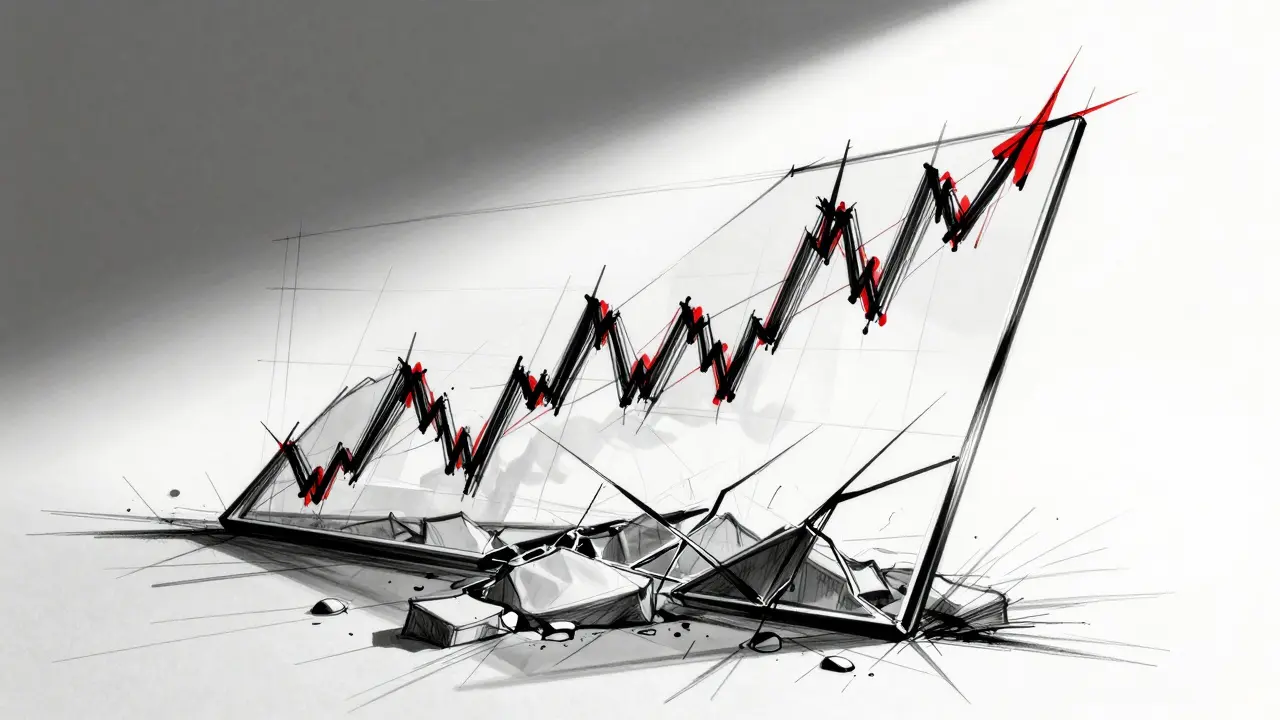
If you think crypto is volatile, wait until you see what happens to micro-cap tokens like Bitcoin AI. The price history of this token is a textbook example of a pump-and-dump cycle, whether intentional or organic.
Launched on August 18, 2025, the token started with an all-time low (ATL) of $0.0001338 USD. Just 22 days later, on September 9, 2025, it hit an all-time high (ATH) of $0.2184 USD. That is a gain of over 163,000%. Imagine buying $100 worth of tokens and watching them turn into $163,000 in three weeks. It sounds like a dream. It is also a trap.
By June 2026, the price had collapsed by 98.91% from that peak, settling around $0.00185-$0.00238 USD. Anyone who bought near the top lost almost everything. Even today, the token swings wildly. On some days, the price moves up or down by 10-15% based on trades totaling less than $600 in volume. That means a single person buying $500 worth of tokens can move the entire market. This is not investing; it is gambling.
The liquidity situation makes this worse. With a daily trading volume often under $1,000, you might find yourself unable to sell your tokens when you want to. If you try to sell a large amount, the price will crash instantly due to slippage. You could end up selling for pennies on the dollar, or not at all.
Security Concerns: What Does a CertiK 3.3 Mean?
Security is paramount in crypto. Bitcoin AI has undergone some form of review by CertiK is a leading blockchain security auditing firm, receiving a score of 3.3 out of 10. To put that in perspective, established blue-chip projects typically score much higher. A 3.3 suggests significant vulnerabilities or a lack of rigorous testing.
Without access to the full audit report, we cannot say exactly what went wrong. However, a low score combined with an anonymous team means you have no one to call if something goes wrong. If the smart contract has a bug that allows someone to drain the liquidity pool, your money is gone forever. There is no insurance, no customer support, and no legal recourse.
How to Buy Bitcoin AI (If You Still Want To)
I am not recommending you buy this token. But if you are determined to take the risk, here is how it works technically. Since Bitcoin AI is a BEP-20 token, you cannot buy it on most centralized exchanges like Coinbase or Binance directly. You must use decentralized finance (DeFi) tools.
- Get a Wallet: Download a Web3 wallet like MetaMask or Trust Wallet. Make sure you are familiar with managing private keys and seed phrases. Never share these with anyone.
- Buy BNB: Purchase BNB (Binance Coin) on a major exchange and withdraw it to your wallet on the BNB Smart Chain network. You will need BNB to pay for gas fees.
- Add the Token: Go to a DEX (Decentralized Exchange) like PancakeSwap or use a swap interface on platforms like Bitget. Paste the Bitcoin AI contract address (`0xf22aac87e08d7fc60aa89eb21110ddfe59c20854`) to add the token to your wallet.
- Swap: Swap your BNB for BTC (Bitcoin AI). Be aware of the slippage tolerance. Given the low liquidity, you may need to set a high slippage percentage (e.g., 5-10%) to complete the trade, which increases the cost.
Remember, every step carries risk. Phishing sites fake wallet connections. Fake tokens have similar names. Always double-check the contract address against multiple sources like CoinGecko and CoinMarketCap.
Why Experts Ignore Bitcoin AI
You won’t find Bitcoin AI on any "Top 5 AI Coins" lists from reputable sources. Articles from the Bitcoin Foundation, Forbes Digital Assets, and CryptoSlate focus on projects with real utility. They highlight tokens that power AI-driven portfolio management, image generation, or decentralized compute networks.
Bitcoin AI lacks all of this. It is essentially a meme coin dressed up in AI clothing. The community interest is negligible. Reddit threads discussing AI crypto investments mention ICP, RNDR, and NEAR, but never Bitcoin AI. YouTube reviews focus on macro trends, not this specific token. This silence is telling. Serious analysts and developers ignore it because there is nothing to analyze or build upon.
The persistence of its listing on major aggregators is likely due to automated scraping rather than editorial endorsement. The fact that Forbes once misclassified it as an "exchange" further highlights the confusion and lack of clear identity surrounding the project.
Final Thoughts: Is It Worth Your Money?
Let’s be direct. Bitcoin AI (BTC) is a high-risk, speculative instrument with no clear path to long-term value. It has no working product, no transparent team, and minimal liquidity. The "AI" label is a marketing hook, not a technical feature. While the fixed supply of 21 million tokens mimics Bitcoin’s scarcity, it does not replicate Bitcoin’s security, adoption, or network effect.
If you are looking to invest in the intersection of AI and crypto, there are dozens of better options with real technology and active development. Bitcoin AI serves as a cautionary tale: just because a token has a cool name and a chart that spikes, doesn’t mean it has substance. Protect your capital. Do your own research. And remember, in the world of micro-cap crypto, you are usually the exit liquidity for someone else.
Is Bitcoin AI (BTC) the same as Bitcoin?
No. Bitcoin AI is a completely different token. It runs on the BNB Smart Chain as a BEP-20 token, whereas Bitcoin runs on its own dedicated blockchain. Bitcoin AI has no relation to the original Bitcoin protocol or its development team.
Does Bitcoin AI actually use Artificial Intelligence?
There is no public evidence that Bitcoin AI integrates any functional AI technology. The term "AI" appears to be used for marketing purposes only. Unlike projects like Bittensor or Fetch.ai, there are no documented algorithms, models, or AI-driven features in the protocol.
Who created Bitcoin AI?
The team behind Bitcoin AI is anonymous. No founding individuals, corporate entities, or official whitepapers have been identified by major data aggregators like CoinMarketCap or CoinGecko. This lack of transparency is a significant risk factor.
Can I buy Bitcoin AI on Coinbase or Binance?
Unlikely. Bitcoin AI is a micro-cap token with very low liquidity. It is primarily traded on decentralized exchanges (DEXs) via the BNB Smart Chain. You would need to use a Web3 wallet and swap BNB for the token using its contract address.
Why did the price of Bitcoin AI drop so much?
The price dropped over 98% from its all-time high due to typical micro-cap volatility. After an initial speculative spike in September 2025, interest faded, leading to a massive sell-off. With low liquidity, even small sales can cause drastic price drops.
Is Bitcoin AI a scam?
While not definitively labeled a scam, it exhibits many red flags associated with fraudulent or rug-pull projects: anonymous team, vague utility, low security audit scores, and extreme price manipulation potential. Investors should treat it as extremely high-risk.


