

The Tech Behind the Speed: How AlephBFT Works
If you've ever waited minutes for a transaction to clear on an older network, you know how frustrating it is. Aleph Zero fixes this using a consensus mechanism called AlephBFT. Instead of a simple linear chain of blocks, it uses a Directed Acyclic Graph (or DAG) as an intermediary step. Think of a DAG like a web of interconnected paths rather than a single file line. This allows the network to process thousands of transactions per second with "instant finality," meaning your transaction is confirmed in under a second. Because it's built on the Substrate stack, developers have a flexible playground to build custom blockchains for specific needs, whether that's for a government agency or a high-frequency trading desk.Privacy Without the Mystery
Most privacy coins are "all or nothing," but Aleph Zero gives you a dial to control your level of visibility. It does this through two main heavy-hitters in the cryptography world: Zero-Knowledge Proofs (ZKPs) and Secure Multi-Party Computation (sMPC). ZKPs allow you to prove a statement is true without revealing the data itself. sMPC takes it further by letting different parties compute a function together without any single party seeing the other's private input. For a developer, this means they can create private smart contracts where certain inputs and outputs stay totally hidden. This makes the network "enterprise-ready" because companies can keep their trade secrets while still using a decentralized ledger.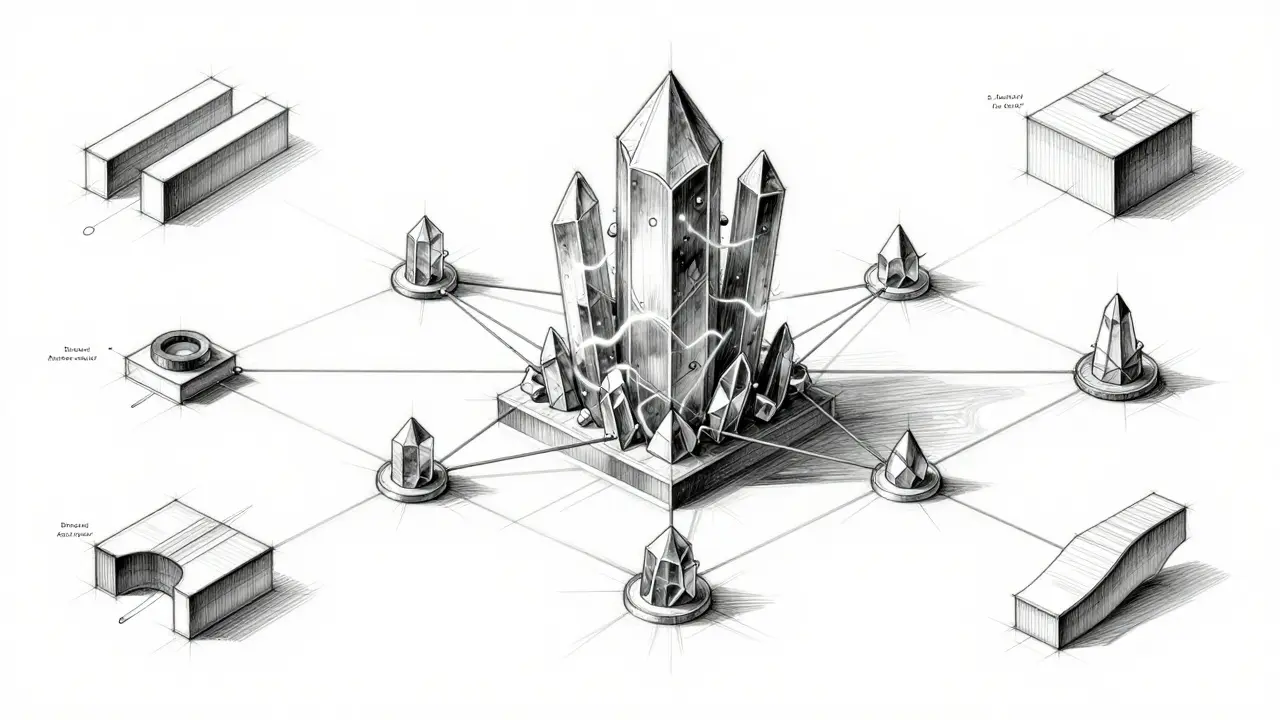
What Does the AZERO Token Actually Do?
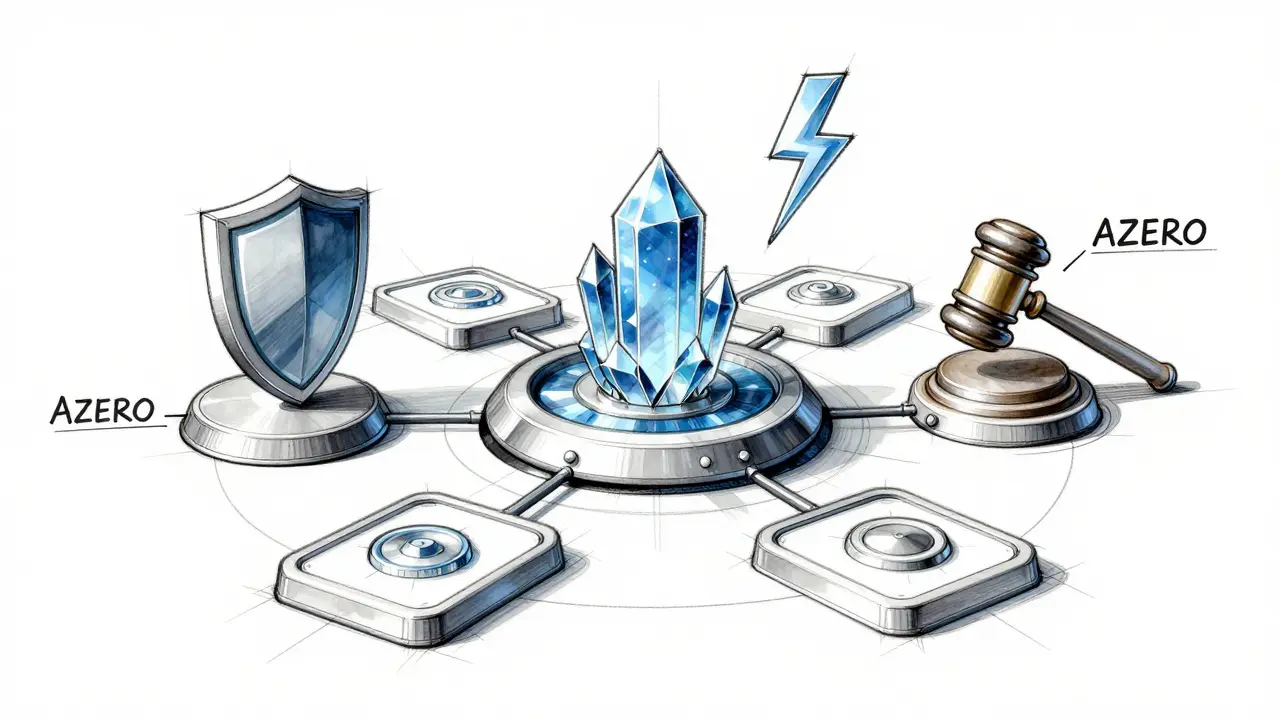
Many coins are just speculative chips, but the Aleph Zero token (AZERO) is the fuel that keeps the engine running. It's not just for trading on exchanges; it has several practical jobs within the ecosystem:- Network Security: Since Aleph Zero uses Proof-of-Stake (PoS), users stake their AZERO to validate transactions and keep the network honest.
- Transaction Fees: Every time you move funds or interact with a contract, you pay a small fee in AZERO.
- Governance: Token holders can vote on how the project evolves, giving the community a say in the roadmap.
- Ecosystem Payments: AZERO is used for fees within the network's EVM (Ethereum Virtual Machine) and WASM environments.
| Attribute | Value |
|---|---|
| Maximum Supply | 520,000,000 AZERO |
| Total Supply | 395,460,081 AZERO |
| Circulating Supply | 344,297,220 AZERO |
| Average Staking Rewards | 10% - 15% APY |
| Staking Percentage | ~31.5% of supply |
Real-World Use Cases: Beyond Just Trading
It's easy to get bogged down in the math, but what can you actually *do* with this tech? There are over 40 active use cases in development. Instead of just "sending coins," developers are building tools for:- Automatic Tax Payments: Imagine a system that calculates and pays your taxes in real-time without a human accountant needing to see your entire wallet history.
- IoT Integration: Using the speed of the DAG to handle millions of tiny data pings from smart devices in a city.
- Notary Services: Digital signatures that are legally binding and time-stamped without needing a physical office.
- Game Assets: Creating rare items in a game that can be traded securely and instantly without the lag common in other NFT projects.
Staking and Passive Income
If you're holding AZERO for the long haul, leaving it in a wallet is essentially wasting money. Because the network doesn't use energy-hungry mining, it relies on validators. You can join this process by staking your tokens. Currently, staking rewards hover between 10% and 15% annually. This isn't just a "bonus"-it's a payment for helping secure the network. If you're not a technical wizard, you can usually stake through a validator or a supported wallet like Ledger, which keeps your keys offline while your tokens work for you.Is Aleph Zero a Viable Investment?
No coin is a guaranteed win, and AZERO has shown it can be volatile. For instance, there have been periods where it underperformed the broader market, dropping significantly more than Bitcoin or Ethereum in a single week. However, its value isn't just tied to hype; it's tied to adoption. Unlike many "ghost chains" that have a fancy website but no users, Aleph Zero has a growing community of over 200,000 people. It's backed by venture capital and is targeting the enterprise sector-governments and big banks-which usually move slower but bring much larger amounts of capital when they finally jump in.What makes Aleph Zero different from other privacy coins like Monero?
Monero focuses primarily on hiding the sender and receiver of a transaction. Aleph Zero is a full Layer 1 platform, meaning it supports smart contracts and decentralized apps (dApps). It offers "programmable privacy," where developers can choose which parts of a contract are public and which are private, making it more flexible for business use.
Is AZERO mining-intensive?
No. Aleph Zero uses Proof-of-Stake (PoS), not Proof-of-Work. This means there are no expensive mining rigs or massive electricity bills. The network is secured by users who "stake" or lock up their coins to validate transactions.
How fast are transactions on the Aleph Zero network?
Thanks to its AlephBFT consensus and DAG architecture, the network achieves near-instant finality, typically confirming transactions in less than one second.
Can I use AZERO with a hardware wallet?
Yes, AZERO is integrated with Ledger, allowing users to store their private keys offline for maximum security while still managing their tokens.
What is the maximum supply of AZERO?
The maximum supply of AZERO is capped at 520,000,000 tokens, which helps prevent the kind of unlimited inflation seen in some other cryptocurrency projects.


