

You hold some crypto. Maybe you bought it because the price was going up. Maybe you want to use a lending app or trade on a decentralized exchange. But have you ever thought about who actually decides how those apps work? In traditional finance, a board of directors votes behind closed doors. In crypto, governance tokens change that dynamic completely. They turn users into owners.
Governance tokens are digital assets that give holders the right to vote on proposals within a decentralized protocol or organization. Think of them as membership cards for a club where every member gets a say in the rules. If you hold these tokens, you aren't just watching from the sidelines; you can influence interest rates, fee structures, and even which new features get built. This shift from passive investing to active participation is one of the most radical ideas in the entire blockchain space.
How Governance Tokens Actually Work
To understand governance tokens, you need to look under the hood at the smart contracts that power them. When a project like Uniswap or Aave launches, they issue a specific token-UNI or AAVE, respectively. These tokens follow standard formats like ERC-20 on Ethereum, but they carry extra data attached to them: voting weight.
The basic rule is simple: more tokens usually mean more votes. If you hold 1,000 tokens and your neighbor holds 100, you typically have ten times their voting power. This creates what experts call a "wealth-weighted democracy." It’s not one-person-one-vote; it’s one-token-one-vote (or variations thereof). Here is how the process usually plays out:
- Proposal Creation: Any community member can draft a proposal. This might be a request to allocate funds from the treasury to a marketing campaign or a technical upgrade to the code.
- Discussion Phase: The proposal goes live on forums like Discourse or Discord. Community members debate the merits, risks, and details. This off-chain discussion is crucial because once voting starts, changing minds is harder.
- Voting Period: Token holders connect their wallets to a governance platform (like Snapshot.org) and cast their votes. Some systems allow you to delegate your vote to someone else if you don’t have time to research every proposal.
- Execution: If the proposal passes the required quorum (minimum participation) and majority threshold, the smart contract automatically executes the changes. No middleman needed.
This mechanism ensures that control stays distributed among stakeholders rather than concentrated in a single company headquarters. However, the reality is often messier than the theory, as we’ll see next.
The Big Players: Examples of Governance Tokens
Not all governance tokens are created equal. Some belong to massive ecosystems with billions in value locked, while others are small experiments. Understanding the major players helps you see where this technology is heading.
| Token Name | Protocol | Primary Use Case | Key Feature |
|---|---|---|---|
| MakerDAO (MKR) | Maker Protocol | Stability of DAI stablecoin | Emergency shutdown powers |
| Uniswap (UNI) | Uniswap DEX | Fee structure & upgrades | Large community treasury ($4.8B+) |
| Aave (AAVE) | Aave Lending | Risk parameters & safety | Safety Module staking |
| Compound (COMP) | Compound Finance | Lending rates & asset support | High delegation usage |
MakerDAO’s MKR token was the pioneer, launching in late 2017. It set the standard for using tokens to manage risk. If the system faces insolvency, MKR holders must step in to backstop the DAI stablecoin. Uniswap’s UNI token, launched later, focused heavily on community distribution, giving away 60% of its supply to early users. This created a massive base of potential voters, though actual participation remains low. Aave uses its token differently, integrating it into a "Safety Module" where stakers earn rewards but also take on insurance liability if the protocol suffers a hack.
Governance vs. Utility Tokens: What’s the Difference?
Newcomers often confuse governance tokens with utility tokens. While both are cryptocurrencies, their purposes diverge sharply. A utility token, like BNB on the Binance Chain, primarily grants access to services or discounts fees. You buy BNB to pay for transactions cheaper. It doesn’t necessarily give you a seat at the table to decide how the network evolves.
Governance tokens, by contrast, are about power. Holding UNI doesn’t discount your trading fees (unless the community votes to implement such a feature). Instead, it gives you the ability to vote on whether Uniswap should deploy on a new blockchain layer. The distinction matters for regulatory reasons too. Regulators like the SEC scrutinize tokens that promise financial returns based on the efforts of others, potentially classifying them as securities. Governance tokens try to sidestep this by emphasizing functional control over profit-sharing, though the line remains blurry.
The Problem with Whales and Low Participation
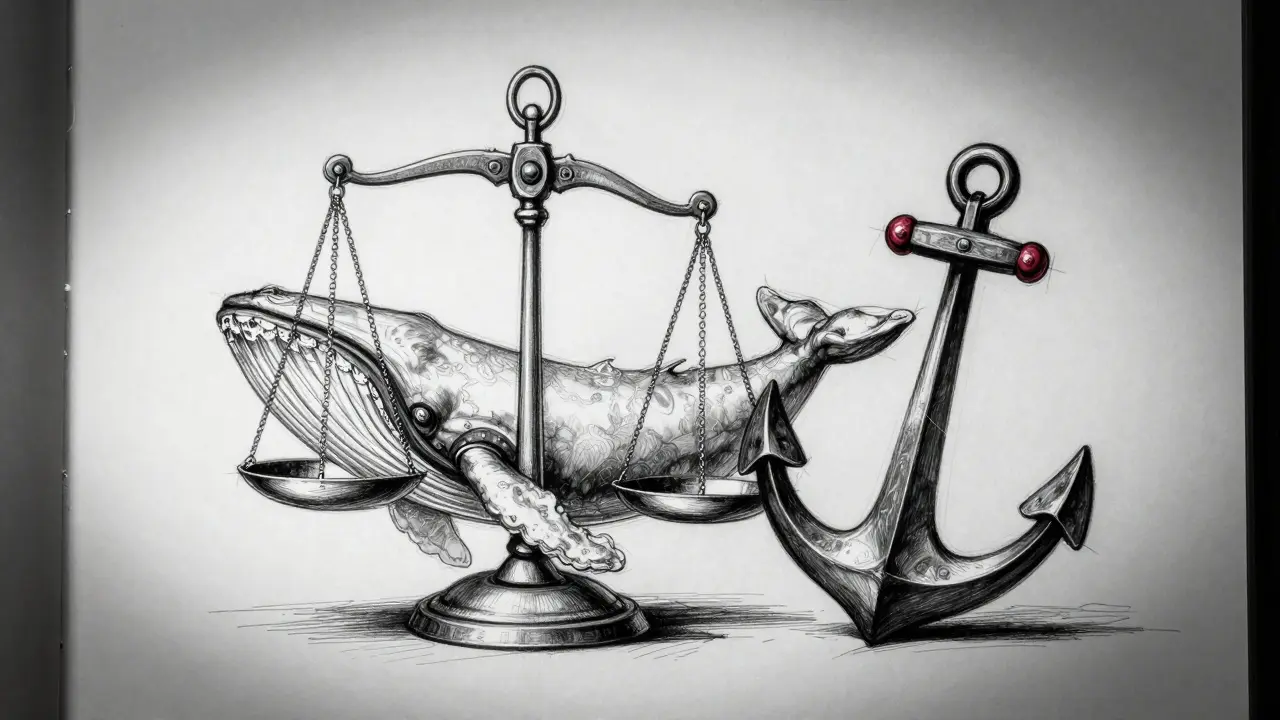
If governance tokens are the answer to centralized control, why do critics call them flawed? The biggest issue is plutocracy-the rule by the wealthy. Because voting power is tied to token holdings, large holders (often called "whales") dominate decisions. Data from iTrustCapital showed that the top 100 MKR holders controlled over 62% of voting power in 2023. This means a small group can push through proposals that benefit them, even if the broader community disagrees.
Then there’s the problem of apathy. Most people buy tokens for investment, not civic duty. According to TokenView, average participation rates across major protocols hover around 2.3%. That means less than 1 in 40 token holders actually votes. When only a tiny fraction participates, the result isn’t true democracy; it’s an oligarchy run by the most motivated (and often richest) few. Projects like Yearn.finance have seen controversial proposals pass with less than 1% voter turnout, raising questions about legitimacy.
How to Start Voting with Governance Tokens
Want to make a difference? Getting involved takes some effort, but it’s accessible if you follow the steps. Here is a practical guide to joining the conversation.
- Acquire Tokens: Buy governance tokens on a reputable exchange like Coinbase or Kraken. Ensure you understand the tokenomics-how many tokens exist, and how are they distributed?
- Set Up a Wallet: Move your tokens to a self-custody wallet like MetaMask or Ledger. You need control of your private keys to sign votes securely.
- Find the Forum: Locate the project’s official governance forum (usually on Discourse) and Discord server. Read past proposals to understand the culture and current debates.
- Delegate Your Vote (Optional): If you’re busy, consider delegating your voting power to a trusted researcher or committee. Platforms like Tally.xyz help you find delegates with track records of thoughtful analysis.
- Cast Your Vote: When a proposal you care about goes live, connect your wallet to the voting interface (like Snapshot.org). Sign the transaction with your wallet. Note that many votes are "gasless," meaning they don’t cost network fees, encouraging wider participation.
Don’t expect overnight results. Governance is slow. MakerDAO took 17 days on average to implement decisions in 2023, compared to hours for a centralized bank. But that slowness allows for scrutiny and reduces the risk of rogue executives making rash moves.
The Future of Decentralized Decision-Making
The space is evolving rapidly to address its flaws. Developers are experimenting with quadratic voting, where voting power scales with the square root of tokens held, reducing whale dominance. Reputation-based systems are also gaining traction, weighting votes by contribution history rather than just wealth. By 2026, industry analysts predict that most major protocols will adopt hybrid models combining token holdings with proof-of-contribution metrics.
Regulatory clarity is another frontier. As governments define rules for digital assets, governance tokens may face stricter oversight. Yet, the core appeal remains: the chance to own a piece of the internet’s infrastructure. Whether you’re a developer, investor, or casual user, understanding governance tokens is key to navigating the next era of Web3.
Do I need to stake my governance tokens to vote?
Not always. Many platforms like Snapshot allow you to vote without locking your tokens, preserving your liquidity. However, some protocols require staking to prevent sybil attacks or ensure long-term commitment. Check the specific rules of each DAO before participating.
Can I sell my governance tokens after voting?
Yes. Governance tokens are transferable assets. Once you’ve cast your vote, you retain full ownership rights, including the ability to sell, trade, or move them to another wallet. Your voting record is public, but your future actions are yours alone.
What happens if a governance proposal fails?
If a proposal fails to meet the quorum or majority threshold, nothing changes. The status quo remains. Proposers can revise their ideas and resubmit them later. Failed proposals often spark valuable discussions that lead to better solutions down the line.
Are governance tokens safe investments?
Like all crypto assets, they carry significant risk. Their value depends on the success of the underlying protocol and market sentiment. Additionally, regulatory uncertainty could impact their legality in some jurisdictions. Never invest more than you can afford to lose.
How do I find good governance delegates?
Use aggregator sites like Tally.xyz or DeBank. Look for delegates with high engagement scores, transparent reasoning in their comments, and a history of voting against conflicts of interest. Avoid delegates who simply copy others’ votes without explanation.