
You might have heard that miners get paid for securing the blockchain, but do you know exactly what they receive? The answer lies in block rewards, which are the total compensation given to miners or validators for successfully adding a new block of transactions to a blockchain ledger. Think of it as a paycheck for doing digital heavy lifting. Without this incentive, no one would spend electricity and hardware resources to keep networks like Bitcoin or Ethereum running securely.
This mechanism isn't just about handing out free coins. It is the economic engine that drives decentralization. It balances two critical needs: introducing new currency into circulation (monetary policy) and paying for the security of the network (incentive structure). If you want to understand why crypto prices move, how mining works, or what happens during a 'halving,' you need to grasp how block rewards function.
The Two Parts of a Block Reward
A block reward is not a single lump sum. It is made up of two distinct components. Understanding this split is crucial because the balance between them shifts over time, especially as networks mature.
- The Block Subsidy: This is the newly minted cryptocurrency created out of thin air. When a miner solves the complex mathematical puzzle required to add a block, the protocol generates these fresh coins and awards them to the winner. For example, when Bitcoin launched in 2009, this subsidy was 50 BTC. Today, it is much lower due to scheduled reductions.
- Transaction Fees: These are the small payments users attach to their transactions to prioritize them. When you send crypto, you pay a fee. All the fees from every transaction included in that specific block go to the miner who found it.
In the early days of any network, the block subsidy makes up the vast majority of the reward. Transaction fees are often negligible. However, as the subsidy decreases over time, transaction fees become increasingly important. This transition is central to the long-term viability of cryptocurrencies.
How Bitcoin’s Halving Changes the Game
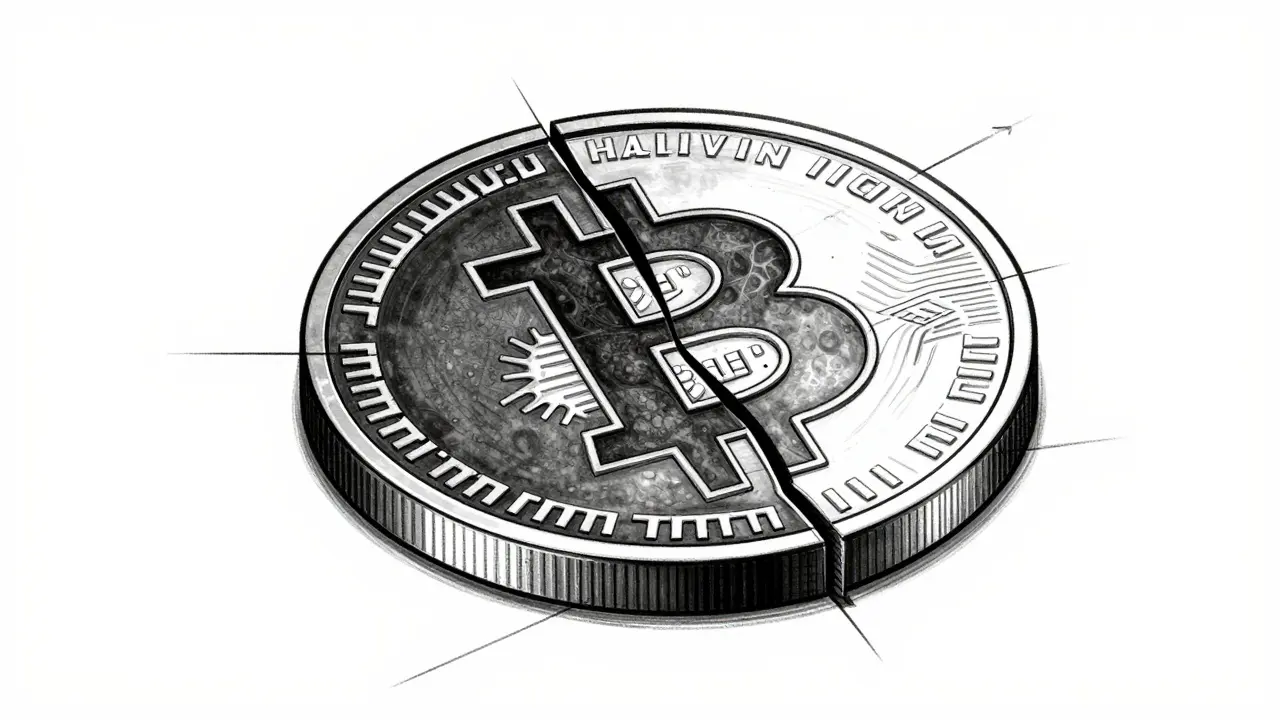
Bitcoin uses a fixed schedule to control its supply, known as the Bitcoin Halving, which is an event that occurs approximately every four years where the block subsidy is cut in half. This process was coded into Bitcoin's genesis by Satoshi Nakamoto to ensure scarcity.
| Date | Block Height | Reward Before | Reward After |
|---|---|---|---|
| Nov 28, 2012 | d>210,00050 BTC | 25 BTC | |
| July 9, 2016 | 420,000 | 25 BTC | 12.5 BTC |
| May 11, 2020 | 630,000 | 12.5 BTC | 6.25 BTC |
| April 20, 2024 | 840,000 | 6.25 BTC | 3.125 BTC |
As of 2026, the most recent halving occurred in April 2024, dropping the reward to 3.125 BTC per block. The next halving is projected for around August 2028, which will further reduce the subsidy to 1.5625 BTC. This predictable reduction creates a deflationary pressure on Bitcoin, assuming demand remains constant or grows. Eventually, around the year 2140, the block subsidy will reach zero, and miners will rely entirely on transaction fees.
Ethereum’s Shift: From Mining to Staking
While Bitcoin sticks to its Proof-of-Work roots, Ethereum took a different path. In September 2022, Ethereum underwent "The Merge," transitioning from Proof-of-Work (mining) to Proof-of-Stake (PoS), a consensus mechanism where validators secure the network by locking up ETH rather than using energy-intensive hardware. This change fundamentally altered how block rewards work.
In the old PoW model, miners competed to solve puzzles, and the winner got the block reward plus fees. Now, validators are chosen pseudo-randomly based on the amount of ETH they have staked. The reward structure is more dynamic:
- Base Rewards: Validators earn ETH for proposing blocks and attesting to other blocks. The rate depends on the total amount of ETH staked across the network. As more people stake, the individual reward percentage decreases to maintain stability.
- Transaction Fees: Here is the big difference. Under Ethereum's EIP-1559 update, a portion of every transaction fee (the base fee) is burned-destroyed forever. Only the priority fee (tip) goes to the validator. This can make Ethereum deflationary during high network activity, unlike Bitcoin which always issues new coins until 2140.
This shift reduced Ethereum's annual issuance by roughly 90%, making it a much leaner monetary policy compared to its pre-2022 self.
Why Do Block Rewards Matter to You?
If you are not a miner or a validator, why should you care about block rewards? Because they directly impact the value and security of the assets you hold.
Security Budget: The total value of block rewards represents the "security budget" of a network. It is the money spent to protect the ledger from attacks. If the reward value drops too low, fewer miners or validators may participate, potentially weakening the network's resistance to 51% attacks. For Bitcoin, the current high price of BTC ensures that even with a smaller number of coins rewarded, the dollar value remains attractive enough to keep powerful mining rigs online.
Supply Dynamics: Block rewards determine how many new coins enter the market each day. In Bitcoin, this is a fixed, predictable trickle. In Ethereum, it varies. If you are analyzing whether a coin is likely to appreciate in value, understanding its emission schedule is vital. A sudden drop in block rewards (like a halving) often leads to price increases if demand doesn't fall equally, simply because there is less new supply flooding the market.
Transaction Costs: As block subsidies shrink, competition for block space intensifies. Miners prioritize transactions with higher fees. This means that during times of high usage, you might pay more to get your transaction confirmed quickly. Understanding this helps you time your transfers better.
Other Models: Litecoin, Solana, and Beyond
Not all cryptocurrencies follow Bitcoin's strict halving model. Different projects use different economic engines to suit their goals.
- Litecoin: Similar to Bitcoin, Litecoin has a maximum supply cap (84 million) and undergoes halvings. However, because it produces blocks faster (every 2.5 minutes vs Bitcoin's 10 minutes), its halvings occur more frequently in terms of real-time calendar years, though still spaced out by block count.
- Solana: Solana uses an inflation-based model. Instead of a hard cap, it starts with a high inflation rate (around 8%) that gradually decreases over ten years until it reaches a terminal rate of 1.5%. Validators are rewarded from this inflationary issuance. This model aims to provide continuous incentives for network growth without a hard supply limit.
- Monero: Monero employs a "tail emission." After reaching its initial supply target, it continues to emit a tiny, fixed amount of XMR per minute (0.6 XMR/min). This ensures that miners always have a steady income stream from block rewards, preventing the network from becoming vulnerable as transaction fees fluctuate.
Each model reflects a different philosophy on decentralization, sustainability, and monetary policy. There is no single "best" way, but trade-offs exist between predictability, flexibility, and long-term security.
The Future: When Subsidies Hit Zero
The ultimate question for Proof-of-Work networks like Bitcoin is: What happens when the block subsidy disappears? Around 2140, the last fraction of a Bitcoin will be mined. From that point on, miners will only earn transaction fees.
This transition is already being modeled. Analysts suggest that for Bitcoin to remain secure, transaction fees must eventually cover the cost of electricity and hardware for miners. Some estimates suggest fees need to rise significantly, potentially requiring average transaction costs of $15-$25 during peak times. While this sounds expensive for small purchases, it may be acceptable for large-value transfers or institutional settlements.
For now, we are decades away from this scenario. The current mix of block subsidy and fees provides a robust safety net. But as you watch the crypto landscape evolve, keep an eye on the ratio of fees to subsidies. It is the leading indicator of a network's maturity and its ability to sustain itself purely through user demand.
Who gets the block reward?
In Proof-of-Work networks like Bitcoin, the miner who successfully solves the cryptographic puzzle and adds the block receives the entire reward. In Proof-of-Stake networks like Ethereum, the validator selected to propose the block receives the reward. If you mine or stake through a pool or service, the reward is shared among participants according to their contribution.
What happens after the Bitcoin halving?
After a halving, the number of new bitcoins created per block is cut in half. Historically, this has led to periods of price appreciation due to reduced supply growth, though market conditions vary. Miners may also adjust their operations, turning off less efficient equipment to stay profitable.
Are block rewards taxable?
Yes, in most jurisdictions including the US and EU, block rewards are considered taxable income at the fair market value on the date of receipt. You must report this income regardless of whether you sell the coins immediately or hold them.
Can block rewards change unexpectedly?
For established networks like Bitcoin and Ethereum, the reward schedules are hardcoded and require broad community consensus to change, making unexpected changes highly unlikely. However, newer or smaller altcoins may have more flexible or mutable policies, so always check the specific whitepaper or governance rules of a project.
Why do some coins burn transaction fees?
Burning fees, as seen in Ethereum post-EIP-1559, reduces the total supply of the token. This creates a deflationary pressure that can increase the value of remaining tokens if demand is high. It serves as a mechanism to align the cost of network usage with the value of the asset, rather than just rewarding validators.


