
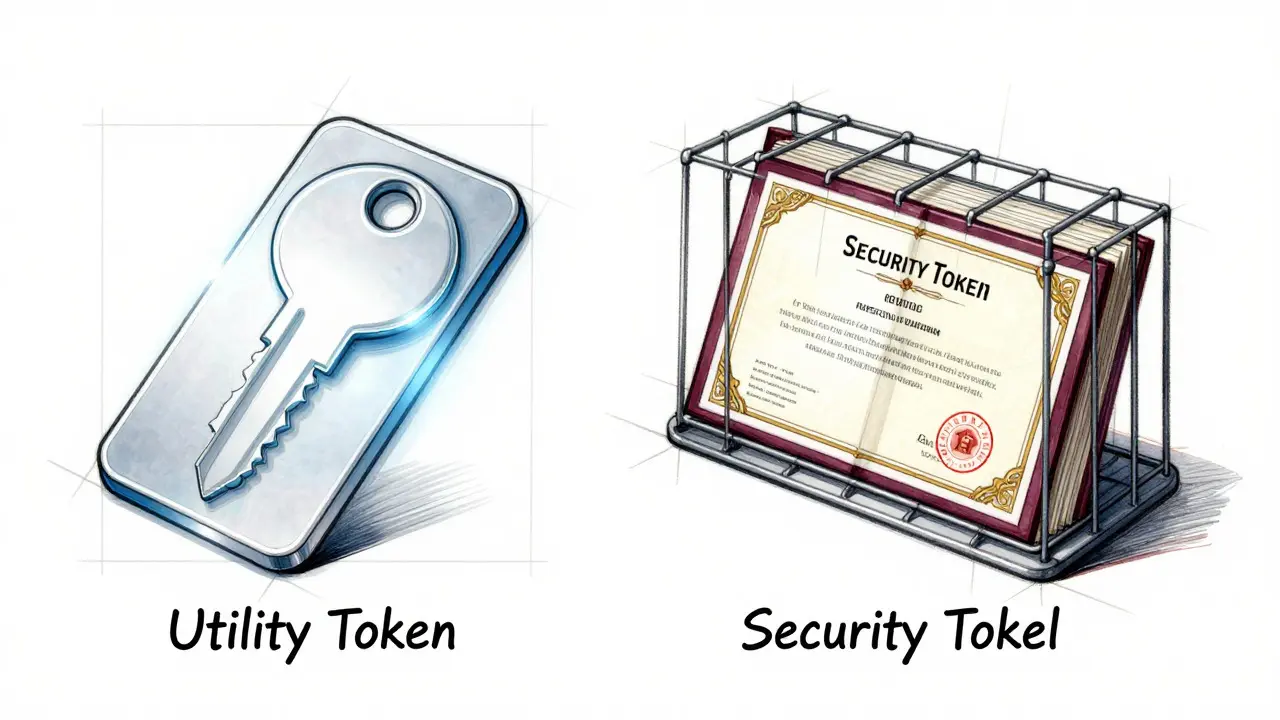
Imagine buying a ticket to a concert. That ticket gets you into the venue, maybe access to a VIP lounge, but it doesn't mean you own a piece of the band or get a cut of their future profits. Now imagine buying stock in the record label that owns the band. You don't get into the concert, but if the band sells millions of albums, your investment grows. This simple analogy captures the core difference between utility tokens and security tokens. In the complex world of blockchain, knowing which is which isn't just academic-it determines whether you're buying a product or an investment, and whether the government is watching closely.
The line between these two categories has been one of the most debated topics in crypto since the initial coin offering (ICO) boom of 2017-2018. With regulators like the U.S. Securities and Exchange Commission (SEC) cracking down on unregistered securities, understanding this distinction is critical for anyone holding digital assets. Are you paying for access to a network, or are you betting on its financial success? Let's break down exactly how these tokens differ, why the law treats them differently, and what that means for your wallet.
What Is a Utility Token?
A utility token is a digital asset designed to provide access to a specific product or service within a blockchain ecosystem. Think of it as a digital key or a coupon. Its primary purpose is functional, not financial. When you hold a utility token, you are usually gaining the right to use a platform, vote on its governance, or pay for services with discounted fees.
These tokens emerged prominently after Ethereum introduced the ERC-20 standard in November 2015. By August 2023, data from Etherscan showed that ERC-20 governed approximately 92% of all utility tokens. Other popular standards include Binance Smart Chain's BEP-20 (5.3%) and Solana's SPL (2.1%). Because they are meant to be used rather than held for profit, utility tokens are generally fungible-meaning one token is identical to another, much like dollars in a currency.
A clear example is Filecoin's FIL token. You buy FIL to pay for decentralized storage space on the Filecoin network. If the network becomes more efficient, the cost of storage might drop, but you don't automatically receive a dividend because the company made money. Another example is IX Swap's IXS Token, launched in June 2021, which gives users discounted trading fees and voting rights on their exchange. The value of these tokens often fluctuates wildly based on speculation, but legally, they are supposed to represent consumption, not ownership.
What Is a Security Token?
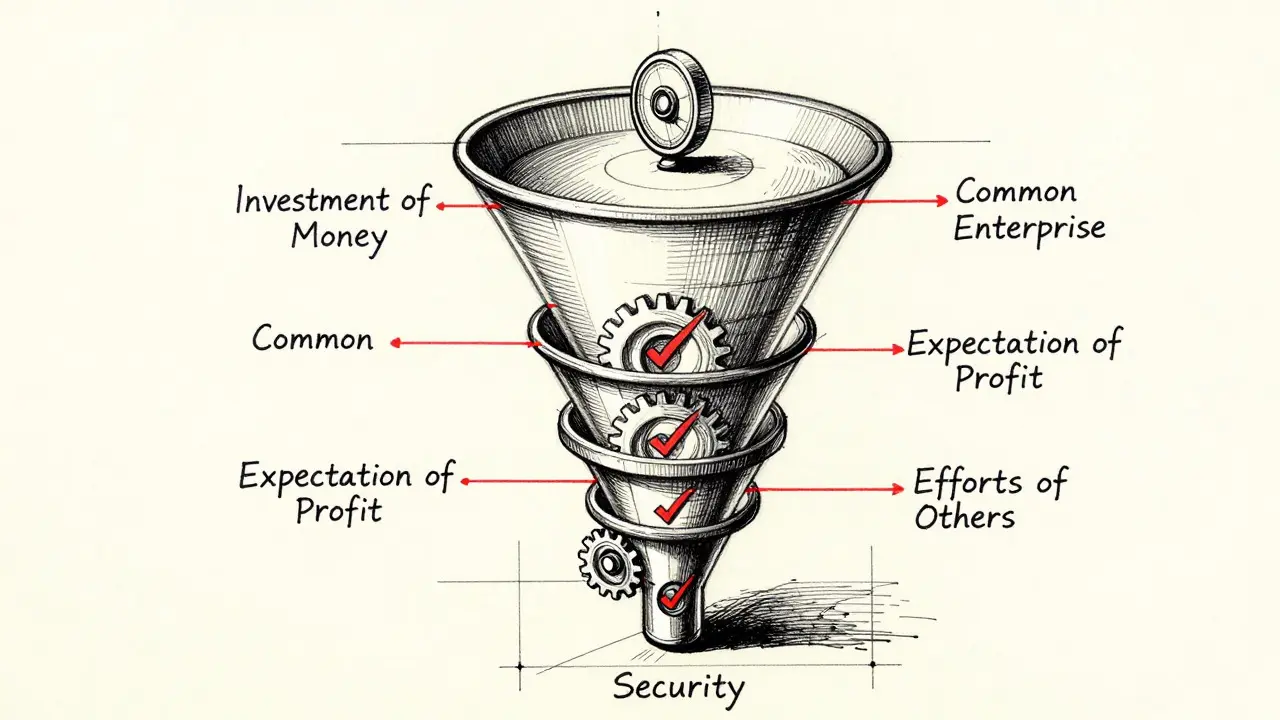
In contrast, a security token represents a fractional ownership stake in a real-world asset. These assets can include equity in a company, debt instruments, real estate, or even art. Because they represent an investment contract, they are subject to strict securities regulations. The defining moment for this category came on July 25, 2017, when the SEC released its DAO Report, applying the Howey Test to digital assets. This test determines if an arrangement constitutes an "investment contract" by asking four questions:
- Is there an investment of money?
- Is there a common enterprise?
- Is there an expectation of profit?
- Is that profit derived from the efforts of others?
If the answer to all four is yes, it's a security. Security tokens require complex technical implementations to handle compliance. They often adhere to standards like ERC-1400 or Polymath's ST-20 protocol. These smart contracts embed legal parameters directly into the code. For instance, they can restrict transfers only to accredited investors (those with high net worth or income), block transactions from certain jurisdictions, and automate dividend distributions.
Consider LABS Group's RWA token, launched in August 2022. It tokenizes real estate properties and distributes quarterly rental income to holders. Or look at Tradeflow eNote™, launched in November 2022, which connects tokenized debt to traditional banking systems for interest payments. These aren't just speculative bets; they are digitized versions of stocks and bonds, bringing traditional finance onto the blockchain.
Key Differences: Regulation, Rights, and Volatility
The differences between these two token types go far beyond their names. They affect how you buy them, how much they swing in price, and what rights you have as a holder. Here is a direct comparison of their attributes:
| Feature | Utility Token | Security Token |
|---|---|---|
| Primary Purpose | Access to services/platforms | Ownership/investment returns |
| Regulatory Status | Largely unregulated (if truly utility) | Strictly regulated (Securities laws) |
| Holder Rights | Usage, governance, discounts | Dividends, profit share, voting on corporate matters |
| Price Volatility | High (Median daily swing: 12.7%) | Low (Median daily swing: 3.9%) |
| Liquidity | High (Avg daily volume: $18.7M) | Low (Avg daily volume: $4.2M) |
| Investor Access | Open to public (usually) | Often restricted to accredited investors |
Market data highlights these contrasts sharply. According to Messari Crypto Reports from Q3 2023, utility tokens exhibit 3.2 times greater price volatility than security tokens. This makes sense: utility tokens are driven by hype and adoption rates, while security tokens are backed by tangible assets like property or cash flow. However, this stability comes at a cost. Security tokens suffer from lower liquidity. CoinGecko's September 2023 analysis showed average daily trading volumes of just $4.2 million per security token, compared to $18.7 million for utility tokens. If you need to sell quickly, utility tokens are easier to offload, but security tokens offer more predictable value.
The Regulatory Landscape: Howey Test and Enforcement
Regulation is the biggest differentiator. Gary Gensler, Chairman of the SEC since April 2021, has been vocal about enforcing securities laws in crypto. In his September 12, 2023 congressional testimony, he stated that "the vast majority of tokens are securities." The SEC applies the Howey Test rigorously. In 2022 alone, the agency took 47 enforcement actions against unregistered security token offerings, resulting in $1.2 billion in penalties and disgorgement orders.
This aggressive stance means many tokens marketed as "utility" were reclassified as securities. A 2022 SEC report indicated that 98.7% of tokens previously labeled as utility were deemed securities under closer scrutiny. This creates a gray area for projects. For example, Uniswap's UNI token provides governance rights. Some legal scholars argue it's a utility token because it doesn't promise profit, while regulators may view it differently depending on how the project evolves.
Other regions are taking different approaches. The European Union's Markets in Crypto-Assets (MiCA) regulation, effective December 30, 2024, aims to create a unified framework. MiCA distinguishes "utility tokens" under Article 3(9) from "security tokens," which fall under existing financial regulations. Switzerland's FINMA Guidelines, revised in July 2022, also provide a clearer path, categorizing tokens based on their function. As of August 2023, the International Organization of Securities Commissions (IOSCO) reported that 68 of 135 member jurisdictions had implemented specific security token regulations, signaling a global move toward clarity, albeit with fragmented rules.
Cost and Complexity: Launching a Token
If you're a developer or entrepreneur looking to issue tokens, the choice between utility and security dictates your budget and timeline. Launching a utility token via an Initial Coin Offering (ICO) is relatively straightforward. Antier Solutions' June 2023 pricing guide estimates costs between $50,000 and $150,000, with a development time of 4-6 weeks. You mainly need smart contract coding and basic marketing.
Security Token Offerings (STOs), however, are a different beast. Calibraint's September 2023 industry report puts costs between $500,000 and $2 million, with preparation times of 6-12 months. Why so expensive? You need legal compliance, investor accreditation systems, and regulatory filings. In the U.S., you must navigate exemptions like Regulation D (506c), Regulation A+, or Regulation S. Each has distinct requirements. Documentation is also heavier; security token platforms like Securitize maintain 187-page compliance manuals updated quarterly. GitHub analysis shows security token repositories have 4.7 times more documentation commits than utility token projects, reflecting the rigorous audit and legal review processes required.
Market Trends and Institutional Adoption
Despite the higher barriers to entry, security tokens are growing fast. While utility tokens make up about 78% of all token offerings by volume, security tokens have grown at a compound annual growth rate (CAGR) of 47% since 2020. Their market capitalization reached an estimated $5.2 billion by Q2 2023, according to Chainalysis. This growth is driven by institutional interest in tokenized real-world assets (RWAs).
Traditional finance giants are entering the space. BlackRock launched its BUIDL fund in March 2023, managing $410 million in tokenized assets as of September 2023. Franklin Templeton followed with its OnChain U.S. Government Money Fund in July 2022, managing $145 million. These moves signal that security tokens are becoming a viable bridge between Wall Street and blockchain. Deloitte's 2023 Digital Asset Outlook projects that security tokens will capture 89% of institutional digital asset investments by 2027.
Conversely, utility tokens remain dominant in consumer-facing applications. They power decentralized exchanges, gaming ecosystems, and storage networks. However, user sentiment varies. Reddit analysis from January-August 2023 showed that while 38.2% of utility token discussions praised "access to exclusive features," 27.6% complained about "lack of fundamental value." The collapse of Steem in May 2020, where value dropped 92% due to governance disputes, serves as a cautionary tale for utility token holders who rely solely on speculation.
Future Outlook: Hybrid Models and Global Standards
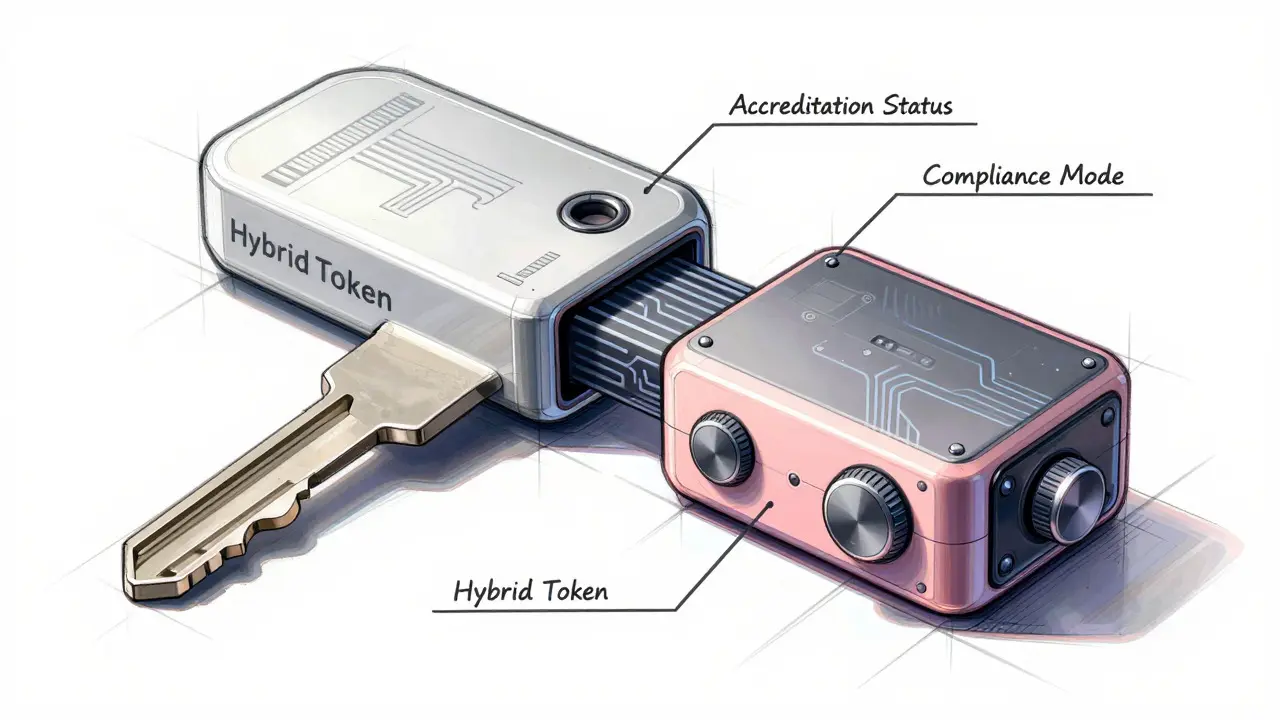
The binary distinction between utility and security tokens is blurring. Technological advancements are enabling hybrid models that combine features while maintaining compliance. TokenSoft's Universal Token Framework, launched in June 2023, dynamically adjusts token functionality based on investor accreditation status. This allows a single token to act as a security for accredited investors and a utility for others, simplifying issuance.
The World Economic Forum's June 2023 report predicts that by 2027, 10% of global GDP will be tokenized, with security tokens representing 73% of this value. Integration with traditional finance is accelerating. DTCC's Project Ion, launched in September 2023, processes $1.2 trillion in daily securities transactions using blockchain technology compatible with security tokens. This infrastructure supports the vision of a seamless global market where assets can be traded instantly across borders.
However, challenges remain. Regulatory fragmentation persists, with 47 different securities classifications across major jurisdictions. Cross-border settlement is still technically difficult. But as frameworks like MiCA take effect and institutions build dedicated infrastructure, the market is maturing. For investors, the key takeaway is diligence: understand what you're buying. Is it a tool for a network, or a slice of an asset? Knowing the difference protects your capital and ensures you're playing by the rules.
How do I know if a token is a security or a utility?
Apply the Howey Test. Ask yourself: Are you investing money with the expectation of profit derived from the efforts of others? If yes, it's likely a security. If the token primarily grants access to a service or platform without promising financial returns, it's likely a utility token. Always check the project's whitepaper and legal disclaimers.
Can a utility token become a security?
Yes. If the primary reason people buy the token shifts from using the service to speculating on price appreciation driven by the team's efforts, regulators may reclassify it as a security. Many tokens from the 2017 ICO boom were reclassified this way.
Why are security tokens less liquid than utility tokens?
Security tokens often have transfer restrictions. They may only be tradable by accredited investors or on specific licensed exchanges. These compliance hurdles reduce the number of potential buyers and sellers, leading to lower trading volumes compared to open-market utility tokens.
What is the MiCA regulation?
Markets in Crypto-Assets (MiCA) is a comprehensive EU regulation effective December 2024. It provides a unified legal framework for crypto assets, clearly distinguishing between utility tokens (which have lighter rules) and security tokens (which follow existing financial regulations). It aims to protect investors and foster innovation.
Are security tokens safer investments?
Generally, yes. Security tokens are backed by real-world assets like real estate or equity, and they undergo strict regulatory scrutiny. This reduces fraud risk and offers more stable value compared to utility tokens, which can be highly volatile and speculative. However, they still carry market risks associated with the underlying assets.