
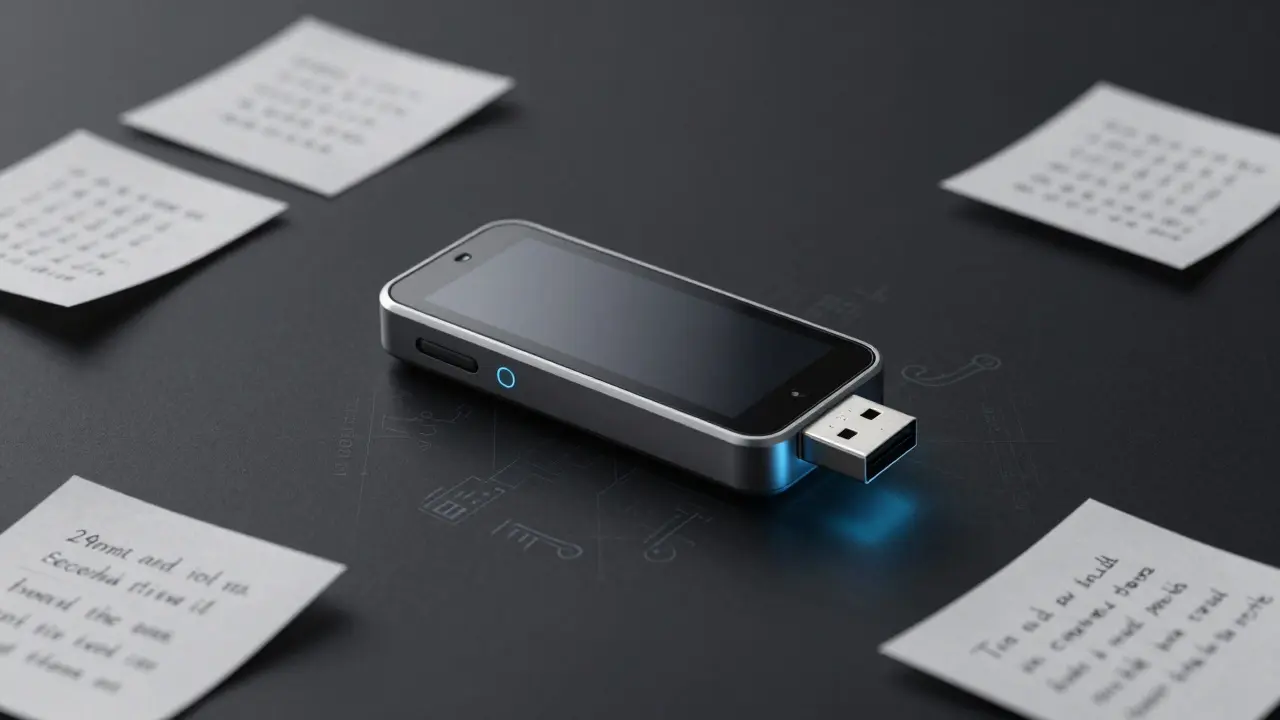
When you own cryptocurrency, you don’t actually store coins in a digital folder like you would photos on your phone. What you really hold is a set of secret codes-private keys-that prove you own your coins on the blockchain. If you lose those keys, your crypto is gone forever. That’s why choosing the right crypto wallet isn’t just about convenience-it’s about survival.
What Is a Crypto Wallet?
A crypto wallet is a tool that lets you interact with blockchains. It doesn’t store your Bitcoin or Ethereum like a bank stores cash. Instead, it holds your private keys, which are long strings of letters and numbers that let you sign transactions and prove ownership. Without your private key, no one can move your crypto-not even the wallet provider. There are two main categories: hot wallets and cold wallets. Hot wallets are connected to the internet. Cold wallets are not. That simple difference changes everything about security, speed, and how you use your crypto.Hot Wallets: Speed Over Security
Hot wallets are built for daily use. They’re fast, easy to set up, and always online. That’s why they handle 78% of all crypto transactions as of 2025. If you’re trading, swapping tokens, or using DeFi apps like Uniswap or Aave, you’re almost certainly using a hot wallet. There are three common types:- Web wallets like MetaMask run as browser extensions. They work on Chrome, Firefox, and Edge, and support over 1,200 tokens across Ethereum, Polygon, and Binance Smart Chain. MetaMask alone processes 2.1 million daily transactions on Ethereum-based apps.
- Mobile wallets like Trust Wallet and Coinbase Wallet live on your phone. They’re convenient for on-the-go payments and scanning QR codes. Trust Wallet supports over 10 million token contracts across 70+ blockchains.
- Desktop wallets like Exodus install directly on your computer. They offer more control than web wallets and include built-in exchanges, letting you swap crypto without leaving the app.
Cold Wallets: Security for Long-Term Holding
Cold wallets are designed to keep your crypto offline. They’re not connected to the internet unless you plug them in to send a transaction. That makes them nearly impossible to hack remotely. The most common type of cold wallet is the hardware wallet. These are physical devices, often shaped like USB sticks, that store your private keys inside a secure chip. Two big names dominate this space: Ledger and Trezor. The Ledger Nano X costs $149 and supports over 5,500 cryptocurrencies. It has Bluetooth, a touchscreen, and a secure element chip certified to military-grade standards (CC EAL6+). The Trezor Model One is cheaper at $49 and supports around 1,000 coins. It’s open-source, which means its code is publicly reviewed by security experts. Cold wallets are the go-to for long-term holders. According to Ledger’s 2024 report, 63% of all crypto value is stored offline. Institutional investors-hedge funds, family offices, even universities-use hardware wallets to safeguard their holdings. Coinbase’s 2025 survey found that 73% of institutional holders rely on cold storage. But cold wallets aren’t perfect. Setting one up takes time. You have to write down your recovery phrase, verify it, and store it safely. One in four users on Amazon reported struggling with the 24-word backup process. And if you lose the device? You’re still safe-as long as you have your phrase. If you don’t? Your crypto is gone.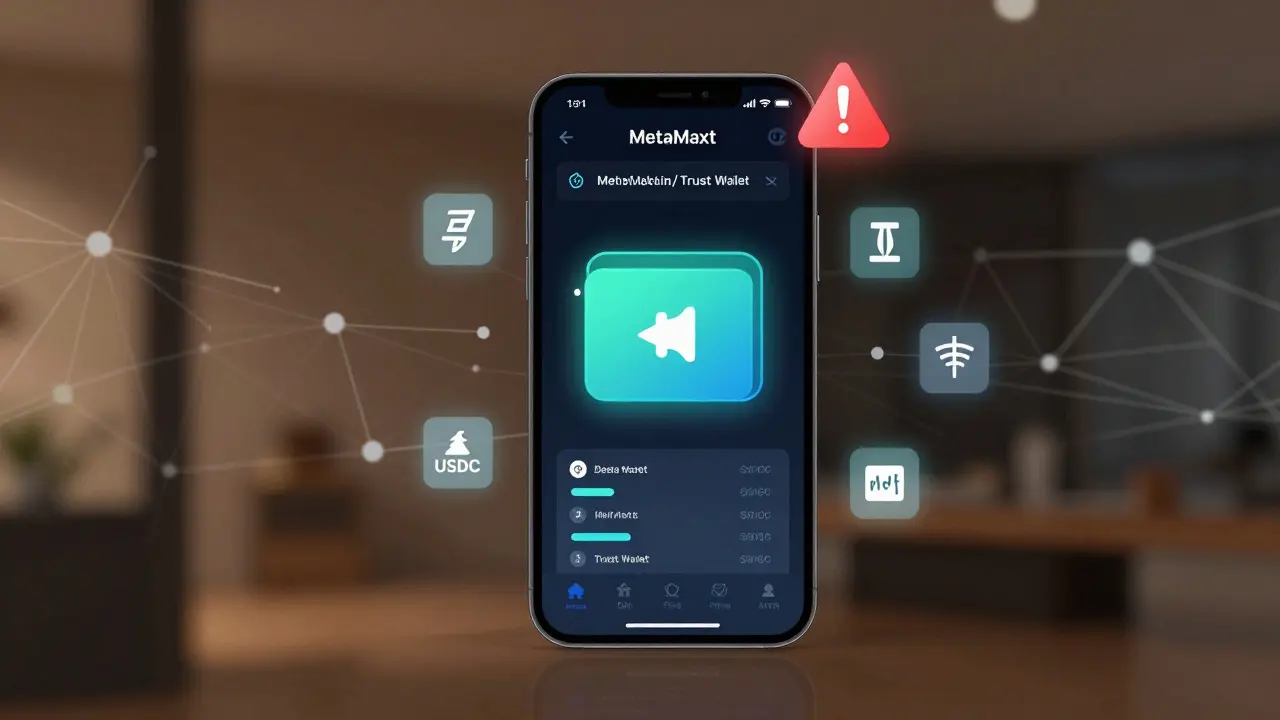
Custodial vs. Non-Custodial: Who Controls Your Keys?
There’s another layer to wallet types: custody. This determines who holds your private keys. Custodial wallets (like Coinbase Wallet or Binance Wallet) keep your keys for you. That means if you forget your password, they can reset it. Sounds helpful, right? But it also means they control your money. If Coinbase gets hacked-or shuts down-you could lose access. The industry mantra is clear: “Not your keys, not your coins.” Non-custodial wallets (like MetaMask, Exodus, or Ledger) put you in full control. You’re the only one with access. That’s more secure, but also more responsibility. No customer support can recover your wallet if you lose your phrase. Most beginners start with custodial wallets because they’re easier. But if you’re holding more than a few hundred dollars, switching to a non-custodial wallet is a smart move.Which Wallet Should You Use?
There’s no single best wallet. The right one depends on what you’re trying to do.- For daily trading or DeFi: Use a hot wallet like MetaMask or Trust Wallet. They connect instantly to dApps and let you swap tokens in seconds.
- For holding long-term: Use a hardware wallet like Ledger Nano X or Trezor Model One. Store your biggest holdings here.
- For beginners: Try Zengo. It uses biometrics instead of recovery phrases and has zero-fee swaps. It’s the highest-rated wallet for new users in 2025.
- For Bitcoin-only users: Sparrow Wallet is the most powerful option, but it requires technical knowledge.
Real-World Risks and Pitfalls
Even the best wallets can fail if you don’t use them right.- Phishing attacks: Fake websites mimic MetaMask or Ledger to steal your recovery phrase. Always type the URL yourself.
- Seed phrase mismanagement: 43% of all wallet support tickets are caused by lost or damaged recovery phrases. Write it on paper. Store it in a fireproof safe. Never take a photo of it.
- Firmware updates: A 2025 security report found undisclosed flaws in update systems for three major hardware wallets. Always update your device through its official app, never via third-party links.
- Network errors: If you send ETH to a Bitcoin address, it’s gone forever. Always double-check the network and address before confirming.
The Future of Crypto Wallets
Wallets are evolving fast. In 2025, MetaMask introduced passwordless login using Ethereum’s ERC-6492 standard. Zengo pioneered biometric key recovery. Ledger’s new Nano Flex model has a touchscreen and Bluetooth 5.2. Regulations are changing too. The EU’s MiCA law, effective since late 2024, now requires wallet providers to verify users’ identities. That means even non-custodial wallets may need to collect ID in Europe. Looking ahead, multi-signature (multisig) wallets and social recovery-where you assign trusted friends to help you regain access-are gaining traction. Vitalik Buterin believes these will eventually replace hardware wallets for everyday users. But for now, the rule remains: if you’re holding serious value, use a hardware wallet. If you’re trading daily, use a trusted hot wallet. And never, ever lose your recovery phrase.What’s the difference between a hot wallet and a cold wallet?
A hot wallet is connected to the internet, making it fast for transactions but vulnerable to hacking. A cold wallet is offline, offering much stronger security but requiring you to physically connect it to send funds. Hardware wallets are a type of cold wallet.
Are hardware wallets worth the cost?
Yes-if you hold more than $1,000 in crypto. Hardware wallets like Ledger and Trezor cost between $49 and $179, but they’ve prevented billions in theft. The cost is a small price to pay for protecting your assets. For small, daily-use amounts, a hot wallet is fine.
Can I use one wallet for all my crypto?
Most modern wallets support multiple blockchains. Exodus, MetaMask, and Ledger Nano X all handle Bitcoin, Ethereum, Solana, and dozens of others. But some wallets are optimized for one chain-for example, Sparrow Wallet is built specifically for Bitcoin. Choose based on your needs.
What happens if I lose my recovery phrase?
If you lose your recovery phrase and don’t have a backup, your crypto is permanently gone. No company, hacker, or government can recover it. There’s no reset button. That’s why writing it down on paper and storing it securely is the most important step in crypto ownership.
Is MetaMask safe to use?
MetaMask is one of the most trusted web wallets, but it’s still a hot wallet. It’s safe if you use it correctly: never click suspicious links, keep your browser updated, and only connect it to verified dApps. Never store large amounts in it long-term. Use it for trading, not for holding.
Should I use a custodial wallet like Coinbase Wallet?
Only if you’re just starting out and want simplicity. Custodial wallets are easier to use, but you don’t control your keys. That means Coinbase could freeze your account, or be hacked. For serious holdings, switch to a non-custodial wallet like Exodus or a hardware wallet.


