

Imagine walking into a shop in Quito and paying for your groceries with Bitcoin. In most countries, this is becoming normal. In Ecuador, it’s a legal gray area that pushes many transactions off the official books and into what locals call the underground crypto market in Ecuador. You might think this means illegal black markets full of shady deals. But the reality is more nuanced. It’s less about crime and more about necessity, convenience, and navigating a regulatory landscape that hasn’t quite caught up with technology.
The Ecuadorian cryptocurrency ecosystem exists in a unique state of limbo. While buying and selling digital assets isn't technically illegal, cryptocurrencies are not recognized as legal tender. This distinction creates a specific type of underground activity-not necessarily illicit smuggling, but rather unregulated peer-to-peer (P2P) exchanges that operate outside traditional banking channels to avoid fees, delays, or simply because banks don't support them. If you're an investor, a local merchant, or just curious about how money moves in this Andean nation, understanding this shadow economy is crucial.
Why Does an Underground Market Exist?
To understand the underground scene, you have to look at the history. A few years ago, the government banned private cryptocurrencies entirely, hoping to launch their own state-issued digital currency called "Dinero Electrónico." That project fizzled out, leaving a vacuum. Today, while the blanket ban is gone, the legal framework remains cautious. Cryptocurrencies are treated as property or assets, not money. You can trade them, but you can't legally use them to settle debts in the same way you use US Dollars, which is Ecuador's official currency.
This ambiguity drives people underground. Banks in Ecuador are notoriously slow to adopt crypto-friendly policies. If you try to wire $500 from a bank account to a crypto exchange, you might face questions, high fees, or outright rejection. So, where does the money go? It goes to cash-based P2P networks. People meet in person, hand over physical dollars, and transfer Bitcoin via mobile apps. These transactions leave no digital paper trail in the national banking system, effectively creating a parallel financial layer.
How the P2P Networks Operate
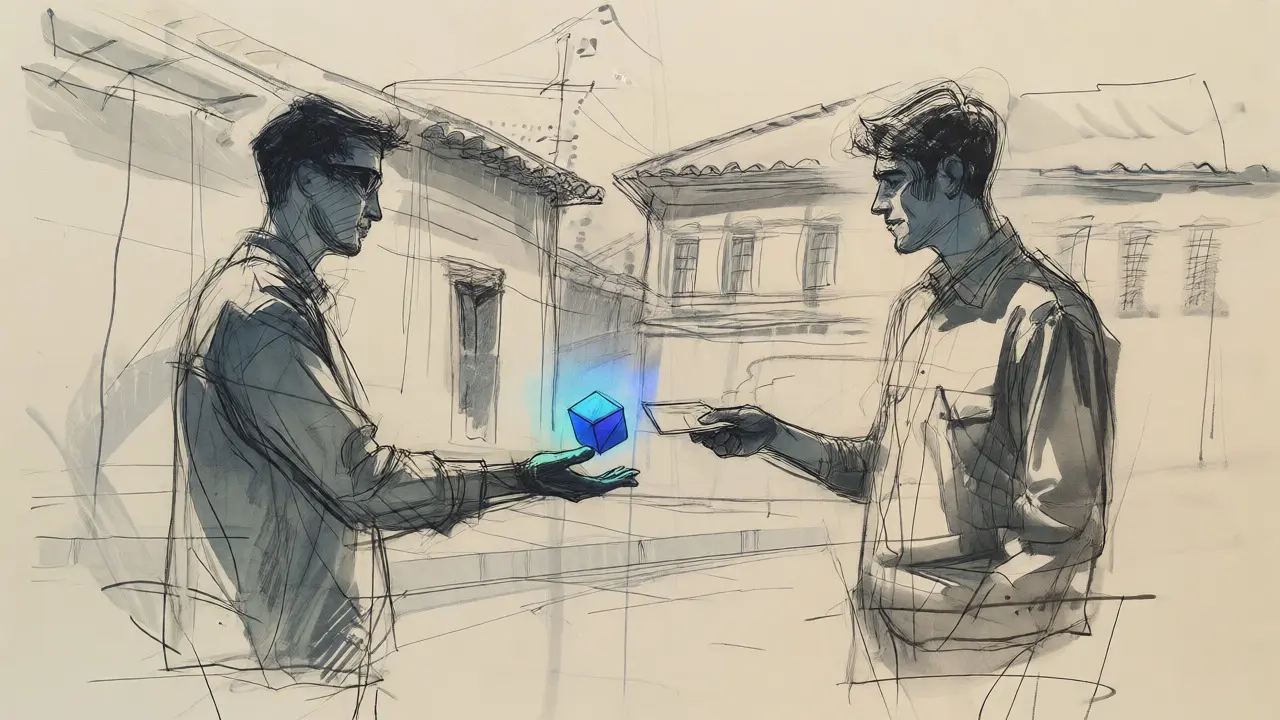
The backbone of this underground movement is peer-to-peer trading. Platforms like Binance P2P and LocalCoinSwap serve as digital bulletin boards, but the actual execution often feels very analog. Here is how a typical transaction works for someone looking to enter the underground crypto market in Ecuador:
- Listing: A seller posts an offer to sell 100 USDT (a stablecoin pegged to the dollar) for $105 USD cash.
- Agreement: A buyer accepts the offer. They agree to meet at a public place, like a mall in Guayaquil or a café in Cuenca.
- Exchange: The buyer hands over physical bills. The seller releases the crypto from their escrow wallet on the platform.
- Completion: Both parties mark the transaction complete. No bank involved, no tax form filed immediately.
This method bypasses the strict Know Your Customer (KYC) checks that centralized exchanges require for large fiat deposits. For many Ecuadorians, especially those without formal bank accounts or those who distrust the banking sector, this accessibility is worth the slight risk of meeting strangers.
Legal Risks vs. Practical Reality
Is it dangerous to participate? Not necessarily. The law doesn't punish you for holding Bitcoin. However, the lack of regulation means you have zero protection if things go wrong. If you send money to a scammer who promises to deliver Ethereum, there is no consumer protection agency to call. The Central Bank of Ecuador has warned repeatedly that cryptocurrencies are volatile and not backed by any entity.
Moreover, tax implications are murky. While income from crypto sales should theoretically be reported, enforcement is inconsistent. Many small traders ignore this, operating under the radar. Larger businesses accepting crypto face higher scrutiny. If a restaurant starts taking Bitcoin payments, they need to convert it to dollars quickly to pay suppliers and employees, often using the same P2P networks mentioned above. This creates a cycle where crypto circulates locally before being converted back to fiat, keeping value within the community but outside the official ledger.
Key Players and Platforms
Even though the activity is "underground," the tools used are global. There are no major local-only exchanges dominating the space. Instead, international platforms fill the gap. Here is a breakdown of the entities facilitating these trades:
| Platform Type | Examples | Role in Underground Market | Risk Level |
|---|---|---|---|
| Global P2P Exchanges | Binance P2P, LocalCoinSwap | Connects buyers/sellers; handles escrow | Medium (Counterparty risk) |
| Centralized Exchanges (CEX) | CEX.IO, Bybit, Gemini | Used for storing/trading after initial acquisition | Low (Regulatory compliance) |
| Local Cash Agents | Informal brokers, WhatsApp groups | Facilitates direct cash-for-crypto swaps | High (No escrow, fraud risk) |
Notice the distinction between "Centralized Exchanges" and "Local Cash Agents." The former are legal, regulated entities. The latter represent the true underground element-individuals or small groups acting as liquidity providers without licenses. These agents often charge higher spreads (the difference between buy and sell prices) to compensate for the risk and effort of handling physical cash.

Challenges for New Entrants
If you want to join this market, you need to navigate several hurdles. First, liquidity varies by city. Quito and Guayaquil have active communities, but smaller towns might struggle to find buyers or sellers willing to deal in cash. Second, security is paramount. Because these transactions often involve large amounts of physical currency, theft is a real concern. Most experienced traders recommend meeting in busy, well-lit areas and verifying the crypto receipt on-chain before handing over cash.
Another challenge is the psychological barrier. Older generations in Ecuador remember hyperinflation and economic instability. They trust dollars in hand. Convincing them that a digital token holds value requires education. This is where community-driven efforts come in. Informal workshops and online groups help demystify blockchain, explaining why a decentralized asset might be safer than a failing local bank during a crisis.
The Future of Crypto in Ecuador
Will this underground market stay hidden forever? Probably not. As adoption grows, pressure mounts for clearer regulations. Other Latin American countries, like El Salvador, have embraced Bitcoin as legal tender. Ecuador might follow suit, or it might create a middle-ground framework that allows businesses to accept crypto without treating it as primary currency.
For now, the underground crypto market in Ecuador serves a vital function. It provides financial inclusion for the unbanked and a hedge against inflation for the wealthy. It’s messy, unregulated, and sometimes risky, but it’s also resilient. If you’re planning to invest or trade here, treat it like any emerging market: do your homework, start small, and always prioritize security over speed.
Is it illegal to buy Bitcoin in Ecuador?
No, it is not illegal to buy, sell, or hold Bitcoin in Ecuador. However, cryptocurrencies are not considered legal tender, meaning they cannot be used to legally force payment for goods and services in the same way US Dollars can. Trading is permitted, but the regulatory environment is cautious.
Why do people use underground P2P markets instead of banks?
Many Ecuadorians use P2P markets because traditional banks often reject crypto-related transfers, charge high fees, or take days to process international wires. P2P allows for instant cash-to-crypto conversion without involving the banking system, offering speed and privacy.
Are there taxes on crypto profits in Ecuador?
Technically, gains from selling assets are taxable income. However, enforcement on individual crypto traders is inconsistent. Most small-scale traders do not report these gains, while larger businesses must account for them when converting crypto to USD for operational expenses.
What is the safest way to trade crypto in Ecuador?
Using established P2P platforms with escrow services (like Binance P2P or LocalCoinSwap) is generally safer than informal cash deals. Escrow holds the funds until both parties confirm the transaction, reducing the risk of fraud compared to handing cash directly to an unknown broker.
Can I pay for coffee with Bitcoin in Quito?
You can try, but most merchants will refuse because they cannot legally accept it as final settlement easily, and they would need to convert it to USD immediately. Some tech-savvy cafes may accept it, but it is rare and usually done through third-party processors rather than direct P2P.