

Imagine holding a digital wallet full of cryptocurrency, standing in a bustling market in Istanbul, and being told you cannot pay for your dinner with it. This isn't a hypothetical scenario; it is the daily reality for millions of people living in Turkey. The confusion often stems from a single event: the April 2021 ban on using crypto as a payment method. But to understand where things stand today, you have to look beyond that initial headline.
The regulatory landscape has shifted dramatically since then. While you still cannot use Bitcoin or Ethereum to buy coffee, the rules around trading, holding, and business compliance have become incredibly strict. If you are trying to navigate this system-whether you are a local trader, a foreign investor, or a business owner-you need to know exactly what is legal, what is blocked, and why the government took these specific steps.
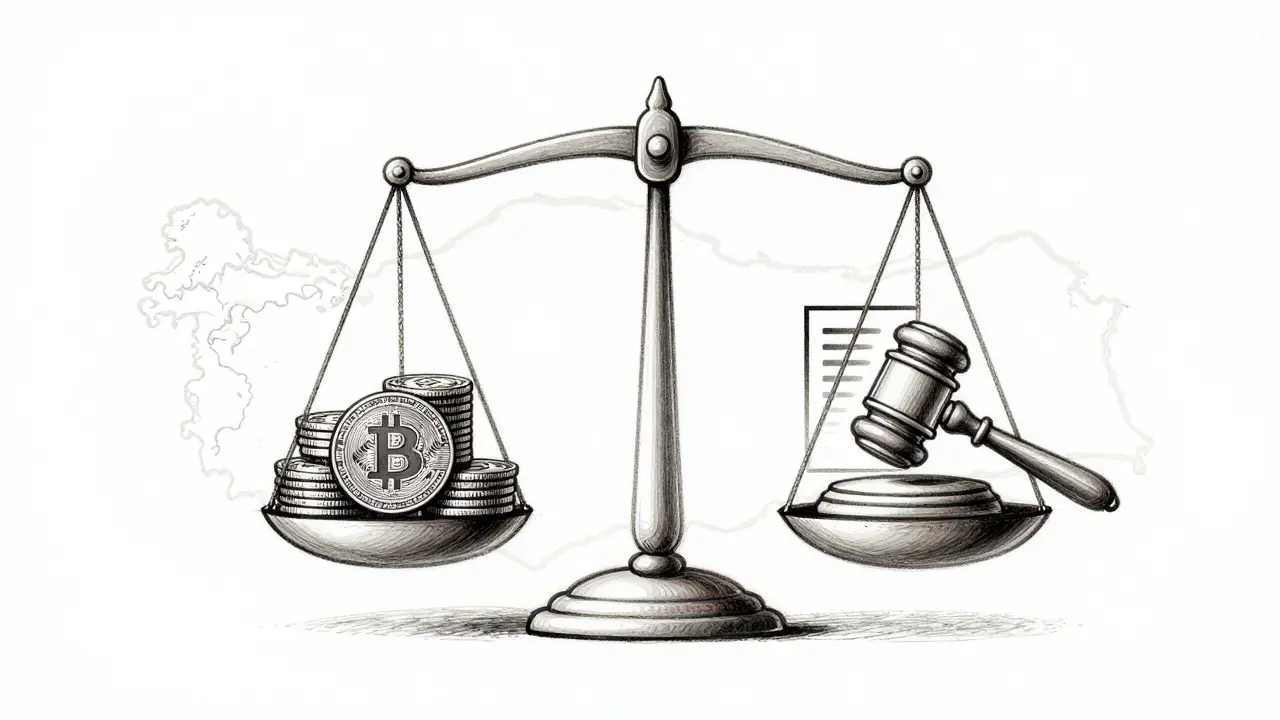
The Core Rule: Trading Is Allowed, Payments Are Not
To get straight to the point, the Central Bank of the Republic of Turkey (CBRT) issued a regulation on April 16, 2021, which officially banned the use of cryptoassets for payments. This rule took effect on April 30, 2021. It was published in the Official Gazette of the Republic of Turkey (No. 31456), making it a matter of public record and legal obligation.
This ban applies to everyone. Merchants, service providers, and payment processors are prohibited from accepting digital currencies directly or indirectly. However, here is the crucial distinction that many people miss: the regulation explicitly states that crypto assets are not prohibited goods. You can buy them. You can sell them. You can hold them. You can transfer them between wallets. The only thing you cannot do is use them as a medium of exchange for goods and services within the country.
Why did the CBRT make this move? They cited five specific risks in their official statement:
- Cryptoassets lack regulatory supervision mechanisms or a central authority.
- Market values exhibit excessive volatility, threatening financial stability.
- Anonymous structures facilitate illegal activities like money laundering.
- Digital wallets can be stolen or used without authorization.
- Transactions are irrevocable, meaning if you send funds by mistake, they are gone forever.
This "targeted restriction" model places Turkey in a unique spot globally. Unlike China, which implemented a comprehensive ban on all cryptocurrency activities in 2021, or El Salvador, which adopted Bitcoin as legal tender later that same year, Turkey chose a middle path. It aligns more closely with frameworks seen in Kazakhstan and Russia, which restrict usage but allow for regulated trading markets.
The Rise of CASPs and Strict Licensing
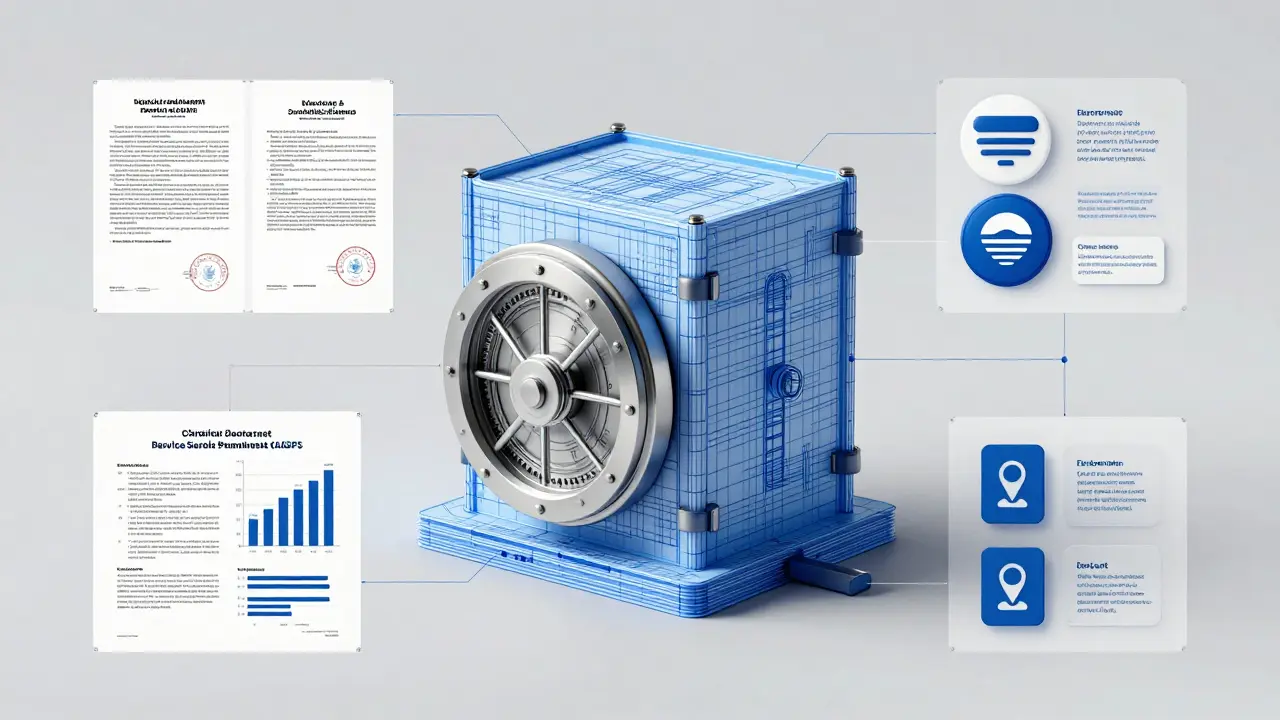
If the 2021 ban was the foundation, the subsequent years built a heavy structure on top of it. The most significant change came with the implementation of the 'Law on Amendments to the Capital Markets Law' in July 2024. This law requires all Crypto Asset Service Providers (CASPs) to obtain operating licenses from the Turkish Capital Markets Board (CMB).
Let's break down what a CASP is. These are the entities that interact with crypto on behalf of users. This includes crypto exchanges, custodians who hold your assets, and even some wallet service providers. Before this law, many international platforms operated in a gray area. Now, they must register locally and meet stringent capital requirements.
| Entity Type | Minimum Capital (TRY) | Approximate USD Value |
|---|---|---|
| Crypto Exchanges | 150 million TRY | $4.1 million |
| Custodians | 500 million TRY | $13.7 million |
These numbers are not small talk. They create a high barrier to entry designed to weed out smaller, less stable operators. The CMB serves as the primary regulatory authority for these entities. Meanwhile, the Financial Crimes Investigation Board (MASAK) enforces Anti-Money Laundering (AML) regulations, and the Scientific and Technological Research Council of Türkiye (TÜBİTAK) oversees technical compliance standards. This multi-agency approach ensures that every aspect of a crypto business-from its code to its customer base-is under scrutiny.
New AML Rules and Identity Verification
The regulatory tightening didn't stop at licensing. In December 2024, Turkey published additional AML regulations in the Official Gazette. These rules established a critical threshold: 15,000 Turkish lira (approximately $425). Any transaction exceeding this amount requires mandatory identity verification. These rules were scheduled to take effect on February 25, 2025.
What does this mean for the average user? If you want to send or receive more than 15,000 lira in crypto, the platform must verify your identity. But it gets stricter. The regulations also mandate verification for transactions involving unregistered wallet addresses. If you try to transfer funds to a wallet that hasn't been properly registered or lacks adequate sender details, that transfer can be flagged as 'risky.' In many cases, these transfers are subject to immediate suspension.
This effectively kills the anonymity that early crypto enthusiasts prized. For businesses, this means massive operational changes. Exchanges reported 30-40% increases in compliance staffing needs according to Deloitte Turkey's January 2025 industry report. They now need dedicated risk management teams, price monitoring systems to detect suspicious activity, and robust procedures for terminating relationships with non-compliant users.
Enforcement Actions and DeFi Restrictions
Talk is cheap; enforcement is real. In March 2025, the CMB took decisive action by blocking 46 crypto platforms. This list included major decentralized finance (DeFi) protocols like PancakeSwap. This move demonstrated Turkey's increasing regulatory stringency. The requirement is clear: if you serve Turkish users, you must have a local presence and adhere to strict oversight.
The CMB prohibits derivative transactions involving crypto entirely. However, they permit Initial Coin Offerings (ICOs) under one condition: exchanges must review the associated smart contracts and ensure they comply with listing criteria. This shows a nuanced understanding of technology-they aren't banning innovation outright, but they are demanding control over how it enters the market.
User experiences reflect this tension. On the r/CryptoTurkey subreddit, which has over 45,000 members as of March 2025, discussions frequently highlight the frustration of the "Turkish crypto paradox." Users can trade freely on licensed platforms, but they cannot use their USDT or Bitcoin to pay for everyday expenses. One user, AnkaraTrader88, commented in January 2025: "I can trade freely but can't use my USDT to pay for dinner-that's the Turkish crypto paradox." Reviews on Trustpilot for major exchanges like Binance Turkey echo this sentiment, praising the efficiency of trading platforms while criticizing the uselessness of crypto for actual payments.
The Legal Challenge and Future Outlook
Is the current system permanent? Not necessarily. Sima Baktaş, founding partner of the Turkish law firm GlobalB, is challenging the payment ban in a landmark case scheduled for May 28, 2025, in Ankara. Baktaş argues that lifting the ban would "foster financial sector development, make payments more effective, and increase Turkey's attractiveness for blockchain businesses."
Baktaş cites survey data showing an 11-fold increase in cryptocurrency users during 2021 and a 12% overall growth in crypto usage by 2023. By 2023, 19.3% of Turkey's population was actively using cryptocurrencies. Despite the payment ban, the market has grown substantially, with Finance Magnates estimating a $170 billion sector value in December 2024. This suggests that demand is resilient, even if utility is restricted.
However, enterprise adoption remains low. Only 2% of Turkish businesses accept cryptocurrency, compared to 14% in neighboring Georgia, which has more permissive regulations. The upcoming court decision could change this dynamic. If successful, the lawsuit might lead to "better secondary laws and new licensing opportunities for cryptocurrency businesses," as Baktaş stated in MiTrade's March 6, 2025 report. Conversely, the CMB's recent enforcement actions suggest that the government is committed to maintaining tight control over financial flows.
Can I use Bitcoin to buy goods in Turkey?
No. Since April 30, 2021, it is illegal for merchants and payment processors in Turkey to accept cryptocurrency as payment for goods or services. You can only buy, sell, hold, or transfer crypto through licensed platforms.
What is a CASP in Turkey?
A CASP stands for Crypto Asset Service Provider. Under laws implemented in July 2024, any entity acting as a crypto exchange, custodian, or wallet provider must obtain a license from the Turkish Capital Markets Board (CMB) and meet significant capital requirements.
When do I need to verify my identity for crypto transactions?
As of February 25, 2025, you must undergo identity verification for any transaction exceeding 15,000 Turkish lira (approx. $425). Additionally, transactions involving unregistered wallet addresses may require verification regardless of amount.
Are DeFi platforms like PancakeSwap available in Turkey?
Many DeFi platforms have been blocked. In March 2025, the CMB blocked 46 platforms, including PancakeSwap, for failing to register locally and comply with AML regulations. Access to these services is restricted for residents.
Is there a chance the crypto payment ban will be lifted?
There is a legal challenge pending. Law firm GlobalB is arguing against the ban in court, with a hearing scheduled for May 28, 2025. While the outcome is uncertain, the argument centers on boosting financial development and attracting blockchain businesses.
Navigating Turkey's crypto environment requires patience and strict adherence to the rules. The days of wild west trading are over. Today, it is a highly regulated space where compliance is king. Whether you are trading for profit or simply holding assets, understanding the roles of the CBRT, CMB, and MASAK is essential to keeping your funds safe and your operations legal.


