
On December 30, 2024, the EU’s MiCA regulation became fully active. For crypto businesses operating in Europe, this wasn’t just a new rule-it was a deadline. If you were already offering crypto services before that date, you got a grace period. But that grace period isn’t the same everywhere. And if you ignore it, your business could shut down overnight-even if you’re compliant in one country.
What MiCA Actually Changes for Crypto Companies
Before MiCA, every EU country had its own rules for crypto. Some had strict licensing. Others had almost none. That made it messy for businesses trying to serve customers across borders. MiCA fixes that. It creates one set of rules for the entire EU and EEA. Now, if you get licensed in one country, you can offer services across all 27 EU members and three EEA countries without applying again. That’s called passporting. It’s the whole point. But here’s the catch: you can’t just start using passporting right away. You need authorization as a Crypto-Asset Service Provider (CASP). And if you were already operating before December 30, 2024, you’re not automatically authorized. You’re in a gray zone-allowed to keep running, but only temporarily. That’s the transition period.Transition Periods Vary by Country-And That’s a Big Problem
The EU gave member states flexibility to set their own transition deadlines, up to 18 months after MiCA’s full application. But most didn’t use the full time. In fact, 15 countries chose shorter windows-some as little as five months. Here’s what it looks like in practice:- Belgium, Czech Republic, Poland: Deadline to apply for license is July 31, 2025. Operations allowed until July 1, 2026.
- Lithuania: Transition ends January 1, 2026.
- Finland, Netherlands, Slovenia, Hungary, Latvia: Deadline is June 30, 2025.
- Norway (EEA): Transition ends December 30, 2025.
Grandfathering Isn’t a License-It’s a Temporary Stay
Many businesses thought being “grandfathered in” meant they were now MiCA-compliant. It doesn’t. Grandfathering only lets you keep offering services while you wait for your application to be reviewed. You still don’t have a CASP license. And without that license, you can’t passport. That’s critical. If you’re based in Germany but serve customers in Finland, and Finland’s deadline passed, you can’t legally serve those Finnish customers anymore-even if your German license is pending. You’re not protected by MiCA until you’re fully authorized. The EU’s watchdog, ESMA, made this clear: grandfathering doesn’t grant rights under MiCA. It’s a pause button, not a green light.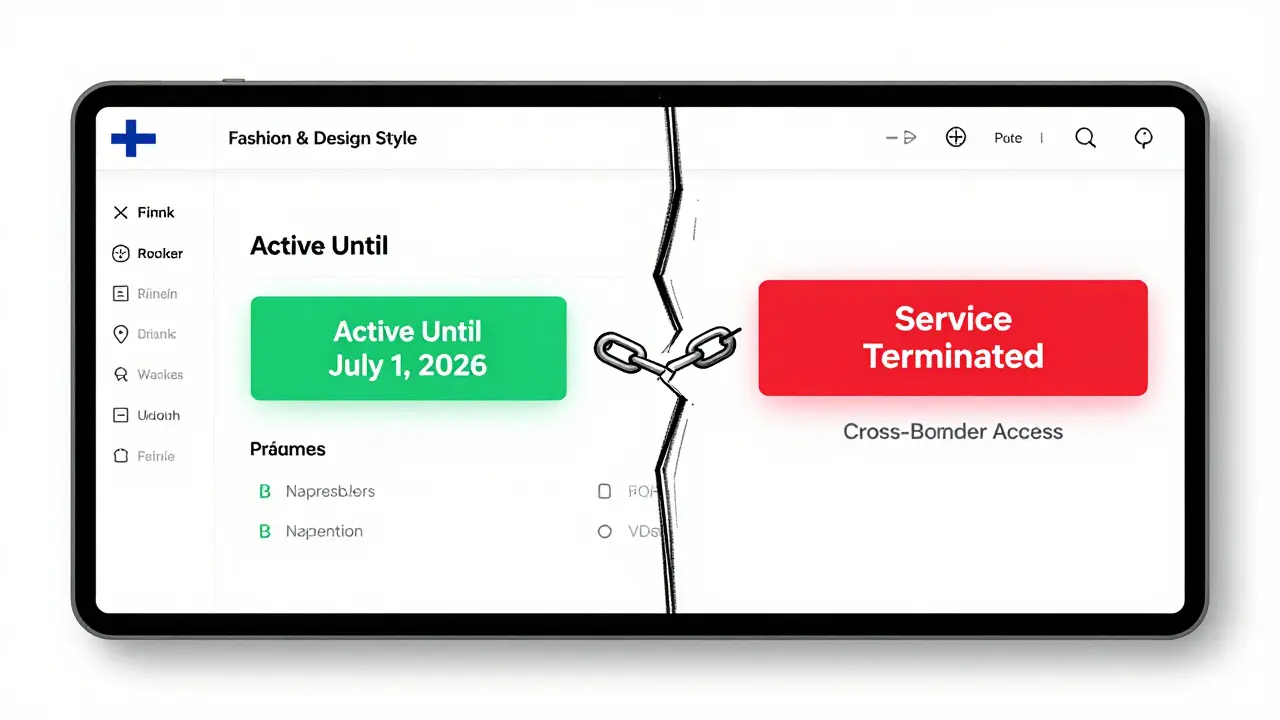
Cross-Border Businesses Are in the Most Danger
This is where things get dangerous. If your company operates in more than one EU country, you don’t get to pick the longest transition period. You have to follow the shortest one. Example: You’re registered in Poland (transition ends July 1, 2026), but you also serve clients in Finland (deadline June 30, 2025). Even if your Polish application is still being reviewed, you must stop serving Finnish customers after June 30, 2025. Why? Because Finland’s rules apply to anyone offering services there. If you’re not authorized under MiCA, you’re breaking the law in Finland-even if you’re fine in Poland. ESMA told national regulators they must monitor this. If a business is serving clients in multiple countries, the authority in each country must coordinate. But coordination doesn’t mean protection. If one country’s deadline passes, your service to that country stops.Who’s Already Licensed? And What Does That Mean?
By mid-2025, over 40 CASP licenses had been issued across the EU. The Netherlands and Malta were first-issuing licenses on December 30, 2024. Germany followed in January 2025. These early adopters aren’t just ahead of the curve-they’ve unlocked the real power of MiCA: passporting. Now they can open offices or offer services in France, Spain, or Estonia without applying again. That’s a massive advantage. Competitors still waiting for their licenses can’t do that. They’re stuck in national limbo. The European Securities and Markets Authority (ESMA) maintains a public register of licensed CASPs. You can check if your provider is on it. If they’re not, they’re still operating under old rules-and that’s risky for you as a customer.What You Need to Do Now
If you run a crypto business in the EU:- Find out which country’s transition deadline applies to you. Is it based on where you’re registered? Or where your customers are?
- If you serve customers in multiple countries, identify the shortest deadline. That’s your real cutoff.
- Check if you’ve submitted your CASP application. If not, you’re already late in some countries.
- Stop serving clients in any country where your transition period has expired-even if you’re still operating elsewhere.
- Track your application status on your national regulator’s website. If it’s been over six months with no response, escalate.
What Happens If You Miss the Deadline?
If you keep operating after your transition period ends without a license:- You’re breaking EU law.
- Your assets could be frozen.
- Your customers can’t withdraw funds legally.
- You risk fines, criminal charges, or being shut down by regulators.
Why MiCA Matters Beyond the EU
MiCA isn’t just about Europe. It’s becoming the global standard. Countries like the UK, Canada, and Australia are watching closely. If you’re planning to expand outside the EU, having a MiCA license gives you credibility. It signals you’re serious about compliance. It also means your customers can trust you more. People are starting to ask: “Are you MiCA-licensed?” If you say no, they walk away.Final Reality Check
MiCA was designed to bring order to chaos. But the transition period wasn’t meant to be a free pass. It was a countdown. And now, that countdown is over for many. If you’re still waiting to apply, you’re behind. If you’re still operating in a country where the deadline passed, you’re exposed. There’s no more grace. The EU is enforcing MiCA-and it’s not asking for permission. The winners aren’t the ones who waited. They’re the ones who applied early, got licensed, and now operate across the entire EU without limits. Don’t be the one who missed it.What happens if my crypto business doesn’t get a MiCA license by the deadline?
If you don’t get licensed by your country’s deadline, you lose legal permission to offer crypto services in the EU. Regulators can freeze your assets, block your website, or shut down your operations. You also can’t legally serve customers in any EU country-even if you’re licensed elsewhere. There’s no extension.
Can I keep serving customers in a country after my transition period ends?
No. Once your transition period ends, you must stop serving customers in that country unless you have a valid MiCA license. Even if you’re licensed in another EU country, you can’t serve clients in a country where your transition has expired. The rule is based on where the customer is, not where you’re based.
What’s the difference between a national license and a MiCA license?
A national license only lets you operate in one country. A MiCA license (CASP authorization) lets you operate across the entire EU and EEA through passporting. Before MiCA, you needed separate licenses in each country. Now, one license covers all. But you only get passporting after you’re fully authorized under MiCA-not during the transition.
Do I need a MiCA license if I only deal with Bitcoin and Ethereum?
Yes. MiCA applies to all crypto-assets, including Bitcoin and Ethereum, if you’re offering services like trading, custody, or exchange. The regulation doesn’t exempt major cryptocurrencies. If you’re a service provider in the EU, you need a CASP license regardless of which tokens you handle.
How long does it take to get a MiCA license?
Processing times vary. In the Netherlands and Germany, approvals took 3-6 months after application. In countries with less experience, it can take over a year. ESMA recommends applying at least six months before your transition deadline. Delays are common, so don’t wait until the last minute.


