

What Is Yield Farming in 2025?
Yield farming isn’t just about staking your crypto and waiting for rewards anymore. In 2025, it’s a full-blown financial strategy where you lend your digital assets to decentralized platforms and get paid in return-often in the form of tokens, trading fees, or both. The goal? Turn your idle crypto into consistent income. But not all platforms are created equal. Some offer steady, low-risk returns. Others promise wild returns but come with serious risks like smart contract exploits, impermanent loss, or sudden token dumps.
Today’s top yield farming platforms have evolved far beyond the chaotic days of 2020. They’re more secure, more automated, and more cross-chain. You no longer need to juggle 10 different wallets or manually compound rewards every few hours. The best platforms do it for you. But choosing the right one still depends on your risk tolerance, technical comfort, and how much time you want to spend managing your money.
Curve Finance: The Safe Bet for Stablecoin Farmers
If you want low volatility and predictable returns, Curve Finance is still the gold standard. Launched in 2020, it specializes in liquidity pools for stablecoins like USDC, DAI, and USDT. These pools don’t swing wildly in value because they’re designed to trade assets that are pegged to the dollar. That makes Curve ideal for people who want to earn yield without watching their portfolio crash during a market dip.
In 2025, Curve offers APYs between 5% and 15%, depending on the pool and market conditions. That’s not flashy, but it’s reliable. The platform has been audited multiple times and has held billions in locked value for years. It’s survived bear markets, hacks, and token crashes that wiped out lesser protocols.
One thing Curve doesn’t do: auto-compound. You get rewards in CRV tokens, but you have to manually reinvest them-or use a helper like Convex Protocol or Yearn Finance to do it automatically. Locking your CRV as veCRV gives you extra rewards and voting power in Curve’s governance, which can boost your yield by another 2-5% over time.
Bottom line: If you’re risk-averse and want steady income from stablecoins, Curve is your best starting point. It’s the DeFi equivalent of a high-yield savings account.
Yearn Finance: The Set-and-Forget Platform for Beginners
Yearn Finance is like having a professional fund manager for your crypto-except it’s automated and runs on blockchain code. Created by Andre Cronje, Yearn doesn’t just offer one yield strategy. It scans dozens of DeFi protocols every few minutes and moves your funds to wherever the best returns are. You deposit once, and Yearn handles the rest.
Its vaults cover everything from stablecoins to ETH and wrapped Bitcoin. APYs range from 4% to 20% in 2025, depending on the vault and underlying assets. The platform’s biggest strength? Simplicity. You don’t need to understand AMMs, liquidity pools, or gas fees. Just pick a vault, deposit, and forget it.
Yearn’s auto-compounding works in the background, reinvesting your rewards without you lifting a finger. It’s especially useful for small investors who can’t afford to pay high gas fees every time they try to compound manually. That said, some lower-tier vaults can underperform if the strategy gets too crowded or if gas costs spike on Ethereum.
Yearn also has a strong track record for security. Its smart contracts have been tested for over four years and have weathered multiple DeFi winters. It’s not the highest-yielding platform, but it’s one of the safest for newcomers who want to dip their toes into yield farming without learning everything at once.
Beefy Finance: The Cross-Chain Yield Powerhouse
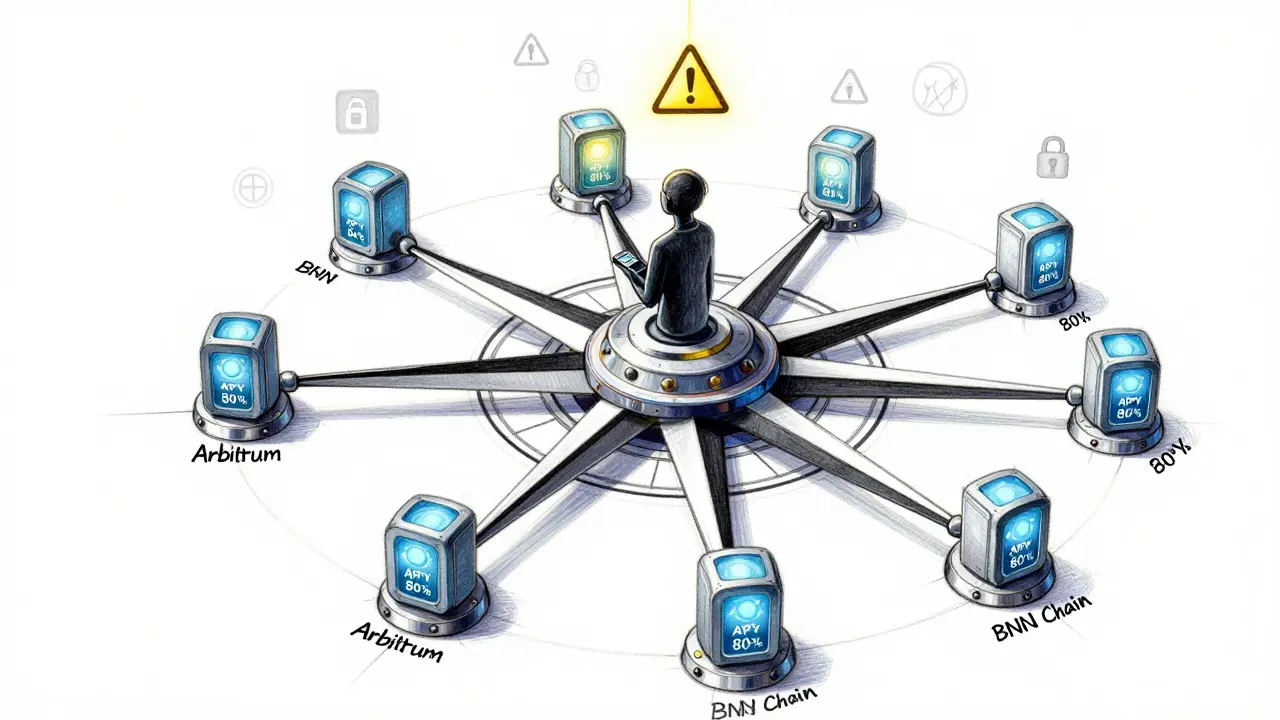
Beefy Finance is where serious yield farmers go when they want maximum returns-and they’re willing to trade complexity for it. Unlike platforms stuck on Ethereum, Beefy operates across more than 30 blockchains: BNB Chain, Polygon, Arbitrum, Avalanche, Fantom, and even TON. That means you can farm yields on chains with lower fees and faster transactions.
Its vaults offer APYs from 5% all the way up to 80%. Yes, 80%. But here’s the catch: those ultra-high yields usually come from newer, less-proven protocols or volatile token pairs. Beefy doesn’t create these strategies-it aggregates them. So if one underlying protocol fails, your funds could be at risk.
Beefy’s auto-compounding is powerful. It reinvests rewards automatically, often multiple times a day. It also lets you farm across chains without manually bridging assets. You deposit in one place, and Beefy handles the rest.
But this platform isn’t for beginners. You need to understand what you’re farming, which chains you’re using, and how the underlying protocols work. Many users lose money by chasing 70% APYs on obscure tokens that later crash. The key is diversification: spread your funds across multiple vaults and chains. Don’t put everything in one high-yield vault.
Beefy is ideal if you’re comfortable with DeFi, want to maximize returns, and don’t mind doing a bit of homework before depositing.
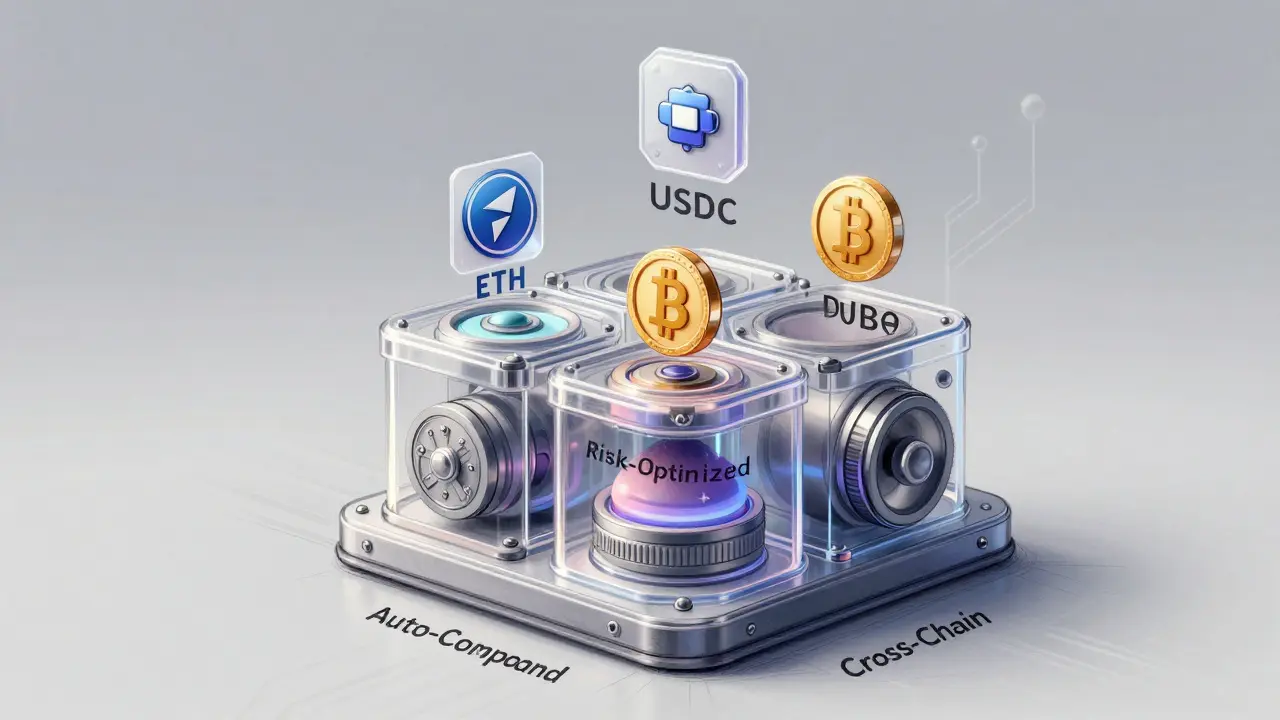
GMX: Earn From Trading Fees, Not Token Inflation
GMX flips the script on traditional yield farming. Instead of earning rewards from newly minted tokens, you earn from actual trading activity. How? By providing liquidity to GMX’s GLP pool. GLP is a basket of assets like ETH, WBTC, USDC, and other major cryptos. When traders use GMX to bet on price movements with leverage, they pay fees-and those fees get distributed to GLP holders.
In 2025, GMX offers APYs between 10% and 20%, paid in ETH and esGMX (a locked version of the GMX token). The yield isn’t inflated by token emissions-it’s backed by real trading volume. That makes it more sustainable than platforms that pay you in tokens you can’t sell without crashing the price.
GMX runs on Arbitrum and Avalanche, so gas fees are low. It also auto-compounds your rewards, so you don’t have to manage them manually. The platform has strong security and has never been hacked.
But there’s a downside: you’re exposed to the price of the assets in the GLP pool. If ETH drops sharply, your GLP value drops too-even if you’re earning good fees. You also get a small amount of risk from trader losses, since GMX’s model means traders’ losses become your gains. In extreme volatility, this can cause temporary imbalances.
GMX is perfect for experienced users who understand derivatives and want exposure to real market activity, not speculative token rewards.
How to Choose the Right Platform for You
There’s no single “best” yield farming platform. The right one depends on what you want.
- Low risk, steady income? Go with Curve Finance. Stick to stablecoin pools. Lock your CRV for extra rewards.
- Want simplicity and automation? Yearn Finance is your best bet. Pick a vault, deposit, and let it run.
- Want the highest possible returns and don’t mind complexity? Beefy Finance gives you access to 30+ chains and vaults with APYs up to 80%. But diversify your deposits.
- Prefer real yield from trading, not token inflation? GMX is unique. You earn from actual market activity. Great for long-term holders who understand volatility.
Most successful yield farmers use a mix. Put 50% in Curve for safety. Put 30% in Yearn for automation. Put 20% in Beefy or GMX for higher returns. Never put all your money in one place.
Common Mistakes to Avoid in 2025
Even experienced users make these mistakes:
- Ignoring impermanent loss - When you provide liquidity to volatile asset pairs, your holdings can lose value compared to just holding the assets. Use tools like DeBank or Zapper to track this.
- Forgetting gas fees - If you’re farming on Ethereum, manual compounding can cost $20-$50 per transaction. Auto-compounding platforms like Yearn and Beefy save you money here.
- Chasing the highest APY - A 100% APY often means the token will crash next week. Look at the platform’s history, audits, and team. Not just the number.
- Not tracking your total portfolio - Use dashboards like DeBank or Zapper to see all your positions in one place. Otherwise, you won’t know your real returns.
- Overlooking regulatory risks - Some platforms now restrict users from certain countries. Make sure your chosen platform is legal in your region.
What’s Next for Yield Farming?
2025 is shaping up to be the year yield farming becomes more institutional. Real-world asset (RWA) tokenization is starting to show up-think bonds, real estate, and commodities being turned into crypto tokens that earn yield. Platforms like Maple Finance and Centrifuge are already testing this.
Layer-2 networks like Arbitrum and zkSync are making farming cheaper and faster. AI-driven yield optimizers are starting to appear, using machine learning to predict the best pools before they get crowded.
Security is better than ever. Real-time monitoring, automated circuit breakers, and insurance pools are now standard on major platforms. Exit scams are rarer than they were in 2021.
The future of yield farming isn’t about chasing the next moonshot. It’s about building a balanced, automated, multi-chain income stream that works even when markets go down.
Frequently Asked Questions
Is yield farming still profitable in 2025?
Yes, but the days of 200% APYs are over. Profitable yield farming in 2025 means focusing on sustainable returns-5% to 20% from stablecoins, trading fees, or well-audited protocols. High-yield farms often collapse quickly. The smart farmers now prioritize safety, automation, and diversification over short-term hype.
What’s the safest yield farming platform in 2025?
Curve Finance is the safest. It’s been around since 2020, specializes in stablecoins, has multiple security audits, and holds billions in locked value. Yearn Finance is also very safe due to its long track record and automated, conservative strategies. Avoid new, un-audited protocols-even if they promise 100% APY.
Do I need to pay gas fees for yield farming?
Yes, but it depends on the platform and chain. On Ethereum, gas fees can be high-sometimes $10-$50 per transaction. That’s why auto-compounding platforms like Yearn and Beefy are so valuable. They reduce the number of transactions you make. On chains like Polygon, BNB Chain, or Arbitrum, gas fees are often under $0.10, making farming much cheaper.
Can I lose money yield farming?
Absolutely. You can lose money through impermanent loss (if prices swing), smart contract exploits, token crashes, or platform failures. Even GMX and Curve aren’t risk-free. Always do your research, start small, and never invest more than you can afford to lose. Diversification is your best defense.
What’s the difference between APY and APR in yield farming?
APR (Annual Percentage Rate) is the simple interest you earn in a year. APY (Annual Percentage Yield) includes compounding-meaning you earn interest on your interest. Most yield farming platforms advertise APY because it’s higher and more attractive. For example, a 10% APR that compounds daily becomes about 10.5% APY. Auto-compounding platforms like Beefy and Yearn maximize your APY.
Should I use a hardware wallet for yield farming?
For large amounts, yes. For small, frequent trades, a secure software wallet like MetaMask is fine. But never connect your hardware wallet directly to a yield platform. Instead, use a separate wallet with a small amount of funds for farming. Keep your main holdings offline. This limits your exposure if a platform gets hacked.
Next Steps for New Yield Farmers
Start small. Pick one platform that matches your risk level. If you’re new, try Yearn Finance with a $50 deposit in a stablecoin vault. If you’re comfortable with DeFi, try Curve with $100 in USDC/DAI. Track your returns for a month using DeBank. Then expand to a second platform.
Never rush into a high-yield vault without reading its audit reports and checking its community on Discord or Twitter. Most failures happen because people chase numbers instead of understanding the system behind them.
Yield farming in 2025 isn’t about getting rich overnight. It’s about building a steady, automated income stream that works while you sleep. Do it right, and it becomes one of the most reliable ways to grow your crypto holdings over time.


