
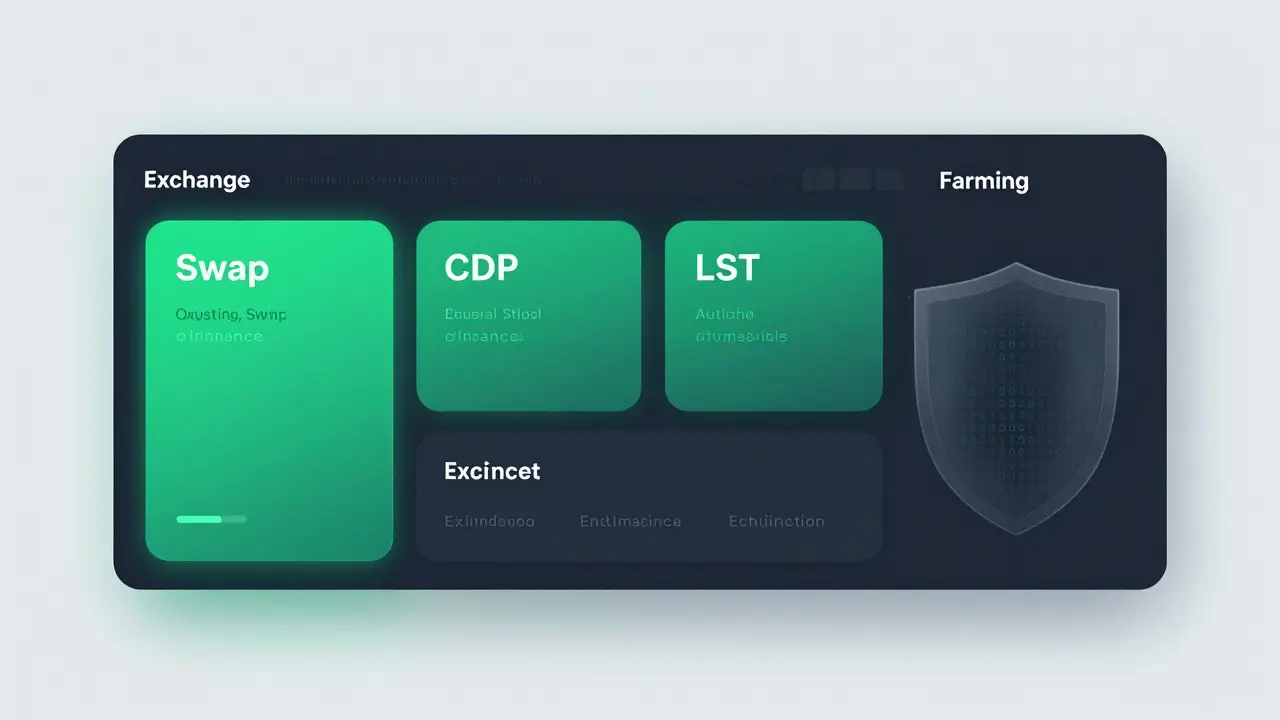
Thala v1 wasn't just another DeFi platform - it was one of the biggest names on the Aptos blockchain. By November 2024, it had locked up $240 million in user funds, offering tools like swapping tokens, borrowing against crypto, and earning rewards through staking. For users, it felt like a safe, reliable way to grow their crypto holdings. Then, everything changed.
What Went Wrong? The $25.5 Million Exploit
On November 15, 2024, Thala v1 was hit by a devastating exploit. An attacker found a simple but deadly flaw in its farming contracts. The issue? The system didn't check whether a user actually had enough staked tokens before allowing them to withdraw.
Here's how it worked in practice:
- The attacker added liquidity to a THALA-LP pool and got LP tokens in return.
- They staked those LP tokens into Thala's farming contract.
- Then, they unstaked - which reset their balance to zero.
- But instead of stopping there, they tried to unstake again - this time for a massive amount, even though their staked balance was now zero.
- The smart contract, lacking a basic validation check, allowed it.
This wasn't some advanced hack. It was a basic coding mistake - the kind that should have been caught during a routine audit. The attacker walked away with $25.5 million in THALA-LP tokens, which were quickly converted into $9 million in MOD stablecoins, $2.5 million in THL tokens, and 400,000 APT tokens.
How Thala Responded: Fast, Smart, and Transparent
Most DeFi projects panic when this happens. Some vanish. Others blame users. Thala did something different.
Within hours:
- All farming contracts were paused.
- $11.5 million in remaining assets were frozen.
- The team worked with blockchain investigators like Seal 911 and Ogle to trace the attacker's movements.
By the six-hour mark, they had the attacker’s wallet pinned down. Instead of filing a lawsuit or demanding a public shaming, they made a bold offer: $300,000 in bounty if the attacker returned everything.
The attacker agreed.
Every single dollar - $25.5 million - was returned. Not a penny was lost by users. Thala didn’t just fix the problem; they made sure no one else paid for it.
The Aftermath: TVL, Token Price, and User Trust
The damage didn’t end with the theft. The market reacted hard.
- The THL token dropped 35%, falling from around $0.78 to $0.51.
- Total Value Locked (TVL) fell from $240 million to $195.6 million - a $44.4 million loss.
- Many users pulled their funds out, scared of another incident.
Thala didn’t ignore this. Their CEO, Adam Cader, posted a clear message on X: "Security issues like this are painful, but they’re part of building on new blockchains. We keep going because each mistake teaches us - and the whole ecosystem - how to do better."
That attitude mattered. It showed users they weren’t dealing with a team that hid behind excuses. They were building - even after being hit.
What’s Still Broken? The Delayed Return of Staking
As of late November 2024, Thala had restored its Swap, CDP, and LST services. Users could still trade, borrow, and stake liquid tokens. But farming? Still offline.
Why? Because Thala refused to rush. They brought in third-party auditors, re-examined every line of code, and built new safety checks. No more trusting a contract just because it "worked before." They wanted to make sure no similar flaw existed anywhere else.
This delay wasn’t a sign of weakness - it was a sign of responsibility. Most platforms would have reopened staking within days. Thala waited until they were 100% sure.

Why This Matters Beyond Thala
Thala’s story isn’t just about one platform. It’s a case study in how DeFi can survive a major crisis.
In October 2024 alone, hackers stole $130 million across DeFi projects. In Q3 2024, over $460 million vanished in 28 separate incidents. Most of those projects never recovered. Users lost everything. Communities broke apart.
Thala did the opposite. They:
- Found the attacker fast
- Recovered all stolen funds
- Didn’t punish users
- Waited to reopen until it was truly safe
That’s rare. And it’s worth remembering: security isn’t about never getting hacked. It’s about how you respond when you do.
Is Thala v1 Still Worth Using Today?
If you’re thinking about using Thala now, here’s the honest take:
- Yes - if you want to use Swap, CDP, or LST. Those services are live, audited, and running smoothly.
- No - if you’re looking to farm or stake THALA-LP tokens. Those are still paused, and there’s no confirmed date for their return.
- Proceed with caution - THL’s price is still down 35%. Confidence is rebuilding, but slowly.
Thala v1 didn’t die. It evolved. The team didn’t run. They doubled down on safety. And in DeFi, where trust is everything, that might be the most valuable thing they’ve built.
What happened to Thala v1’s farming system?
Thala v1’s farming and staking functions were paused after a $25.5 million exploit in November 2024. The team has not reopened them because they are conducting a full re-audit of the codebase to ensure no other vulnerabilities exist. As of now, only Swap, CDP, and LST services are active.
Did users lose money in the Thala v1 hack?
No. Thala covered the entire $25.5 million loss themselves and negotiated the return of all stolen assets. Every user’s position was restored to 100% of its original value. No one had to repay or take action - Thala made sure everyone was made whole.
How did the attacker steal $25.5 million from Thala v1?
The attacker exploited a missing validation check in the unstake function. They staked THALA-LP tokens, unstaked them to zero their balance, then tried to unstake again - this time for a much larger amount than they had. The smart contract didn’t check if the withdrawal amount was valid, so it allowed the transaction, letting the attacker drain funds.
Is Thala v1 still operational today?
Yes, but partially. The Swap, Collateralized Debt Position (CDP), and Liquid Staking Token (LST) modules are fully functional. However, farming and staking remain paused while the team completes a full code audit. The frontend interface has been restored since November 16, 2024.
What is the current status of the THL token after the hack?
The THL token price dropped 35% after the exploit, falling from around $0.78 to $0.51. While it has stabilized since, trading volume and market confidence remain lower than pre-incident levels. The token’s value is now tied to the platform’s long-term recovery and the eventual return of farming.
Why did Thala offer a $300,000 bounty instead of suing the attacker?
Thala chose a pragmatic approach. Legal action would have taken years and likely wouldn’t have recovered all funds. By offering a bounty, they got the attacker to return $25.5 million immediately - far more than the $300,000 paid. It was a fast, efficient solution that protected users and saved resources.
Can Thala v1 be trusted again?
For non-farming services - yes. The Swap, CDP, and LST modules have been re-audited and are running securely. For farming, trust is still being rebuilt. Thala’s decision to delay reopening until every line of code is verified shows they prioritize safety over speed. That’s a good sign.


