
When you're looking for a new crypto exchange, you want one that’s secure, reliable, and transparent. But what happens when you stumble across a platform like Terrabit-a name that shows up on CoinMarketCap but doesn’t show up anywhere else? No user reviews. No security details. No regulatory compliance. Just a listing with a note: untracked.
What Does “Untracked” Really Mean?
On CoinMarketCap, “untracked” isn’t just a technical label. It’s a red flag. It means Terrabit doesn’t report its trading volume, and no independent source can verify how much trading actually happens on the platform. That’s not normal. Even small, lesser-known exchanges like Bitrue or Gate.io report their volumes. Why? Because transparency builds trust. And trust is the foundation of any crypto exchange. Terrabit’s untracked status suggests one of three things: it’s inactive, it’s hiding activity, or it doesn’t have enough users to matter. Given that major exchanges handle billions in daily volume, and even niche platforms report hundreds of millions, Terrabit’s silence speaks volumes. If you’re thinking of depositing funds, ask yourself: why would you trust a platform that won’t even tell you how many people use it?No Security Details. No Transparency.
Let’s talk security. Reputable exchanges like Kraken, Coinbase, and Binance publish detailed security protocols. They use cold storage for 95%+ of funds. They enforce FIDO2-compliant two-factor authentication (2FA)-not SMS, which is easily hacked. They run bug bounty programs. They limit API key permissions. They’ve survived multiple cyberattacks because they’re built to handle them. Terrabit? Nothing. Zero documentation. No mention in security reports from Chainalysis, Arkose Labs, or any other trusted source. There’s no evidence it uses encryption for private keys. No proof it stores assets offline. No indication it even has a 2FA system. In 2024 alone, North Korean hacking groups stole $1.34 billion from crypto platforms. If Terrabit doesn’t have basic protections, it’s not just risky-it’s a target waiting to be hit. And here’s the scary part: if Terrabit gets hacked, you won’t know until it’s too late. There are no public incident reports. No news articles. No user complaints on Reddit or Trustpilot. That’s not because it’s perfect-it’s because almost no one uses it. And if no one’s using it, there’s no one to report problems.Can You Even Use Terrabit?
Try finding a guide on how to sign up. Try finding a FAQ. Try finding a help center. You won’t. Established exchanges invest heavily in onboarding. Kraken has a “Learn” section with video tutorials. Coinbase walks you through buying your first Bitcoin step-by-step. Even smaller platforms like KuCoin offer clear instructions. Terrabit? Nothing. No getting-started guide. No wallet setup instructions. No explanation of withdrawal limits or fees. If you’re not a technical expert who can reverse-engineer a website, you’re stuck. And even if you figure out how to deposit, what happens when you want to withdraw? Is there a 24-hour delay? A whitelist requirement? A manual review? No one knows. No one has written about it. No one has tried it.
Regulatory Reality Check
The crypto world changed in 2025. The EU’s MiCA framework went live, forcing exchanges to comply with strict reporting, custody, and transparency rules. The U.S. passed the GENIUS Act, requiring stronger cybersecurity standards. Even in places like New Zealand, where regulations are still developing, the Financial Markets Authority has warned investors about unregulated platforms. Terrabit doesn’t appear on any official regulatory registry. It doesn’t claim to be licensed. It doesn’t mention compliance with AML or KYC rules. That means if you deposit $10,000 in ETH and the platform vanishes tomorrow, you have zero legal recourse. No regulator to call. No insurance fund to claim. No customer support to email. Compare that to Binance, which operates under multiple licenses globally, or Kraken, which is registered with FinCEN and follows strict U.S. compliance standards. Terrabit doesn’t even try to be in the same league.Why Do People Even Mention Terrabit?
You might wonder: if it’s so risky and obscure, why does it show up at all? The answer is simple: it’s a ghost in the machine. Some shady operators create fake exchange listings to lure unsuspecting users. They use generic names like “Terrabit,” “CryptoVault,” or “BitPulse” and list them on CoinMarketCap through automated bots. These platforms don’t exist as real services-they’re just placeholders designed to generate traffic or collect email signups for phishing campaigns. Others are abandoned projects. Maybe someone built it in 2022, gave up after a month, and never took it down. The domain still works. The CoinMarketCap listing still shows up. But no one maintains it. No one supports it. No one uses it. Either way, it’s not a legitimate exchange. It’s a digital ghost town.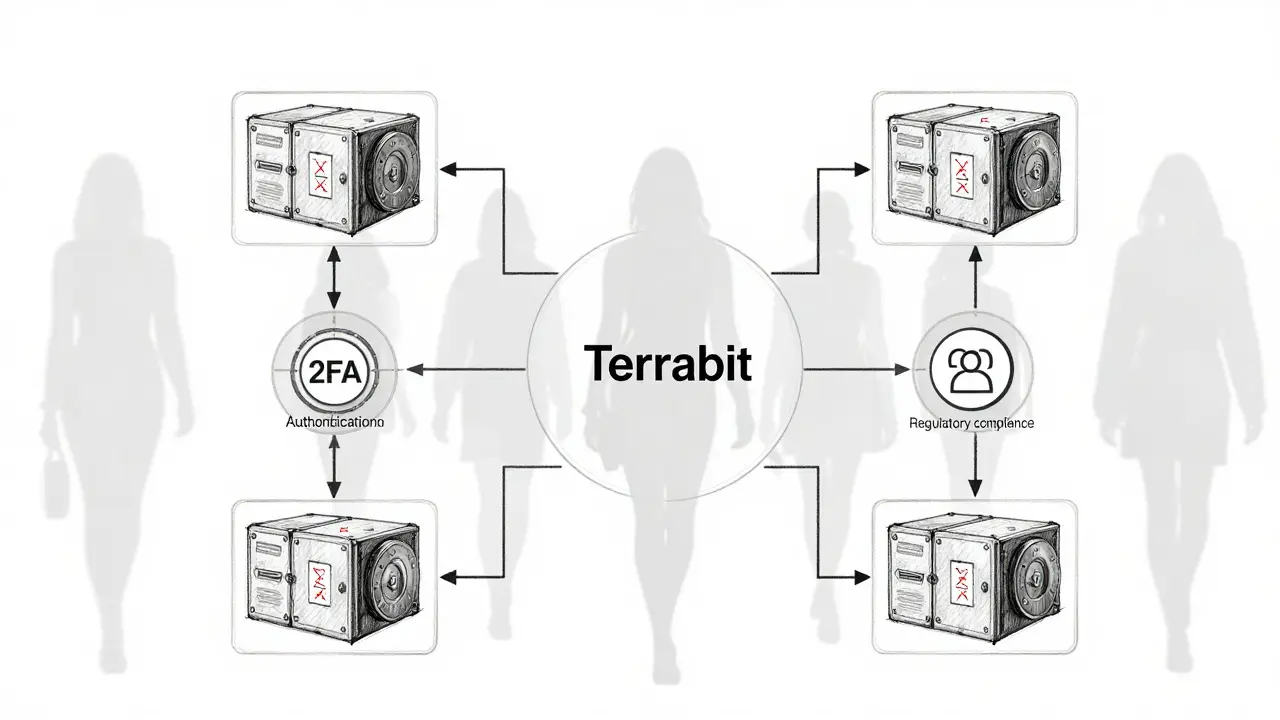
What Should You Do Instead?
If you’re looking for a safe, reliable crypto exchange, stick with platforms that have:- Verifiable trading volumes (tracked on CoinMarketCap or CoinGecko)
- Public security audits and transparency reports
- Two-factor authentication using authenticator apps (not SMS)
- Regulatory registration in major jurisdictions
- Active user communities on Reddit, Twitter, or Discord
- Clear customer support and help documentation
The Bottom Line
Terrabit isn’t just a bad crypto exchange-it’s a warning sign. It’s what happens when you skip the basics: transparency, security, compliance, and user trust. There’s no evidence it’s functional. No proof it’s secure. No record of users. No regulatory standing. And no reason to believe it will be around next month. If you’re tempted to try it, ask yourself: why take the risk? You don’t need to gamble on a platform that doesn’t even want to be seen. There are dozens of better, safer, and fully transparent alternatives. Use them.Don’t trade on ghosts. Trade on platforms that show their face.
Is Terrabit a legitimate crypto exchange?
No, Terrabit is not a legitimate crypto exchange. It’s listed as "untracked" on CoinMarketCap, meaning its trading volume isn’t verified by any independent source. There are no security details, no regulatory registrations, no user reviews, and no documentation. It lacks the basic transparency and infrastructure required of any credible exchange.
Why is Terrabit marked as "untracked"?
Terrabit is marked as "untracked" because it doesn’t provide verifiable data on trading volume, liquidity, or user activity. Major data aggregators like CoinMarketCap only label exchanges as tracked if they meet strict transparency standards. Terrabit fails this requirement, suggesting it either doesn’t operate at scale, hides its activity, or doesn’t exist as a real service.
Is Terrabit safe to use for trading or storing crypto?
No, Terrabit is not safe. There’s no evidence it uses cold storage, two-factor authentication, encryption for private keys, or any other standard security measure. Reputable exchanges implement these protections because cyberattacks are common-$1.34 billion was stolen from crypto platforms in 2024 alone. Terrabit offers no proof it can protect your assets.
Are there any user reviews for Terrabit?
There are no verified user reviews for Terrabit on Trustpilot, Reddit, or any major crypto forum. This absence isn’t normal-even small, legitimate exchanges have some user feedback. The lack of reviews strongly suggests either extremely low usage or that the platform is inactive or fraudulent.
What are better alternatives to Terrabit?
Better alternatives include Kraken (strong security and transparency), Coinbase (beginner-friendly), Binance (wide coin selection), and Independent Reserve (regulated in New Zealand). All of these platforms are tracked, regulated, and have active user communities. They also provide clear support, documentation, and verified security practices.
Could Terrabit be a scam?
It’s highly likely. Terrabit matches the profile of known crypto scams: no transparency, no user base, no security details, and no regulatory presence. Many fake exchanges are created to collect deposits and then disappear. Even if it’s not a scam, it’s so poorly maintained that it’s functionally useless and dangerous to use.
Does Terrabit support withdrawals?
There is no public information about Terrabit’s withdrawal process. No guides, no terms of service, no user reports. Without knowing how withdrawals work-whether there are limits, delays, or whitelisting requirements-you can’t safely use the platform. If you can’t find this basic info, assume it’s not reliable.
Is Terrabit compliant with MiCA or other regulations?
No, Terrabit shows no evidence of compliance with MiCA (EU), the U.S. GENIUS Act, or any other regulatory framework. It doesn’t claim to be licensed, doesn’t disclose KYC/AML policies, and isn’t listed on any official regulatory registry. Using it puts you at risk of losing funds with no legal protection.


