
VASP Registration Cost Calculator
Calculate Your VASP Registration Costs
Estimate the minimum costs to register as a Virtual Asset Service Provider in Taiwan (as of 2024)
Estimated Registration Cost
If you live in Taiwan and want to buy Bitcoin using your bank account, you’re out of luck. That’s not because the government hates crypto-it’s because they’ve made a deliberate choice to keep banks completely separate from digital asset trading. Since 2014, Taiwanese banks have been legally barred from handling any cryptocurrency transactions. Not exchanges. Not deposits. Not even wire transfers to crypto platforms. This isn’t a glitch in the system-it’s the system.
Why Taiwan Blocks Banks from Crypto
The Financial Supervisory Commission (FSC) made this call back in 2013 when Bitcoin was still a fringe idea. They didn’t ban crypto outright. Instead, they labeled it a “highly speculative virtual commodity,” not money. That distinction matters. It meant people could still own it, trade it, and even invest in it-but not through the banking system. The goal? To prevent money laundering, fraud, and financial instability from spilling into Taiwan’s tightly controlled banking sector. By 2022, the FSC went further. They told credit card companies: no more crypto purchases on cards. That move treated crypto like online gambling or stock trading-things banks are forbidden from financing. The message was clear: if you want crypto, you figure out how to pay for it yourself. No easy credit. No automatic bank transfers. No safety net.What’s Allowed: The VASP System
Taiwan didn’t shut the door on crypto. They built a back door. In 2025, they launched the Virtual Asset Service Provider (VASP) a government-registered entity that offers crypto trading, custody, or exchange services under strict regulatory oversight system. Any crypto platform operating in Taiwan must now register with the FSC. As of late 2024, only 23 companies made the cut. The biggest? MaiCoin Taiwan’s largest registered crypto exchange, handling around $70 million in daily trades and planning to go public on the local stock exchange. VASPs have to follow strict rules: keep customer funds separate from company money, use top-tier cybersecurity, and report suspicious activity. They’re monitored like banks-but they can’t act like them. No savings accounts. No loans. No FDIC-style insurance. Just trading and custody.How People Actually Buy Crypto in Taiwan
If your bank won’t let you send money to Binance or Coinbase, how do you buy crypto? You get creative. Most Taiwanese users rely on peer-to-peer (P2P) platforms. Think of it like buying a used phone from a stranger-but with Bitcoin. You pay cash, use a third-party payment app like LINE Pay or PiPay, or even do a bank transfer to a trusted intermediary who then sends crypto to your wallet. It’s slower. It’s riskier. But it works. International exchanges like Binance and Bybit that register as VASPs in Taiwan are also popular. They don’t take New Taiwan Dollar (TWD) deposits directly, but they let users deposit via approved local payment processors. These platforms often score higher on user reviews (4.2/5) than local ones (3.8/5) because they offer more coins, lower fees, and better interfaces-even if the payment process is clunky.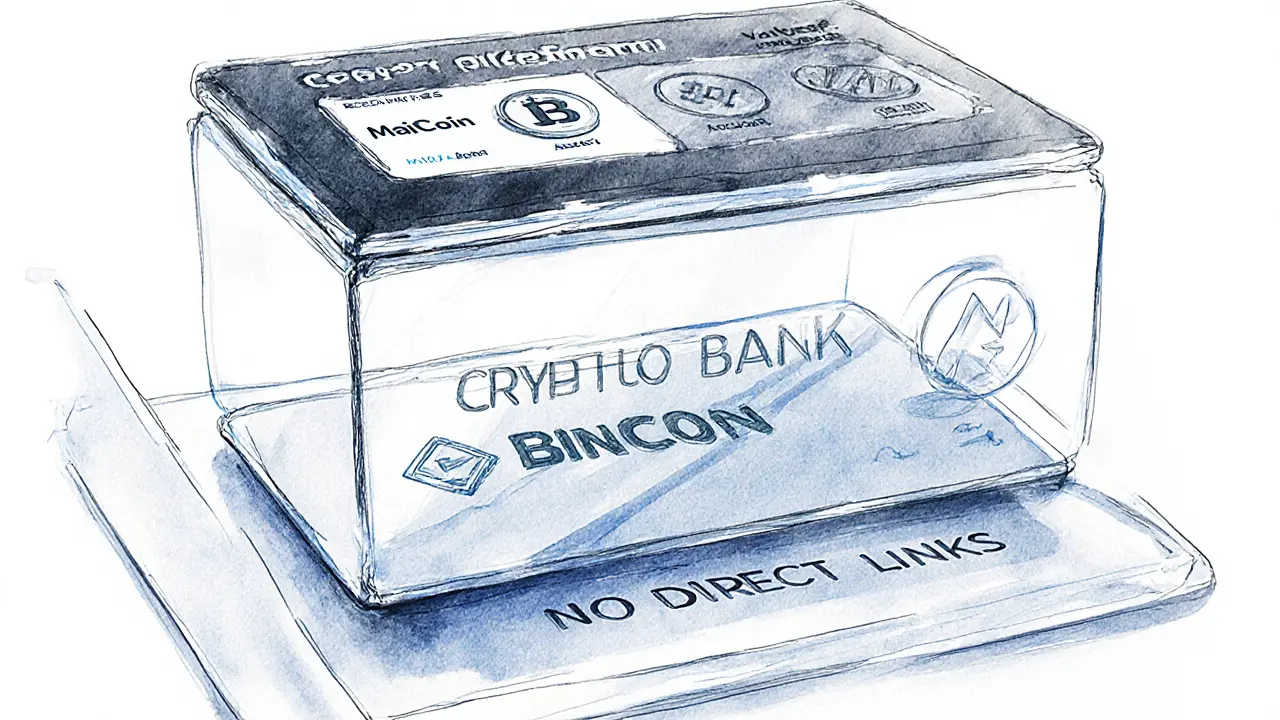
Stablecoins Are the New Frontier
Here’s where things might change. Taiwan’s Central Bank is working on a Central Bank Digital Currency (CBDC) a digital form of the New Taiwan Dollar issued and backed by the Central Bank, currently in prototype testing phase, with pilot programs starting in early 2025. But even more significant is the upcoming TWD-backed stablecoin a digital token pegged 1:1 to the New Taiwan Dollar, regulated by the FSC and expected to launch in June 2025 rules. Starting June 2025, regulated financial institutions-like banks and trust companies-will be allowed to issue stablecoins tied to the TWD. That’s huge. It means you might soon be able to buy a government-backed digital dollar through your bank app. But here’s the catch: those stablecoins won’t be Bitcoin or Ethereum. They’ll be digital versions of your own money. Think of it as an official, secure alternative to USDT or USDC, which remain unregulated and banned from banking channels. This isn’t a reversal of policy. It’s a refinement. The government still doesn’t want banks touching speculative crypto. But they’re okay with them issuing digital money they control.The Numbers Don’t Lie
Despite all the restrictions, crypto use in Taiwan is growing. Around 2.3 million people-about 10% of the population-own digital assets as of late 2024. Daily trading volume on registered platforms hits $200 million. Bitcoin and Ethereum make up 65% of that. User growth is up 15% year-over-year. That tells you something: people want crypto. They just can’t use their bank to get it. The system forces them to navigate around the banking wall, not through it.
Who Benefits? Who Loses?
Compliance experts praise Taiwan’s approach. PwC Taiwan says the VASP system gives consumers more protection than most countries offer. Criminal activity is easier to track. Fraud is harder to hide. The rules are clear. But crypto businesses aren’t happy. Setting up a VASP costs between NT$2 million and NT$5 million ($62,000-$155,000) just to meet compliance standards. Many struggle to open even basic business bank accounts for payroll or vendor payments. Banks still treat them like high-risk pariahs. Legal experts from Global Legal Insights call it a “cautious but not prohibitive” model. It’s not China’s full ban. It’s not the U.S.’s patchwork of state rules. It’s something unique: a wall between crypto and banking, with a narrow, regulated tunnel for government-backed digital money.What’s Next?
The next five years will show whether Taiwan’s model holds. If the CBDC rollout succeeds, expect more banks to get involved in digital money-but only under strict control. If stablecoins become popular, we might see banks offering them as a simple, safe way to hold digital value. But don’t expect banks to start accepting Bitcoin deposits anytime soon. That wall is staying up. The FSC’s priority isn’t innovation-it’s stability. They’re betting that keeping crypto at arm’s length protects ordinary people from the wild swings and scams that plague unregulated markets. For now, if you’re in Taiwan and want crypto, you’ll need patience, cash, and a workaround. The system isn’t designed for convenience. It’s designed for control. And for now, that’s exactly what the government wants.Can I use my Taiwanese bank account to buy Bitcoin?
No. Taiwanese banks are legally prohibited from processing any cryptocurrency transactions, including deposits, withdrawals, or payments to crypto exchanges. This rule has been in place since 2014 and was reinforced in 2022 to include credit card purchases.
Are crypto exchanges legal in Taiwan?
Yes, but only if they’re registered as Virtual Asset Service Providers (VASPs) with the Financial Supervisory Commission. As of late 2024, only 23 exchanges are officially registered. Unregistered platforms operate illegally and can be shut down.
What’s the difference between a stablecoin and Bitcoin in Taiwan’s rules?
Bitcoin and other cryptocurrencies are treated as speculative virtual commodities and banned from banking channels. Stablecoins pegged to the New Taiwan Dollar (TWD) will soon be allowed to be issued by regulated financial institutions starting June 2025. These are seen as digital versions of the local currency, not speculative assets.
Can I use Binance or Coinbase in Taiwan?
Yes, but only if they’re registered as a VASP in Taiwan. Both Binance and Bybit have registered and operate legally under local rules. However, you still can’t deposit TWD directly from your bank-you must use approved third-party payment processors or P2P methods.
Is there a Central Bank Digital Currency (CBDC) in Taiwan?
Yes, the Central Bank of the Republic of China (Taiwan) completed a feasibility study in late 2023 and began prototype testing in early 2025. The CBDC will be a digital version of the New Taiwan Dollar, built on existing digital voucher infrastructure. It’s not meant to replace cash but to offer a secure, government-backed digital payment option.
Why don’t Taiwanese banks work with crypto companies?
Banks avoid crypto companies because regulators have labeled them high-risk for money laundering and fraud. Even registered VASPs face difficulties opening business accounts for payroll or vendor payments. Banks fear regulatory penalties if they’re seen as enabling crypto activity, so they err on the side of caution.
How many people in Taiwan own cryptocurrency?
As of late 2024, an estimated 2.3 million Taiwanese citizens-about 10% of the population-own some form of cryptocurrency. Daily trading volume on registered platforms exceeds $200 million, showing strong demand despite banking restrictions.


