
Solana ETF Return Calculator
Estimate Your Returns
Estimated Returns
On April 16, 2025, Canada became the first country in the world to launch publicly traded Solana ETFs-investment funds that let you own Solana (SOL) without ever touching a wallet, private key, or crypto exchange. For everyday investors, this isn’t just another financial product. It’s a game-changer. Suddenly, you can hold Solana inside your TFSA or RRSP, earn staking rewards automatically, and trade it like a stock-all through your regular brokerage account. But here’s the catch: the U.S. still hasn’t approved any altcoin ETFs. Not Solana. Not XRP. Not Cardano. And that’s not an accident. It’s a regulatory gap-and Canada is filling it.
What Exactly Is a Solana ETF?
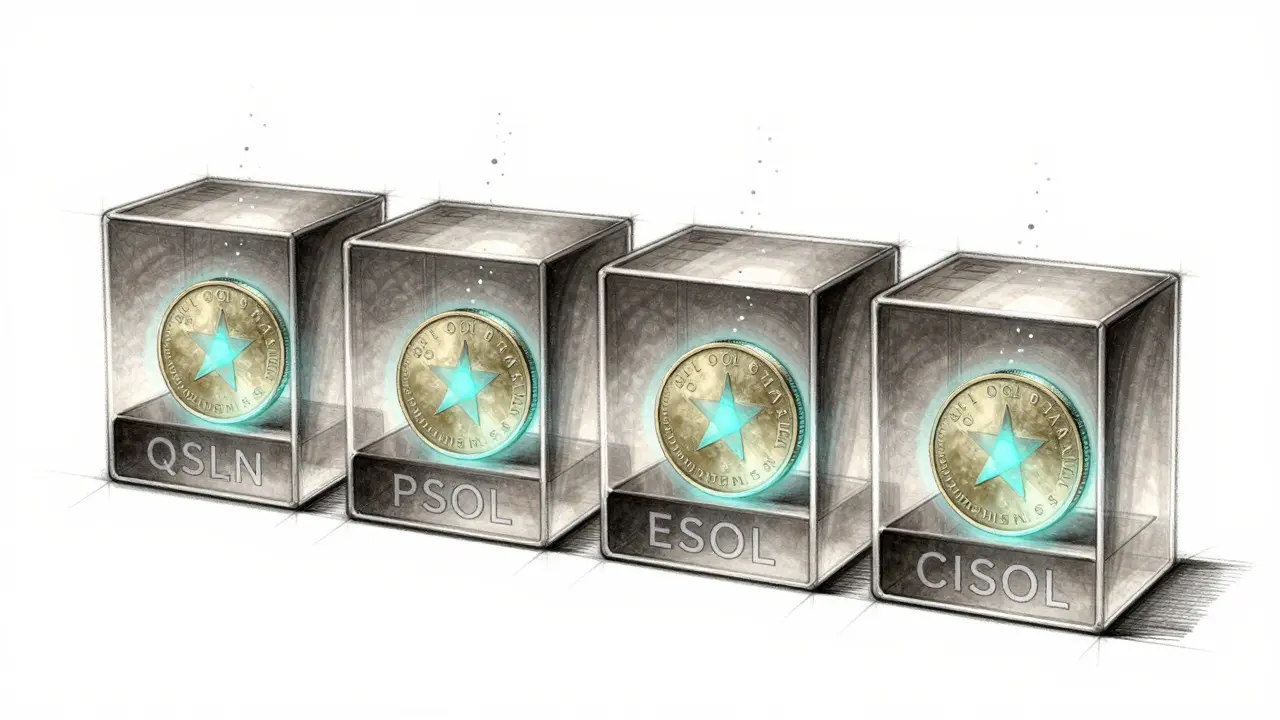
A Solana ETF is a fund that buys and holds actual Solana tokens on your behalf. You don’t need to download an app. You don’t need to worry about phishing scams or exchange hacks. You just buy shares of the ETF, like you would with Apple or Shopify stock. The fund handles everything: custody, security, staking, and even tax reporting. The four approved funds in Canada are:- 3iQ Solana Staking ETF (QSLN) - The only one that earns staking rewards daily, with 0% fees for the first year.
- Purpose Investments SOL ETF (PSOL) - Tracks Solana’s price with no staking.
- Evolve Solana ETF (ESOL) - Similar structure to PSOL, low-cost, simple exposure.
- CI Financial Solana ETF (CISOL) - Backed by one of Canada’s largest asset managers.
All four trade on the Toronto Stock Exchange. You can buy them through Questrade, Wealthsimple, or any Canadian brokerage. No crypto account needed.
Why Staking Matters (And Why the U.S. Can’t Do It)
Solana runs on Proof-of-Stake. That means people who hold SOL can help secure the network and get paid for it-like interest on a savings account, but for blockchain. The 3iQ QSLN ETF does this automatically. It stakes a portion of its SOL holdings, and the rewards get added to the fund’s value every single day. By October 2025, QSLN had over $258 million CAD in assets under management, mostly because of this feature.The U.S. SEC won’t allow staking in crypto ETFs. Why? They say it blurs the line between investor and participant in the network. They worry about asset commingling, legal liability, and unclear rules. Canada’s regulator-the Ontario Securities Commission (OSC)-took a different view. They saw staking as a natural part of how Solana works. So they approved it. That’s not just a technical difference. It’s a philosophical one. Canada treats crypto like an asset class. The U.S. treats it like a risky gamble.
How Much Can You Earn?
Solana’s staking yield has hovered around 5% to 7% annually since early 2025. That’s not guaranteed-it can go up or down depending on network activity, validator competition, and token supply. But here’s the math: if you invest $10,000 CAD in QSLN and Solana’s staking yield stays at 6%, you’d earn about $600 in rewards over a year-on top of any price increase. And since it’s in a TFSA, you pay zero tax on those gains. In a regular brokerage account, you’d pay capital gains tax. In a TFSA? Nothing. That’s the real power move.Compare that to holding SOL directly on an exchange. You’d need to manually stake it, deal with unbonding periods (2-3 days), and still pay taxes on rewards. The ETF does it all for you, quietly, securely, and legally.
Is Solana Safe to Invest In?
No asset is risk-free. Solana had an 11-hour network outage in December 2024. It’s happened before-in 2022 and 2023 too. Critics point to this as a red flag. And they’re right to. Solana’s speed-65,000 transactions per second-is impressive. But it comes at a cost: complexity. The network relies on tight coordination between validators. If one fails, others can get overwhelmed.That’s why the ETF structure matters. It doesn’t eliminate risk-it just changes how you experience it. Instead of losing your tokens because you clicked a bad link, you’re exposed to Solana’s price swings and network reliability. That’s still a big risk. But it’s a transparent one. You know what you’re buying: exposure to a fast, scalable blockchain with a $69 billion market cap as of April 2025. That’s bigger than Cardano, Polygon, and most altcoins. It’s not Bitcoin. But it’s not a gamble either.
Canada vs. U.S.: The Real Difference
The U.S. has approved Bitcoin and Ethereum spot ETFs. That’s huge. But that’s it. No altcoins. Not even XRP, despite a recent court ruling that classified it as a security only in its initial sale-not as a token. The SEC is still dragging its feet. Meanwhile, Canada approved Solana and XRP ETFs in the same quarter. Why? Because Canada’s regulatory system lets provinces like Ontario approve products without waiting for federal approval. The OSC moved fast. They created clear rules in January 2025 for crypto ETFs: no leverage, no derivatives, no staking for Bitcoin or Ethereum (yet), but staking allowed for Proof-of-Stake tokens like Solana.That’s not luck. That’s strategy. Canada didn’t wait for Washington. They built their own path. And now, investors from the U.S. are opening Canadian brokerage accounts just to get access to these funds. Some are even using Canadian custodians to hold their ETFs in retirement accounts.
Who Should Buy a Solana ETF?
This isn’t for day traders. It’s for people who believe in blockchain tech but don’t want the hassle-or risk-of managing crypto themselves. If you’ve ever said:- “I want to own Solana, but I’m scared of exchanges.”
- “I wish I could hold crypto in my RRSP.”
- “I don’t understand staking, but I want the rewards.”
Then this is for you.
It’s also for advisors who manage portfolios for clients in TFSA and RRSP accounts. Before April 2025, they couldn’t recommend Solana. Now they can. And they’re doing it. According to TD Securities, over 60% of new Solana ETF buyers in the first six months were retail investors using registered accounts.
What’s Next?
The next wave is likely Cardano and Polkadot ETFs. Both are Proof-of-Stake. Both have strong developer communities. Both are waiting in the wings. The OSC has already signaled they’re open to it. And if Ethereum staking ETFs get approved in the U.S. by mid-2025-as Bloomberg’s James Seyffart predicts-Canada might not stay ahead for long. But for now, it’s leading.The bigger story? Canada is proving that regulated crypto investment isn’t a fantasy. It’s here. And it’s working. You don’t need to be a tech expert. You don’t need to understand blockchain. You just need to know how to buy an ETF. And that’s something millions of Canadians already do every day.
Can I buy a Solana ETF in the United States?
No, not yet. The U.S. SEC has only approved Bitcoin and Ethereum spot ETFs. No altcoin ETFs-including Solana-are approved as of December 2025. Some U.S. investors open Canadian brokerage accounts to access these funds, but this requires cross-border account setup and may have tax implications.
Can I hold a Solana ETF in my TFSA or RRSP?
Yes. All four Solana ETFs approved in Canada are eligible for TFSA and RRSP accounts. This is a major advantage over holding Solana directly on exchanges, which cannot be held in registered accounts under Canadian tax rules.
Does the Solana ETF pay dividends?
No dividends. Instead, staking rewards are automatically reinvested into the fund, increasing its net asset value (NAV). You see the growth in your share price. There’s no separate payout. This is different from traditional dividend-paying stocks but standard for crypto ETFs.
What’s the difference between QSLN and PSOL?
QSLN (3iQ) stakes Solana and earns rewards daily, with 0% management fees for the first year. PSOL (Purpose) tracks Solana’s price only and does not stake. QSLN is better for long-term growth with passive income. PSOL is simpler if you just want price exposure without staking complexity.
Is Solana too volatile for a long-term investment?
Solana has shown high volatility, trading between $194 and $203 in late 2025 after a sharp rise earlier in the year. Its network outages also raise concerns. But volatility is normal for crypto. The ETF structure reduces personal risk (no keys, no exchanges) and gives you access to a blockchain with real-world usage. If you believe in Solana’s tech and are investing for the long term, the ETF makes it safer and simpler.
Are there fees with these ETFs?
Yes. QSLN charges 0% management fees for the first 12 months, then 0.75% annually. PSOL, ESOL, and CISOL charge between 0.65% and 0.85% per year. These are lower than most actively managed mutual funds but higher than Bitcoin ETFs, which often charge 0.4% or less. The staking rewards from QSLN can offset these fees in many cases.


