
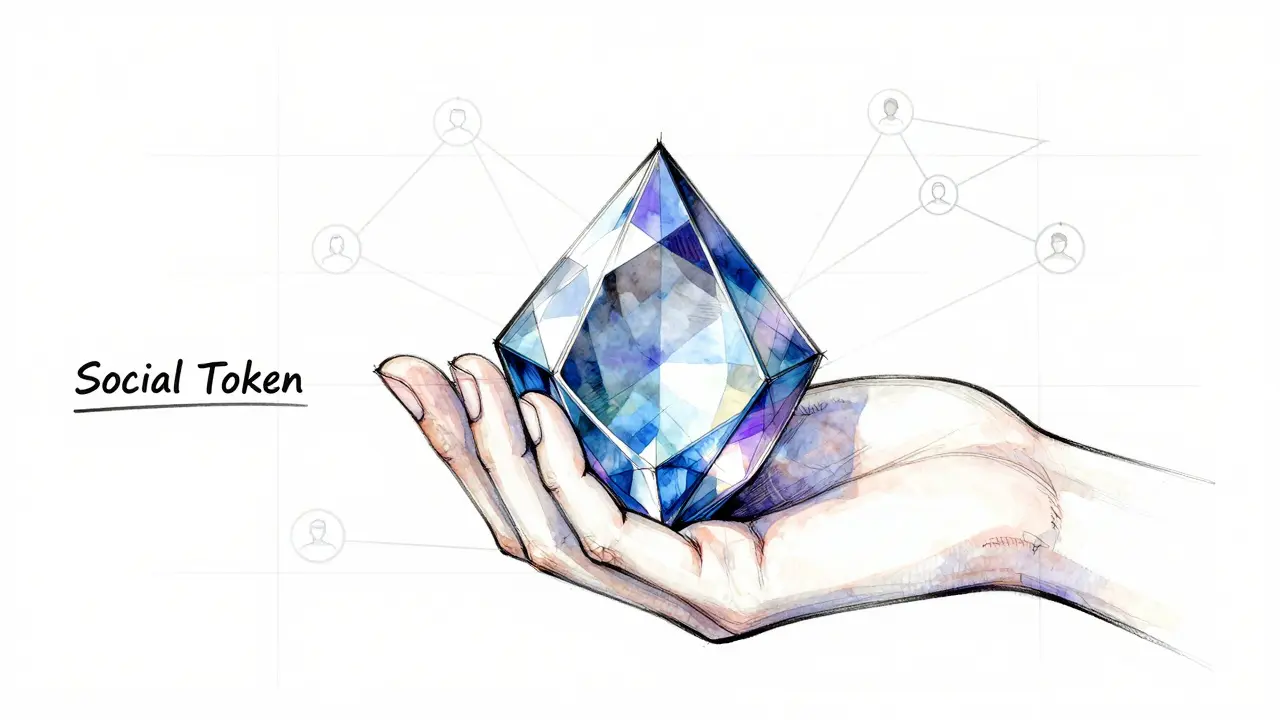
Imagine a community where every member is also an owner. You don't just pay to join; you hold a piece of the group's value. If the community grows, your stake grows. This isn't a fantasy scenario from a sci-fi novel. It is the reality of Social Tokens, which are digital assets issued by creators or communities that represent ownership, access rights, and governance power within a specific social ecosystem. Unlike traditional subscription models where money flows one way-from user to platform-social tokens create a circular economy. They turn passive followers into active stakeholders.
The concept gained significant traction around 2020-2021 as part of the broader decentralized finance (DeFi) and Web3 movement. Linda Xie, former product manager at Coinbase and co-founder of Scalar Capital, defined these tokens in her April 2021 guide as tools that enable members to collaborate and share ownership in the value they create together. Today, in 2026, this model has matured beyond early experiments. It offers concrete benefits for engagement, monetization, and autonomy that traditional platforms simply cannot match.
Shared Ownership and Value Alignment
The core benefit of social tokens is shared ownership. In traditional online communities, value accrues to the platform hosting the discussion. Think about how much time you spend on social media sites. You create content, engage with friends, and build networks, but the company owns the data and profits from ads. Social tokens flip this script. They allow participants to collectively own and benefit from the growth of the communities they help build.
Linda Xie noted in her analysis that "shared ownership of social tokens among community members contributes to long-term value alignment." When members hold tokens, they have a financial and emotional incentive to help the community succeed. This transforms passive lurkers into active contributors. A prime example is the Friends With Benefits (FWB) community. By September 2021, their community treasury had grown to over $10 million. Token holders didn't just watch this happen; they collectively governed how those resources were allocated. This structure ensures that everyone pulls in the same direction because everyone benefits when the ship moves forward.
Social tokens generally fall into three categories based on who issues them:
- Personal Tokens: Issued by an individual to support their work and gain access to their inner circle.
- Community Tokens: Issued by a group to fund collective projects and govern decisions.
- Creator Tokens: Similar to personal tokens but often focused on intellectual property or creative output.
These tokens derive their value from social capital rather than traditional financial metrics like revenue or profit margins. Early implementations included Reddit's Community Points system launched in 2020. Subreddits like r/CryptoCurrency introduced Ethereum-based tokens called Moons for its 2.2 million subscribers. While these were initially experimental, they demonstrated how established platforms began testing tokenized engagement before independent ecosystems fully matured.
Incentivized Engagement and Participation
Keeping a community active is hard. Most groups suffer from low participation rates after the initial hype fades. Social tokens solve this by creating incentivized participation structures. According to Sidecar AI's September 2021 analysis, tokens can be given in exchange for contributions, whether that is work performed or active participation. This helps drive engagement in a way that likes and shares never could.
Consider the BanklessDAO community. They distributed their BANK token to members who contributed to content creation, community management, and technical development. The result? A 300% increase in active contributors within six months of implementation, according to their Q2 2021 metrics. Unlike conventional loyalty programs that offer static rewards like discount coupons, social tokens create dynamic value ecosystems. The tokens themselves can appreciate in value as the community grows, giving members a tangible reason to stay involved.
Creators have also developed sophisticated tiered systems. Mighty Networks documented cases where influencers sold different tiers of tokens. For instance, 'Platinum' tokens might cost $500 each and grant monthly private conversations. 'Gold' tokens at $200 could offer quarterly access, while 'Silver' tokens at $50 provided exclusive content. One mid-tier creator with 50,000 followers generated $120,000 in initial sales using this model. This approach creates a sustainable revenue stream while rewarding the most dedicated supporters with higher levels of interaction.
Token-Gated Access and Exclusivity
Access provisioning is one of the most immediate practical benefits of social tokens. It transforms how exclusive content and experiences are distributed. As Coinbase explained in June 2022, some social tokens allow holders to visit private chat groups or access exclusive merchandise. This isn't just about locking a Discord channel behind a paywall. It is about verifying true commitment.
Take the Whale (WHALE) token community. Holders of 10+ tokens gained access to virtual art exhibitions. Those holding 100+ tokens received physical art pieces. This tiered access model increased community retention by 65% according to their Q3 2021 metrics. The technical implementation uses smart contracts to automatically verify token holdings. This eliminates manual verification processes that previously limited scalability. No more asking users to email screenshots of receipts. The blockchain does the checking instantly and securely.
Sidecar AI documented a professional association that implemented token-gated Zoom webinars. This reduced unauthorized access by 100% while increasing paid membership by 40% within three months. The token requirement created a verifiable proof of community investment. Unlike traditional subscription models that charge flat fees regardless of engagement, social tokens enable dynamic access structures. Benefits scale with participation. The Index Coop community granted voting rights proportional to token holdings. Members holding more than 1,000 INDEX tokens could propose governance changes. This system processed 27 successful proposals in 2021 with a 78% average voter turnout, far higher than traditional community decision-making processes.
Decentralized Governance and Decision Making
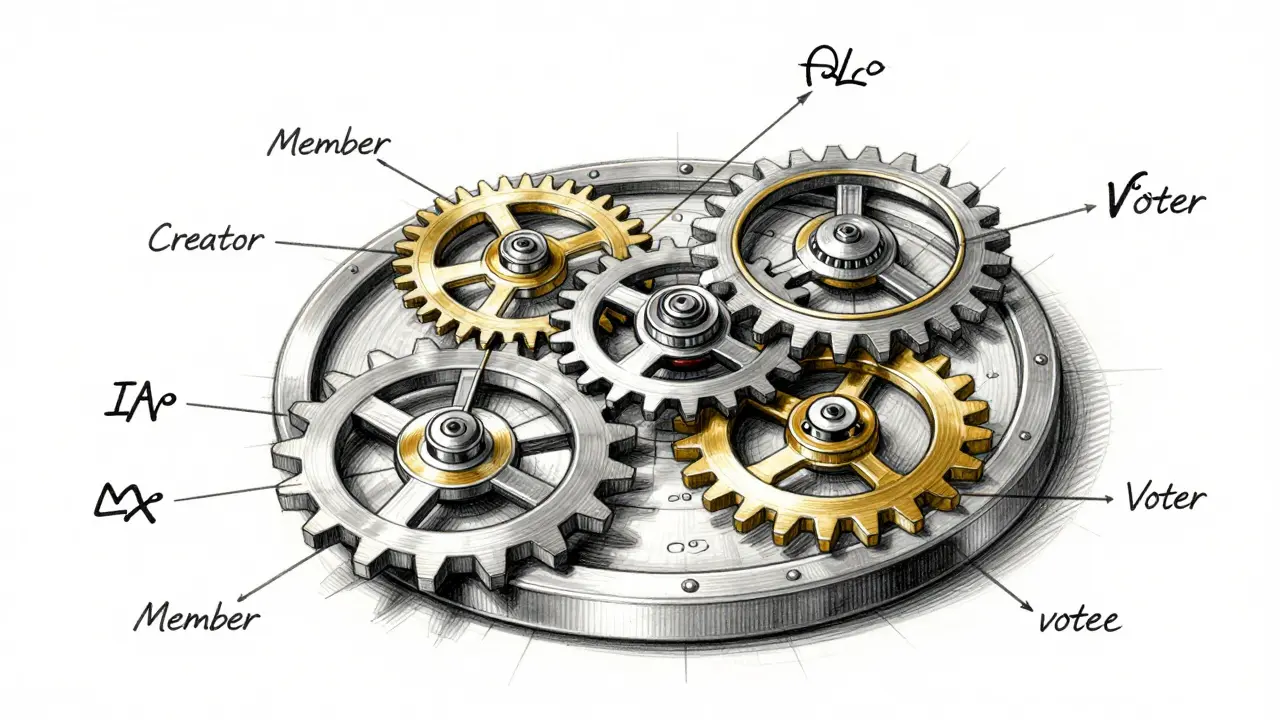
Governance capabilities represent perhaps the most transformative benefit of social tokens. They enable truly decentralized community decision-making. Traditional communities rely on a few leaders to make all the calls. Social tokens empower the entire group. Coinbase noted that social tokens may double as governance tokens, empowering members to vote on upcoming projects and changes.
In the Friends With Benefits community, token holders voted on treasury allocations, event planning, and membership standards. They processed 42 governance proposals in 2021 with an average participation rate of 35% among token holders. Compare this to traditional community voting, which typically sees 5-15% participation according to Mighty Networks' 2022 report. This model reimagines leadership structures. Sidecar AI highlighted that social tokens can reimagine the traditional board structure and create a more community-centric voting system.
Technical implementations often use quadratic voting or conviction voting systems built into the token's smart contract. The Gitcoin community implemented a quadratic funding mechanism that distributed $1.3 million to public goods projects in Q4 2021 based on community voting patterns. This ensures that small donors have as much influence as large ones, promoting fairness. Linda Xie predicted that more people would be hired by social token communities in part-time or full-time roles. This came to pass when BanklessDAO employed over 200 contributors across 15 working groups by Q1 2022, with compensation partially or fully in community tokens.
Monetization and Economic Sustainability
Monetization and economic sustainability address longstanding challenges in community building. Creators often struggle to make a living from their audiences. Social tokens provide a direct revenue stream. Coinbase described them as digital assets issued by creators to monetize content and build a Web3 ecosystem. There are several economic models at play here.
The "appreciation model" sees token value increase with community growth. The $FWB token appreciated from $1.50 at launch in May 2021 to over $40 by November 2021. This created immediate value for early members. The resale market adds another layer. Mighty Networks documented how ownership becomes an asset that can be resold. Through digital contracts, creators can stipulate that they receive a percentage of resale profits. Platforms like Tensor implement automatic royalty distributions, returning 5-10% of secondary market sales to creators.
As token value grows, creators can use it as compensation. Sidecar AI highlighted a fitness community that paid trainers 70% in community tokens and 30% in fiat currency. This reduced cash expenses by 45% while increasing trainer retention by 60%, according to their Q4 2021 financial report. Crucially, unlike advertising-based models that create conflicts between platform and user interests, social token economies align incentives. Linda Xie noted that social tokens provide a novel revenue stream for creators while providing benefits and loyalty acknowledgments to fans, creating self-sustaining economic systems.

Network Effects and Social Graphs
Social tokens create network effects that enhance community discovery. Linda Xie explained that social graphs can be created based on the tokens individuals hold. This helps people discover new communities and meet others with shared interests. Early implementations included RabbitHole, which created "achievement badges" as NFTs signaling specific skill sets. This connected 15,000 users to relevant communities within six months of launch, according to Q2 2022 metrics.
This creates a self-reinforcing cycle. Participation generates verifiable credentials that facilitate entry into related communities. This addresses the "cold start problem" that plagues many new groups. Technical implementation involves analyzing blockchain wallet holdings to identify affiliations. Platforms like Collab.Land processed over 5 million token-based access verifications monthly by Q3 2022. Unlike social media algorithms that prioritize engagement over meaningful connections, token-based graphs create organic pathways between aligned communities. Sidecar AI documented how social tokens deliver any benefits the issuer determines, enabling creators to design interconnected ecosystems. Participation in one community provides advantages in related ones, creating network effects that standalone communities cannot achieve.
| Feature | Traditional Community | Social Token Community |
|---|---|---|
| Ownership | Platform-owned | Member-owned via tokens |
| Revenue Model | Ads/Subscriptions | Token appreciation/Royalties |
| Governance | Centralized leaders | Decentralized voting |
| Engagement Incentive | Social recognition | Economic stake + Access |
| Data Portability | Locked to platform | Portable via wallet |
Challenges and Considerations
While the benefits are clear, social tokens are not without challenges. Volatility is a major concern. Token prices can fluctuate wildly, affecting member confidence. Regulatory uncertainty remains a hurdle in many jurisdictions. Additionally, the barrier to entry can be high for non-technical users who need to manage crypto wallets and understand gas fees. Successful communities must balance economic incentives with genuine social connection. If the focus shifts too heavily to speculation, the community spirit can erode. Education and user-friendly interfaces are essential for widespread adoption.
What are social tokens?
Social tokens are digital assets issued by creators or communities that represent ownership, access rights, and governance power. They allow members to share in the value created by the community and participate in decision-making processes.
How do social tokens differ from cryptocurrencies like Bitcoin?
Unlike Bitcoin, which aims to be a global currency or store of value, social tokens are tied to specific communities or creators. Their value is derived from social capital and the utility they provide within that specific ecosystem, such as access to content or voting rights.
Can I make money from social tokens?
Potentially, yes. If the community grows and demand for the token increases, its price may appreciate. However, this is speculative. The primary purpose is usually access and governance, not investment. Always consider the risks of volatility.
Which blockchains are used for social tokens?
Social tokens are commonly implemented on Ethereum, Polygon, and Solana. These blockchains offer the smart contract functionality needed to define token parameters, manage access, and facilitate transactions.
Are social tokens legal?
The legal status varies by jurisdiction. Some regulators view certain social tokens as securities. It is crucial to consult local laws and seek professional advice before issuing or investing in social tokens to ensure compliance.