
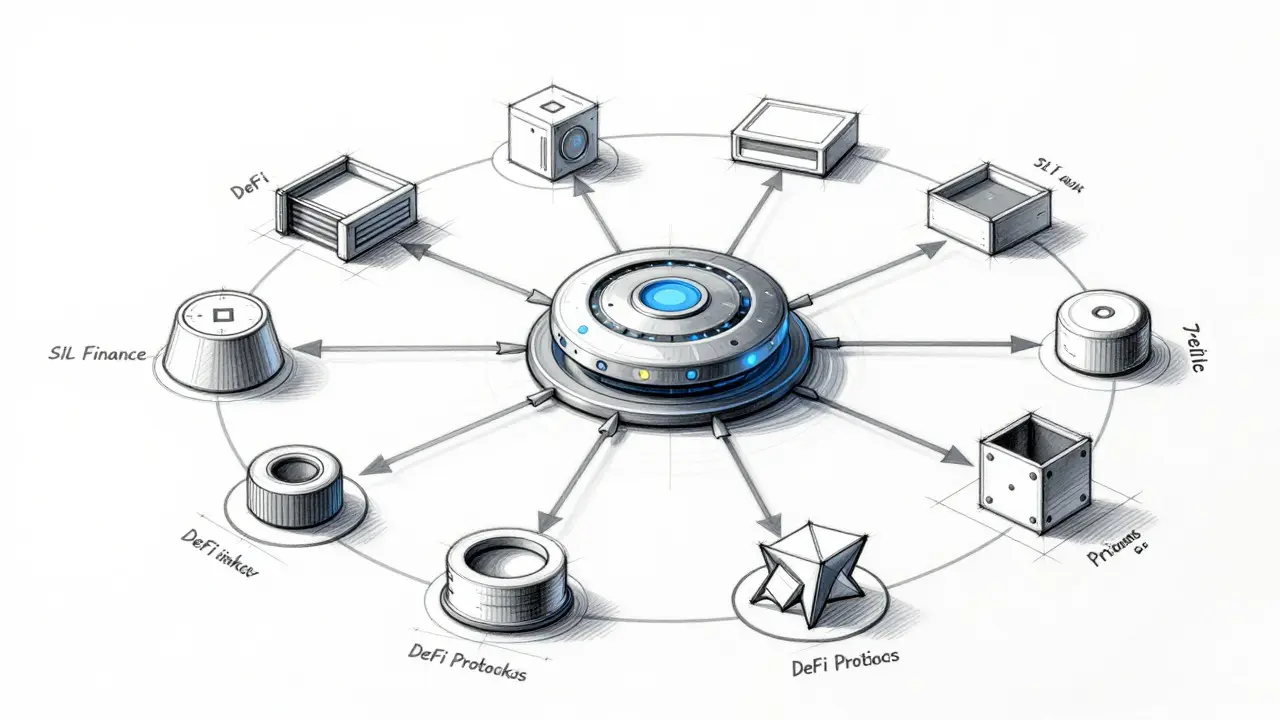
Imagine finding a way to earn passive income from your crypto holdings without manually moving funds between different platforms. That is the core promise of SIL Finance, a decentralized finance project that aims to simplify complex yield farming strategies for everyday users. The project, often referred to by its ticker symbol SIL, positions itself as a bridge between established protocols like Yearn Finance (YFI) and YFII, automatically selecting the best investment opportunities based on safety and return rates. But what about the buzz surrounding its airdrop? Is it a legitimate chance to earn free tokens, or just another hype cycle? Let's break down exactly what SIL Finance is, how its airdrop mechanics work, and what you need to know before jumping in.
What Is SIL Finance?
To understand the airdrop, you first need to grasp the underlying technology. SIL Finance operates as an automated yield optimizer. Instead of you hunting for the highest interest rate across dozens of DeFi protocols, the platform does the math for you. It evaluates factors such as the annualized rate of return, the safety factor of the protocol, and the financial management cycle to deploy your assets where they will perform best.
The project has a maximum supply cap of 30,000 SIL tokens. This low supply suggests a deflationary model or a highly exclusive utility, rather than a mass-market token. The smart contract for SIL is deployed on the Ethereum mainnet, with the address listed as 0x133B...FF3a13C. This technical foundation places it squarely in the competitive landscape of automated yield farming, alongside giants like Beefy Finance and Yearn Finance.
Understanding the Current Market Status
Here is where things get tricky. If you check major cryptocurrency tracking platforms, you might see conflicting data. As of late 2025, some platforms report the price of SIL at $0.00 with a market capitalization of $0.00 and zero circulating supply. Other sources, like Crypto.com, have displayed prices around $21.01, though trading volume remains negligible.
This discrepancy is a red flag worth noting. It usually indicates one of two things: either the token has very low liquidity (meaning few people are buying or selling), or there are data synchronization issues between exchanges. For any investor, this lack of consistent market activity means that even if you receive tokens via an airdrop, exiting your position could be difficult or result in significant slippage. Always verify the live trading pairs on a reliable exchange before assuming you can easily sell your rewards.
How the SIL Finance Airdrop Works
So, how do you actually get these tokens? According to recent updates from platforms like Bitget, users can receive free SIL Finance airdrops by joining ongoing challenges and promotions. Unlike traditional airdrops that simply distribute tokens to old wallet holders, this approach seems tied to active participation or specific promotional events.
While detailed parameters like exact distribution schedules and minimum holding periods aren't always publicly documented in real-time, the general pattern for DeFi airdrops involves:
- Eligibility: Often tied to interacting with the protocol (e.g., providing liquidity or using the yield optimizer).
- Timing: Distributions may happen in batches or after specific milestones are reached.
- Claiming: Users typically need to connect their wallet to the official claim page to receive tokens.
Because the project is relatively niche, keep an eye on official announcements rather than relying on third-party news sites, which sometimes confuse SIL Finance with other similarly named projects like Silo Finance (SILO) or SilkAI (SILK). These are entirely different ecosystems with distinct tokens and airdrop structures.
Risks and Due Diligence
Before connecting your wallet to claim any airdrop, exercise caution. The primary risk here isn't just the value of the token, but the operational status of the project. With limited public documentation and sparse community engagement metrics, it is hard to assess long-term viability. Here is a checklist to protect yourself:
- Verify the Contract Address: Ensure you are claiming from the official Ethereum mainnet contract (0x133B...FF3a13C) and not a copycat scam site.
- Check Liquidity: Look at the order book depth on DEXs like Uniswap. If there is no liquidity, your tokens are essentially paper wealth until someone provides it.
- Watch for Rug Pulls: In low-cap DeFi projects, developers can withdraw liquidity quickly. Check if the liquidity pool is locked.
- Confirm Token Utility: Does the SIL token grant governance rights? Does it reduce fees? Without clear utility, the price relies solely on speculation.

SIL Finance vs. Other Yield Protocols
To put SIL Finance in perspective, let's compare it to more established players in the yield optimization space. While SIL aims to automate the process, larger competitors have deeper liquidity pools and more proven track records.
| Feature | SIL Finance (SIL) | Yearn Finance (YFI) | Beefy Finance (BEAM) |
|---|---|---|---|
| Max Supply | 30,000 SIL | 30,000 YFI | 2,000,000 BEAM |
| Primary Function | Automated Yield Selection | Vaults & Governance | Cross-chain Yield Aggregation |
| Liquidity Status | Low / Inconsistent | High | Medium-High |
| Airdrop History | Promotional Challenges | Initial Distribution Only | Community Events |
Notice that while SIL shares the same max supply number as Yearn Finance, its market presence is significantly smaller. This comparison highlights why due diligence is crucial. You are entering a much thinner market than the established leaders.
Next Steps for Participants
If you decide to participate in the SIL Finance airdrop, start small. Use a separate wallet dedicated to high-risk DeFi interactions to avoid putting your main portfolio at risk. Monitor the official channels for specific dates and requirements, as "ongoing challenges" implies the rules may change. Once you receive the tokens, wait for liquidity to improve before attempting to sell. Patience is often more valuable than speed in low-volume markets.
Is SIL Finance the same as Silo Finance?
No, they are completely different projects. SIL Finance uses the ticker SIL and focuses on bridging YFI/YFII yields. Silo Finance uses the ticker SILO and is a separate lending and staking protocol. Do not confuse their airdrops or contracts.
How many SIL tokens are in circulation?
Data varies by platform. Some trackers show 0 circulating supply, while others list up to 30,000. This inconsistency suggests the token may be illiquid or in early deployment stages. Always check the latest blockchain explorer data for accuracy.
Where can I trade SIL tokens?
Trading activity is currently limited. Most major centralized exchanges report zero volume. You may find trading pairs on decentralized exchanges (DEXs) like Uniswap, but check liquidity depth before executing large trades to avoid high slippage.
What is the purpose of the SIL token?
The SIL token serves as the native asset for the SIL Finance platform. Its specific utility, such as fee discounts or governance voting power, should be verified in the official whitepaper, as detailed public documentation is currently sparse.
How do I claim the SIL airdrop?
Currently, the primary method mentioned is through promotional challenges on platforms like Bitget. There is no single universal claim link. Follow official project announcements for specific event details and ensure you use the correct contract address when claiming.


