
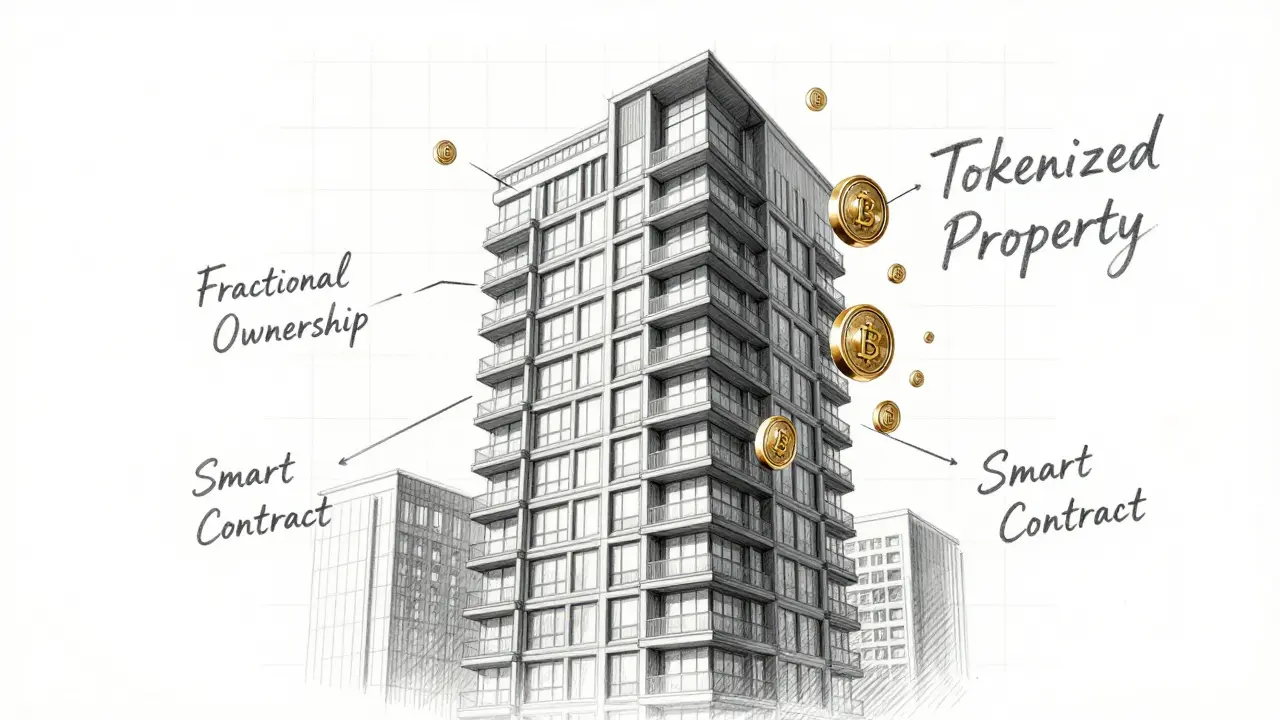
Imagine buying a slice of a rental home in Chicago without ever stepping foot in the United States. You don’t need a mortgage broker, a title company, or hundreds of thousands of dollars upfront. You just need a digital wallet and a few hundred bucks. This isn’t science fiction anymore; it’s the reality of real estate NFT platforms.
In 2025, the global market for these tokenized properties hit USD 720 million. By 2031, experts project that number will explode to over USD 2 billion. Why? Because blockchain technology is finally solving the biggest headaches in traditional real estate: high entry costs, slow paperwork, and lack of transparency. But with great power comes complexity. Not all platforms are created equal, and the rules of the game are still being written.
How Real Estate NFTs Actually Work
Let’s cut through the jargon. When we talk about real estate NFTs, we aren’t talking about buying a JPEG of a house. We’re talking about tokenization, which is the process of converting rights to an asset into a digital token on a blockchain.
Here is the simple breakdown:
- The Asset: A physical building (like an apartment complex) or virtual land (in a metaverse).
- The Legal Wrapper: The property is usually held by a legal entity, like an LLC. The NFT represents shares in that LLC, not direct ownership of the dirt under your feet.
- The Blockchain: Most platforms use Ethereum, a decentralized computing platform that enables smart contracts and decentralized applications. It acts as the immutable ledger, recording who owns what and when transactions happen.
- Smart Contracts: These are self-executing codes. When rent comes in, the contract automatically splits the money and sends your share to your crypto wallet. No middleman taking a cut.
This setup allows for fractional ownership, where investors can own a percentage of a high-value asset rather than the whole thing. Instead of needing $500,000 for a down payment, you might only need $500 to get started.
Top Real Estate NFT Platforms to Watch in 2026
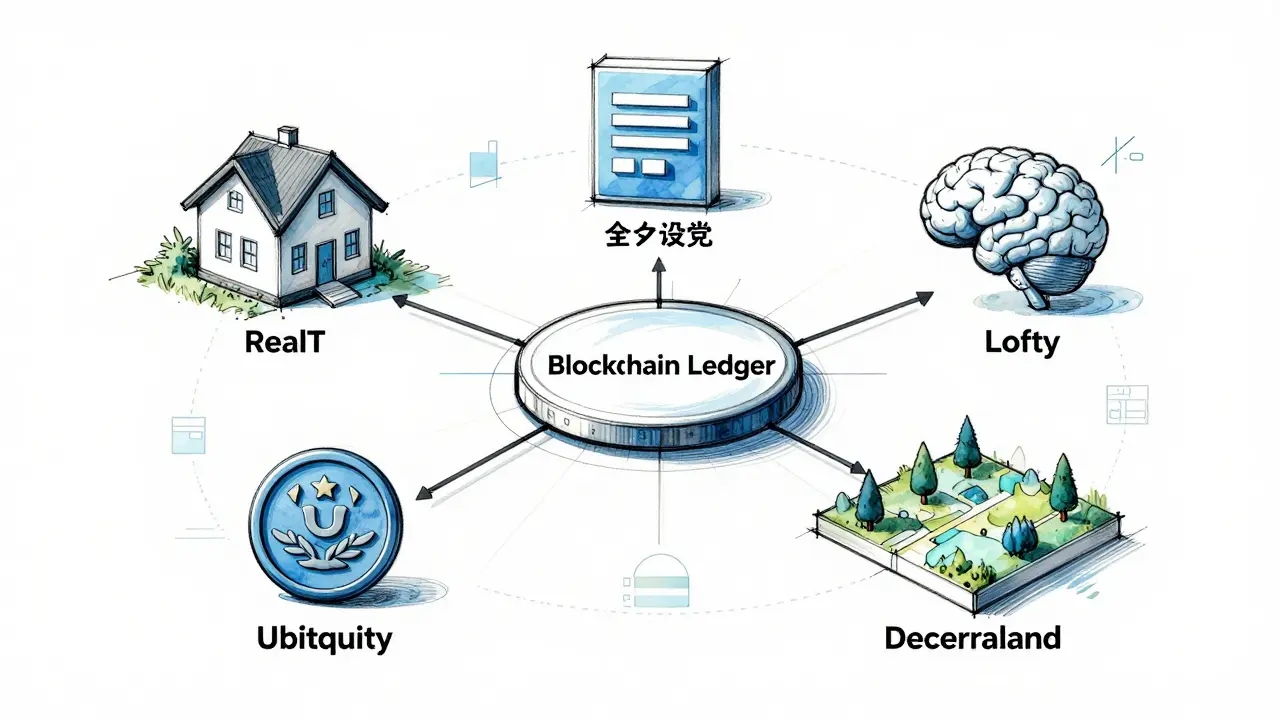
The landscape has matured significantly since the early days of hype. Today, a few key players dominate the space, each with a different angle. Here is how they stack up against each other.
| Platform | Primary Focus | Key Feature | Best For |
|---|---|---|---|
| RealT | Fractional U.S. Rentals | Daily dividend payouts in crypto | Passive income seekers |
| Propy | Full Property Sales | End-to-end closing via smart contracts | Buyers/Sellers wanting full ownership |
| Lofty AI | AI-Driven Investment | Automated property selection tools | Data-driven investors |
| Ubitquity | Title & Records | Blockchain-based deed management | Municipalities & Title Companies |
| Decentraland | Virtual Land | Metaverse real estate development | Creative developers & gamers |
RealT stands out as one of the most established names. They specialize in fractional ownership of U.S. rental properties, particularly in cities like Detroit, Chicago, and Atlanta. If you want passive income, this is your go-to. You buy tokens, and every day, a portion of the rental income is distributed to your wallet. It’s simple, transparent, and accessible globally.
On the flip side, Propy focuses on facilitating entire property sales. They’ve handled transactions exceeding USD 1 million per property. If you are looking to buy a whole house using Bitcoin or Ethereum and close the deal entirely on-chain, Propy is the pioneer here. They handle everything from listing to title transfer, reducing the closing time from weeks to days.
Then there’s Lofty AI. As the name suggests, they lean heavily on artificial intelligence. They help investors analyze properties and manage portfolios using data insights. For those who trust algorithms more than gut feelings, Lofty offers a sophisticated layer of analysis on top of the blockchain infrastructure.
Don’t overlook Ubitquity. They aren’t selling houses directly; they are building the backend infrastructure for governments and title companies to record deeds on the blockchain. Their work in places like Colorado and Wyoming is crucial for legitimizing the entire industry. Without secure, government-backed records, NFT real estate remains risky. Ubitquity helps bridge that gap.
Finally, if your interest lies in the digital frontier, Decentraland is the giant of virtual real estate. While it doesn’t offer physical bricks and mortar, it demonstrates the viability of owning, developing, and monetizing digital land. Many concepts tested in Decentraland eventually influence how physical tokenization is marketed and managed.
Why Investors Are Making the Switch
You might be wondering, "Why bother with all this tech when I can just buy a REIT (Real Estate Investment Trust)?" Fair question. Traditional REITs have been around for decades. So why the shift?
First, let’s talk about barriers. Traditional real estate requires massive capital. Even REITs often have minimum investment thresholds or require you to navigate stock market volatility. With NFT platforms, you can start with as little as a few hundred dollars. This democratization means a student in Wellington or a freelancer in Berlin can access premium U.S. real estate markets previously reserved for the wealthy.
Second, consider liquidity. Selling a physical house takes months. Selling shares in a private LLC is a legal nightmare. While secondary markets for real estate NFTs are still developing, the potential for faster trading exists. Over 60% of commercial real estate transactions now involve digital documentation, paving the way for smoother, faster transfers.
Third, transparency. In traditional deals, hidden fees and opaque processes are common. Blockchain records are immutable. You can see the transaction history, the valuation data, and the ownership structure. There is no room for fraud in the same way there is with paper deeds. This reduces the billions lost annually to title fraud.
The Risks You Can’t Ignore
It’s easy to get excited about the future, but we need to keep our feet on the ground. Real estate NFTs are not without significant risks.
Regulatory Uncertainty: This is the big one. Laws vary wildly between countries and even states. Is your NFT a security? Is it a utility? The SEC and other global bodies are still figuring this out. A change in regulation could impact the value of your tokens overnight. Always check the legal status of the platform in your jurisdiction.
Liquidity Constraints: While better than physical real estate, NFT markets are still niche. If you need cash quickly, you might not find a buyer for your tokens at a fair price. Unlike stocks, which trade 24/7 on massive exchanges, real estate NFT volumes can be thin.
Technical Complexity: You need to manage private keys, understand gas fees (transaction costs on Ethereum), and interact with smart contracts. If you lose your seed phrase, your investment is gone forever. There is no "forgot password" button on the blockchain. The learning curve is steep for newcomers, typically taking 2-4 weeks to feel comfortable.
Market Volatility: Your property value is tied to both the real estate market and the cryptocurrency market. If Bitcoin crashes, the sentiment around all crypto assets, including real estate NFTs, may suffer, even if the underlying property is stable.

Getting Started: A Practical Checklist
If you’re ready to dip your toes in, here is how to do it safely and effectively.
- Choose a Reputable Platform: Stick to established names like RealT or Propy initially. Avoid new, unverified projects promising guaranteed returns.
- Set Up a Secure Wallet: Use a hardware wallet like Ledger or Trezor for long-term storage. Never store large amounts of funds on an exchange or a hot wallet connected to your computer constantly.
- Understand the Fees: Look beyond the purchase price. Factor in gas fees, platform management fees, and any exit fees when you sell.
- Start Small: Treat your first investment as tuition. Buy a small amount to understand the process of claiming dividends and transferring tokens.
- Verify the Legal Structure: Read the fine print. Who holds the deed? What happens if the property needs major repairs? How are disputes resolved?
Remember, this is an emerging asset class. Diversification is key. Don’t put all your eggs in the crypto basket, whether that basket is filled with Bitcoin or tokenized apartments.
The Future Outlook: 2026 and Beyond
We are standing at an inflection point. Industry experts predict that tokenized real estate assets will exceed 25% of global commercial property transactions by 2030. This isn’t just hype; it’s driven by institutional adoption. Major banks like JPMorgan are already exploring blockchain for settlements, processing hundreds of billions in transactions through platforms like Onyx.
As user interfaces improve and mobile apps become standard, the technical barrier will drop. Imagine buying a fraction of a vacation home in Bali through an app as easy to use as Venmo. That future is closer than you think. However, success will depend on regulatory clarity. Governments need to provide clear frameworks for tokenized ownership to protect consumers while fostering innovation.
For now, real estate NFTs offer a compelling alternative for those willing to navigate the complexities. They provide access, transparency, and efficiency that traditional methods simply cannot match. Whether you are a seasoned crypto investor or a curious beginner, keeping an eye on this space is wise. The walls between finance and real estate are crumbling, and blockchain is the wrecking ball.
Is investing in real estate NFTs safe?
Safety depends on several factors. While the underlying property may be stable, the digital nature introduces risks like smart contract bugs, platform insolvency, and regulatory changes. Always use reputable platforms, secure your wallet, and never invest more than you can afford to lose. It is generally considered riskier than traditional REITs due to market volatility and regulatory uncertainty.
What is the difference between RealT and Propy?
RealT focuses on fractional ownership, allowing you to buy small shares of rental properties and earn daily dividends. Propy facilitates the sale of entire properties using blockchain, enabling end-to-end transactions for buyers and sellers who want full ownership. RealT is for passive income investors; Propy is for those buying or selling whole homes.
Can I live in a property I own via NFT?
Generally, no. Most fractional ownership platforms like RealT structure investments as rental-only assets. The LLC that holds the deed leases the property to tenants. If you buy via a platform like Propy for full ownership, you may be able to occupy it, but you must check the specific terms of the smart contract and local laws.
How do I pay taxes on real estate NFT profits?
Tax treatment varies by country. In many jurisdictions, rental income from NFTs is taxed as ordinary income, and capital gains apply when you sell the tokens. Because transactions occur on-chain, tracking them for tax purposes can be complex. It is highly recommended to consult with a tax professional familiar with cryptocurrency regulations in your specific location.
What happens if the blockchain network goes down?
Blockchains like Ethereum are designed to be highly resilient and rarely go down completely. However, network congestion can lead to high transaction fees (gas fees). If a platform’s website goes offline, your tokens remain safe on the blockchain as long as you hold the private keys. Always ensure you have control of your wallet, not just an account on a centralized platform.
Are real estate NFTs regulated in the US?
Regulation is evolving. The SEC views many tokenized securities as investments subject to federal securities laws. Platforms must comply with KYC (Know Your Customer) and AML (Anti-Money Laundering) regulations. Some tokens are offered only to accredited investors, while others, like those on RealT, are structured to allow retail participation within legal boundaries. Always verify the compliance status of any platform you use.