
Are you tired of high gas fees on Ethereum or the complexity of setting up multiple wallets just to trade meme coins? You might have heard about QuickSwap v3 on DogeChain, a decentralized exchange designed specifically for low-cost trading within the Dogecoin ecosystem. Launched in August 2022, this platform promises fast swaps and yield farming opportunities without breaking the bank. But does it actually deliver on those promises, or is it just another flash-in-the-pan DeFi project?
In this review, we cut through the hype. We’ll look at how QuickSwap v3 works on DogeChain, what the real costs are, and whether it’s safe enough for your money. Whether you’re a seasoned DeFi farmer or a new trader looking to dip your toes into the world of automated market makers, this guide will help you decide if QuickSwap is the right tool for your wallet.
What Is QuickSwap v3 on DogeChain?
To understand QuickSwap v3, you first need to know what DogeChain is a Layer 2 blockchain network built on top of the Dogecoin blockchain, enabling smart contracts and decentralized applications. While original Dogecoin was only good for sending tips and buying pizza, DogeChain allows for complex financial operations like lending, borrowing, and swapping tokens.
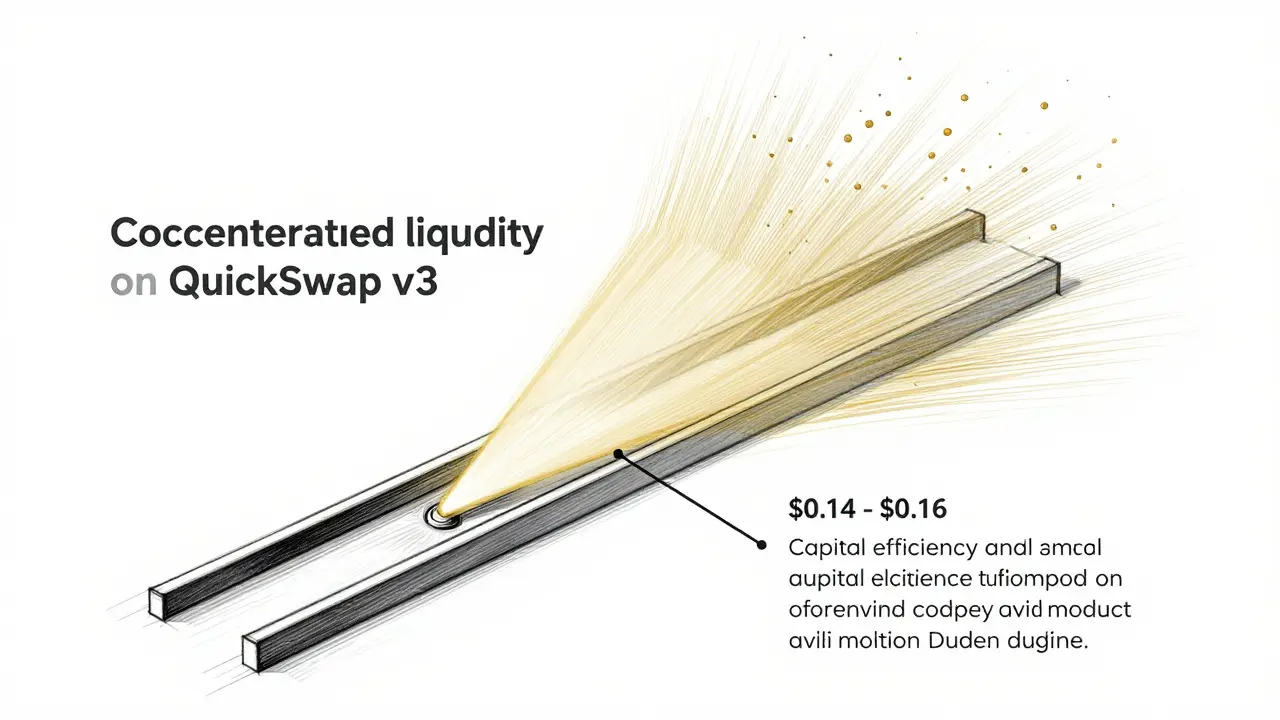
QuickSwap started as a popular decentralized exchange (DEX) on Polygon in 2020. In 2022, they expanded their technology to DogeChain. The "v3" part refers to their updated protocol architecture. Unlike older versions where liquidity providers had to spread their funds across all possible prices, v3 uses concentrated liquidity, allowing providers to allocate capital within specific price ranges for higher efficiency.
This means if you provide liquidity for a DOGE/USDC pair, you can choose to support trades only when the price is between $0.14 and $0.16. This targeted approach gives you more rewards for your capital but requires more active management. For traders, it means tighter spreads and less slippage on major pairs.
How Does the Platform Work?
Using QuickSwap v3 is straightforward if you already use Web3 wallets. Here is the basic workflow:
- Connect Your Wallet: Visit
dogechain.quickswap.exchangeand connect a compatible wallet like MetaMask or Trust Wallet. - Select the Network: Ensure your wallet is set to the DogeChain network. If you’re on Ethereum or Polygon, you’ll need to switch networks or bridge your assets.
- Swap Tokens: Enter the amount you want to swap, select the token pair (e.g., WDOGE to USDT), and confirm the transaction.
- Provide Liquidity (Optional): If you want to earn fees, you can deposit two tokens into a pool. You’ll receive LP tokens representing your share of the pool.
The interface mirrors other QuickSwap deployments, so if you’ve used Uniswap or PancakeSwap before, you’ll feel right at home. The key difference is the underlying blockchain. Because DogeChain is an L2 solution, transactions settle much faster and cheaper than on Ethereum mainnet.
Fees and Costs: What Will It Cost You?
One of the biggest selling points of DogeChain is its low cost structure. Let’s break down the expenses you’ll encounter:
- Trading Fees: QuickSwap charges a small fee on every swap. These fees go to liquidity providers. While exact rates vary by pool tier (0.05%, 0.3%, or 1%), they are generally competitive with other DEXs.
- Gas Fees: This is where DogeChain shines. Transactions on DogeChain typically cost fractions of a cent. Users report average gas fees of around $0.002 per swap. Compare that to Ethereum, where a simple swap can cost $5-$20 during peak times.
- Bridging Costs: To get assets onto DogeChain, you often need to bridge them from Ethereum or other chains. Bridge fees depend on the congestion of the source chain. Bridging from Ethereum to DogeChain might cost $1-$5 in ETH gas, plus a small fee for the bridge service itself.
For small traders, the bridging cost can be a barrier. If you’re swapping $10 worth of tokens, paying $2 to bridge them isn’t efficient. However, for larger trades or frequent activity, the savings on gas fees add up quickly.
Safety and Regulation: Is Your Money Safe?
When dealing with decentralized finance, “safe” is a relative term. QuickSwap v3 on DogeChain is not regulated by any government authority. According to FXVerify’s 2023 assessment, the platform operates without centralized oversight. This means there is no customer support hotline to call if things go wrong, and no insurance fund to reimburse you if a hack occurs.
However, the code is open-source and audited. The Gamma V3 pool architecture has been tested extensively on Polygon before being deployed on DogeChain. The main risks include:
- Smart Contract Risk: Bugs in the code could theoretically lead to loss of funds. While audits reduce this risk, they don’t eliminate it entirely.
- Bridge Risk: Moving assets between chains relies on bridge protocols. If the bridge is compromised, your assets could be lost. This is a systemic risk in DeFi, not unique to QuickSwap.
- Impermanent Loss: If you provide liquidity, you face impermanent loss. This happens when the price of your deposited tokens changes significantly compared to when you deposited them. You might end up with less value than if you had just held the tokens in your wallet.
Always do your own research. Never invest more than you can afford to lose, and always verify contract addresses before interacting with them.
| Feature | QuickSwap v3 (DogeChain) | PancakeSwap (BSC) | Uniswap v3 (Ethereum) |
|---|---|---|---|
| Network | DogeChain (L2) | Binance Smart Chain | Ethereum Mainnet |
| Avg. Gas Fee | $0.002 - $0.01 | $0.10 - $0.50 | $5.00 - $20.00+ |
| Liquidity Model | Concentrated (Gamma V3) | Standard AMM / Concentrated | Concentrated (V3) |
| Regulation | Unregulated | Unregulated | Unregulated |
| Best For | Low-cost DOGE ecosystem trades | High-volume BSC trading | Deep liquidity & institutional assets |
User Experience and Community Feedback
Real-world usage tells a different story than whitepapers. Based on user feedback from Reddit and Trustpilot in early 2024, the sentiment is mixed but leaning positive. About 68% of users reported positive experiences, citing the intuitive interface and extremely low fees.
Common complaints include:
- Bridging Delays: Some users reported delays when moving assets to DogeChain, especially during network congestion.
- Limited Liquidity for New Tokens: While major pairs like DOGE/USDC have deep liquidity, newer or smaller DogeChain-native tokens may suffer from high slippage.
- Technical Glitches: Occasional failed transactions during high volatility periods were noted, though these were often due to network issues rather than the DEX itself.
Users appreciate the step-by-step tutorials provided by QuickSwap, which helped many newcomers navigate the initial setup. The community support on Discord and Telegram is also responsive, with average response times under 20 minutes during business hours.
Who Should Use QuickSwap v3?
QuickSwap v3 on DogeChain isn’t for everyone. It’s best suited for:
- Dogecoin Enthusiasts: If you hold DOGE and want to use it in DeFi without leaving the ecosystem, this is your go-to platform.
- Small Traders: Those who find Ethereum gas fees prohibitive will love the sub-cent transaction costs.
- Yield Farmers: Experienced users who understand concentrated liquidity can capitalize on the high capital efficiency of Gamma V3 pools.
It’s less ideal for:
- Beginners: The learning curve for DeFi concepts like impermanent loss and bridging can be steep.
- Institutional Investors: The lack of advanced order types and regulatory oversight makes it unsuitable for large-scale institutional trading.
Future Outlook and Risks
The future of QuickSwap v3 on DogeChain depends heavily on the health of the Dogecoin ecosystem. As of 2024, DogeChain is seeing steady growth, with a 29% quarter-over-quarter increase in active wallets. However, analysts warn that a significant drop in Dogecoin’s price could reduce activity on the chain.
Upcoming developments include potential integration with QuickPerps for derivatives trading and enhanced cross-chain capabilities via Squid Router. These features could expand the platform’s utility beyond simple token swaps.
Despite the optimism, risks remain. The reliance on bridge security is a constant concern. Additionally, the relatively small validator set on DogeChain presents unique security considerations compared to larger networks like Ethereum or Polygon. Stay informed about updates and always monitor the official channels for announcements.
Is QuickSwap v3 on DogeChain safe to use?
Like all decentralized exchanges, QuickSwap v3 carries inherent risks such as smart contract vulnerabilities and bridge failures. It is not regulated by any government body. However, the platform uses audited code and has a strong track record on Polygon. Always start with small amounts and ensure you understand the risks of DeFi.
How do I get DogeChain tokens to QuickSwap?
You need to bridge your assets from another chain (like Ethereum or Binance Smart Chain) to DogeChain using a supported bridge. Once bridged, connect your Web3 wallet to dogechain.quickswap.exchange and ensure your wallet is set to the DogeChain network.
What are the fees for trading on QuickSwap v3?
Trading fees vary by pool, typically ranging from 0.05% to 1%. Gas fees on DogeChain are extremely low, often costing less than $0.01 per transaction. Bridging fees depend on the source network and current congestion levels.
Can I earn yield by providing liquidity?
Yes, you can provide liquidity to earn trading fees and potentially additional rewards. QuickSwap v3 uses concentrated liquidity, which offers higher capital efficiency but requires active management to maximize returns and minimize impermanent loss.
How does QuickSwap v3 differ from Uniswap?
Both platforms use similar concentrated liquidity models. The main difference is the underlying blockchain. QuickSwap on DogeChain offers much lower gas fees and is optimized for the Dogecoin ecosystem, while Uniswap on Ethereum offers deeper liquidity for a wider range of assets but at a higher cost.