
Imagine a ledger that everyone can read, but no single person controls. That is the core promise of a public blockchain, which is a decentralized, transparent digital record-keeping system that operates without central authority oversight. Unlike private databases used by banks or corporations, these networks allow anyone to participate in verifying transactions. You do not need permission to join, check the history, or send value.
The landscape of public blockchains has evolved significantly since the first one launched. While many people know the big names, understanding the specific differences between them is crucial for deciding which network fits your needs-whether you are looking to store value, build an application, or simply understand the technology driving the digital economy.
Bitcoin: The Original Public Blockchain
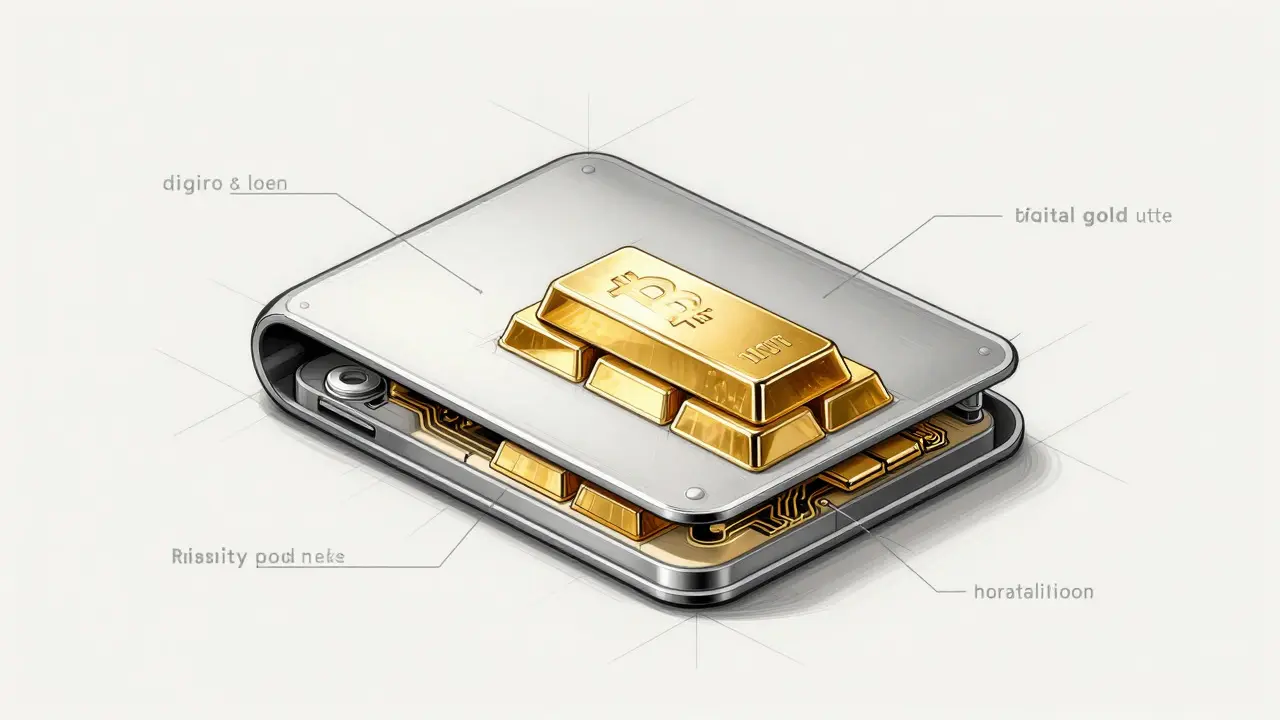
Bitcoin was the first practical implementation of a peer-to-peer electronic cash system, launched on January 3, 2009, by pseudonymous developer Satoshi Nakamoto. It established the blueprint for all subsequent public blockchains. Its primary design goal was to create a secure, censorship-resistant store of value, often referred to as "digital gold."
Bitcoin prioritizes security and decentralization above all else. As of late 2023, data from Bitnodes.io showed over 15,000 full nodes distributed across more than 100 countries. This widespread distribution makes it incredibly difficult for any single entity to control or alter the network. To change a historical transaction on Bitcoin, an attacker would need to control more than 51% of the network's computational power-a feat estimated to cost around $14.5 billion according to Crypto51.app calculations from October 2023.
However, this focus on security comes with trade-offs. Bitcoin processes approximately 4 to 7 transactions per second (TPS) with an average block time of 10 minutes. For simple value transfers, this is sufficient, but it limits its use for high-frequency applications. The network uses the SHA-256 cryptographic hashing algorithm and requires massive computing power, consuming roughly 200 exahashes per second globally. Despite the energy concerns, Bitcoin’s simplicity ensures it remains the most robust and trusted public blockchain for storing wealth.
Ethereum: The Programmable World Computer
If Bitcoin is a calculator, Ethereum is a programmable blockchain platform proposed by Vitalik Buterin in 2013 and launched on July 30, 2015, designed to host decentralized applications and smart contracts. Ethereum expanded the concept of blockchain beyond simple currency transfers to enable complex logic and automated agreements.
The key innovation here is the smart contract, which is self-executing code stored on the blockchain that automatically enforces terms when conditions are met. These contracts power decentralized finance (DeFi), non-fungible tokens (NFTs), and other dApps. In 2023, State of the Dapps reported over 50 million unique smart contracts deployed on Ethereum, supporting more than 4,000 decentralized applications.
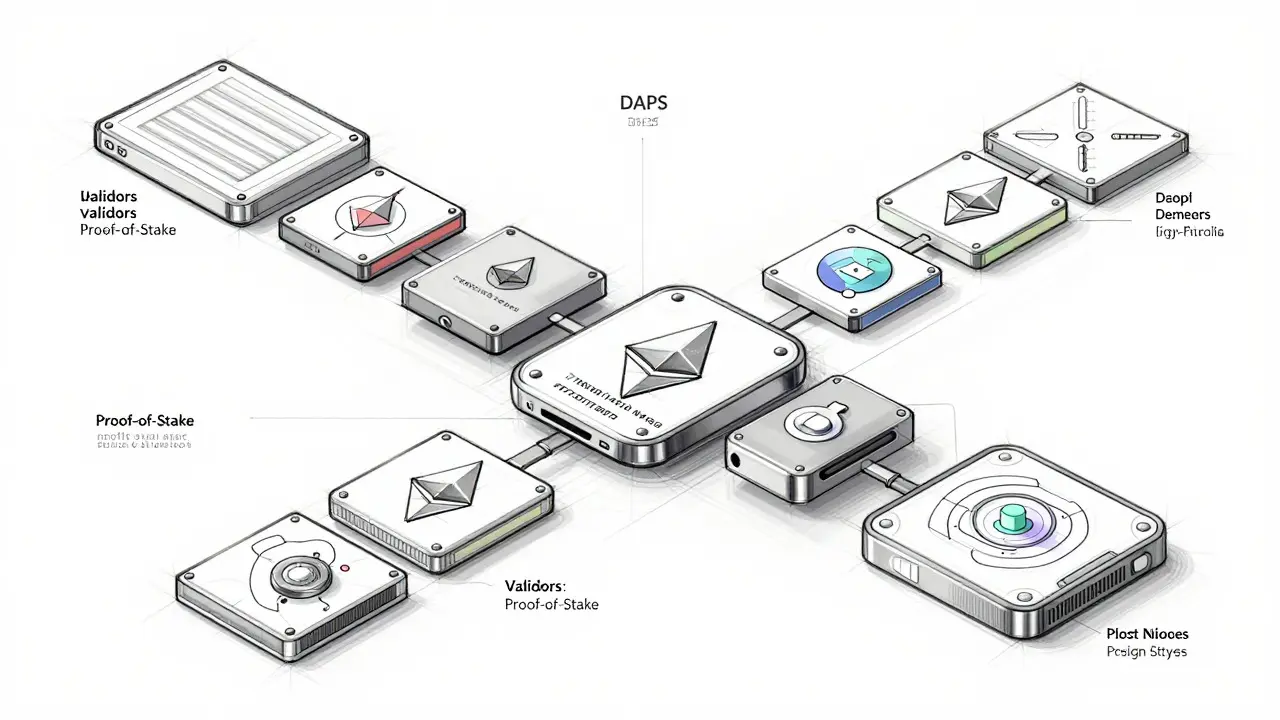
A major shift occurred on September 15, 2022, with "The Merge," where Ethereum transitioned from Proof-of-Work to Proof-of-Stake. This consensus mechanism reduced the network’s energy consumption by 99.95%, according to the Ethereum Foundation. Instead of miners using electricity-heavy hardware, validators now stake 32 ETH to secure the network. This move made Ethereum more environmentally friendly and opened doors for institutional adoption, though it introduced new dynamics regarding validator centralization risks.
Comparing Bitcoin and Ethereum: Key Differences
Understanding the distinction between these two giants helps clarify their roles. They solve different problems. Below is a comparison based on technical specifications and usage patterns observed in 2023.
| Feature | Bitcoin | Ethereum |
|---|---|---|
| Primary Use Case | Store of Value / Digital Gold | Decentralized Applications / Smart Contracts |
| Consensus Mechanism | Proof-of-Work (SHA-256) | Proof-of-Stake |
| Transactions Per Second (TPS) | 4-7 TPS | 15-30 TPS (Base Layer) |
| Block Time | ~10 Minutes | ~12 Seconds |
| Programming Language | Bitcoin Script (Limited) | Solidity (Turing-Complete) |
| Avg. Transaction Fee (Q3 2023) | $1.20 | $3.50 |
| Energy Consumption Impact | High | Low (Post-Merge) |
Notice the difference in fees and speed. Bitcoin is cheaper for simple transfers but slower. Ethereum is faster and more versatile but can become expensive during peak usage due to "gas fees"-the cost paid to execute code on the network. During the 2021 bull market, Ethereum gas fees peaked at $180 per transaction, making small interactions prohibitively costly. This scalability challenge has driven the development of Layer-2 solutions like Arbitrum and Optimism, which handle the bulk of Ethereum transactions today.
Beyond the Big Two: Other Notable Public Blockchains
While Bitcoin and Ethereum dominate market share, other public blockchains offer unique approaches to solving scalability and efficiency issues. Two prominent examples are Cardano and Solana.
Cardano was a public blockchain launched in September 2017 that employs the Ouroboros proof-of-stake protocol. Known for its rigorous academic research approach, Cardano aims for sustainability and interoperability. It features 10-second block times and over 2,000 nodes. Its methodical development pace means fewer bugs but also slower feature rollouts compared to competitors.
On the other end of the spectrum is Solana, which was launched in March 2020 and achieves up to 65,000 TPS through its innovative proof-of-history consensus mechanism. Solana focuses heavily on speed and low costs. However, this performance comes with stability trade-offs. The network experienced six outages in 2022 alone, as documented in the Solana Status Dashboard. This highlights the classic blockchain trilemma: balancing decentralization, security, and scalability is extremely difficult.
How to Choose the Right Blockchain for Your Needs
Selecting a public blockchain depends entirely on what you want to achieve. There is no single "best" option for every scenario.
- For Long-Term Savings: If your goal is to preserve wealth against inflation and censorship, Bitcoin remains the top choice. Its track record, decentralization, and fixed supply make it the most trusted asset in the space.
- For Building Applications: Developers creating DeFi protocols, NFTs, or DAOs typically choose Ethereum or its Layer-2 alternatives. The vast ecosystem of tools, libraries, and user base lowers the barrier to entry.
- For High-Frequency Transactions: If you are building a gaming platform or a payment system requiring thousands of transactions per second, Solana or similar high-throughput chains might be more suitable, provided you accept the potential stability risks.
- For Academic Rigor and Sustainability: Projects prioritizing peer-reviewed code and energy efficiency may find Cardano’s methodology appealing.
It is also important to consider regulatory landscapes. The European Union’s MiCA regulation, effective December 2024, classifies Bitcoin as a "virtual asset" while designating Ethereum as a "utility token," leading to different compliance requirements. In the United States, the SEC continues to evaluate whether certain tokens meet the definition of securities, adding another layer of complexity for users and developers alike.
Common Misconceptions About Public Blockchains
Despite widespread adoption, several myths persist. One common belief is that public blockchains are anonymous. In reality, they are transparent. Every transaction is visible on the ledger. While addresses are not directly linked to real-world identities, sophisticated analysis can often deanonymize users. True privacy requires additional tools like mixers or privacy-focused coins.
Another misconception is that blockchain solves all problems. As economist Paul Krugman noted in his October 2023 New York Times column, "Blockchain technology solves a problem that doesn't exist for most mainstream applications." Centralized databases are often faster, cheaper, and easier to manage for internal corporate use. Public blockchains shine only when trustless, decentralized coordination is necessary.
Future Trends and Developments
The public blockchain landscape is evolving rapidly. Bitcoin is exploring upgrades like Taproot Assets to enable tokenization while maintaining its security model. Ethereum’s roadmap includes the "Dencun" upgrade, featuring proto-danksharding to reduce Layer-2 costs by up to 90%. These developments aim to improve usability without compromising decentralization.
Institutional adoption is also growing. JPMorgan’s Onyx Digital Assets team reported a 300% year-over-year increase in Ethereum-based institutional transactions in 2023. Meanwhile, emerging technologies like quantum-resistant blockchains and Directed Acyclic Graphs (DAGs) such as IOTA’s Tangle architecture are being researched to address future challenges.
As we move forward, specialization will likely define the industry. Rather than one blockchain dominating everything, we will see a multi-chain ecosystem where each network excels in specific areas. Understanding these distinctions empowers you to navigate the digital economy with confidence.
What is the main difference between Bitcoin and Ethereum?
Bitcoin is primarily designed as a decentralized store of value and digital cash, focusing on security and simplicity. Ethereum is a programmable platform that allows developers to build decentralized applications (dApps) and smart contracts, offering more functionality but greater complexity.
Are public blockchains truly anonymous?
No, public blockchains are transparent, not anonymous. All transactions are recorded on a public ledger. While user identities are represented by alphanumeric addresses, advanced analytics can sometimes link these addresses to real-world individuals. Privacy coins or mixing services are needed for true anonymity.
Why did Ethereum switch to Proof-of-Stake?
Ethereum switched to Proof-of-Stake via "The Merge" in September 2022 to drastically reduce energy consumption (by 99.95%) and improve scalability. This change aligned the network with environmental goals and made it more attractive for institutional investors concerned about carbon footprints.
Which blockchain is best for beginners?
For beginners interested in holding assets, Bitcoin is often recommended due to its simplicity and strong security track record. For those wanting to explore decentralized applications, Ethereum offers the largest ecosystem of tools and tutorials, though users must learn to manage gas fees.
What are Layer-2 solutions?
Layer-2 solutions are secondary protocols built on top of a main blockchain (like Ethereum) to increase transaction speed and reduce costs. Examples include Arbitrum and Optimism. They process transactions off the main chain and then settle the final results on the base layer, enhancing scalability without sacrificing security.
Is Solana more secure than Bitcoin?
Not necessarily. Bitcoin is widely considered the most secure blockchain due to its massive hash rate and decentralized node distribution. Solana offers higher speed and lower fees but has experienced network outages, indicating potential trade-offs in stability and decentralization compared to Bitcoin.
How do smart contracts work?
Smart contracts are self-executing codes stored on a blockchain. They automatically enforce the terms of an agreement when predefined conditions are met, without needing intermediaries. For example, a smart contract could release funds to a seller only after a buyer confirms receipt of goods.


