
The Nightmare Scenario: What Is a 51% Attack?
Imagine you buy a rare digital painting on a blockchain. You pay for it, and the transaction is confirmed. But then, someone with enough power goes back in time, erases that payment, and buys the same painting from another seller using the same funds. This is a 51% attack. It’s the ultimate threat to decentralized networks.
In simple terms, a 51% attack happens when a single entity or group controls more than half of a blockchain’s resources. With that majority, they can rewrite history, double-spend coins, and stop new transactions from being processed. For years, we’ve looked at two main ways blockchains prevent this: Proof of Work (PoW) and Proof of Stake (PoS).
You might wonder which one actually keeps your money safe. The answer isn’t just about technology; it’s about economics, energy, and human behavior. Let’s break down how these two giants handle the threat of takeover.
How Proof of Work Stops Bad Actors
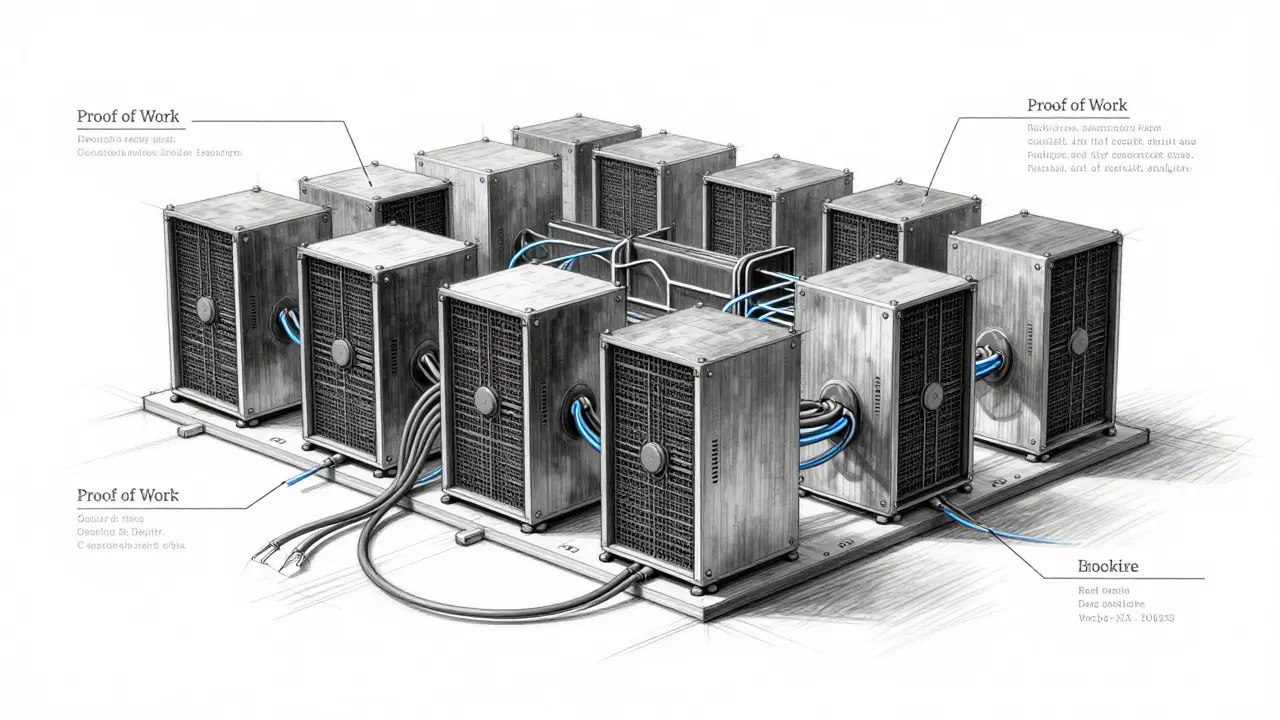
Proof of Work is the original security model, launched by Bitcoin in 2009. Think of it as a global computing race. Miners use specialized hardware to solve complex mathematical puzzles. The first one to solve it gets to add the next block to the chain and earns a reward.
To pull off a 51% attack on a PoW network like Bitcoin, an attacker needs to control more than 51% of the total hashrate-the combined computing power of all miners worldwide. This requires massive investments in ASICs (specialized mining machines) and endless electricity bills.
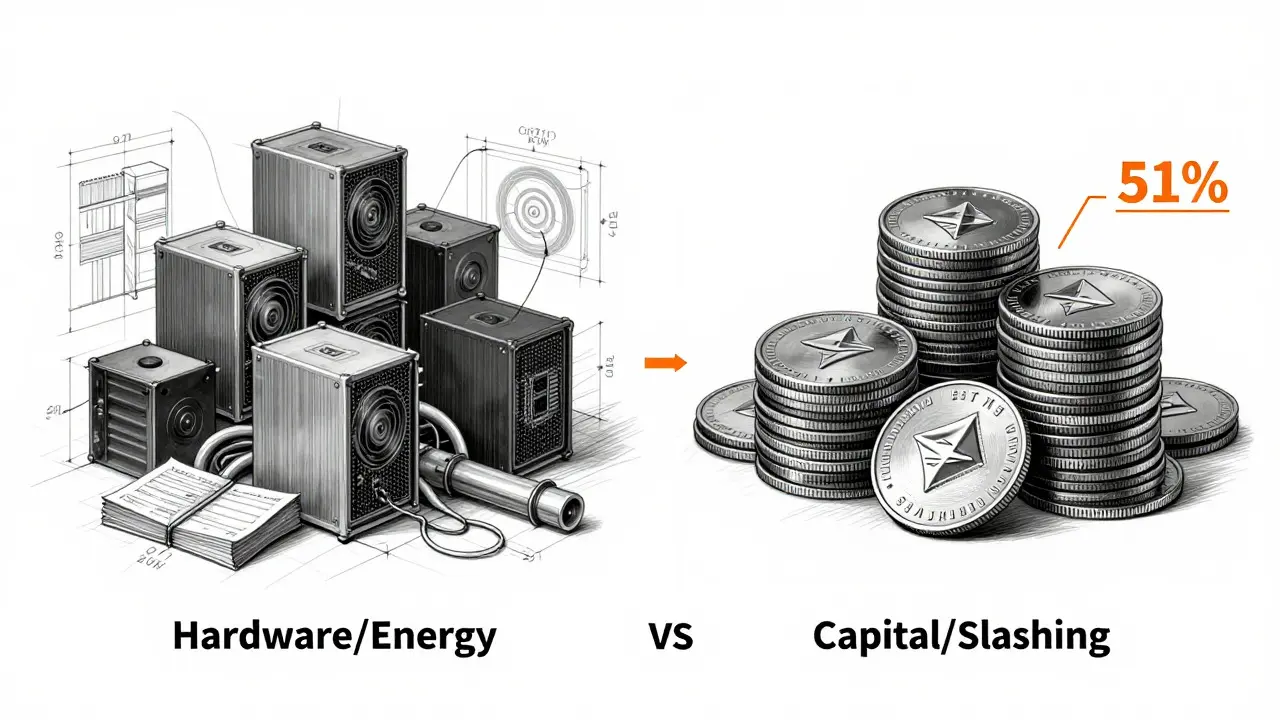
- The Barrier: Hardware and Energy.
- The Cost: Buying thousands of GPUs or ASICs plus paying industrial-scale electricity costs.
- The Risk: If the attack fails, the expensive hardware loses value because the market price of the coin likely crashes.
For a giant like Bitcoin, this is nearly impossible today. The hashrate is so high that renting or buying enough power would cost billions, often more than the potential profit from the attack. However, smaller PoW chains are vulnerable. We’ve seen attacks on smaller networks where the hashrate was low enough for a wealthy individual to rent mining power on the open market and disrupt the chain temporarily.
How Proof of Stake Changes the Game
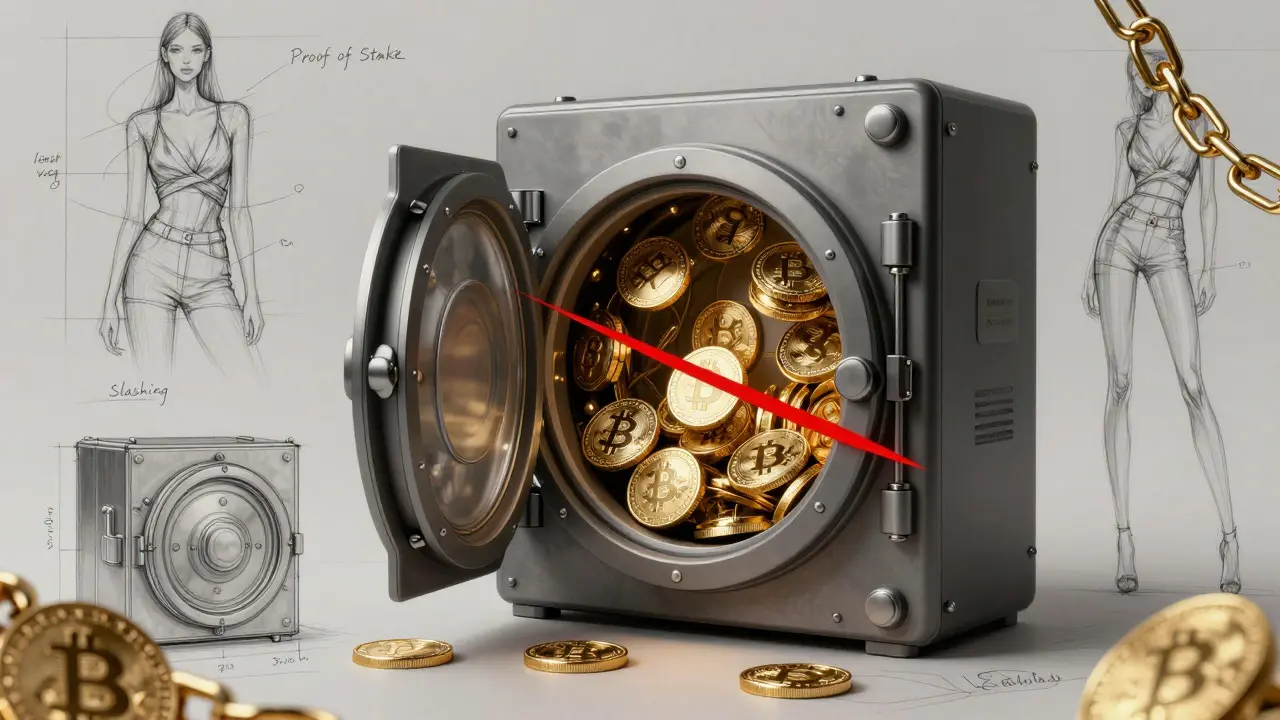
Proof of Stake, championed by Ethereum after its "Merge" in 2022, flips the script. Instead of burning electricity to solve puzzles, validators lock up their cryptocurrency tokens as collateral to participate in securing the network.
In Ethereum’s case, you need to stake exactly 32 ETH to become a validator. As of mid-2026, with ETH trading around $1,200, that’s an entry ticket of roughly $38,400. To execute a 51% attack here, an attacker doesn’t need computers; they need money. Specifically, they need to acquire and stake more than 51% of the total staked supply.
- The Barrier: Financial Capital.
- The Cost: Purchasing a massive portion of the circulating token supply.
- The Defense: Slashing.
This is where PoS gets interesting. In PoW, if an attacker fails, they still own their hardware. In PoS, if a validator acts maliciously, the protocol can "slash" them. This means the system automatically confiscates part or all of their staked tokens. An attacker trying to rewrite history risks losing their entire multi-million dollar investment instantly. It’s not just hard to attack; it’s financially suicidal.
Economic Analysis: Which Is Harder to Attack?
So, who wins? The numbers suggest PoS might actually be harder to attack economically, despite popular belief. Let’s look at the math behind the scenes.
Security researchers have compared the cost of attacking Bitcoin (PoW) versus Ethereum (PoS). To attack Bitcoin, you need to outspend the honest miners in electricity and hardware depreciation. To attack Ethereum, you need to buy over half the staked ETH.
Here is a comparison of the economic barriers:
| Factor | Proof of Work (Bitcoin) | Proof of Stake (Ethereum) |
|---|---|---|
| Resource Needed | Computing Power (Hashrate) | Cryptocurrency Tokens (Stake) |
| Primary Cost | Hardware + Electricity | Token Purchase Price |
| Attack Deterrent | High operational costs; hardware resale value drops | Slashing (loss of staked capital) |
| Estimated Cost Multiplier | Baseline | ~5x higher than equivalent PoW attack |
| Recovery Time | Hours to days (reorg difficulty increases exponentially) | Near-instant detection via slashing conditions |
According to analysis by firms like GlobalX ETFs, the market value required to acquire 51% of staked tokens in a major PoS system is approximately five times greater than the cost of generating 51% of Bitcoin’s hashpower. Why? Because in PoS, the attacker must hold the asset publicly while building their stake, driving up the price and alerting the community. In PoW, an attacker can secretly rent hashrate until the last minute.
The Hidden Risks: Centralization and Wealth
It’s not all perfect, though. Both systems have weaknesses that smart attackers look for.
In Proof of Stake, there is a fear of "wealth concentration." If a few large entities hold most of the tokens, they could theoretically collude. This is called oligarchy risk. While the cost to attack is high, the barrier to entry for *influence* is lower if you already hold millions of dollars in tokens. Critics argue this makes PoS less democratic, even if it is secure.
In Proof of Work, the risk is "pool centralization." If a few mining pools control most of the hashrate, they can censor transactions. While they haven’t attacked the chain itself, they show they have the power to influence it. Also, PoW is environmentally taxing. The energy consumption creates political pressure, which can indirectly threaten the network’s stability through regulation.
Real-World Examples: Attacks That Happened
Theory is great, but what does reality look like? We have seen 51% attacks happen, mostly on smaller chains.
- Bitcoin Gold (PoW): In 2020, Bitcoin Gold suffered a 51% attack. The attacker rewrote weeks of history and double-spent millions in BTCG. The network had low hashrate, making it cheap to rent enough mining power.
- Ethereum Classic (PoW): ETC has faced multiple 51% attacks since 2016. Each time, the attacker rented hashrate, disrupted the chain, and moved on. The lesson? Small PoW chains are fragile.
- Ethereum (PoS): Since switching to Proof of Stake, Ethereum has never faced a successful 51% attack. The economic cost to buy 51% of staked ETH would exceed tens of billions of dollars, far outweighing any potential gain.
These examples prove that network size matters more than the mechanism itself. A small PoS chain is still vulnerable. A small PoW chain is also vulnerable. But for top-tier networks, both mechanisms provide robust security.
Which Should You Trust?
If you are holding Bitcoin, you are relying on the sheer physical impossibility of gathering enough energy and hardware to beat the global network. It’s a fortress built on steel and silicon.
If you are holding Ethereum, you are relying on the economic suicide pact of slashing. It’s a fortress built on financial incentives and penalties.
For most users, the difference is academic. Neither Bitcoin nor Ethereum is likely to fall to a 51% attack anytime soon. However, if you are investing in smaller, newer cryptocurrencies, check their consensus mechanism. A small PoW chain is risky due to cheap hashrate rentals. A small PoS chain is risky if the token distribution is uneven among a few wallets.
The Future: Hybrid Models and Quantum Threats
We aren’t done evolving yet. Some newer blockchains are experimenting with hybrid models, combining PoW and PoS to get the best of both worlds. They use PoW to prevent spam and Sybil attacks (fake identities) and PoS for finality and energy efficiency.
Looking further ahead, quantum computing poses a theoretical threat to both. Quantum computers could potentially crack the cryptographic signatures used in both systems. But that’s a problem for the late 2030s, not today. For now, the battle between Proof of Work and Proof of Stake remains a standoff, with both sides proving incredibly resilient against the 51% attack.
Can a 51% attack happen on Ethereum?
Theoretically, yes, but practically, it is extremely unlikely. To attack Ethereum, an attacker would need to acquire more than 51% of the staked ETH. Given Ethereum's market cap and staking participation, this would cost tens of billions of dollars. Furthermore, the act of buying such a large amount would drive the price up, increasing the cost. Once detected, the attacker’s staked ETH would be slashed (confiscated), making the attack financially ruinous.
Is Proof of Stake safer than Proof of Work?
It depends on how you define "safer." Proof of Stake has a higher economic barrier to entry for attackers due to the cost of acquiring tokens and the risk of slashing. Proof of Work has a higher physical barrier due to the need for massive hardware and energy infrastructure. For large networks like Bitcoin and Ethereum, both are highly secure. For smaller networks, PoS may offer better deterrence because renting hashrate for PoW attacks is easier than quietly accumulating 51% of a token supply without moving the market.
What is slashing in Proof of Stake?
Slashing is a penalty mechanism in Proof of Stake networks. Validators lock up their crypto as collateral. If they behave maliciously-for example, by signing two different blocks for the same height or going offline for too long-the protocol automatically confiscates a portion of their stake. This serves as a strong economic disincentive for attempting a 51% attack.
Why did smaller PoW chains suffer 51% attacks?
Smaller PoW chains have low hashrate, meaning there is less computational power securing them. Attackers can rent mining power from cloud services or mining pools for a relatively low daily fee. If the value of the coins they can double-spend exceeds the rental cost of the mining power, the attack becomes profitable. Larger chains like Bitcoin have such immense hashrate that the rental cost is prohibitive.
Does Proof of Work use too much energy?
Yes, Proof of Work is energy-intensive because miners compete to solve puzzles, consuming vast amounts of electricity. This has led to environmental criticism. Proof of Stake reduces energy consumption by over 99% because it relies on financial stakes rather than computational work. However, some argue that the energy spent in PoW is a feature, not a bug, as it anchors the digital currency to real-world physical resources, enhancing security.