
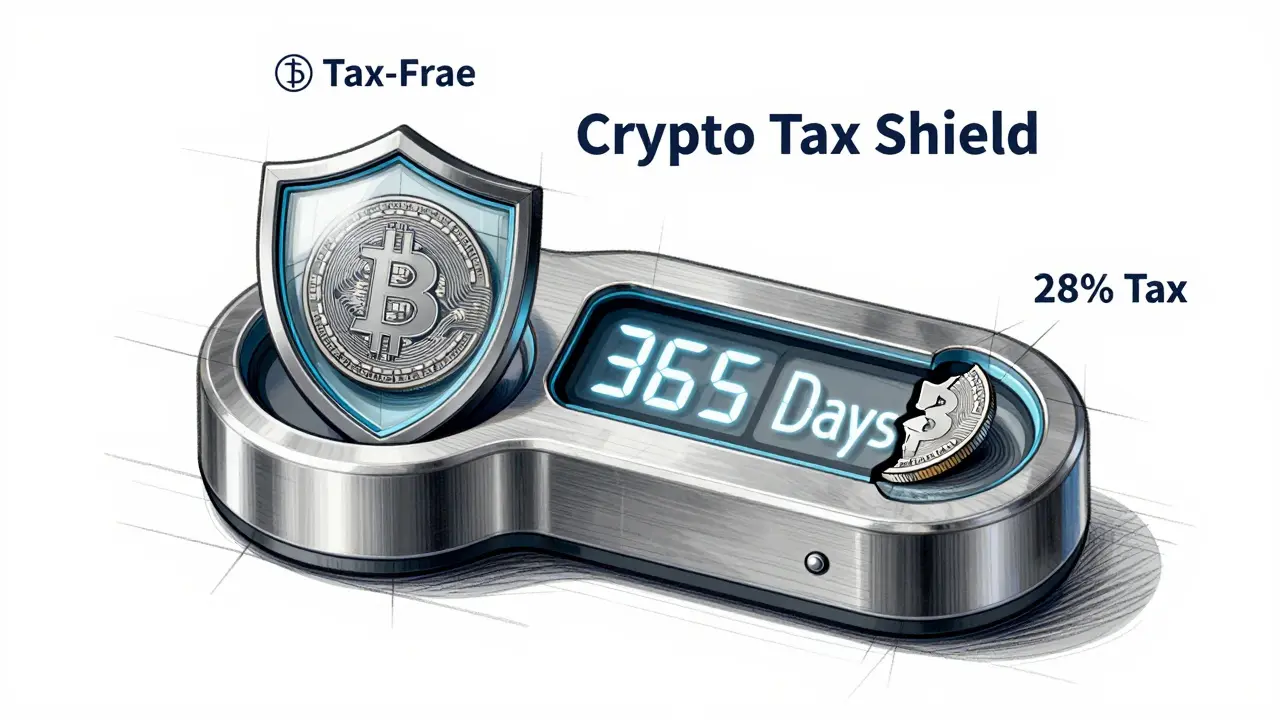
For years, Portugal was the undisputed king of crypto taxation in Europe. You could buy Bitcoin, watch it triple in value, and pay zero taxes when you sold it. Then came 2023. The government changed the rules, introducing a flat 28% tax on short-term gains. Panic set in. Many assumed the golden era was over.
But here is the reality check that most headlines miss: if you hold your cryptocurrency for more than one year, those gains are still completely tax-free. In fact, as we move through 2026, this long-term exemption remains one of the strongest incentives in the European Union for serious investors. The system isn't broken; it just requires patience and precise record-keeping.
Quick Takeaways
- Holding Period Matters: Crypto held for less than 365 days is taxed at 28%. Held longer? It’s tax-free.
- Category G vs. Category B: Casual investing falls under Capital Gains (G). Professional trading falls under Self-Employment (B) with progressive rates up to 53%.
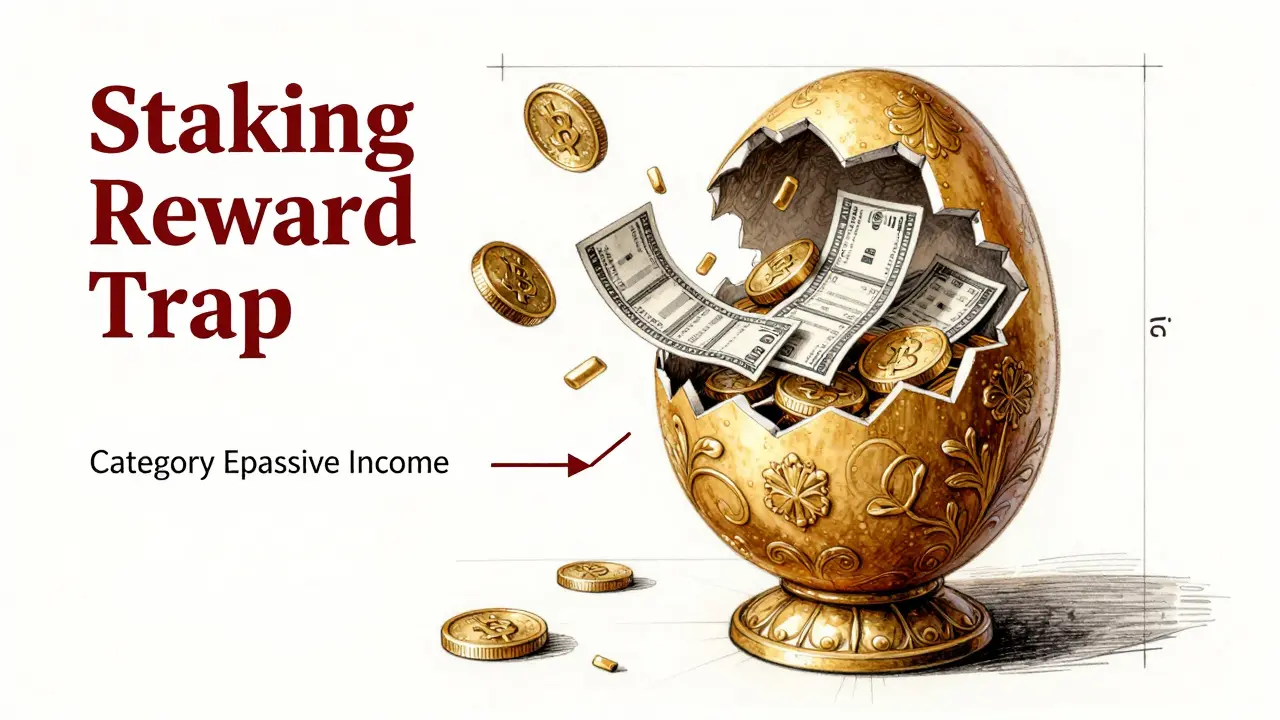
- Staking Isn’t Free: Rewards from staking or lending are considered passive income (Category E) and taxed at a flat 28%.
- Crypto-to-Crypto Is Safe: Swapping Bitcoin for Ethereum does not trigger a taxable event.
- Record Keeping Is Non-Negotiable: You must prove the exact acquisition date to claim the exemption.
The 365-Day Rule: Your Path to Zero Tax
The core of Portugal’s current crypto tax framework revolves around a single number: 365. This rule defines the difference between a taxable event and a tax-free windfall. Under the Personal Income Tax Code (PIT Code), profits from selling digital assets are classified as Capital Gains (income derived from the sale of assets, specifically categorized under Category G in Portuguese tax law).
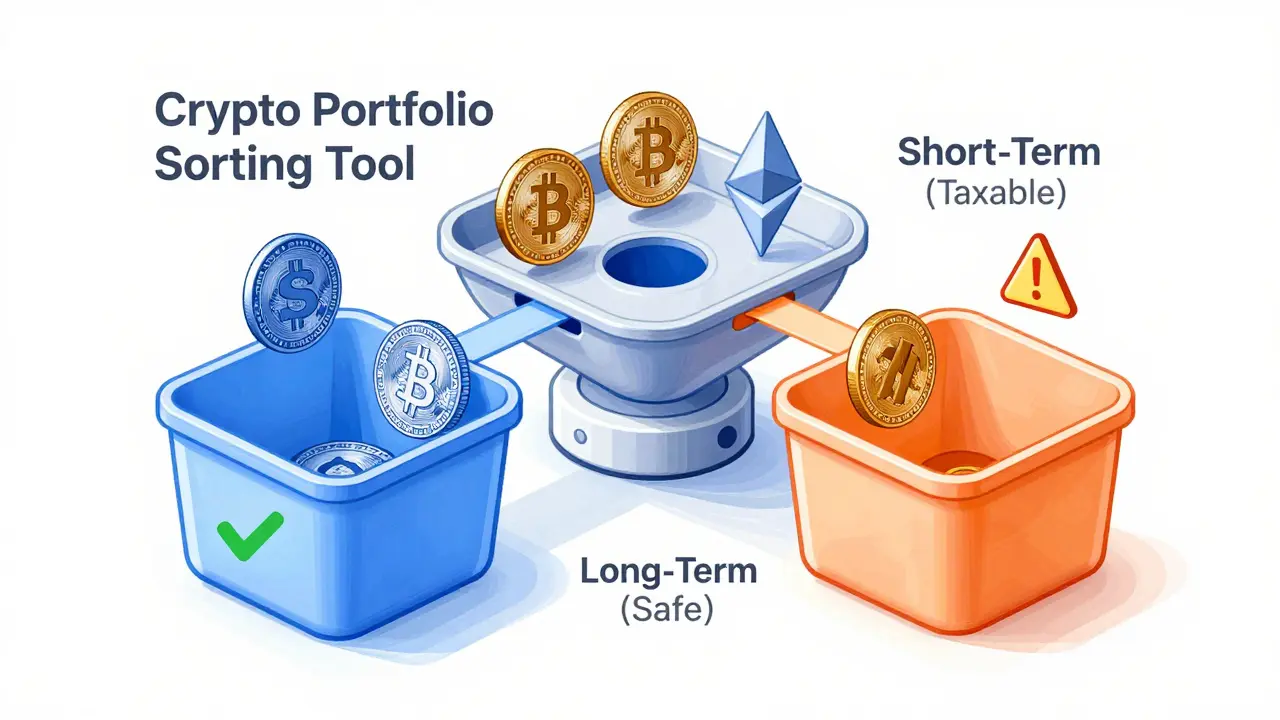
If you sell your crypto after holding it for more than one year, the gain is exempt from personal income tax. There is no cap on the amount. Whether you made €1,000 or €1,000,000, the tax bill is zero. This applies whether you convert the crypto to Euros (fiat) or use it to buy goods and services, provided the asset was held for the full period.
However, if you sell within that first year, the profit is subject to a flat 28% tax rate. This rate is applied to the net gain-the difference between what you bought it for and what you sold it for. Unlike some countries that apply progressive tax brackets to capital gains, Portugal keeps it simple with this flat rate for casual investors.
You might wonder if you can opt out of the 28% flat rate. Yes, you can choose to add short-term gains to your total annual income. If your overall income places you in a lower tax bracket than 28%, this option saves money. But for most high earners, the 28% flat rate is actually beneficial compared to top marginal income tax rates that can exceed 48%.
What Counts as "Professional" Trading?
Not all crypto activity fits neatly into the Category G bucket. The Portuguese tax authority, Autoridade Tributária e Aduaneira (AT), distinguishes between an investor and a professional trader. This distinction is critical because it changes how much you pay.
If your activities are deemed "professional," they fall under Self-Employment Income (Category B of the PIT Code, covering income from independent economic activities such as frequent trading, mining, or validation services). This includes:
- Frequent buying and selling with the intent to profit from short-term price fluctuations (day trading).
- Mining cryptocurrencies as a primary business operation.
- Running nodes for transaction validation where the scale suggests a commercial enterprise.
Income from these activities is taxed progressively. Rates start at 14.5% but climb steeply, reaching up to 53% for very high incomes. So, while the long-term exemption protects passive holders, active traders need to be careful. If you trade daily, the AT may view you as a business, not an investor. In that case, holding for a year doesn't help-you're taxed on every transaction as business income.
Staking, Lending, and DeFi: The Hidden Taxes
Many investors assume that because their principal investment is tax-free after a year, the rewards generated by that investment are also free. This is a dangerous misconception. Staking rewards, yield farming returns, and interest from lending platforms do not qualify for the long-term capital gains exemption.
These earnings are classified as Passive Income (Category E in the PIT Code, which includes dividends, interest, and other fixed-yield investments). Regardless of how long you have held the underlying asset, the new tokens or interest received are taxed immediately at a flat 28% rate.
Let's look at a concrete example. You buy 1 ETH in January 2025. You stake it in a validator pool. By December 2025, you have earned 0.1 ETH in rewards. When you withdraw or sell that 0.1 ETH, it is taxable income. The fact that your original 1 ETH has been held for a year does not shield the rewards. You owe 28% on the value of the rewards at the time they were received.
This also applies to Decentralized Finance (DeFi) protocols. If you provide liquidity to a pool and earn fees, those fees are treated similarly. The key takeaway? Yield generation is a taxable event in its own right, separate from the capital appreciation of your main holdings.
Crypto-to-Crypto Trades Are Not Taxable Events
Here is a relief measure for many: swapping one cryptocurrency for another does not trigger a tax liability. If you exchange Bitcoin for Solana, or Ethereum for a stablecoin like USDT, you do not report this as a sale.
The tax clock does not reset either. Your holding period for the new asset carries over from the original acquisition date of the old asset. This is known as the "carry-over basis" rule. If you bought BTC on June 1, 2025, and swapped it for SOL on July 1, 2025, your holding period for the SOL starts on June 1, 2025. If you sell the SOL on July 1, 2026, it qualifies for the long-term exemption because it has been held for more than 365 days since the initial purchase.
This rule encourages portfolio rebalancing without creating immediate tax bills. However, you must keep meticulous records. You need to prove the original purchase date and cost basis of the BTC to justify the tax-free status of the SOL later.
Comparison: Portugal vs. Other EU Jurisdictions
To understand why Portugal remains attractive, compare it to neighbors. France imposes a 30% social contribution surcharge plus income tax on all crypto gains, regardless of holding period. Italy charges a flat 26% capital gains tax. Spain ranges from 19% to 28% depending on total wealth.
Germany is Portugal’s closest competitor. Germany also offers a tax exemption for crypto held over one year. However, Portugal’s framework is often seen as more straightforward for non-residents becoming residents, especially when combined with historical residency programs. While Germany has strict anti-money laundering reporting thresholds, Portugal’s integration with the EU’s MiCA (Markets in Crypto-Assets) regulation provides a clear legal structure for businesses while keeping individual long-term gains protected.
| Country | Long-Term Gain (>1 Year) | Short-Term Gain (<1 Year) | Staking/Yield |
|---|---|---|---|
| Portugal | Tax-Free (0%) | 28% Flat | 28% Flat |
| Germany | Tax-Free (0%) | Progressive (up to ~45%) | Progressive (as income) |
| France | ~30% (Social Contributions + Tax) | ~30% | ~30% |
| Spain | 19%-28% (Wealth dependent) | 19%-28% | 19%-47% (As income) |
| Italy | 26% Flat | 26% Flat | 26% Flat |
How to Prove Your Holding Period
The burden of proof lies with you. The tax office will not track your wallet activity. If you claim a tax-free gain, you must demonstrate that the asset was held for more than 365 days. This requires rigorous documentation.
You need three specific data points for every transaction:
- Acquisition Date: The exact day you bought the crypto or received it via swap.
- Cost Basis: The price you paid, including fees.
- Disposal Date: The day you sold or spent the crypto.
Using specialized software is highly recommended. Tools like CoinTracking or Koinly can import data from major exchanges (Binance, Coinbase, Kraken) and even blockchain explorers. These platforms generate reports that map each coin to its specific entry date, ensuring you don't accidentally sell a "short-term" coin thinking it was "long-term."
A common mistake is using FIFO (First-In, First-Out) automatically. In Portugal, you should ideally use Specific Identification. This means you choose exactly which batch of coins you are selling. If you want to keep your gains tax-free, you must select the oldest coins in your wallet to sell. If you sell newer coins, you trigger the 28% tax. Your tax software must allow you to manually identify lots.
Navigating Residency and the NHR Program
Many foreigners move to Portugal specifically for tax benefits. Historically, the Non-Habitual Resident (NHR) regime offered a 10% flat tax on foreign-sourced income, including crypto. As of 2026, the NHR program has undergone significant changes, restricting eligibility to certain high-skilled professions and researchers. However, the general crypto tax rules described above apply to all tax residents, regardless of NHR status.
If you are not eligible for NHR, you still benefit from the 365-day exemption. For new residents, be aware of the "entry tax" implications. If you move to Portugal with significant crypto holdings, you generally do not pay tax on unrealized gains at the moment of moving. However, once you are a tax resident, any future disposal triggers the local rules. Plan your arrival date carefully if you have pending sales.
Common Pitfalls to Avoid
Even with favorable laws, mistakes happen. Here are the most frequent errors that lead to unexpected tax bills:
- Ignoring Small Wallets: People forget about old wallets from 2017. If you access them and move funds, ensure you document the history. If you sell, the long-term exemption likely applies, but you need the proof.
- Mixing Business and Personal: If you occasionally trade for fun but mostly hold, you are safe. If you trade daily, the AT may reclassify your entire portfolio as business income. Keep a clear separation.
- Underestimating Stablecoins: Using USDT to park funds is fine. But if you earn interest on USDT in a savings account, that interest is Category E income (taxed at 28%).
- NFT Confusion: Unique non-fungible tokens (NFTs) are not always treated as standard crypto assets. Some may be classified as movable property or art. Consult a specialist for high-value NFT trades, as the rules can differ.
Next Steps for Investors
If you are already in Portugal, audit your portfolio today. Identify which assets have crossed the 365-day threshold. Mark them clearly in your tracking software. When you decide to take profits, prioritize selling these long-term holdings first to maximize tax efficiency.
If you are considering moving to Portugal, understand that the tax benefit is real but conditional. It rewards patience. It does not reward speculation. Build a strategy around holding quality assets for the long term, and Portugal’s tax code will work in your favor. For complex situations involving multiple jurisdictions or large volumes, hire a local accountant familiar with crypto. The cost of professional advice is small compared to the risk of a penalty from the Autoridade Tributária.
Is crypto gambling taxed in Portugal?
Gambling winnings are generally tax-free in Portugal if they come from licensed operators. However, if you are betting with crypto on unlicensed offshore sites, the legal status is murkier. The safest approach is to treat any consistent winning streak as potential income. Occasional luck is usually ignored, but professional gambling falls under Category B (Self-Employment) and is taxable.
Do I have to report crypto if I didn't sell anything?
Yes. Even if you have no taxable events, you must declare your crypto holdings in your annual tax return if you are a tax resident. This is part of the transparency requirements aligned with EU regulations. You report the existence of the assets and their approximate value, even if no gain was realized.
What happens if I lose money on crypto?
You can offset capital losses against capital gains. If you had a €10,000 gain in a tax-free long-term position and a €2,000 loss in a short-term position, the rules for offsetting are strict. Generally, losses can only offset gains of the same category. Short-term losses can reduce short-term taxable gains. Long-term losses can reduce long-term gains (though since long-term gains are tax-free, this is less relevant unless you have mixed scenarios). Keep records of all losses for four years.
Does the 365-day rule apply to gifts?
Receiving crypto as a gift is generally not a taxable event for the recipient, provided it is a genuine gift and not disguised income. However, the holding period for the recipient usually starts from the date of receipt, not the donor's original purchase date. Check with a tax advisor, as gifting rules can interact with inheritance and donation taxes in Portugal.
Are there penalties for failing to report crypto?
Yes. Penalties can range from 10% to 50% of the unpaid tax, plus interest. More seriously, intentional concealment of assets can lead to criminal charges for tax evasion. Given that banks and exchanges increasingly share data with tax authorities under CRS (Common Reporting Standard), hiding crypto is becoming nearly impossible. Voluntary disclosure is always better than an audit.