
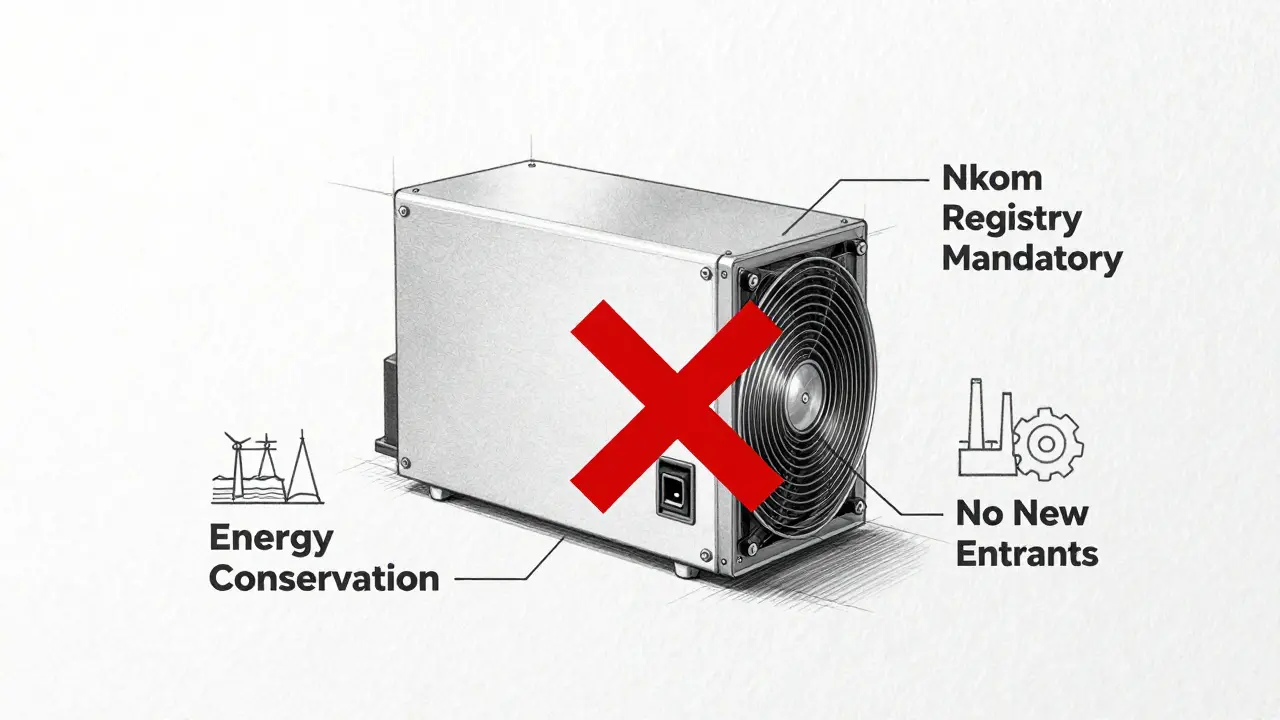
Imagine spending millions on industrial-grade ASIC miners, securing a cheap power contract, and breaking ground on a state-of-the-art facility-only to be told by the government that you can’t turn it on. For cryptocurrency miners looking at Norway, this isn't a hypothetical nightmare; it is the reality of operating in one of Europe’s most restrictive jurisdictions for digital asset infrastructure.
As of mid-2026, Norway has carved out a unique path in the global crypto landscape. While many nations scramble to attract hash rate with tax breaks or deregulation, Norway has doubled down on conservation. The country implemented the world’s first comprehensive national regulatory framework specifically targeting crypto mining data centers. This includes a mandatory registration system enforced by the Norwegian Communications Authority (Nkom) and a temporary ban on new, power-intensive mining operations that took full effect in autumn 2025.
If you are an investor, a miner, or simply curious about how renewable energy policies clash with blockchain growth, understanding these rules is critical. The stakes are high, the penalties are steep, and the window for new entry has effectively slammed shut. Here is exactly what you need to know about navigating-or avoiding-the Norwegian regulatory minefield.
The Two Pillars of Norway’s Regulatory Framework
To understand why Norway feels so hostile to new crypto projects, you have to look at the two distinct legal mechanisms working in tandem. These aren't just vague guidelines; they are enforceable laws with teeth.
First, there is the Norwegian Electronic Communications Act. This legislation, which came into force on January 1, 2025, created the first European national data center registry. It mandates that any entity operating a data center must register with Nkom (the Norwegian Communications Authority). Existing facilities had until July 1, 2025, to comply. New facilities must register before construction even begins. The penalty for non-compliance? Fines up to 5% of annual turnover. That is not a slap on the wrist; it is an existential threat to any business model relying on unregistered infrastructure.
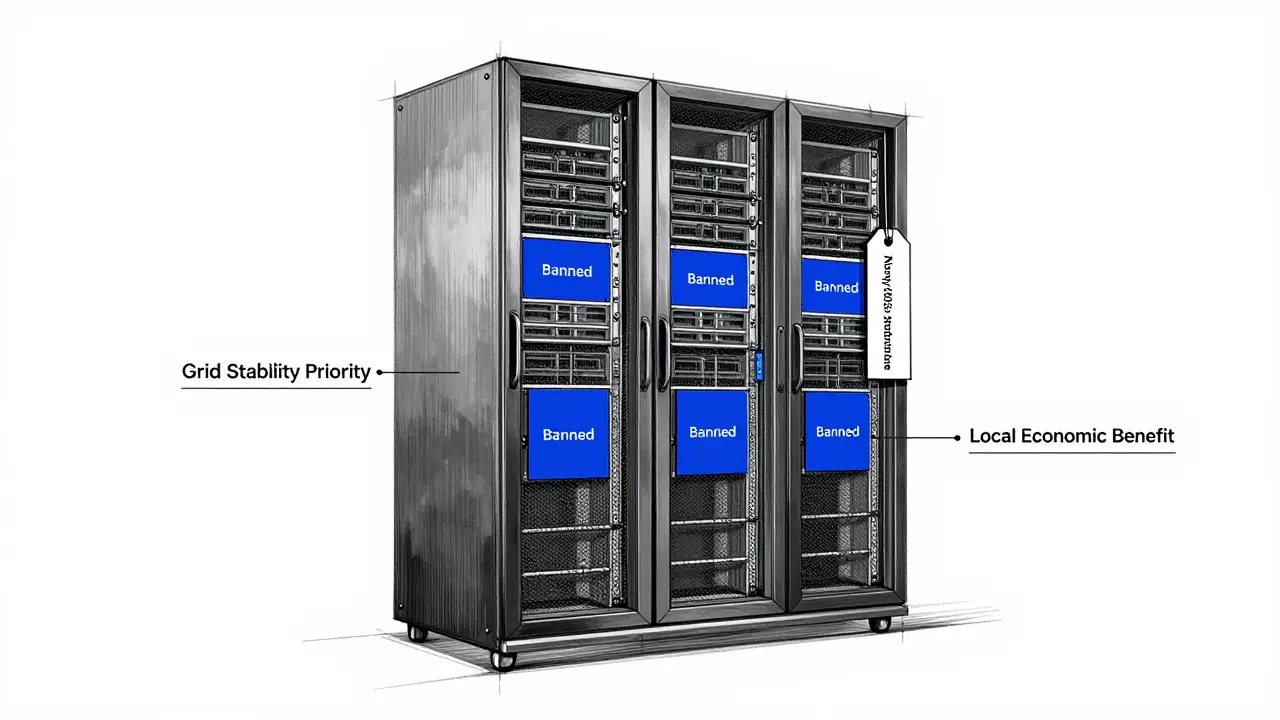
Second, and more aggressively, is the temporary ban on new cryptocurrency mining data centers. Announced in April 2024 and implemented in autumn 2025, this measure was coordinated by the Ministry of Digitalization and Public Administration and the Ministry of Energy. Led by Minister Karianne Tung and Energy Minister Terje Aasland, the government explicitly stated their intention to limit crypto mining as much as possible. Unlike China’s 2021 total prohibition, Norway allows existing mines to operate. However, it blocks any new entrants using the most energy-intensive technologies. This creates a "grandfathered" status quo where current players survive, but no new competition can enter the market.
Why Norway Cracked Down: Energy vs. Speculation
You might wonder: if Norway has some of the cleanest, cheapest hydroelectric power in the world, why not let miners use it? The answer lies in resource allocation. The Norwegian government views electricity not just as a commodity, but as a strategic national resource that should serve broader social and economic goals.
Minister Tung characterized crypto mining as "very power-intensive and generates little in the way of jobs and income for the local community." From the government’s perspective, every kilowatt-hour used by a Bitcoin miner is a kilowatt-hour not available for traditional manufacturing, public services, or green industries like aluminum smelting or hydrogen production. The argument is simple: crypto offers speculative financial gains for a few, while consuming resources that could support tangible economic development for many.
This represents a fundamental shift in Nordic energy policy. Historically, countries like Iceland, Sweden, and Finland welcomed miners because they had surplus renewable energy. Norway has decided that surplus does not justify environmental impact or grid strain. They are prioritizing stability and local benefit over global hash rate expansion. For investors expecting a "wild west" environment similar to Texas or Kazakhstan, Norway is a hard pass.
The Registration Trap: What You Must Disclose
For those already operating or planning to build non-mining data centers, the registration process under the Electronic Communications Act is rigorous. It is designed to create total transparency. You cannot hide behind shell companies or vague service descriptions.
Operators must provide:
- Company Details: Legal name, physical address, and legal status.
- Contact Information: A designated representative for government communications.
- Service Descriptions: Detailed explanations of the services provided.
- Customer Lists: Specific disclosure of whether clients are public agencies or private businesses.
The killer clause here is the requirement to declare specific services. If your data center hosts cryptocurrency mining rigs, you must declare it. This transparency allows Nkom to identify power-intensive activities instantly. It turns the registry into an enforcement tool. Authorities can cross-reference energy consumption data with registered services to spot anomalies. If you claim to be a generic cloud provider but draw the same power as a Bitcoin farm, you will be flagged. This makes covert mining operations nearly impossible to sustain in the long term.
Comparison: Norway vs. The Rest of Europe
| Jurisdiction | Stance on New Mines | Registration Requirement | Primary Motivation |
|---|---|---|---|
| Norway | Banned (Temporary) | Mandatory (Nkom Registry) | Energy Conservation / Local Jobs |
| Iceland | Welcomed | Standard Business License | Surplus Renewable Energy Utilization |
| Sweden | Neutral/Favorable | Standard Business License | Green Energy Export |
| China | Total Ban | N/A (Illegal) | Financial Control / Environmental Policy |
| EU General (MiCA) | Varies by State | Financial Compliance Focus | Consumer Protection / Market Stability |
As the table shows, Norway stands alone in its aggressive combination of registration and prohibition. While the EU implements the Markets in Crypto Assets (MiCA) regulation throughout 2025, MiCA focuses on financial stability and consumer protection. It does not inherently restrict energy usage. Norway’s approach goes beyond financial regulation; it is an industrial policy decision. They are actively steering capital away from crypto and toward sectors they deem more valuable to the national interest.
Impact on Miners and Investors
The ripple effects of these regulations are already visible. International mining companies that had planned investments in Norway have reportedly relocated to other Nordic countries or North America. The uncertainty surrounding the "energy intensity threshold" for the ban has created a chilling effect. Even if your operation is slightly below the undefined cutoff, the risk of future rule changes makes Norway an unattractive bet.
For existing operators, the situation is precarious. While they are allowed to continue, they face increased scrutiny. The registration requirements impose significant administrative costs. Small-scale miners, in particular, struggle with the legal and reporting burdens. Many are questioning the long-term viability of staying in Norway when governments signal that crypto is not a priority sector. There are ongoing discussions about whether the temporary ban could become permanent or expand to include existing facilities. No one wants to invest in a sunset industry.
Environmental groups, however, cheer this on. They view Norway as a model for sustainable energy policy. The tension between technological innovation and resource conservation is real. In Norway, conservation currently wins. For miners, this means higher compliance costs, less freedom to expand, and a constant overhead of regulatory anxiety.
What Comes Next?
Looking ahead, Norway serves as a regulatory testing ground. Other countries with abundant renewable energy may watch closely to see if this model preserves grid stability without stifling innovation entirely. The autumn 2025 implementation was just the beginning. Government officials have hinted at ongoing evaluations of crypto mining’s compatibility with climate goals. If the data shows that mining continues to strain the grid during peak demand periods, further restrictions are likely.
For now, the message is clear: Norway is not open for business for new crypto mining ventures. If you are in the space, your best move is to look elsewhere. Countries like Canada, parts of the United States, or even neighboring Sweden offer more predictable environments. In Norway, the cost of doing business isn't just electricity-it's political risk.
Can I still start a crypto mining farm in Norway in 2026?
No. As of autumn 2025, Norway has implemented a temporary ban on new cryptocurrency mining data centers, particularly those using energy-intensive technologies. While existing operations may continue, new entrants are blocked from establishing mining facilities. The government aims to redirect electricity to industries with higher social and economic benefits.
Who enforces the data center registration in Norway?
The Norwegian Communications Authority (Nkom) enforces the registration requirements under the Norwegian Electronic Communications Act. All data centers, including those hosting crypto mining, must register with Nkom. Failure to comply can result in fines up to 5% of annual turnover.
Why is Norway banning crypto mining?
The Norwegian government argues that crypto mining consumes excessive electricity while generating minimal local employment or economic benefit. They prioritize using hydroelectric power for traditional industries, manufacturing, and public services rather than speculative digital assets. The goal is to ensure energy resources support broader societal goals.
Does the ban affect existing mining operations?
Currently, no. The ban applies exclusively to new mining operations. Existing facilities are allowed to continue operating but must comply with strict registration and transparency requirements. However, there is uncertainty about whether restrictions could expand to existing sites in the future.
How does Norway’s approach compare to the EU’s MiCA regulation?
MiCA (Markets in Crypto Assets) focuses on financial regulation, consumer protection, and market stability across the EU. It does not inherently restrict energy usage. Norway’s approach is distinct because it combines financial oversight with direct industrial policy, banning new energy-intensive mining to conserve national power resources. Norway aligns with MiCA on financial aspects but exceeds it in energy restrictions.


