
Imagine spending months crafting a digital masterpiece, only to watch it sell for thousands of dollars over and over again on the secondary market while you receive exactly zero. For many digital artists, this isn't a nightmare-it's the current reality of the Web3 economy. The original promise of NFTs was a revolution in creator earnings: a world where a smart contract automatically sent a percentage of every resale back to the artist. But that dream has hit a wall called NFT royalty circumvention.
The problem is simple but devastating. While the technology allows for royalty settings, it doesn't actually force anyone to pay them. This has turned the secondary market into a "cat-and-mouse game" where traders find clever ways to bypass payments and creators are left fighting for pennies. If you're an artist or a collector, understanding why this happens is the only way to navigate the current landscape.
The Technical Gap: Why Royalties Are Optional
To understand why royalties are so easy to dodge, we have to look at the plumbing. Most NFTs use ERC-721 is the dominant Ethereum token standard for non-fungible tokens. While it's great for proving ownership, it wasn't built with a mandatory payment system for creators. It simply doesn't have the built-in teeth to stop a transfer without a payment.
Then came ERC-2981 is a specialized NFT royalty standard designed to provide a uniform way for marketplaces to signal royalty information. On paper, this solved everything. In practice, it's optional. Marketplaces can choose to follow it, or they can just ignore it. Since many platforms want to attract more traders by offering lower fees, they have a huge incentive to treat royalties as a suggestion rather than a rule.
| Standard | Royalty Mechanism | Enforcement Level | Main Weakness |
|---|---|---|---|
| ERC-721 | None built-in | None | Purely dependent on marketplace honor |
| ERC-2981 | Standardized signaling | Optional | Marketplaces can ignore the signal |
| ERC721-C | Programmable contracts | High (On-chain) | Requires adoption by creators/users |
How Traders Actually Bypass Royalties
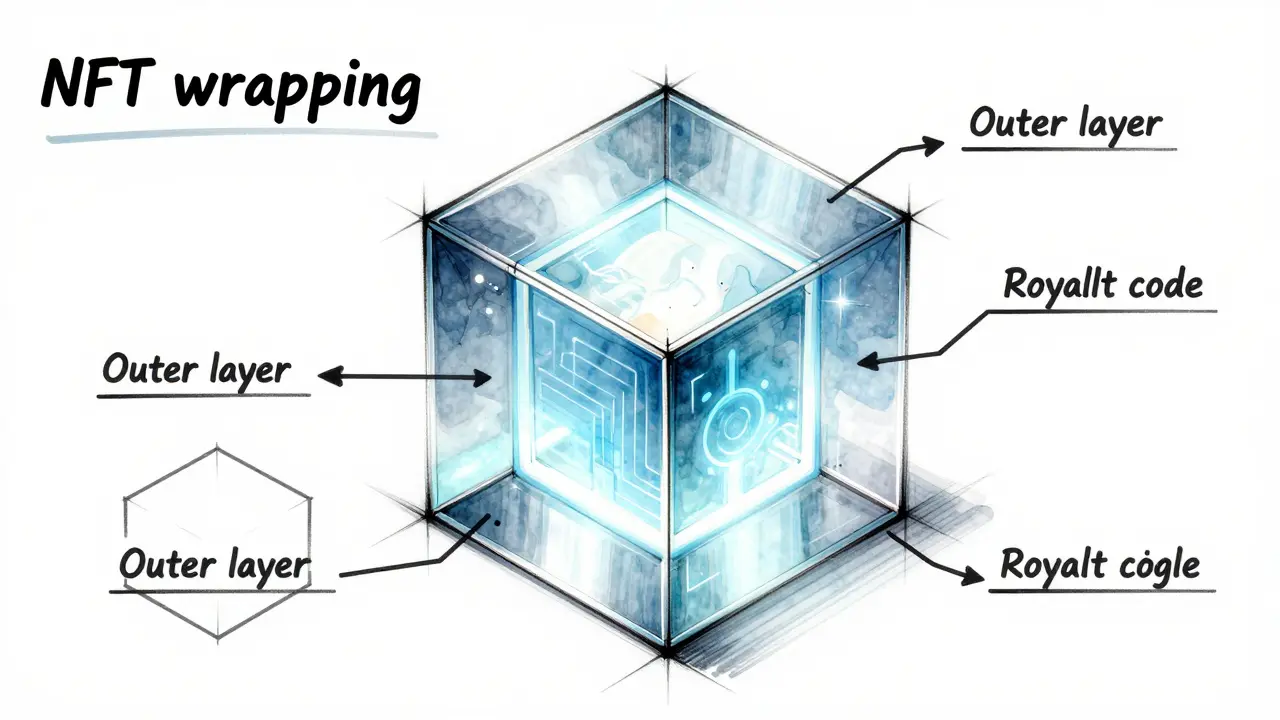
Traders don't just "forget" to pay; they use specific tactics to make royalties vanish. One of the most common technical tricks is called "wrapping." Think of this as putting your NFT inside a digital box. The NFT might have an ERC-2981 royalty requirement, but the "box" (the wrapper) is a standard ERC-721 contract that doesn't mention royalties at all. When the trader sells the "box," the marketplace only sees the outer layer and ignores the artist's fee inside.
Then there is the "off-platform" shuffle. Two people agree to buy and sell an NFT. They list the item on a marketplace for $0, transfer the ownership officially, and then the buyer sends the actual payment to the seller via a separate app or a direct wallet transfer. Since the marketplace thinks the sale price was zero, no royalty is triggered.
Finally, we have marketplace-level policy shifts. Platforms like Blur have fundamentally changed the game by implementing policies that essentially nullify creator royalties to attract high-volume traders. If you mint a piece on Rarible with a 5% fee, but it eventually lands on Blur, that 5% often disappears into thin air because the platform simply refuses to enforce it.
The Struggle for Enforcement: Blocklists vs. Allowlists
Creators have tried to fight back using two main strategies, but both come with a heavy price: the loss of "composability." Composability is the ability for different blockchain apps to talk to each other. If you break that, you make your NFT less useful.
Blocklists work like a digital firewall. The creator maintains a list of "bad" marketplaces that don't pay royalties and tells the smart contract to block any transfers to those addresses. If a trader tries to sell on a blocked site, the transaction fails. The problem? It's an endless game of whack-a-mole. New marketplaces pop up every day, and creators have to manually track and block them in real-time.
Allowlists are the opposite. The creator specifies a few "trusted" platforms where the NFT can be traded. While this guarantees royalties, it kills the open nature of the blockchain. You're essentially telling the world, "You can only trade my art if I personally approve the website you're using." This makes the NFT feel more like a gated corporate product and less like a decentralized asset.
A New Path: Programmable and Network-Level Royalties
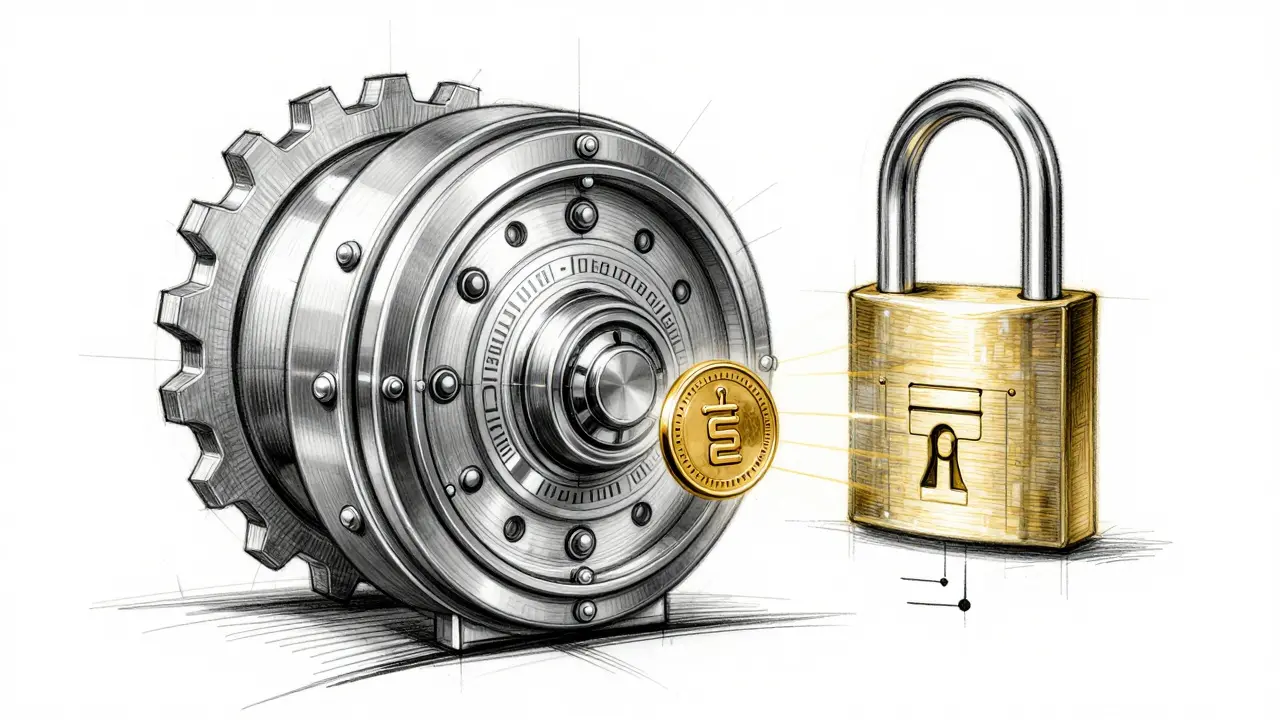
The industry is finally moving toward solutions that don't rely on the "honor system." One of the most promising developments is the ERC721-C is a customizable royalty standard developed by Limit Break that allows for on-chain enforcement. Unlike older standards, ERC721-C lets creators build a programmable contract that can actually block zero-fee exchanges from listing their work. It moves the power from the marketplace back to the artist.
Another interesting approach comes from the network level. The Hedera is a decentralized network that integrates royalty enforcement directly into its native token service network. Instead of hoping a marketplace does the right thing, Hedera builds the royalty fee into the network's own logic. If you mint on Hedera, the system is designed to honor those fees regardless of which app is facilitating the trade.
This shift from "social contracts" to "technical contracts" is the only way the creator economy survives. As the University of Washington Law School pointed out, relying on a marketplace to pay you is essentially a social agreement-and in the world of high-stakes trading, social agreements are frequently broken.
What This Means for the Future of Digital Art
The tension between royalty enforcement and composability is the defining conflict of the NFT era. If creators make their NFTs too restrictive, the value drops because they are harder to trade. If they make them too open, they get cheated out of their earnings. It's a delicate balance.
For now, the evidence shows that generic "registries" (like Manifold's) aren't enough because they still rely on marketplaces to check the registry. The future belongs to standards like ERC721-C and network-level enforcement where the code simply doesn't allow a transfer to happen unless the fee is paid. Only then can artists trust that their success on the secondary market actually benefits them.
Why are NFT royalties optional on most marketplaces?
Royalties are optional because the primary token standards, like ERC-721, do not have a built-in mechanism to force payments. While ERC-2981 provides a way to signal what the royalty should be, marketplaces can choose to ignore this signal to attract more users by offering lower trading costs.
What is NFT wrapping and how does it bypass royalties?
Wrapping is the process of placing an NFT inside a different smart contract "wrapper." If the original NFT has royalty requirements, the wrapper can be designed as a standard ERC-721 token that lacks those requirements. The marketplace then interacts with the wrapper rather than the original asset, effectively hiding the royalty obligation.
Do blocklists actually work for creators?
They work to a degree, but they are difficult to maintain. Creators must constantly monitor the blockchain for new marketplaces and add their addresses to the blocklist. If a trader uses a new, unlisted marketplace, the blocklist is useless until the creator discovers and adds that new address.
How does ERC721-C differ from standard NFTs?
ERC721-C introduces programmable, on-chain enforcement. Instead of just signaling a royalty fee, it allows creators to set rules within the smart contract that can block transfers to non-compliant platforms, making it much harder for traders to use zero-fee marketplaces.
Does Hedera really enforce royalties better than Ethereum?
Yes, because Hedera integrates royalty enforcement at the network level rather than leaving it to the marketplace. By building the fee logic into the network's native token service, it creates a more consistent environment where fees are honored across the ecosystem.


