
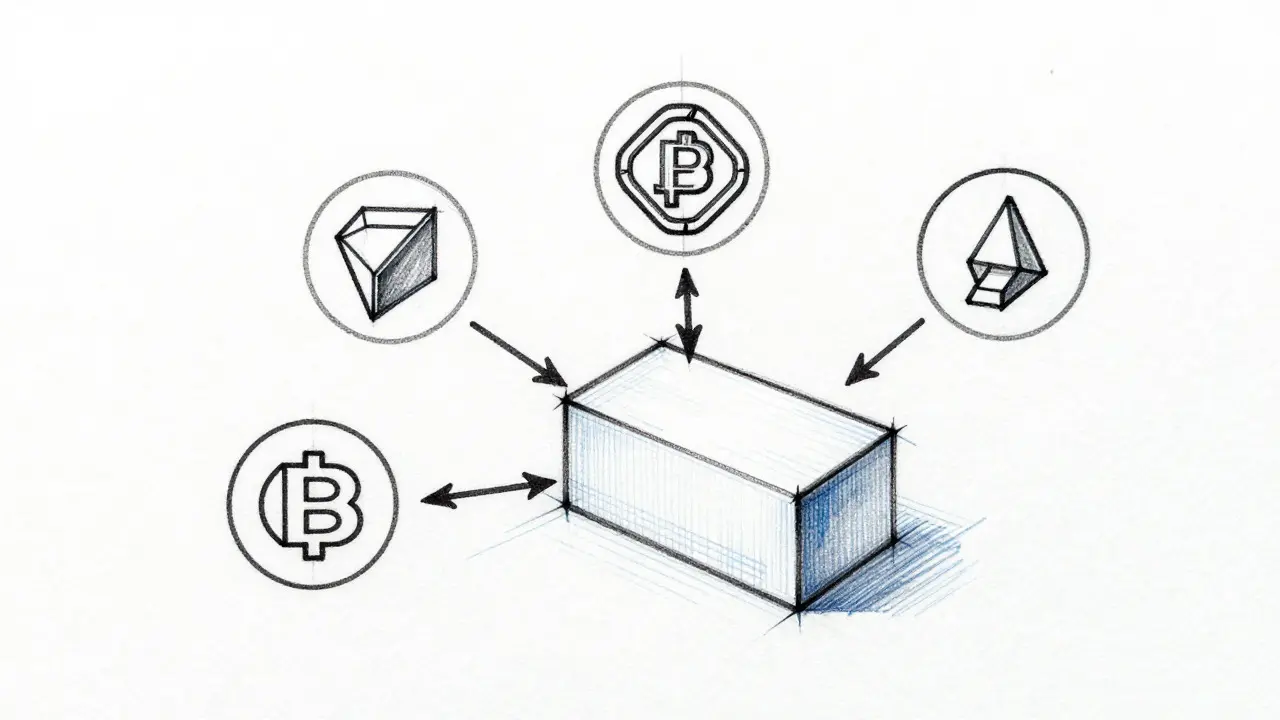
Most decentralized exchanges feel like a chore. You connect your wallet, pay a gas fee that feels like rent money, and hope the liquidity is deep enough to not get wrecked by slippage. But what if you could bundle five trades into one transaction and slash those costs? That is the promise of Kyo Finance V2, a decentralized exchange built specifically on the Soneium blockchain network. It’s not trying to be the next Uniswap or PancakeSwap. Instead, it targets a specific pain point for users on emerging networks: high gas fees and fragmented liquidity.
If you are diving into the Soneium ecosystem, Kyo Finance might be your go-to tool. If you just want to trade Bitcoin for Ethereum with zero friction, you probably want to look elsewhere. This review breaks down whether this niche platform is worth your time, especially given its evolution into version V3 and the lingering buzz around potential airdrops.
What Is Kyo Finance V2?
Kyo Finance V2 is a non-custodial decentralized exchange (DEX). Unlike centralized platforms like Coinbase or Kraken, you never hand over your funds. Your assets stay in your Web3 wallet, such as MetaMask, until the moment you swap them. The "V2" designation refers to its second major iteration, which introduced significant technical upgrades before the platform recently rolled out V3.
The core innovation here isn't just another automated market maker (AMM). It’s the infrastructure optimization. Kyo Finance was developed to solve inefficiencies inherent in newer blockchains like Soneium. Specifically, it addresses high transaction costs and the hassle of managing multiple separate transactions for complex DeFi strategies.
| Feature | Detail |
|---|---|
| Network | Soneium (Ethereum-compatible Layer 2) |
| Token Model | ve(3,3) - Voting Escrow with dual incentives |
| Key Feature | Batch Transaction Support |
| Liquidity Type | Configurable Pools |
| Status | Evolving to V3 (as of late 2025) |
The Killer Feature: Batch Transactions
Let’s talk about the thing that actually makes Kyo Finance useful. In most DEXs, if you want to swap Token A for B, add liquidity to a pool, and then stake your LP tokens, you execute three separate transactions. That means three times the gas fees and three times the waiting period.
Kyo Finance V2 allows batch transaction support. You can queue up multiple actions-swaps, liquidity additions, withdrawals-and execute them all in a single click. For active traders or yield farmers who rebalance portfolios daily, this is a massive efficiency boost. It reduces the cognitive load of tracking pending transactions and, more importantly, cuts the total cost of entry significantly on networks where gas can still spike during congestion.
This feature positions Kyo Finance not as a general-purpose trading hub, but as a utility-first protocol for power users within the Soneium ecosystem. It’s the difference between buying groceries one item at a time versus loading a cart and checking out once.
Understanding the ve(3,3) Tokenomics
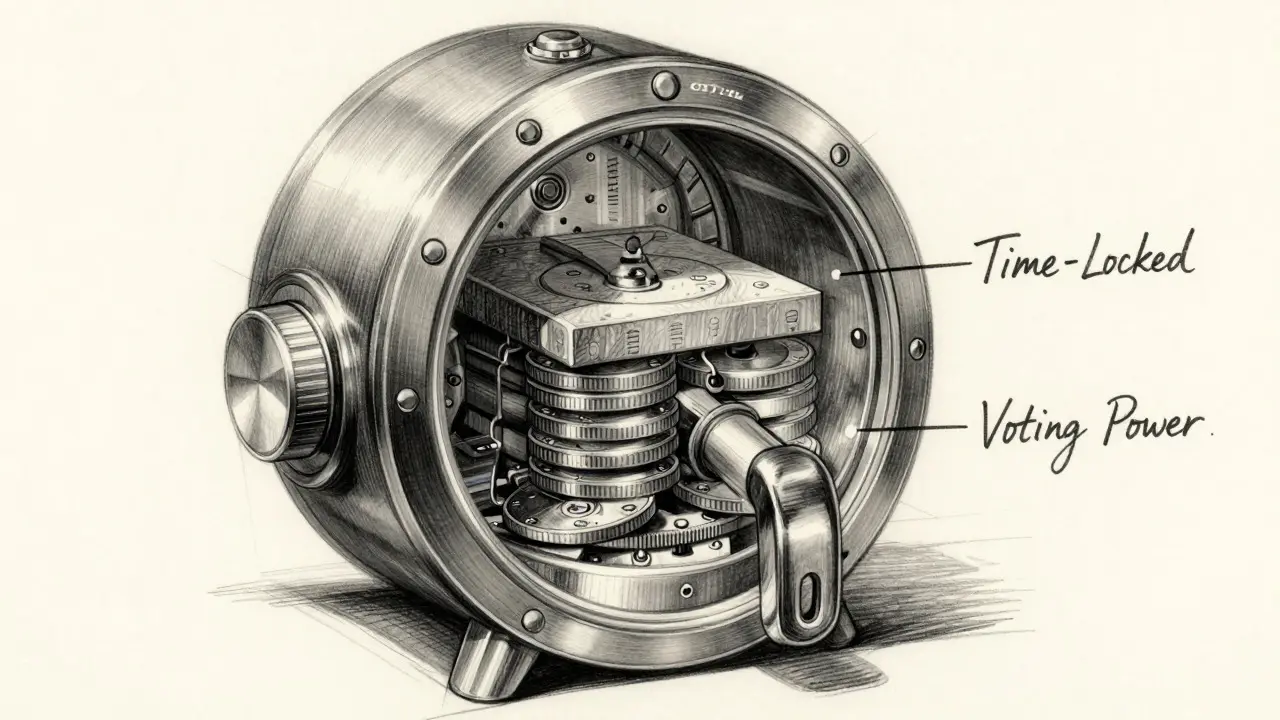
The economic model behind Kyo Finance is based on the ve(3,3) framework. This is a sophisticated mechanism designed to align the interests of voters, liquidity providers, and traders. Here is how it works in plain English:
- Voting Escrow (ve): Users lock governance tokens for extended periods. The longer they lock, the more voting power they gain and the higher their rewards.
- Dual Incentives: Unlike standard models where liquidity providers (LPs) just get trading fees, ve(3,3) distributes rewards based on both deposit value and duration. This encourages long-term stability rather than quick flips.
- Credit System: Early participants earn credits proportional to their engagement. These credits are widely speculated to lead to future token airdrops, creating a strong incentive for early adoption.
This model creates a sticky community. Because rewards are tied to time-locked participation, it discourages mercenary capital that jumps in for a quick profit and leaves, destabilizing the pool. However, it also raises the barrier to entry for casual users who don’t want to commit their assets for months.
Kyo Finance vs. Major DEXs: The Reality Check
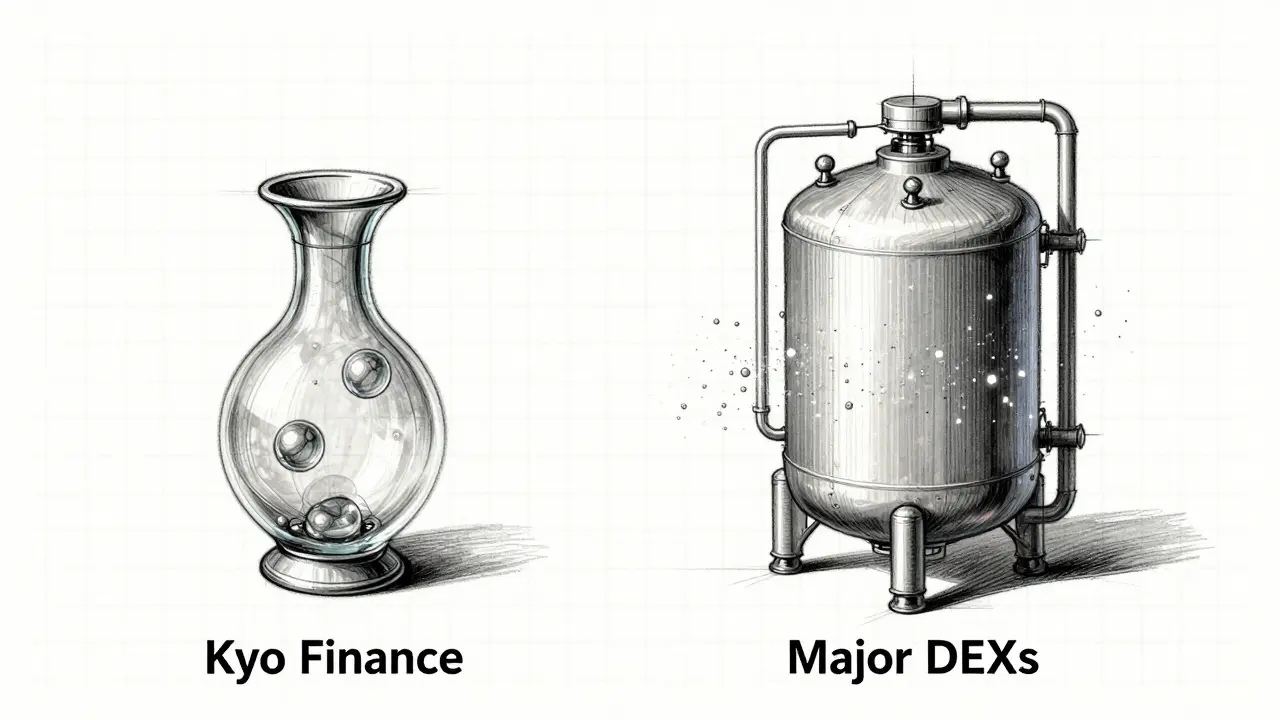
You need to manage expectations regarding scale. When you compare Kyo Finance to giants like Uniswap or PancakeSwap, the numbers tell a stark story. As of late 2025, Uniswap processes over $1 billion in daily volume. PancakeSwap handles nearly $850 million. Kyo Finance V2, according to CoinMarketCap data, saw roughly $2,671 in 24-hour spot trading volume. Even with the upgrade to V3, volume jumped to approximately $3.5 million, which is impressive growth but still a fraction of the top tier.
Why does this matter? Liquidity. Low volume often means thinner order books and higher slippage for large trades. If you are trying to move $10,000 in a single swap on Kyo Finance, you might eat up a significant portion of that amount in price impact. For small-to-medium trades, however, the batch processing and lower base gas costs on Soneium can make it more efficient than using a congested mainnet DEX.
| Metric | Kyo Finance V2/V3 | Uniswap (v3) | PancakeSwap |
|---|---|---|---|
| Daily Volume (Est.) | $2.6k - $3.5M | ~$1.2 Billion | ~$850 Million |
| Primary Network | Soneium | Ethereum + Multi-chain | BSC + Multi-chain |
| Best For | Niche Soneium Trading, Batch Ops | Deep Liquidity, Wide Selection | Low Fees, High Volume |
| Token Selection | ~14 Coins (V3) | Thousands | Thousands |
Is There an Airdrop?
Let’s address the elephant in the room. Many users flock to new DEXs hoping for free tokens. Kyo Finance has generated buzz because of its credit system and its status as a winner of the Soneium Spark Incubation program. CoinPaprika reported in January 2025 that early participants engaging in trading and liquidity provision might benefit from future token distributions.
However, as of October 2025, no official token launch or confirmed airdrop distribution has occurred. The "credits" you earn are speculative assets until the project team announces a concrete plan. Treat any capital you put into Kyo Finance as real money at risk, not as a ticket to free cash. If you are farming solely for an unconfirmed airdrop, you are gambling on speculation, not investing in a proven return.
User Experience and Setup Guide
Using Kyo Finance requires a bit more technical know-how than signing up for Coinbase. Here is the step-by-step process to get started:
- Get a Web3 Wallet: Install MetaMask or another compatible wallet on your browser or mobile device.
- Add the Soneium Network: Kyo Finance runs on Soneium. You must configure your wallet to recognize this network. You can usually find the RPC details on the Soneium official documentation or directly on the Kyo Finance interface.
- Bridge Assets: Since Soneium is a Layer 2 solution, you likely need to bridge ETH or other supported tokens from Ethereum Mainnet or another chain to Soneium. Use a trusted bridge like the official Soneium Bridge or third-party aggregators.
- Connect to Kyo Finance: Visit the Kyo Finance website and connect your wallet. Ensure you are on the correct URL to avoid phishing sites.
- Execute Batch Transactions: Navigate to the swap or liquidity section. Add multiple actions to your queue before clicking "Confirm." Watch your transaction history to see how much gas you saved compared to individual swaps.
The learning curve is moderate. If you have used Uniswap or SushiSwap before, you will feel at home. If you are new to DeFi, expect to spend 2-3 hours reading tutorials and testing with small amounts before committing serious capital. Customer support is limited to community Discord channels, so self-reliance is key.
Risks and Limitations
No DeFi protocol is without risk. Here are the specific pitfalls to watch for with Kyo Finance:
- Limited Token Selection: With only around 14 coins available in V3, you are restricted to the Soneium native ecosystem. You cannot trade obscure altcoins or stablecoins unless they are specifically listed.
- Liquidity Depth: While improving, the liquidity pools are shallow compared to industry leaders. Large trades will suffer from high slippage.
- Smart Contract Risk: Like all DEXs, your funds are held in smart contracts. While Kyo Finance has undergone audits and won incubation programs, code vulnerabilities can still exist. Always verify contract addresses.
- Ecosystem Dependency: Kyo Finance’s success is tied entirely to Soneium’s growth. If the Soneium network fails to gain traction against competitors like Arbitrum or Optimism, Kyo Finance may struggle to attract sustainable volume.
Who Should Use Kyo Finance V2?
Kyo Finance is not for everyone. It is a specialized tool for a specific audience. You should consider using it if:
- You are already active in the Soneium ecosystem and hold native assets.
- You frequently perform multiple DeFi actions (swap + stake + provide liquidity) and want to save on gas fees through batching.
- You are comfortable with moderate technical complexity and self-custody.
- You believe in the long-term potential of Soneium and want to support early-stage protocols via liquidity provision.
Avoid Kyo Finance if:
- You need to trade major pairs like BTC/ETH with high volume and low slippage.
- You prefer the simplicity and customer support of centralized exchanges.
- You are looking for a wide variety of meme coins or newly launched tokens.
Final Verdict
Kyo Finance V2 represents a clever, niche solution within the broader DeFi landscape. Its batch transaction feature is genuinely innovative for reducing friction and cost on the Soneium network. The ve(3,3) tokenomics model shows thoughtful design aimed at long-term sustainability rather than short-term hype.
However, it remains a small player. With limited liquidity and a narrow token selection, it cannot compete with the giants for mainstream trading. It is best viewed as a complementary tool for Soneium natives rather than a primary exchange for general crypto trading. If you are exploring the Soneium ecosystem, Kyo Finance is a worthy candidate for your portfolio toolkit, provided you understand the risks associated with early-stage DeFi protocols.
Is Kyo Finance V2 safe to use?
Kyo Finance operates as a non-custodial decentralized exchange, meaning you retain control of your private keys. It has been recognized as a winner in the Soneium Spark Incubation program, suggesting technical validation. However, like all DeFi protocols, it carries smart contract risk. Always start with small amounts and ensure you are connecting to the official website to avoid phishing scams.
Does Kyo Finance charge high fees?
Kyo Finance aims to reduce overall costs through its batch transaction feature, which consolidates multiple actions into one, saving on gas fees. The platform itself charges standard trading fees typical of AMMs, but the efficiency gains on the Soneium network can make it cheaper than executing separate transactions on more congested chains.
Will there be a Kyo Finance airdrop?
As of late 2025, there is no confirmed airdrop. The platform uses a credit system for liquidity providers and traders, which has led to speculation about future token distributions. However, this remains unconfirmed. Do not invest solely based on the hope of an airdrop, as it may never materialize or may have strict eligibility criteria.
How do I access Kyo Finance V2?
You need a Web3 wallet like MetaMask configured for the Soneium network. First, bridge assets to Soneium, then visit the official Kyo Finance website and connect your wallet. Note that the platform has evolved to V3, so ensure you are accessing the latest version for the best experience and features.
What is the ve(3,3) model?
The ve(3,3) model is a tokenomics framework that incentivizes long-term participation. Users lock governance tokens to gain voting power and increased rewards. Liquidity providers earn fees and potentially additional incentives based on the duration and size of their deposits, creating a balanced ecosystem aligned with the protocol's long-term health.