
If you are trading on Jupiter Exchange the leading decentralized exchange aggregator on the Solana blockchain, you are dealing with the engine behind most Solana transactions. It isn't a single marketplace; it scans dozens of pools to give you the best rate instantly. The numbers are massive-over $150 billion in cumulative volume since its inception-but the reputation is complicated. A major security incident in 2024 raised alarms, yet daily activity remains high. Before you connect your wallet, you need to understand exactly what you're getting into, specifically regarding safety and hidden costs.
What Exactly Is Jupiter?
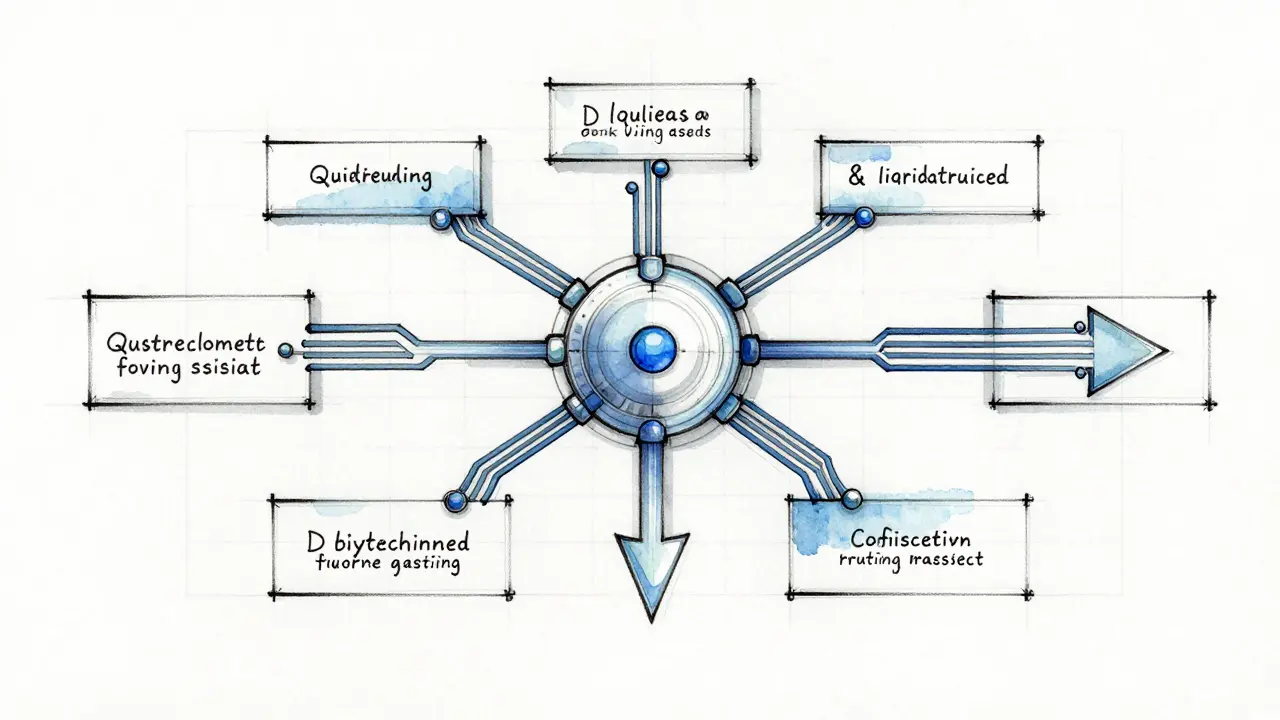
Most people call it an "exchange," but that's technically incorrect. Jupiter acts as a smart router. Imagine you want to buy a ticket for the cheapest price. Instead of checking every airline site manually, a travel agent checks them all instantly and books the best deal for you. That is what Jupiter does for tokens. It connects to markets like Raydium, Orca, and Serum simultaneously. When you swap, Jupiter splits your order across these venues if needed to minimize slippage. This architecture relies entirely on Solana Blockchaina high-performance public ledger, meaning you get transaction speeds around 400 milliseconds and fees under $0.01. You are never sending funds directly to Jupiter; your wallet handles everything non-custodially.
This separation is critical for understanding the risk profile. Because you keep your keys, Jupiter itself cannot steal your assets directly, but vulnerabilities in the smart contract code or phishing sites mimicking Jupiter have caused losses in the past. The platform supports over 1,200 liquidity pools, giving it deep access to Solana's specific asset ecosystem. While competitors exist on other chains, Jupiter holds an estimated 85% market share specifically within the Solana DeFi landscape.
Security After the 2024 Incident
You cannot discuss Jupiter without addressing the security breach that occurred in April 2024. During that event, approximately $50 million in user funds were compromised through a sophisticated phishing attack targeting wallet connections. Independent security firm OneSafe flagged this as a failure in user vigilance rather than a protocol flaw, though some experts argued the transaction signature process had exploitable gaps. Since then, the team has implemented significant changes, including mandatory transaction previews on the interface. These screens now display exactly what a transaction does before you sign it, reducing successful phishing attempts by roughly 63% according to internal reports.
Despite improvements, the risk remains with the user. Unlike centralized exchanges such as Coinbase, there is no customer support line to reverse a mistake or recover stolen funds. Experts recommend connecting via a hardware device like a Ledgerphysical cryptocurrency hardware wallet or Trezor. Software wallets like Phantom are convenient but require higher caution. Statistics show that 92% of affected users in the past connected to fraudulent websites, highlighting that the biggest threat is not the software itself, but the environment you access it from.
Performance vs. Competitors
In terms of raw performance, Jupiter dominates the Solana space. Its proprietary routing algorithm allows it to execute swaps faster than almost any competitor. When compared to cross-chain aggregators like 1inch, Jupiter offers sub-second execution times. 1inch, which operates across many networks including Ethereum, averages confirmation times between 3 to 5 seconds due to the slower nature of those blockchains. If speed and low cost are your priorities, Jupiter is difficult to beat on Solana. The average slippage on Jupiter sits at 0.18%, significantly better than the industry average of 0.34%. This efficiency makes it the preferred choice for high-frequency traders and those moving larger sums.
| Feature | Jupiter (Solana) | 1inch (Multi-chain) | Uniswap (Ethereum) |
|---|---|---|---|
| Average Slippage | 0.18% | 0.22% | 0.45% |
| Transaction Cost | ~$0.00025 | $1-$50+ | $2-$100+ |
| Confirmation Speed | <1 second | 3-5 seconds | 12-30 seconds |
| Primary Network | Solana | EVM Chains | Ethereum |
Note the trade-off: By focusing exclusively on Solana, you miss out on the vast liquidity of Ethereum-based platforms. If you hold assets primarily on Ethereum, Jupiter is less useful for direct swaps. You would need to bridge assets first, adding complexity and bridge risk.
The JUP Token Utility
Holders of the JUP Tokengovernance token for Jupiter Protocol play a role in the ecosystem, though it functions differently than traditional loyalty points. With a max supply of 10 billion, the token was distributed to fund community incentives and development initially. Holding JUP grants you voting rights on protocol changes, such as fee structures or integration partnerships. In earlier phases, the token also granted access to specific yield farming rewards and rebate programs. However, regulatory uncertainty looms over governance tokens. As of 2026, the SEC has not issued definitive guidance classifying all governance tokens as securities, leaving holders in a slightly ambiguous position compared to pure utility tools.
Market data shows volatility correlates with overall Solana performance. While it drives engagement, do not expect passive income solely from holding the token without active participation in governance staking programs, which carry their own slashing risks.
Practical Setup and User Experience
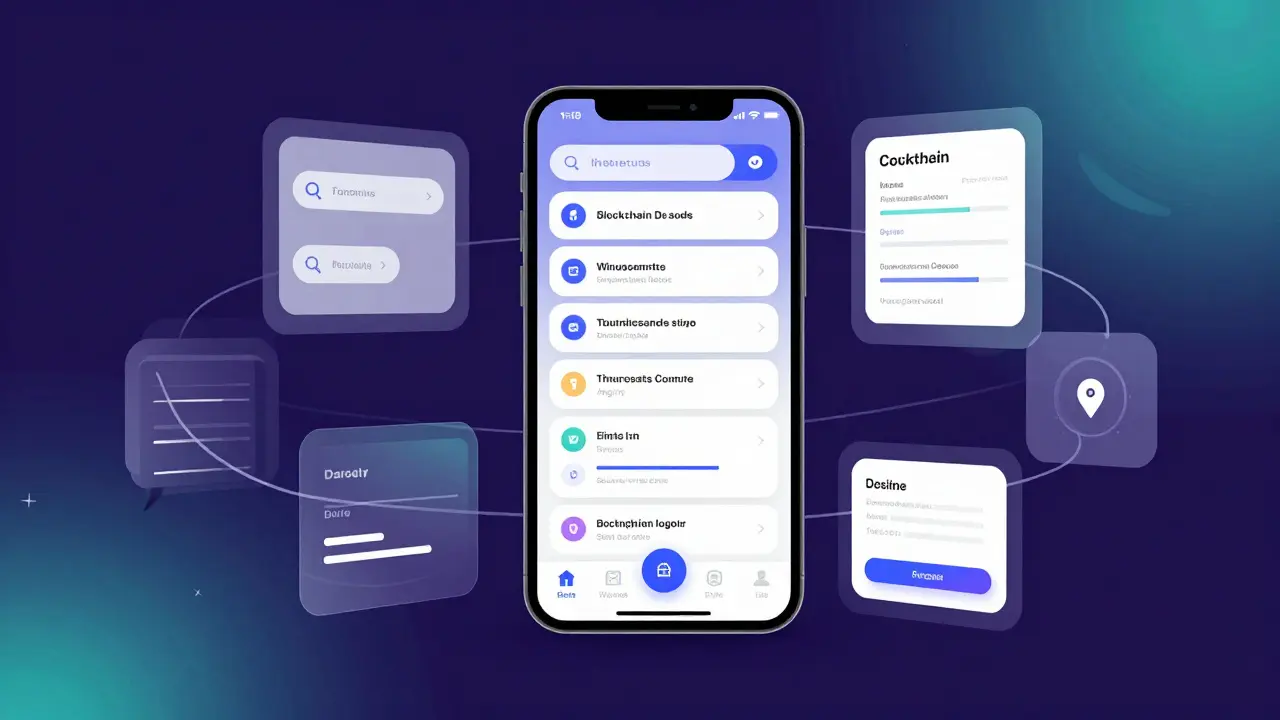
Getting started requires a moderate level of technical comfort. You will need a wallet compatible with Solana, typically Phantom Walletbrowser extension and mobile wallet for Solana, Backpack, or Trust Wallet. The learning curve is steeper than centralized apps. New users often report spending 6 to 8 hours learning the interface nuances, particularly configuring slippage tolerance correctly. Setting slippage too low means your trade fails often; setting it too high exposes you to sandwich attacks by bots. A safe starting point is 0.5% to 1% for standard stablecoins, but volatile meme coins may require more flexibility.
User feedback highlights a split experience. On Reddit, sentiment remains mostly positive (around 68%), praising the "lightning-fast" swaps. On consumer review platforms, ratings drop lower due to customer service complaints. Remember, as a decentralized application (dApp), there is no chat button to press when things go wrong. The community has stepped in to fill gaps, with creators producing over 120 tutorial videos to help navigate common errors like failed transactions during network congestion.
Future Developments and Risks
The roadmap for Jupiter includes expanding beyond simple swaps. Plans outlined for late 2025 included introducing a mobile app and cross-margin functionality. For a 2026 review, it is crucial to check if these features have fully launched, as relying on a web-only interface limits convenience. There is also talk of Layer 2 expansion to Ethereum networks, which would fundamentally change its competitive advantage. Until then, its reliance on a single chain means any Solana network outage pauses Jupiter. Historical data shows network instability in May 2024 dropped Jupiter's uptime temporarily. While Solana has improved resilience, dependency on a single blockchain always introduces concentration risk.
Is Jupiter Exchange safe to use in 2026?
Yes, but with conditions. The platform code has been audited multiple times, and security layers like transaction previews have reduced scam risks significantly. However, it remains non-custodial, meaning you are responsible for your private keys. Always verify URLs and use a hardware wallet for significant amounts.
Does Jupiter charge hidden fees?
The platform itself does not charge a direct service fee on top of the swap. You only pay the underlying Solana network transaction cost (gas), which is typically fractions of a cent. Some specific liquidity providers might take a portion, but this is standard in DeFi.
Can I use Jupiter on mobile?
As of the latest updates, a dedicated mobile app was planned for release. Currently, users rely on browser-based interfaces optimized for mobile devices. Using a secure mobile browser and wallet combination is recommended if an official native app is not yet available.
How do I set slippage tolerance?
Go to settings in the swap interface. For standard pairs like USDC/SOL, 0.5% is usually sufficient. For newer or volatile tokens, increase it to 1-2%, but never exceed 5% to avoid arbitrage bots front-running your trade.
What happens if Solana goes down?
Jupiter depends entirely on the Solana network. If Solana halts, Jupiter cannot process transactions until stability returns. Unlike multi-chain aggregators, you cannot switch networks mid-trade. Always monitor Solana network health before executing large orders.


