

By early 2025, something remarkable had happened. Wall Street, once skeptical or outright hostile to Bitcoin, was now quietly building massive positions in it. Not through shady backchannels or risky exchanges, but through Bitcoin ETFs - regulated, transparent, and traded just like Apple or Tesla shares. This wasn’t a fad. It was a structural shift. And it changed everything.
Why Bitcoin ETFs Changed the Game
Before 2024, institutional investors - pension funds, hedge funds, endowments - couldn’t easily buy Bitcoin. They needed custody solutions, legal opinions, compliance teams, and risk managers to approve each purchase. Most just said no. Then came the spot Bitcoin ETFs. Suddenly, a $500 million pension fund could buy Bitcoin through Fidelity or Charles Schwab, just like they’d buy gold or bonds. No need to set up a crypto wallet. No need to hire a blockchain specialist. Just click, confirm, and hold. By the end of 2025, these ETFs had gathered $58 billion in assets under management. That’s more than the entire market cap of some mid-sized tech companies. JPMorgan’s analysis showed institutions now held about 25% of all Bitcoin ETPs. That’s not a footnote. That’s a seismic shift. And it wasn’t just Bitcoin. Ethereum ETFs launched in late 2024, and within months, they were drawing billions. Why? Because institutions didn’t just want Bitcoin. They wanted exposure to the whole ecosystem - DeFi, tokenized assets, smart contracts. Ethereum became the second pillar of institutional crypto.The Regulatory Shift That Made It Possible
You can’t have institutional adoption without regulation. And in March 2025, the U.S. Senate passed the GENIUS Act. It wasn’t flashy. No headlines screamed about it. But behind the scenes, it did something revolutionary: it gave crypto firms clear rules. No more guessing. No more enforcement surprises. If you followed the guidelines, you were legal. That was the green light. The U.S. government didn’t stop there. It created the Strategic Bitcoin Reserve - a real, government-backed pool of Bitcoin, held as a long-term asset. Think of it like the U.S. gold reserves, but for the digital age. This wasn’t symbolic. It was strategic. It told the world: Bitcoin is now part of national financial planning. Meanwhile, the Chicago Mercantile Exchange saw record open interest in crypto futures. Institutions weren’t just buying and holding. They were hedging, arbitraging, and building complex strategies. This wasn’t speculation. It was professional trading.Corporate Treasuries Are Buying Bitcoin
Over 170 public companies now hold Bitcoin on their balance sheets. That’s not startups. That’s Fortune 500 firms, tech giants, and industrial conglomerates. Together, they own 1.07 million BTC. MicroStrategy alone owns over half of that - more than 600,000 Bitcoin. Why? Because they see it as a hedge against inflation and currency devaluation. BlackRock’s BUIDL product - a tokenized version of U.S. Treasury bonds - hit $2 billion in market cap. That’s huge. It showed that tokenization isn’t just for crypto natives. It’s for the most conservative investors on Earth. If BlackRock, the world’s largest asset manager, is doing it, then it’s safe. And if it’s safe, then everyone else will follow.
The Rise of Ethereum and Tokenized Real Assets
Bitcoin got the headlines. But Ethereum was quietly stealing the show. Nearly half of institutional asset managers are now researching or planning to invest in it. Why? Because it’s not just digital gold. It’s the backbone of decentralized finance (DeFi). By June 2025, the Total Value Locked (TVL) in DeFi protocols hit $112 billion. That’s more than the entire market cap of some major banks. And tokenized real-world assets - like real estate, bonds, and commodities - hit $19.5 billion. Institutions aren’t just buying coins. They’re buying fractions of buildings, interest payments from loans, and even future revenue streams - all on-chain. The CoinDesk 20 Index, which tracks the top 20 digital assets, rose 22.1% in Q2 2025. Bitcoin didn’t lead. Ethereum and Solana did. Institutional portfolios were diversifying. They weren’t betting on one coin. They were betting on the whole ecosystem.Stablecoins: The Invisible Bridge
You don’t hear much about stablecoins, but they’re the hidden engine of institutional adoption. By September 2025, their total supply hit $277.8 billion. Why does that matter? Because institutions need a way to move money between traditional banking and crypto without volatility. A pension fund wants to buy Ethereum. It doesn’t want to convert U.S. dollars into Bitcoin first, then into Ethereum. That’s messy. Instead, it converts dollars into USDC or DAI - stablecoins pegged 1:1 to the dollar - then moves them instantly to a DeFi protocol. No delays. No exchange risk. No currency conversion fees. Stablecoins made crypto feel like a bank transfer.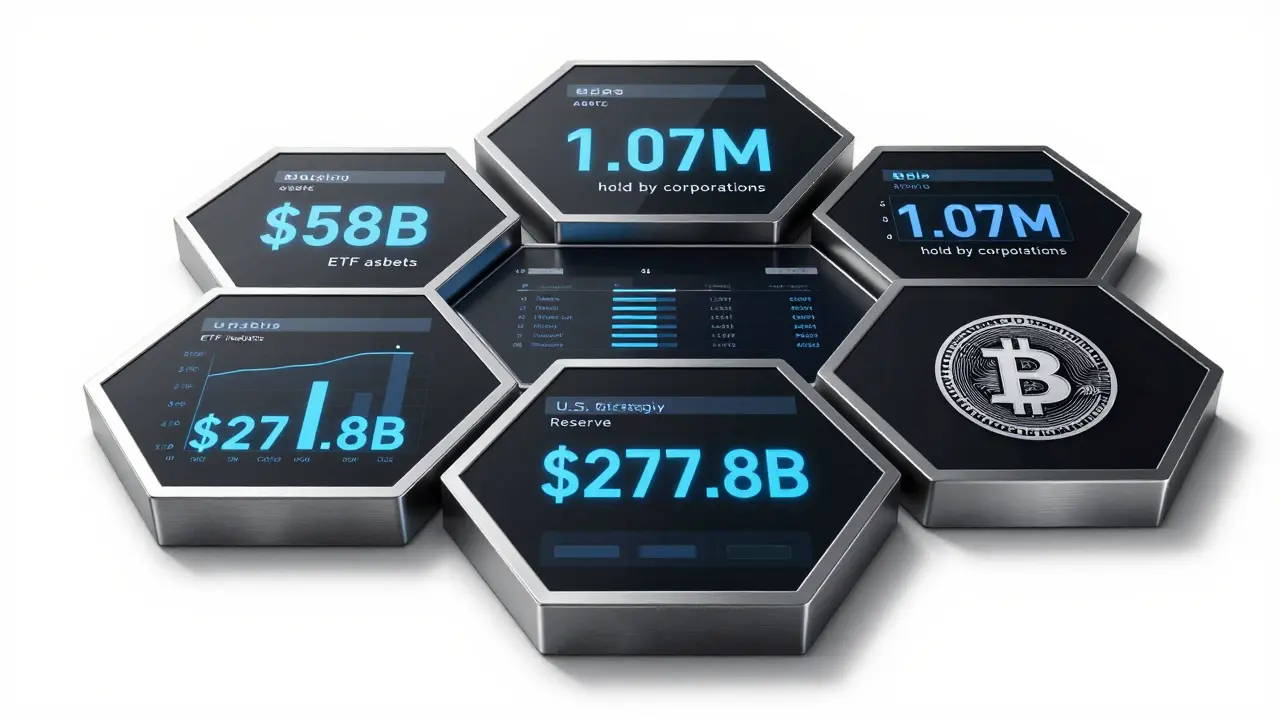
Global Adoption: Who’s Leading?
The U.S. got the ETFs. But the real growth story was elsewhere. According to Chainalysis’ 2025 Global Crypto Adoption Index, the Asia-Pacific region saw a 69% year-over-year surge in on-chain activity. Hong Kong SAR ranked fifth globally - not because of retail users, but because of institutional infrastructure. Banks there now offer crypto custody, trading, and reporting services under clear regulatory rules. Ukraine, Moldova, and Georgia topped the index. Why? Because their citizens, and their institutions, saw crypto as a lifeline - a way to bypass broken banking systems and inflation. But it wasn’t just about survival. It was about innovation. Institutions in these countries started using crypto for payroll, cross-border trade, and even government payments.How the Market Is Changing
The old crypto market - volatile, unregulated, driven by memes - is gone. The new one? It’s quiet, methodical, and institutional. Bullish (BLSH), the parent company of CoinDesk, went public in August 2025. Its shares jumped 45% on the first day. Why? Because investors saw it not as a crypto exchange, but as a financial services company - one that could one day be as big as Nasdaq. Custody providers like Fidelity Digital Assets and Coinbase Custody now offer institutional-grade security, insurance, and audit trails. Prime brokers like Morgan Stanley and Goldman Sachs have built crypto desks. Trading platforms support algorithmic orders, dark pools, and block trades. The infrastructure is finally here.What’s Next?
The momentum isn’t slowing. JPMorgan analysts say we’re still in the early stages of institutional adoption. Even Jamie Dimon - who once called Bitcoin "fraud" - now lets his clients buy it. That kind of shift doesn’t happen overnight. It happens because the evidence became undeniable. Expect more ETFs. Ethereum derivatives. Tokenized sovereign debt. Central bank digital currencies (CBDCs) that integrate with crypto networks. The lines between traditional finance and digital assets are vanishing. This isn’t about getting rich quick. It’s about building a better system. Faster settlements. Lower fees. Global access. And for the first time, institutions are helping build it - not just watching from the sidelines.What is a Bitcoin ETF?
A Bitcoin ETF (Exchange-Traded Fund) is a financial product that tracks the price of Bitcoin and trades on a traditional stock exchange. Investors buy shares of the ETF without needing to own Bitcoin directly. This allows institutions and retail investors to gain exposure to Bitcoin through their existing brokerage accounts, with the same regulatory protections as stocks or bonds.
Why did institutions start buying Bitcoin in 2024-2025?
Institutions began buying Bitcoin because of regulatory clarity, the launch of spot Bitcoin ETFs, and proven performance as a store of value. The GENIUS Act in 2025 provided legal frameworks for crypto firms, while the U.S. Strategic Bitcoin Reserve signaled official recognition. Combined with stable infrastructure, low volatility compared to past cycles, and inflation concerns, Bitcoin became a credible asset class.
How much Bitcoin do institutions own?
By 2025, institutions held approximately 25% of all Bitcoin ETPs, with over 1.07 million BTC held by public companies alone. The largest corporate holder, MicroStrategy, owned more than 600,000 Bitcoin. Combined with ETF holdings and institutional custody accounts, institutions likely controlled over 4 million BTC - roughly 20% of the total supply.
Are Ethereum and other cryptocurrencies also being adopted by institutions?
Yes. Nearly half of institutional asset managers are now researching or planning Ethereum investments. Ethereum’s role in DeFi, tokenized real-world assets, and smart contracts makes it essential. Ethereum ETFs launched in 2024 and quickly gained traction. Solana and other Layer 1 blockchains are also seeing institutional interest due to their scalability and use in financial infrastructure.
What role do stablecoins play in institutional adoption?
Stablecoins act as the bridge between traditional finance and crypto. With over $277.8 billion in supply by September 2025, they allow institutions to move value quickly and without volatility. Institutions use USDC and DAI to fund DeFi protocols, settle cross-border payments, and manage liquidity - all without converting back to fiat currency.
Is institutional adoption making crypto less volatile?
Yes, but not because crypto became predictable. It’s because institutional demand is steady and long-term. Unlike retail traders who buy on hype and sell on fear, institutions buy for strategic reasons - inflation hedging, portfolio diversification, and access to new asset classes. This reduces panic-driven sell-offs and creates a more stable price floor.
What’s the difference between a Bitcoin ETF and owning Bitcoin directly?
Owning Bitcoin directly means holding the actual cryptocurrency in a wallet, with full responsibility for security, private keys, and compliance. A Bitcoin ETF lets you buy shares of a fund that holds Bitcoin on your behalf. You get price exposure without the technical burden. For institutions, ETFs are easier to audit, report, and integrate into existing financial systems.


