
Building a blockchain application feels like assembling a high-performance engine while the car is moving at highway speeds. You have the vision, the code, and the team, but then you hit the wall of implementation challenges. It’s not just about writing smart contracts; it’s about navigating a landscape where speed, security, and decentralization constantly fight for dominance. If you are planning to deploy a decentralized application (dApp) or integrate blockchain into an existing system, understanding these hurdles before they crash your project is critical.
We aren't talking about theoretical roadblocks here. We are looking at the real-world friction that slows down adoption, drains budgets, and causes projects to fail. From the infamous Scalability Trilemma to the nightmare of cross-chain communication, let's break down what actually stops blockchains from working smoothly and how you can mitigate these risks.
The Scalability Trilemma: The Core Bottleneck
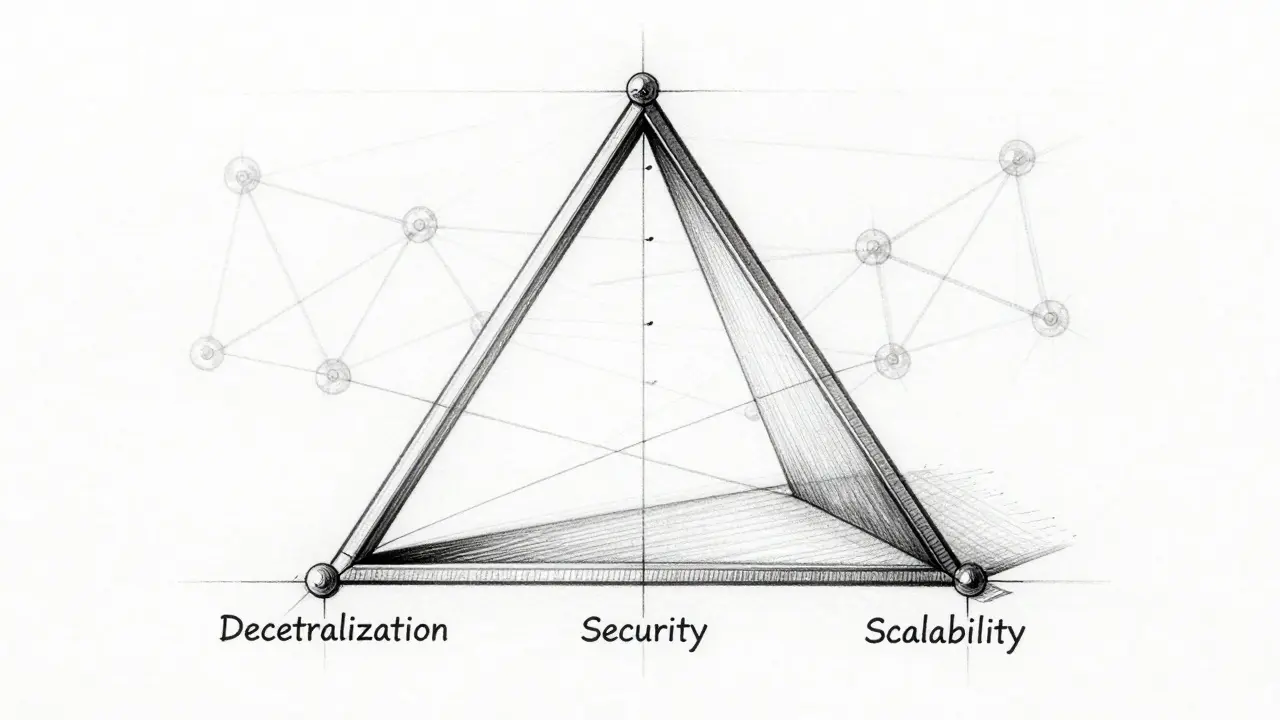
The biggest hurdle in any Blockchain Implementation is the Scalability Trilemma. Coined by Ethereum co-founder Vitalik Buterin, this concept suggests you can only pick two out of three: Decentralization, Security, and Scalability. You cannot have all three simultaneously without significant trade-offs.
Most public chains like Bitcoin and Ethereum prioritize security and decentralization. As a result, they sacrifice scalability. When too many users try to transact at once, the network congests, fees skyrocket, and transaction times slow to a crawl. For example, during peak NFT minting seasons on Ethereum, gas fees could exceed $100 per transaction, making micro-transactions impossible.
To solve this, developers often look to Layer 2 solutions or alternative consensus mechanisms. However, introducing these layers adds complexity. Your dApp now has to bridge assets between chains, manage different fee structures, and handle potential latency issues. This isn't just a technical tweak; it changes the entire user experience architecture.
| Mechanism | Pros | Cons / Implementation Challenge | Best For |
|---|---|---|---|
| Proof of Work (PoW) | Highest security, proven track record | High energy consumption, low throughput (~7 TPS) | Currency stores (Bitcoin) |
| Proof of Stake (PoS) | Energy efficient, faster finality | Risk of centralization among large stakers | Smart Contract Platforms (Ethereum, Cardano) |
| Delegated Proof of Stake (DPoS) | Very high throughput, fast blocks | Less decentralized (fewer validators) | Enterprise dApps, Gaming |
Smart Contract Vulnerabilities: Code Is Law, Until It Isn't
In traditional software, if there's a bug, you patch it. In blockchain, Smart Contracts are immutable. Once deployed, you cannot change them. This immutability is a feature for trust, but it becomes a fatal flaw when security vulnerabilities exist. Implementing secure smart contracts is arguably the most difficult part of blockchain development because the cost of failure is permanent loss of funds.
Common vulnerabilities include reentrancy attacks, integer overflows, and oracle manipulation. The infamous DAO hack in 2016 exploited a reentrancy vulnerability, draining $60 million worth of Ether. Even today, new exploits emerge weekly. According to data from firms like CertiK and OpenZeppelin, billions of dollars have been lost due to coding errors in smart contracts.
Implementing robust security requires more than just good coding practices. You need:
- Formal Verification: Mathematically proving that your code behaves as intended.
- Third-Party Audits: Hiring specialized firms to review your code before deployment.
- Upgradeable Patterns: Using proxy contracts to allow logic updates without changing the underlying address, though this introduces its own governance risks.
For enterprise implementations, this means budgeting significantly for security audits. A rushed audit can miss subtle bugs that hackers will exploit within hours of launch.
Interoperability: The Walled Garden Problem
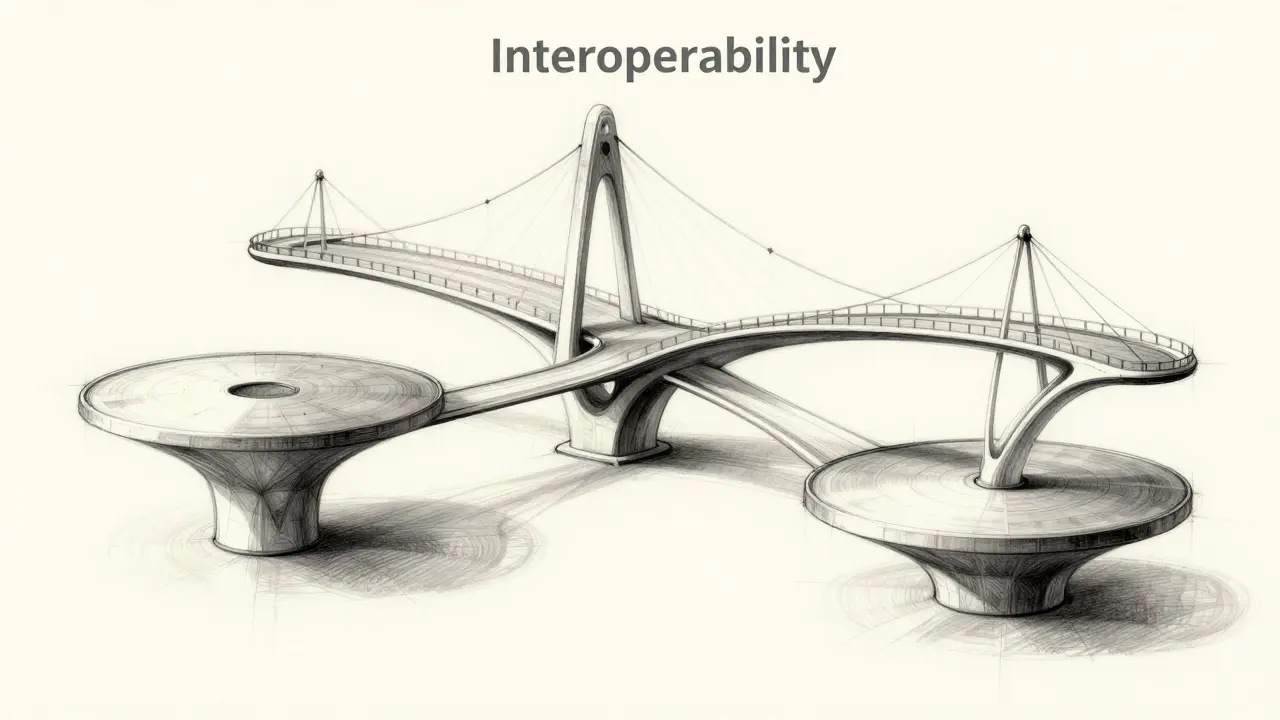
No single blockchain does everything perfectly. Bitcoin is great for value storage. Solana is fast for gaming. Polkadot focuses on connectivity. But this fragmentation creates a massive implementation challenge: Interoperability. How do you make assets and data move seamlessly between these isolated networks?
Bridges are the current solution, but they are also the weakest link. Cross-chain bridges are prime targets for hackers because they hold vast amounts of liquidity and require complex cryptographic proofs. In 2022 alone, bridge hacks exceeded $1 billion. Implementing a secure bridge requires deep expertise in cryptography and consensus mechanisms across multiple chains.
Alternatively, developers use atomic swaps or wrapped tokens (like wBTC). While easier to implement, wrapped tokens introduce counterparty risk. If the custodian holding the underlying asset fails, the wrapped token becomes worthless. For enterprises building multi-chain strategies, managing these connections adds a layer of operational overhead that doesn't exist in traditional IT systems.

Regulatory Uncertainty and Compliance
Technology moves fast; law moves slow. One of the most frustrating implementation challenges is the lack of clear regulatory frameworks. Are your tokens securities? Do you need to comply with KYC (Know Your Customer) and AML (Anti-Money Laundering) laws? The answers vary wildly depending on whether you are operating in the EU, the US, or Asia.
The EU's Markets in Crypto-Assets (MiCA) regulation provides some clarity, but the US remains fragmented with agencies like the SEC and CFTC offering conflicting guidance. For developers, this means building compliance features directly into the protocol. Implementing privacy-preserving technologies like Zero-Knowledge Proofs (ZKPs) allows users to prove they are compliant without revealing their identity, but integrating ZKPs is technically demanding and computationally expensive.
If you ignore compliance, your project might be shut down. If you over-comply, you might destroy the anonymity and decentralization that users seek. Finding the balance is a delicate legal and technical tightrope.
User Experience (UX): Making Complexity Invisible
Let's be honest: blockchain UX is terrible for the average person. Managing private keys, paying gas fees in native tokens, and waiting for block confirmations are barriers that prevent mass adoption. Implementing a smooth user experience is a major challenge for dApp developers.
Traditional web apps hide complexity behind centralized servers. In Web3, the user must interact directly with the blockchain. Solutions like Account Abstraction (ERC-4337) aim to fix this by allowing social logins, sponsored gas fees, and batched transactions. However, implementing Account Abstraction requires significant backend infrastructure changes. You can't just drop it into an existing wallet interface; you need to rebuild the authentication flow entirely.
Furthermore, error messages in blockchain interactions are often cryptic. "Transaction reverted" tells a user nothing. Implementing clear, human-readable feedback loops requires additional development effort to decode blockchain states and translate them into actionable insights for the user.
Data Storage and Oracle Reliability
Blockchains are terrible databases. They are expensive and slow for storing large amounts of data. Storing an image or a video directly on-chain is impractical. Instead, developers store hashes on-chain and keep the actual data off-chain using systems like IPFS (InterPlanetary File System) or Arweave.
This introduces a dependency on external services. If the IPFS pinning service goes down, your NFT metadata disappears. This breaks the promise of permanence. Implementing redundant storage solutions is necessary but adds cost and complexity.
Then there are Oracles. Smart contracts cannot access external data (like stock prices or weather data) on their own. They rely on Oracles like Chainlink to feed this information in. If the Oracle is compromised or provides incorrect data, the smart contract executes based on false premises. Implementing decentralized oracle networks ensures reliability, but it increases gas costs and latency. You must design your contracts to handle delayed or missing data gracefully.
Environmental Concerns and Energy Efficiency
While Ethereum's transition to Proof of Stake reduced its energy consumption by 99.95%, the broader blockchain industry still faces scrutiny over environmental impact. Enterprises adopting blockchain must consider their ESG (Environmental, Social, and Governance) commitments. Choosing a high-energy consensus mechanism like Proof of Work can damage brand reputation and violate internal sustainability policies.
Implementing green blockchain solutions involves selecting eco-friendly chains or carbon-offsetting initiatives. However, verifying the true carbon footprint of a specific chain can be difficult due to varying mining locations and energy sources. Transparency in energy usage is becoming a key requirement for enterprise blockchain adoption.
Key Takeaways for Successful Implementation
Avoiding these pitfalls requires a strategic approach. Don't just build; plan for the constraints.
- Start Small: Use testnets extensively. Never deploy untested code to mainnet.
- Prioritize Security: Budget for audits. Assume your code will be attacked.
- Choose the Right Chain: Don't force Ethereum for high-frequency trading. Look at L2s or alternative L1s.
- Focus on UX: Abstract away wallet complexities where possible.
- Stay Compliant: Engage legal experts early to navigate regulatory landscapes.
What is the biggest technical challenge in blockchain implementation?
The Scalability Trilemma is widely considered the biggest technical challenge. Balancing decentralization, security, and scalability forces developers to make difficult trade-offs. Most public chains sacrifice scalability for security, leading to high fees and slow transactions during peak usage.
How much does it cost to audit a smart contract?
Costs vary significantly based on complexity and the auditor's reputation. Simple contracts may cost $5,000-$10,000, while complex DeFi protocols can range from $50,000 to over $100,000. Given the risk of total fund loss, this is a critical investment, not an optional expense.
Why is interoperability so difficult to achieve?
Each blockchain operates as an isolated silo with its own consensus rules and data structures. Creating secure bridges between them requires complex cryptographic proofs and trusted intermediaries, which become attractive targets for hackers. There is no universal standard for cross-chain communication yet.
Can I update my smart contract after deployment?
Not directly. Smart contracts are immutable. However, you can implement upgradeable patterns using proxy contracts. This allows you to point the contract address to a new logic contract. Be aware that this reduces decentralization as it relies on a governance mechanism to approve upgrades.
What is Account Abstraction and why does it matter?
Account Abstraction (ERC-4337) transforms how users interact with blockchain wallets. It allows for social logins, gas sponsorship, and batched transactions, removing the need for users to manage seed phrases or pay gas fees in native tokens. This is crucial for improving User Experience (UX) and driving mass adoption.