Think cryptocurrency is too transparent to hide billions? Think again. While blockchain ledgers are public, the identities behind wallet addresses can be a maze of shell companies and jurisdictional loopholes. Since the invasion of Ukraine, Western nations have thrown over 2,700 UK-specific sanctions at Russia, trying to choke its war machine. But Moscow hasn’t just sat idle. It has built a sophisticated digital plumbing system using cryptocurrency to bypass these restrictions, moving money through opaque networks that traditional banking regulators struggle to track.
This isn't about someone buying Bitcoin in a cafe. This is state-level financial engineering involving custom tokens, sanctioned exchanges popping up like whack-a-mole, and banks in Central Asia acting as secret gateways. If you’re wondering how a country under heavy economic isolation keeps funding its military procurement and political influence abroad, the answer lies in the intersection of Kyrgyzstani banking and Ethereum smart contracts.
The Rise of the Ruble-Backed Token
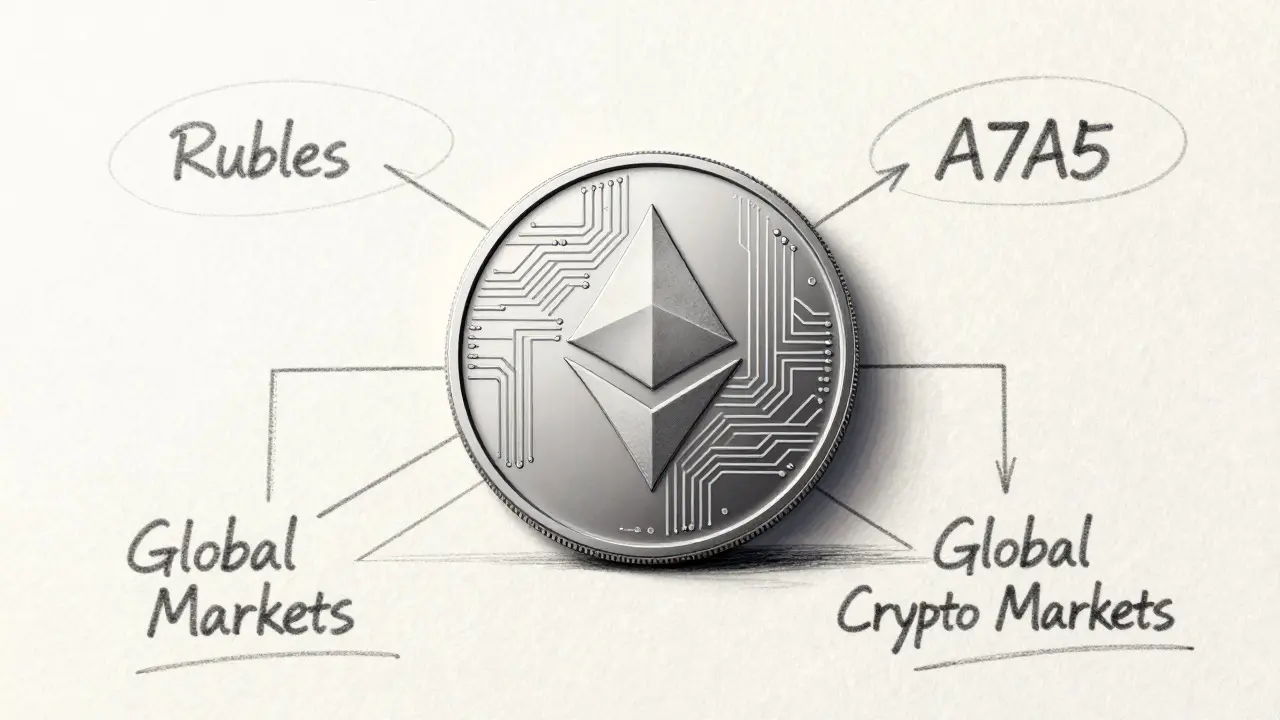
At the heart of this operation is a specific digital asset: the A7A5 token. Unlike volatile cryptocurrencies like Bitcoin, A7A5 is designed to be stable, backed by the Russian ruble. Its purpose is singular: to serve as a bridge between the isolated Russian financial system and the global crypto market. Created by a firm in Kyrgyzstan, this token operates on both the TRON and Ethereum blockchains. Why two chains? Redundancy and accessibility. If one network faces scrutiny or congestion, the other remains open for business.
The scale is staggering. In just four months after its creation, A7A5 processed $9.3 billion in transactions. That’s not pocket change; it’s a significant chunk of capital flowing through a dedicated exchange infrastructure specifically engineered to evade detection. By pegging the token to the ruble, Russian entities can convert their local currency into a digital asset that looks less like "Russian money" and more like generic crypto collateral, making it harder for Western banks to reject transactions outright.
The Exchange Whack-a-Mole Game
You might remember Garantex, a major crypto exchange that was sanctioned by the US Treasury. When law enforcement shut down Garantex operations in March 2025, you’d expect the flow of funds to stop. Instead, it restarted almost immediately on a new platform called Grinex.
This wasn’t a coincidence. Former Garantex officers set up Grinex’s infrastructure right after the crackdown. Promotional materials for Grinex even admitted it was formed in response to the asset freezes affecting Garantex. The US Office of Foreign Assets Control (OFAC) later designated Grinex for sanctions because it was effectively owned or controlled by the same people running the old exchange. They simply moved the house, changed the nameplate, and kept serving the same customers. This tactic allows Russian users to maintain liquidity while technically operating outside the immediate blast radius of previous sanctions.
| Entity | Type | Status | Role in Evasion |
|---|---|---|---|
| A7A5 Token | Ruble-backed Stablecoin | Active | Bridges rubles to global crypto markets via TRON/Ethereum |
| Garantex | Crypto Exchange | Sanctioned/Shut Down | Original hub for Russian crypto flows before replacement |
| Grinex | Crypto Exchange | Sanctioned (US OFAC) | Successor to Garantex, created by former staff to continue services |
| Capital Bank | Kyrgyzstani Bank | Active Gateway | Converts crypto to fiat for military goods procurement |

Kyrgyzstan: The Financial Backdoor
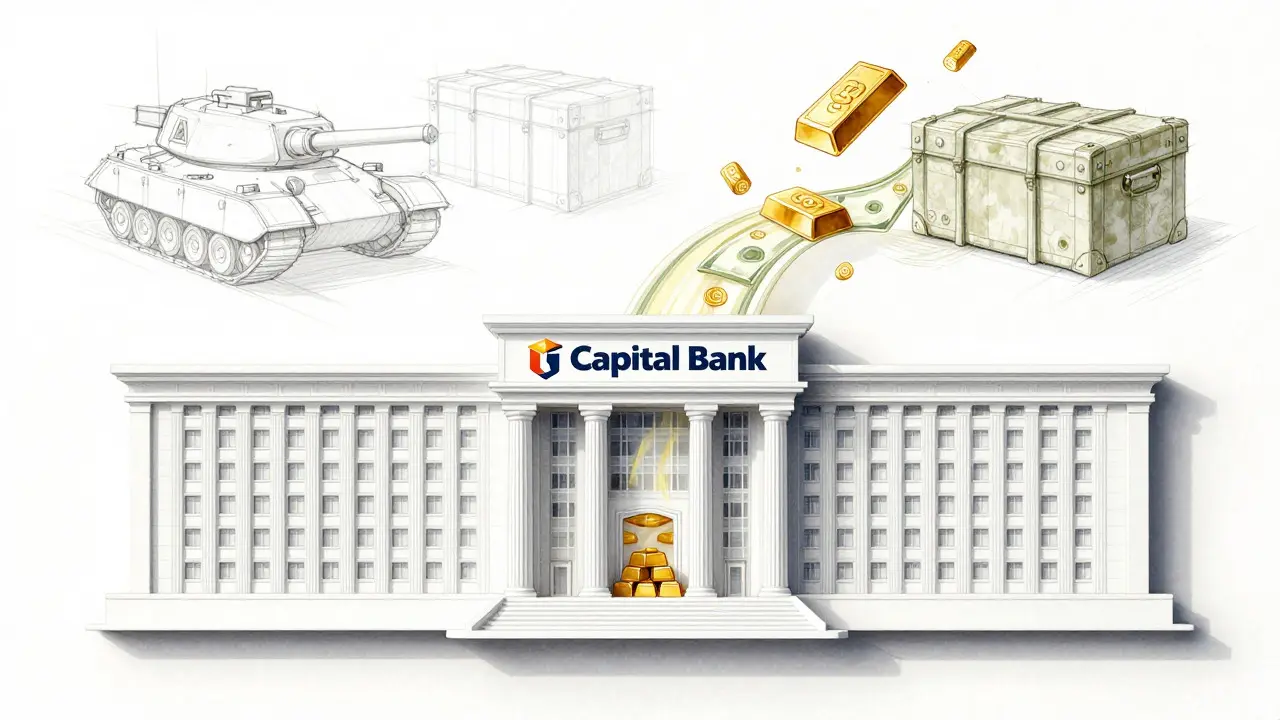
Why Kyrgyzstan? It sits outside the direct reach of many Western regulatory bodies but maintains enough connectivity to the global financial system to matter. Russia exploits this gap heavily. The key player here is Capital Bank, based in Bishkek. Under the direction of Kantemir Chalbayev, this bank acts as the critical interface between the digital world and physical reality.
Cryptocurrency alone can’t buy tanks or microchips directly from most suppliers who demand dollars or euros. Capital Bank takes the digital assets-often converted from A7A5-and turns them into fiat currency. This conversion step is crucial. It cleanses the money trail, allowing Russian entities to pay for military goods and dual-use technologies without directly touching the blocked SWIFT system. It’s a classic case of integrating conventional banking with crypto infrastructure to create a comprehensive circumvention capability.
Political Influence Through Wallets
It’s not just about weapons. Russia uses these crypto channels to fund political influence abroad. Leaked data regarding Ilan Shor, a Moldovan politician sanctioned by the US for undermining elections, reveals the extent of this reach. Analysis by blockchain intelligence firm Elliptic showed that wallets linked to A7 and associated businesses received $8 billion in stablecoin transactions over an 18-month period.
These weren’t just random transfers. The funds paid for apps used to manage networks of political activists in Moldova. Imagine paying thousands of small stipends to organizers across Eastern Europe via smart contracts. It’s efficient, hard to audit line-by-line for foreign donors, and fast. This demonstrates how crypto serves dual purposes: keeping the economy afloat and financing geopolitical soft power projects that traditional aid budgets might miss.
The Regulatory Cat-and-Mouse Game
Western authorities aren’t blind. In October 2025, the UK government announced targeted actions against Grinex, Meer exchanges, and the A7A5 infrastructure. This was part of a coordinated effort with the EU, which adopted its 19th package of sanctions-the first time they explicitly banned transactions on specific crypto platforms used to bypass restrictions.
Investigative groups like Transparency International Russia have been instrumental here. Their reports, such as "Crypto Laundromat" (2025), proved that sanctioned entities don’t disappear; they rebrand. The shift from Garantex to Exved and then Grinex shows a high level of technical sophistication. These operators understand blockchain architecture deeply. They use multiple layers of obfuscation, routing funds through convoluted structures that connect traditional banks, exchanges, and custom tokens.
Compliance tools are adapting, too. Firms like Elliptic now support screening for A7A5 on both TRON and Ethereum. This means legitimate businesses can flag transactions involving these tokens before accepting payment. But it’s a race. As regulators close one loophole, evaders innovate another. Oxford Analytica predicts that while crypto offers short-term relief for Russia, increasing regulatory pressure will force further innovation in tracking technology, turning global finance into a permanent surveillance battlefield.
Frequently Asked Questions
What is the A7A5 token?
The A7A5 token is a ruble-backed cryptocurrency issued by a Kyrgyzstani firm. It operates on both TRON and Ethereum blockchains and was specifically designed to help Russian entities bypass Western sanctions by converting rubles into a digital asset that can be traded internationally. It processed $9.3 billion in transactions within its first four months.
Why did Grinex replace Garantex?
Grinex replaced Garantex after the latter was sanctioned and shut down by US law enforcement in March 2025. Former Garantex officers created Grinex’s infrastructure to continue providing similar services to Russian customers, effectively allowing the flow of funds to resume despite the original exchange being frozen.
How does Capital Bank fit into this scheme?
Capital Bank, located in Kyrgyzstan, acts as a gateway between cryptocurrency networks and the traditional banking system. It converts digital assets obtained through crypto exchanges into fiat currency, which is then used to pay for military goods and other imports, bypassing restrictions on direct Russian banking transactions.
Are Western sanctions effective against crypto?
They are becoming more effective but face challenges. Early sanctions missed crypto nuances, leading to gaps exploited by Russia. Recent actions, like the EU's 19th package banning specific platforms, show improved targeting. However, the cat-and-mouse nature of blockchain means evaders constantly create new tokens and exchanges to stay ahead of regulators.
Who is Ilan Shor and why is he relevant?
Ilan Shor is a sanctioned Moldovan politician and ally of Vladimir Putin. Leaked data analyzed by Elliptic revealed that wallets connected to his network and associated businesses received $8 billion in stablecoins, largely used to fund political activist networks in Moldova, demonstrating how crypto finances geopolitical influence.