

For decades, financial services ran on paper, phone calls, and systems built in the 1970s. Transferring money across borders took days. Reconciling accounts was a manual nightmare. Trust wasn’t built into the system-it had to be enforced by layers of middlemen. Today, that’s changing. Blockchain isn’t just another tech buzzword. It’s rewiring how money moves, how contracts are enforced, and how trust is created-without relying on old-school intermediaries.
What Blockchain Actually Does in Finance
At its core, blockchain is a shared digital ledger. Every transaction is recorded in a block, linked to the one before it, and copied across many computers. Once added, it can’t be erased or changed. That’s it. No fancy AI. No magic. Just math and consensus.
But in finance, that simple idea has huge consequences. Instead of banks sending messages back and forth to confirm a payment, they all see the same update in real time. No more waiting for SWIFT messages to clear. No more discrepancies between systems. The ledger is the single source of truth.
Take trade finance. Normally, exporting goods involves dozens of documents-bills of lading, letters of credit, inspection certificates-passed between banks, shippers, and importers. Each step adds days and cost. With blockchain, all those documents become digital tokens. Once the ship leaves port, the smart contract automatically triggers payment when the tracking data confirms delivery. No human intervention. No delays. PwC found this cuts processing time from 5-10 days to under 24 hours and slashes costs by 80%.
Settlement That Doesn’t Wait
Stock trades used to settle in two days (T+2). That meant money and shares weren’t officially yours until then. If something went wrong in between-say, a bank failed-the whole system risked collapse. That’s why $5.6 billion in settlement risk was tied up annually just in U.S. equity markets.
DTCC’s Project Ion, built on blockchain, changed that. Now, trades settle in minutes. Same-day. T+0. That’s not theory. It’s live. Banks like JPMorgan and Goldman Sachs are using it. The result? Less capital tied up in risk buffers. Less need for costly insurance against counterparty failure. And faster access to your own money.
Same thing happens in cross-border payments. Traditional systems like SWIFT used to take 3-5 days. Now, with blockchain-based rails-like SWIFT’s own GPI integration or the Federal Reserve’s FedNow-payments clear in under a minute. The Bank for International Settlements found this cuts operational costs by 95%.
Tokenization: Turning Illiquid Assets into Liquid Ones
Think about real estate. Buying a building? You need millions. You can’t split ownership easily. That’s why only the wealthy get in.
Blockchain changes that. It lets you tokenize assets-turning a building, a piece of art, or even a private equity fund into digital shares. Each share is a blockchain token. You can buy $100 worth. Sell it later. Trade it like stock. No brokers needed. No paperwork.
JPMorgan’s Onyx platform has already tokenized $2.1 billion in private equity funds. Boston Consulting Group predicts the total value of tokenized real-world assets will hit $16 trillion by 2030. Real estate? $2.8 trillion. Fixed income? $7.1 trillion. Private equity? $4.2 trillion. That’s not speculation. It’s what’s already being built.

Smart Contracts: Code That Acts Like a Lawyer
Remember when you had to sign a contract and wait weeks for a bank to process it? Blockchain replaces that with smart contracts-self-executing code that runs when conditions are met.
Insurance? A flight delay? Your policy automatically pays out when the airline’s flight status feed confirms a delay of more than two hours. No claims form. No calls. Just code.
Barclays used this in trade finance. Their blockchain system cut documentation errors by 75%. But here’s the catch: debugging a smart contract with 12 parties involved? That’s still hard. One developer on Reddit said it felt like “debugging a legal document written in Python.”
That’s why financial firms don’t just hire coders. They hire people who understand both finance and code. The average blockchain developer salary in the U.S. is now $185,000.
Why Big Banks Are All In
It’s not startups leading this. It’s the giants.
According to Deloitte’s 2025 survey, 83 of the top 100 global banks are actively using blockchain. 89% of top investment banks have live projects. Retail banks? 76%. Insurance? 68%.
Why? Because they’re tired of paying billions to keep old systems running. Blockchain reduces reconciliation costs by up to 80%. That’s not a small win. It’s a massive efficiency gain. 67% of institutions say their main goal is eliminating back-office reconciliation. Only 28% are focused on customer apps. That tells you where the real value is hiding.
R3 Corda and Hyperledger Fabric are the two most-used enterprise blockchains in finance. Corda handles 1,500 transactions per second with privacy controls-perfect for syndicated loans. Fabric hits 3,500 TPS and integrates with IBM and Oracle clouds. Both are permissioned: only approved institutions join. That’s key. Public blockchains like Ethereum are too open for banks. They need control.
The Real Bottlenecks
Blockchain isn’t magic. It has limits.
Visa processes 65,000 transactions per second. Hyperledger Fabric does 3,500. That’s fine for interbank settlements. Not for retail payments. So don’t expect blockchain to replace your debit card anytime soon.
Integration is the real killer. Most banks still run on 40-year-old mainframes. Connecting blockchain to those systems takes 18-24 months. One JPMorgan executive said they had to retrain 200 staff and build custom middleware just to make it work. The average cost per institution? $4.7 million.
Regulation is another mess. The EU has MiCA-a clear rulebook for digital assets. The U.S.? Five different agencies (SEC, CFTC, OCC, Fed, Treasury) all trying to lead. No unified framework. That slows adoption. The White House supports blockchain, but without clear rules, banks play it safe.
And then there’s the talent gap. It takes 6-9 months for a financial tech pro to learn blockchain well. IBM’s 2025 report says most firms struggle to find qualified people. That’s why salaries are so high.
What’s Next? The Unified Ledger
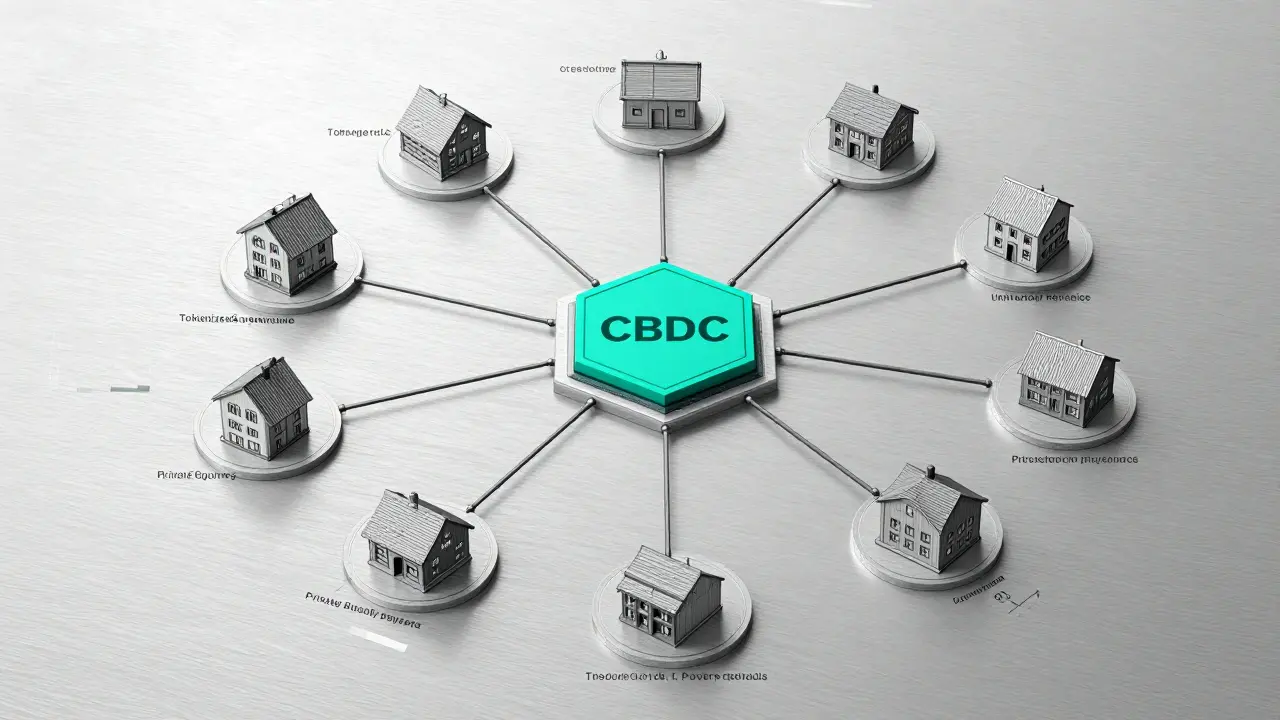
The future isn’t just blockchain. It’s the combination of blockchain, tokenized assets, and central bank digital currencies (CBDCs).
Imagine this: Your bank holds digital dollars issued by the Federal Reserve. You send $10,000 to a supplier in Germany. That money moves on a blockchain. The supplier’s bank holds digital euros from the ECB. The transaction settles instantly. No currency exchange. No correspondent banks. No delays.
The Bank for International Settlements calls this the “unified ledger.” Singapore’s Project Guardian is already testing it. The Monetary Authority of Singapore connected institutional DeFi protocols with traditional banks. This isn’t sci-fi. It’s happening now.
By 2030, Gartner predicts blockchain will be invisible-embedded in 90% of financial transactions. You won’t see it. You’ll just see faster payments, lower fees, and more access to markets you used to be locked out of.
Final Reality Check
Blockchain won’t replace banks. But it will force them to change. The ones that cling to paper and manual processes will lose. The ones that use blockchain to automate, reduce risk, and unlock new products will thrive.
It’s not about Bitcoin. It’s not about speculation. It’s about fixing broken systems. About making finance faster, cheaper, and fairer. That’s the transformation. And it’s already here.
How is blockchain different from traditional banking systems?
Traditional banking relies on centralized ledgers controlled by individual institutions, requiring manual reconciliation and intermediaries like clearinghouses. Blockchain uses a distributed, shared ledger where all authorized parties see the same data in real time. This eliminates reconciliation, reduces settlement times from days to minutes, and cuts out middlemen, lowering costs and increasing transparency.
Can blockchain replace SWIFT for international payments?
SWIFT is being upgraded, not replaced. SWIFT’s GPI network now integrates blockchain rails, allowing cross-border payments to settle in minutes instead of days. Blockchain handles the settlement layer; SWIFT still manages messaging. Together, they reduce costs by 40-60% and cut processing time from 3-5 days to near real-time.
Are blockchain-based financial services secure?
Enterprise blockchains like R3 Corda and Hyperledger Fabric use FIPS 140-2 Level 3 certified encryption and quantum-resistant algorithms coming by 2026. They’re more secure than legacy systems because data can’t be altered after entry, and access is strictly controlled. However, the biggest risks come from poorly coded smart contracts or integration flaws-not the blockchain itself.
What’s the biggest barrier to blockchain adoption in finance?
Integration with legacy systems. Most banks still run on 30-40-year-old mainframes. Connecting modern blockchain platforms to these systems takes 18-24 months and costs an average of $4.7 million per institution. Talent shortages and fragmented regulations add to the challenge.
Is blockchain only useful for big banks?
No. While large institutions lead adoption due to scale, blockchain benefits smaller players too. Tokenization lets small investors access private equity or real estate. Smart contracts automate insurance claims for regional insurers. Even community banks can use blockchain for faster loan processing or KYC checks-though they often join consortium networks to share infrastructure and costs.
Will blockchain make financial services cheaper for consumers?
Yes, indirectly. Lower operational costs for banks mean lower fees for loans, transfers, and investment products. Tokenization opens up previously exclusive markets-like real estate-to smaller investors, reducing barriers to entry. While you won’t see a “blockchain discount” on your statement, you’ll benefit from faster service, fewer hidden fees, and more product options.


