

Have you ever looked at a crypto yield that seemed too good to be true? You know the kind-Annual Percentage Rates (APRs) that make traditional bank savings look like pocket change. In the world of Decentralized Finance (DeFi), these numbers pop up all the time. But usually, they come with a catch. Maybe the platform is new, maybe it’s on an obscure blockchain, or maybe the risk of losing your principal is higher than the reward suggests.
FlatQube is a decentralized cryptocurrency exchange built on the Everscale network, known for offering exceptionally high farming APRs and non-custodial asset management. It’s not a centralized giant like Binance or Coinbase. It doesn’t hold your keys. Instead, it operates as an Automated Market Maker (AMM) where you trade directly from your wallet. The promise here is simple: high yields, full control over your assets, and the speed of the Everscale blockchain. But does it actually deliver, or is it just another shiny object in the crowded DeFi space?
What Exactly Is FlatQube?
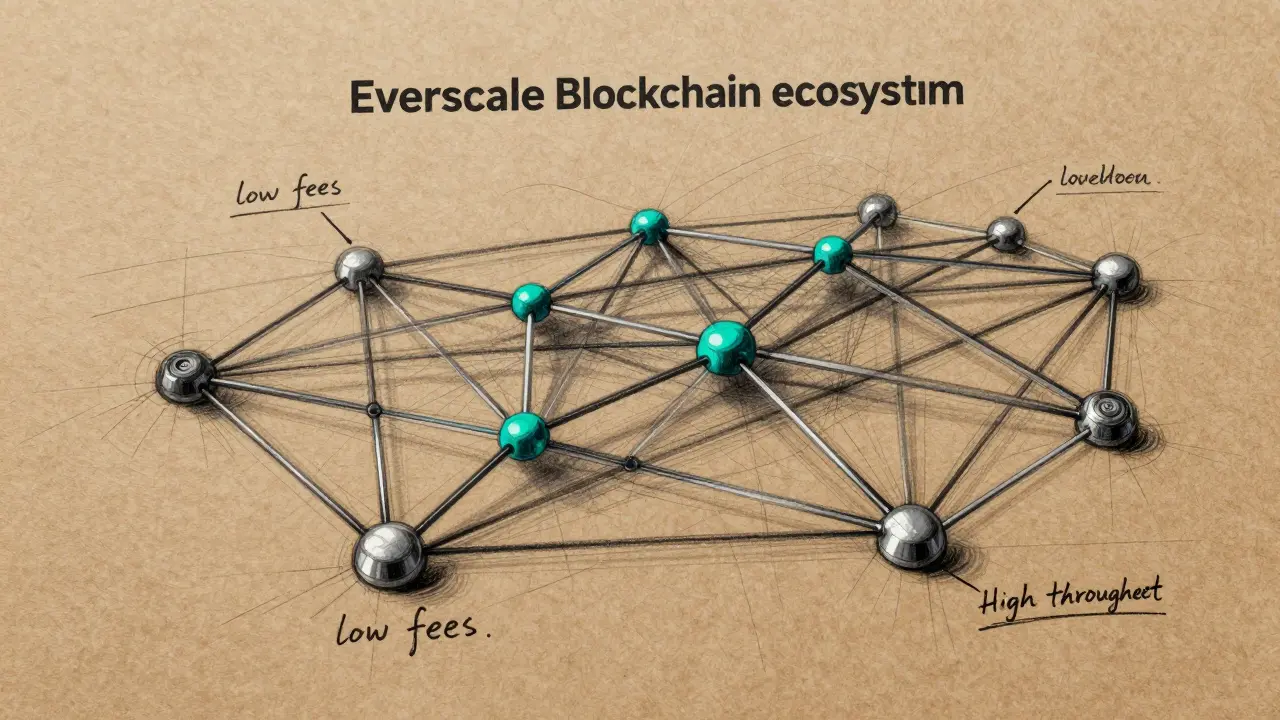
To understand FlatQube, you first need to understand its home: the Everscale blockchain. Everscale is a scalable blockchain network designed to handle high transaction loads with low fees, often cited as a premier solution for Asian markets. While Ethereum dominates headlines, networks like Everscale focus on scalability and cost-efficiency. FlatQube was created by the Broxus development team, who have been instrumental in building out much of the Everscale ecosystem since 2022.
FlatQube functions as a liquidity protocol. Think of it as a digital marketplace where you can swap tokens without needing a middleman. It uses a "constant product formula," which is the standard math behind most AMMs. This ensures that trades can happen automatically based on the liquidity provided by users. Unlike centralized exchanges where you deposit funds into their custody, FlatQube is non-custodial. Your assets stay in your wallet until the moment of the transaction. This is a critical distinction for security-conscious traders who remember the fallout from major centralized exchange collapses in recent years.
The Core Value Proposition: Why Users Choose FlatQube
If you are considering using FlatQube, you are likely drawn to one of three things: yield, security, or speed. Let’s break down why each matters.
- Exceptional Farming APRs: Industry analysis from sources like BeInCrypto highlights FlatQube for offering some of the highest APR rates in the industry. For farmers looking to maximize passive income, this is a major draw. These high rates are often incentivized by the platform to attract liquidity early in its lifecycle.
- User-Controlled Assets: On FlatQube, farming happens within your own wallet. You do not send your coins to a third-party smart contract that you have to blindly trust forever. This eliminates counterparty risk-the fear that the platform itself might get hacked or go insolvent while holding your funds.
- Everscale Scalability: Because it runs on Everscale, transactions are fast and cheap. If you’ve experienced Ethereum gas fees spiking to $50 per transaction, the Everscale experience feels like a breath of fresh air. This makes smaller trades and frequent rebalancing economically viable.
Current Limitations: What You Need to Know Before Trading
No platform is perfect, and FlatQube is no exception. In fact, its strengths are currently balanced by significant limitations. If you are used to the depth and variety of major exchanges, you might find FlatQube restrictive.
| Feature | FlatQube | Typical Large DEX (e.g., Uniswap) |
|---|---|---|
| Supported Coins | 5 | Thousands |
| Trading Pairs | 17 | Tens of thousands |
| Native Token Supply | 2 Million QUBE | Varies (often billions) |
| Primary Use Case | High-Yield Farming | Broad Swapping & Liquidity |
| Blockchain Network | Everscale | Ethereum / Layer 2s |
As of mid-2026, data from CoinGecko indicates that FlatQube supports only 5 coins and 17 trading pairs. This is extremely narrow. If you want to trade niche altcoins or stablecoin pairs beyond the basics, you won’t find them here. The platform is still in a growth phase, trying to build liquidity depth. This means that large trades could suffer from slippage-where the price you expect isn’t the price you get because there isn’t enough liquidity in the pool.
Additionally, the native QUBE token has a fixed total supply cap of 2 million tokens, used for governance and staking rewards within the FlatQube ecosystem. With such a small supply, volatility can be high. Governance rights are tied to this token, but with a limited user base, the influence of individual holders is magnified.

Security and Trust: The Non-Custodial Advantage
In the wake of several high-profile centralized exchange failures, trust has become a currency more valuable than Bitcoin. FlatQube addresses this by being non-custodial. When you connect your wallet to FlatQube, you are signing transactions, not handing over keys. If the FlatQube website goes offline tomorrow, your assets are still safe in your Everscale-compatible wallet.
However, "non-custodial" does not mean "risk-free." Smart contracts can have bugs. The Broxus team has a track record in the Everscale ecosystem, which adds a layer of credibility, but code audits are essential. Always check if the latest version of the FlatQube contracts has been audited by reputable firms. Furthermore, because the platform is relatively new (established in 2022), it lacks the long-term battle testing of older protocols. User feedback on platforms like Reddit or Trustpilot is sparse, which isn’t necessarily bad-it just means the community is still forming.
How to Get Started with FlatQube
If you decide to take the plunge, here is how the process works. It is straightforward if you are already familiar with DeFi, but newcomers should proceed with caution.
- Set Up an Everscale-Compatible Wallet: You cannot use MetaMask directly unless you add custom RPC settings. Most users opt for wallets specifically designed for Everscale, such as Tonkeeper (if supported) or dedicated Everscale wallets like EverWallet. Ensure your wallet is secure and your seed phrase is offline.
- Fund Your Wallet: Buy Everscale’s native token (EVER) or other supported assets on a centralized exchange and transfer them to your Everscale wallet address.
- Connect to FlatQube: Visit the official FlatQube interface. Double-check the URL to avoid phishing sites. Click "Connect Wallet" and approve the connection.
- Swap or Provide Liquidity: For simple swaps, select your input and output tokens. For farming, navigate to the pools section. Here, you will see the APRs. Remember, higher APR often means higher risk or impermanent loss potential.
- Monitor and Withdraw: Since assets remain in your control, you can withdraw at any time. However, check if there are lock-up periods for specific high-yield farms.
Is FlatQube Right for You?
FlatQube is not a one-size-fits-all solution. It is best suited for specific types of users:
- The Yield Farmer: If you are actively seeking high APRs and understand the risks of impermanent loss, FlatQube’s offerings are compelling.
- The Everscale Believer: If you believe in the long-term growth of the Everscale ecosystem, participating in its core DEX helps you align your incentives with the network’s success.
- The Security Purist: If you refuse to leave your assets in centralized custody, FlatQube offers a viable, albeit limited, alternative.
On the flip side, if you need deep liquidity for large trades, a wide variety of tokens, or a user-friendly interface with customer support, FlatQube may frustrate you. Its limited pair selection (17 pairs) is a hard constraint right now.
Future Outlook and Final Thoughts
The future of FlatQube is tightly bound to the Everscale network. As Everscale gains traction in Asia and beyond, demand for its native DEX will likely grow. The Broxus team has shown capability in developing DeFi infrastructure, suggesting they have the technical skills to expand the platform. We can expect more trading pairs, deeper liquidity, and potentially enhanced governance features for QUBE holders.
For now, treat FlatQube as a specialized tool. It excels at providing high-yield opportunities within a secure, non-custodial framework on a fast blockchain. But it is not yet a general-purpose exchange. Do your own research, start small, and never invest more than you can afford to lose. In DeFi, the highest returns always come with the highest stakes.
Is FlatQube a centralized or decentralized exchange?
FlatQube is a fully decentralized exchange (DEX). It operates on the Everscale blockchain and is non-custodial, meaning users retain control of their private keys and assets at all times. There is no central authority holding your funds.
What is the minimum amount to start farming on FlatQube?
There is typically no strict minimum amount set by the protocol, but practical limits exist. You need enough funds to cover transaction fees on the Everscale network and to provide meaningful liquidity to earn rewards. Starting with small amounts is recommended to test the interface.
How many trading pairs does FlatQube currently support?
As of 2026, FlatQube supports approximately 17 trading pairs across 5 different coins. This is significantly fewer than major DEXs, reflecting its status as a growing platform within the Everscale ecosystem.
What is the QUBE token used for?
The QUBE token is the native utility token of FlatQube. It is primarily used for staking rewards, farming incentives, and governance. The total supply is capped at 2 million tokens, making it a scarce asset within the platform.
Is FlatQube safe to use?
FlatQube reduces custodial risk by keeping assets in your wallet. However, smart contract risks remain. While the Broxus team has a strong reputation in the Everscale ecosystem, users should always verify contract audits and be aware of the inherent volatility of DeFi yields.
Which wallets work with FlatQube?
You need a wallet compatible with the Everscale blockchain. Popular options include EverWallet and other Everscale-supported wallets. Standard Ethereum wallets like MetaMask require configuration changes to interact with Everscale.
Why are the APRs on FlatQube so high?
High APRs are often used as incentives to attract liquidity to new or growing pools. As the platform matures and liquidity increases, these rates may decrease. They reflect the current demand for capital in the Everscale ecosystem.


