
When you trade cryptocurrency, every buy and sell costs money. Even if the price moves in your favor, those fees eat into your profits. Most exchanges charge between 0.1% and 0.5% per trade. That might not sound like much, but if you trade $10,000 a week, you’re paying $200 to $500 in fees every month. That’s $2,400 to $6,000 a year-money that could’ve stayed in your pocket.
That’s where exchange token fee discounts come in. If you hold the native token of the exchange you’re trading on, you can cut those fees in half-or even more. It’s not a trick. It’s a built-in reward system designed to keep you trading on their platform. And for active traders, the savings can be life-changing.
How Exchange Token Discounts Actually Work
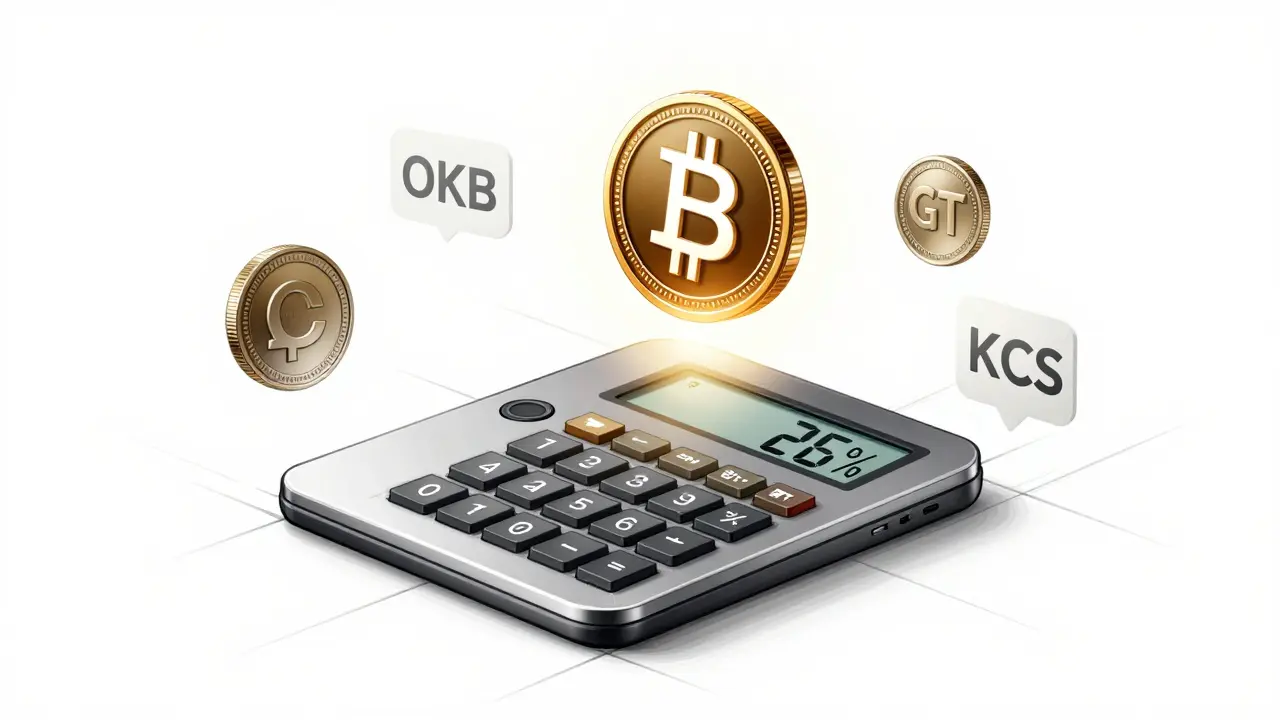
It’s simple: you buy the exchange’s own token-like BNB from Binance, OKB from OKX, or GT from Gate.io-and then set your account to pay trading fees in that token instead of USDT or ETH. In return, the exchange gives you a discount. The bigger your token holdings, the bigger the discount.
Take Binance. If you hold BNB, you get up to a 25% discount on trading fees. That means a 0.1% fee drops to 0.075%. On Gate.io, using GT token can slash fees from 0.2% all the way down to 0.03%. That’s an 85% reduction. For someone trading $500,000 a month, that’s over $8,000 in savings per month.
It’s not just about holding the token. Most platforms use tiered systems. Your discount depends on two things: how much of the token you hold, and how much you trade in a 30-day window. At Binance, for example, trading $100,000 in a month gets you VIP Level 1, which gives you a 10% discount. Hit $1 million, and you’re at VIP Level 4 with 25% off. Add BNB to the mix, and it stacks on top.
Real-World Examples from Top Exchanges
Not all exchange tokens are created equal. Here’s what you’re actually getting across the biggest platforms:
| Exchange | Native Token | Base Fee (Maker/Taker) | Max Discount with Token | Holding Requirement |
|---|---|---|---|---|
| Binance | BNB | 0.100% / 0.100% | 25% | Any amount |
| Gate.io | GT | 0.200% / 0.200% | 85% | 1 GT minimum |
| OKX | OKB | 0.080% / 0.100% | 20% | Any amount |
| KuCoin | KCS | 0.100% / 0.100% | 30% | 1 KCS minimum |
| Bitget | BGB | 0.100% / 0.100% | 30% | Any amount |
Notice something? Gate.io’s GT token offers the deepest discount. But that doesn’t mean it’s the best choice. Token price matters. If GT drops 40% while you’re holding it to save on fees, you’ve lost more than you saved. BNB, on the other hand, has held its value better over time, making its 25% discount more reliable.
Why This System Exists (And Why It’s Not Free)
Exchanges don’t give you discounts because they’re nice. They do it because they need to compete. There are hundreds of crypto exchanges. If yours charges 0.2% and another charges 0.1% with a 25% discount, guess which one you’ll pick?
These tokens also help exchanges raise money. When they launch a new token, they sell it to users. That’s cash in the bank. Then, they lock up a portion of their profits to buy back and burn tokens, reducing supply. That’s how BNB’s price has stayed strong-it’s not just demand, it’s artificial scarcity.
But here’s the catch: these tokens are not stocks. You don’t own part of the exchange. You don’t get dividends. You don’t vote on decisions. You’re just a user who got a discount in exchange for holding a risky asset. If the exchange gets hacked, shuts down, or gets regulated out of business, your token can crash overnight. That’s what happened with FTT after FTX collapsed in 2022. People thought they were saving on fees. Instead, they lost everything.
The Hidden Risks Nobody Talks About
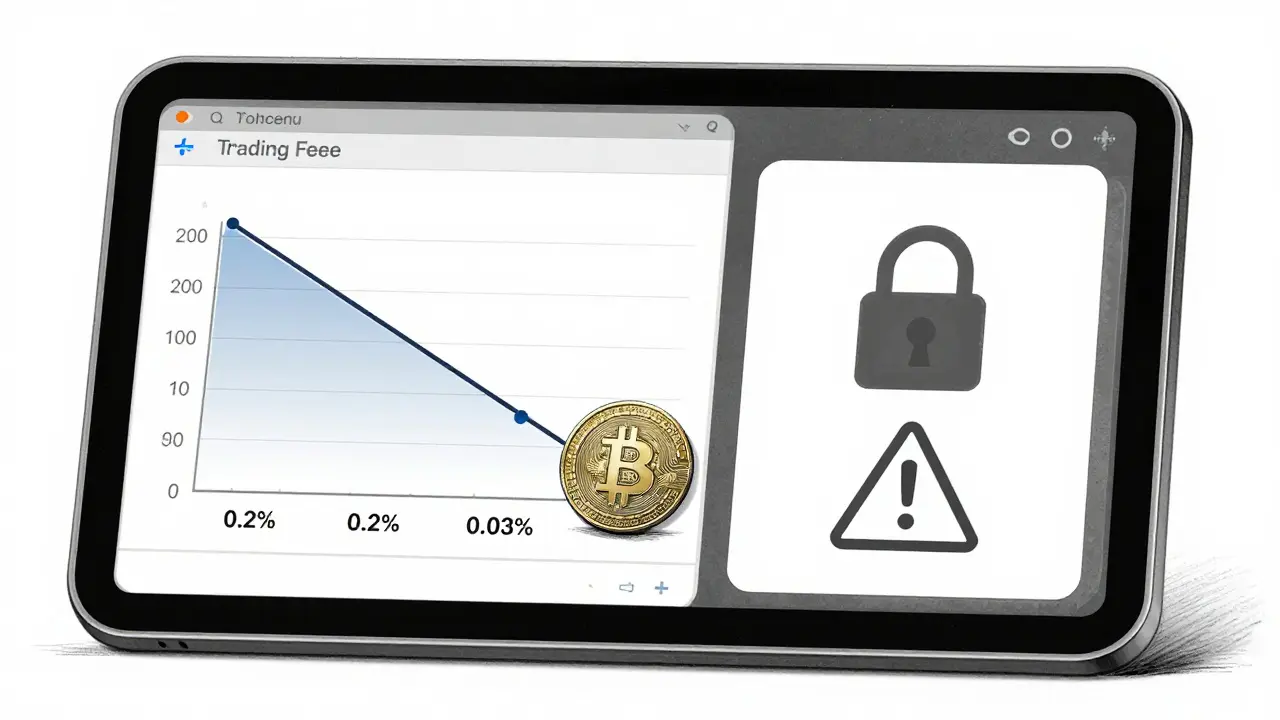
Most guides tell you how to save money. Few tell you how easy it is to lose it.
First, token volatility. If you buy 100 GT tokens at $1 each to get a discount, and GT drops to $0.40 in three months, you’ve lost $60 on your holdings-even if you saved $50 in fees. You’re still down $10.
Second, rule changes. Exchanges can change discount structures anytime. In 2023, one mid-tier exchange cut its fee discount from 30% to 10% overnight. Users who held the token for the discount were blindsided.
Third, complexity. Some platforms require you to stake your tokens, lock them for 30 days, or maintain a minimum balance. If you forget, your discount disappears. One trader on Reddit lost $1,200 in savings because he moved 50 OKB to another wallet to buy ETH-and didn’t realize it reset his VIP level.
Fourth, opportunity cost. That money tied up in exchange tokens could’ve been in Bitcoin, Ethereum, or even a stablecoin earning interest. If your token doesn’t outperform the market, you’re paying for a discount with lower returns.
How to Use This Right (Without Getting Burned)
If you trade often, exchange token discounts are one of the few legit ways to reduce costs. But you need a strategy.
- Calculate your monthly trading volume. If you trade under $5,000, the discount probably isn’t worth the hassle.
- Choose an exchange with a strong, stable token. BNB, OKB, and GT have proven track records. Avoid tokens from exchanges with low volume or recent security issues.
- Never put more than 5-10% of your total crypto portfolio into one exchange token.
- Set a rule: if the token drops 20% from your buy price, sell half. Take profit before the discount disappears.
- Turn on automatic fee payment in the token. Don’t rely on manual settings.
- Check the exchange’s fee schedule monthly. They update it often.
Some advanced traders combine this with low-fee networks. For example, trade on OKX using OKB, but send funds via the Binance Smart Chain instead of Ethereum. Gas fees drop from $5 to $0.20. Now you’re saving on two fronts.
What Happens If You Don’t Use It?
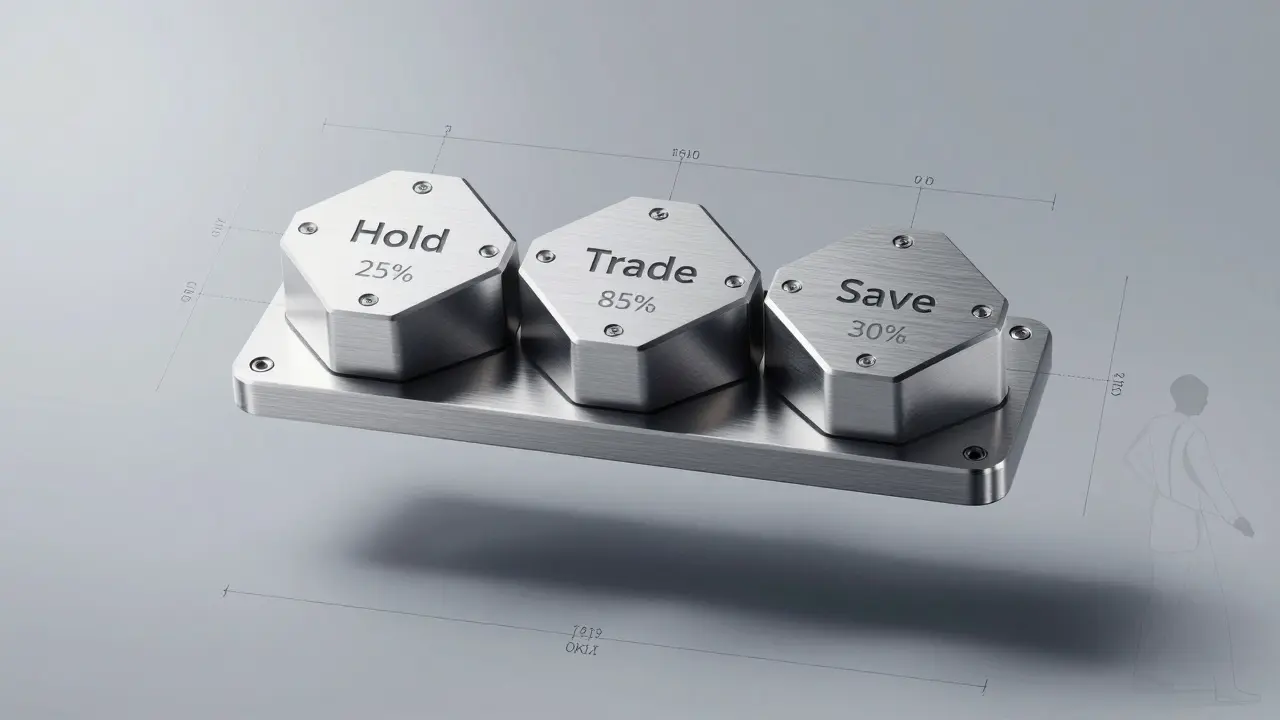
If you ignore exchange tokens entirely, you’re paying full price. That’s fine if you trade rarely. But if you’re active, you’re leaving money on the table. A trader doing 50 trades a month at $10,000 each pays $1,000 in fees without a discount. With a 25% discount, that’s $250 saved. That’s $3,000 a year. That’s a new laptop. Or a weekend trip. Or 0.02 BTC.
It’s not magic. It’s math. And if you’re serious about trading, you should be optimizing every edge.
Final Thought: It’s a Tool, Not a Treasure
Exchange token discounts are one of the smartest cost-saving features in crypto. But they’re not a get-rich-quick scheme. They’re not an investment. They’re a utility-like a loyalty card at your local grocery store, but for trading crypto.
Use them wisely. Don’t chase hype. Don’t over-leverage. Don’t assume the token will always go up. And always, always keep an eye on the exchange’s health. If their support vanishes, their app crashes, or their legal troubles make headlines-pull your tokens out before it’s too late.
Do I have to hold the exchange’s token to get the discount?
Yes. You must own the native token of the exchange and set your account to pay fees in that token. Simply having it in your wallet isn’t enough-you need to enable the option in your trading settings.
Can I use multiple exchange tokens at once?
No. You can only use one native token per account for fee discounts. If you trade on Binance, you can only use BNB. If you trade on OKX, you can only use OKB. You can’t combine them.
Are exchange token discounts guaranteed forever?
No. Exchanges can change or remove fee discounts at any time without notice. Always read the fee schedule updates. Some platforms have reduced discounts after a token’s price surged, claiming it was "too generous."
What’s the best exchange token for fee discounts?
For most users, BNB (Binance) or OKB (OKX) are the safest choices. They have strong track records, high liquidity, and stable discount structures. GT (Gate.io) offers the highest discount, but comes with higher volatility risk. Avoid tokens from smaller exchanges with low trading volume or unclear governance.
Should I buy more tokens just to get a bigger discount?
Only if you’re already trading heavily. Buying more tokens just to jump a VIP tier is risky. If the token price falls, you lose money faster than you save on fees. The sweet spot is holding just enough to get the highest discount you’ll realistically use-not the maximum possible.


