
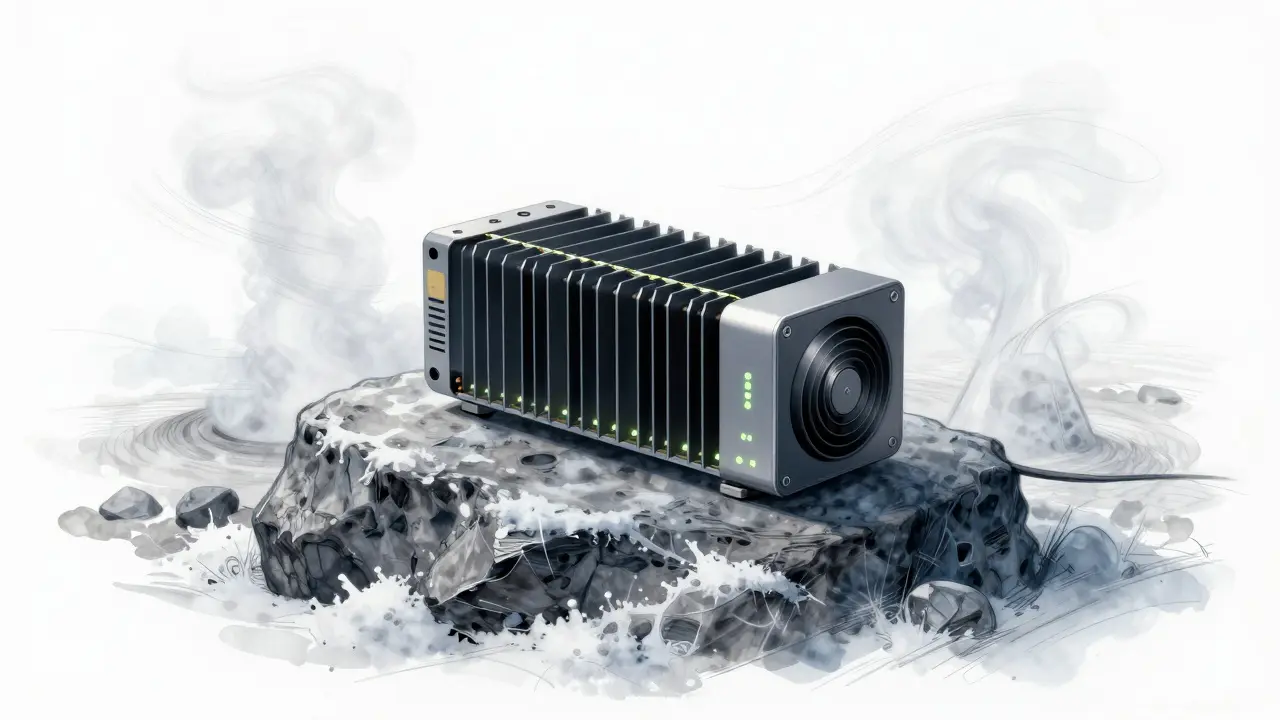
When Iceland became a hotspot for crypto mining a decade ago, it wasn’t because of fancy tech or tax breaks. It was because of something far simpler: free electricity. The country’s volcanoes and waterfalls generate more than enough clean power to run entire cities-enough, it seemed, to power Bitcoin farms too. But by 2025, that free ride is over. Iceland isn’t banning crypto mining. It’s just running out of power to give it.
Why Iceland Was the Perfect Place for Miners
Iceland’s rise as a crypto mining hub started in 2013. Miners didn’t need to build cooling systems-the average temperature outside is below 5°C year-round. No air conditioners needed. No noisy fans. Just plug in your ASICs and let the wind chill do the work. And the electricity? Nearly 100% renewable. Geothermal plants tapped into underground heat, while hydroelectric dams used glacial meltwater. No coal. No gas. No emissions. For miners, it was the dream: cheap, clean, and reliable power. By 2023, crypto mining was using 8% of Iceland’s total electricity. That’s not a small number. It’s more than the entire country of Portugal uses for its homes. And it wasn’t just Bitcoin. Ethereum miners, altcoin farms, and even AI data centers started showing up. The country’s total installed power capacity hovered around 2,000 megawatts, and mining was already taking up 120 megawatts of that. That’s roughly the same as powering 100,000 homes.The Grid Is Full-And No One’s Building More
Here’s the problem: Iceland hasn’t built a new power plant since 2018. Not one. The geothermal fields are running at 95% capacity. The rivers that feed hydro dams are at their seasonal limits. The government has been clear-no new licenses for energy-intensive industries. Not for mining. Not for aluminum smelters. Not even for new data centers. That’s a big deal. Most countries can just build another wind farm or solar array. Iceland can’t. Its geography limits expansion. Geothermal wells take years to drill and stabilize. Hydro dams depend on snowpack and rainfall patterns that are becoming less predictable. And the grid? It’s a single island with no underwater cables to import power from Norway or the UK. It’s isolated. And now, it’s full.Who’s Getting the Power-and Who’s Not
The miners who got in early still have power. Companies like Advania, Verne Global, and Genesis Mining signed long-term contracts back in 2015 and 2016. They locked in low rates and got priority access. They’re still running profitably. Their ASICs-Antminer S19 XP and Whatsminer M50S-are humming along, extracting Bitcoin at 28 joules per terahash, among the most efficient in the world. But if you’re a new miner trying to set up shop in 2026? Good luck. The waiting list for grid connection is over two years long. Some applicants have been told their request is “under review” since 2022. Local authorities don’t even respond to emails anymore. The government’s message is clear: we’re not expanding power for mining. Meanwhile, other industries are getting priority. Aluminum smelting-once the biggest electricity user-is still protected. Why? Because it creates 1,200 direct jobs and brings in steady export revenue. Crypto mining? It creates maybe 50 jobs, mostly IT technicians. No heavy machinery. No local supply chains. Just servers and power.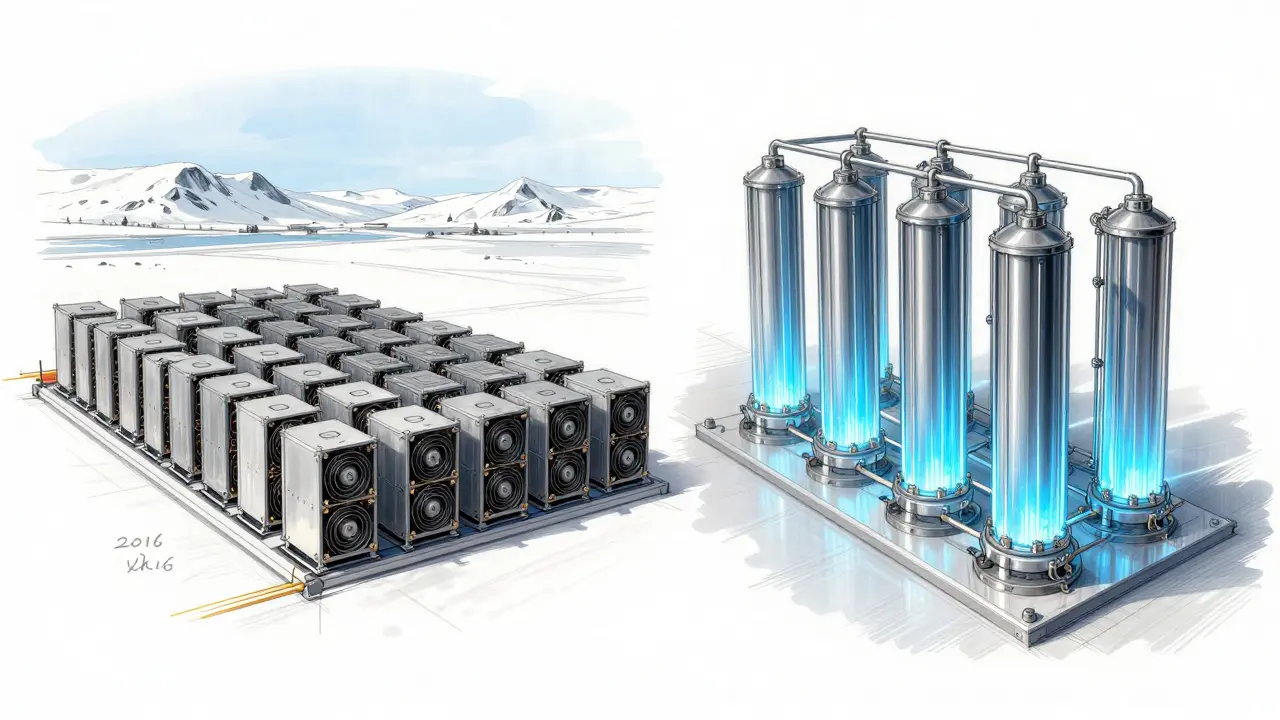
The Government’s Shift: From Mining to Blockchain
In March 2024, Prime Minister Katrín Jakobsdóttir publicly stated Iceland needed to “rethink its energy priorities.” She didn’t say “ban mining.” She said, “We have limited resources. We need to use them for things that last.” The shift was subtle but real. Instead of encouraging Bitcoin farms, the government started funding blockchain startups focused on digital identity, supply chain tracking, and public record systems. They launched a pilot for a national digital currency (CBDC) that runs on low-energy consensus mechanisms-not proof-of-work. They even offered grants to companies building AI models that use 90% less power than traditional training setups. This isn’t anti-crypto. It’s pro-sustainability. Iceland isn’t rejecting blockchain. It’s rejecting energy-hungry blockchain.The Real Cost: What Else Could That Power Do?
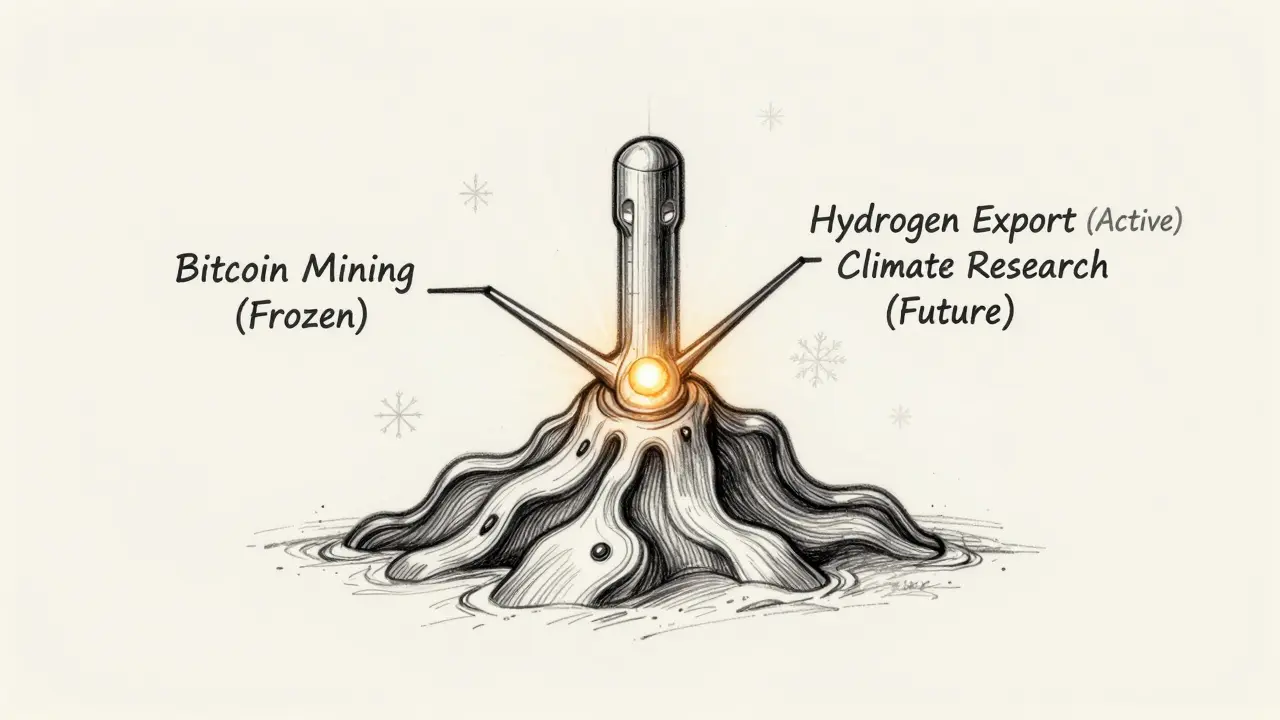
Let’s look at what 120 megawatts could do if it wasn’t going to mining:- Power 150,000 homes for a year
- Fuel a hydrogen production plant that exports clean fuel to Europe
- Run 500 electric vehicle charging stations across the country
- Support a national AI research hub for climate modeling
- Expand geothermal heating to rural towns still using oil
What Miners Are Saying
On Reddit and Bitcoin Talk forums, miners in Iceland are frustrated but resigned. One user wrote: “I’ve been here since 2017. I’ve got 800 rigs. I’m not leaving. But I can’t add one more. The grid won’t let me. They say ‘no new connections.’ That’s it. No appeals. No exceptions.” Another miner from Canada moved to Iceland hoping to scale up. He got rejected after six months of paperwork. “They told me my application was ‘not aligned with national energy strategy.’ I laughed. My rig uses less power than a Walmart. But they don’t care. They’re saving the juice for the future.” The sentiment is clear: Iceland is still a safe, stable place to mine. But it’s no longer a place to grow.The Future: Stable, Not Expanding
Looking ahead, Iceland’s crypto mining sector will stay mostly unchanged. The existing farms will keep running. They’re profitable. They’re efficient. They’re legally locked in. But growth? That’s over. No new permits. No new power lines. No new licenses. If a new power plant is built before 2030-and that’s a big if-it won’t go to miners. It’ll go to green hydrogen, AI research, or public infrastructure. The government has made its choice. Iceland’s renewable energy isn’t infinite. And it’s not for sale anymore. For miners, the lesson is simple: early movers win. Latecomers don’t get in. And in a world where energy is becoming the new currency, Iceland’s message is loud and clear: we’re not just powering Bitcoin. We’re powering our future.Why can’t Iceland build more power plants for crypto mining?
Iceland’s geography limits energy expansion. Geothermal wells take years to develop and can’t be rushed. Hydroelectric dams rely on snowmelt and rainfall, which are becoming less predictable due to climate shifts. The country’s grid is isolated-no connections to other nations-and already operating at near-maximum capacity. Building new infrastructure is slow, expensive, and politically unpopular when other needs like clean hydrogen and public heating are urgent.
Is crypto mining banned in Iceland?
No, crypto mining is not banned. Existing operations continue to run legally. But the government has stopped issuing new power allocation permits. No new mining farms can connect to the grid. The focus has shifted from expanding mining to preserving energy for other strategic uses like hydrogen production and digital public services.
How much electricity does crypto mining use in Iceland?
In 2023, cryptocurrency mining consumed approximately 8% of Iceland’s total electricity output, equivalent to about 120 megawatts. This is roughly the same amount of power needed to supply 100,000 homes. While this is a small percentage globally, it’s significant for a country with only 370,000 people and limited energy capacity.
Why is aluminum smelting prioritized over crypto mining?
Aluminum smelting provides 1,200 direct jobs and generates stable, long-term export revenue. Crypto mining, while profitable, creates few local jobs and relies on volatile market prices. The government views aluminum as a strategic industry with deeper economic roots, while mining is seen as a temporary, high-risk activity with limited multiplier effects on the broader economy.
Can I still mine crypto in Iceland today?
Yes-if you already have a power connection. Existing mining operations continue to operate without interference. But new entrants cannot get approved for grid access. Power allocation is frozen. There are no new contracts being offered. If you don’t have a connection already, you cannot legally start mining in Iceland today.


