

For decades, finance has run on systems built around central authorities-banks, clearinghouses, regulators-all keeping their own copies of records, often out of sync, slow to reconcile, and vulnerable to errors or fraud. Distributed Ledger Technology (DLT) changes that. It doesn’t just make things faster. It rebuilds how value moves, who controls it, and how trust is earned. By 2025, this isn’t a lab experiment anymore. Major banks, payment networks, and regulators are live on production DLT systems, and the changes are real.
What Exactly Is Distributed Ledger Technology?
Think of DLT as a shared digital notebook, but instead of one person keeping it, hundreds or thousands of computers-called nodes-each have an identical copy. Every time a transaction happens, it’s verified by the network and added to everyone’s notebook at once. No central bank approves it. No single company owns it. Once recorded, it can’t be changed. That’s the core: immutability, transparency, and decentralization.
This isn’t just blockchain. Blockchain is one type of DLT, but not all DLTs are blockchains. Some systems, like R3 Corda or Hyperledger Fabric, don’t broadcast every transaction to everyone. They’re designed for banks that need privacy. Others, like Bitcoin, are fully public. The key difference? Permissioned networks (used by banks) control who can join and verify transactions. Permissionless ones (like Bitcoin) let anyone participate. For finance, permissioned systems dominate because they meet strict compliance rules.
How DLT Is Changing Payments
International payments are broken. They take days. They cost 5-7% in fees. They involve middlemen at every step. Swift, the global messaging network used by over 11,000 banks, didn’t just adapt to DLT-they built into it. In September 2025, Swift launched its own blockchain-based shared ledger. This isn’t replacing their messaging system. It’s adding a new layer: a real-time, tamper-proof record of who sent what, to whom, and when.
Jose Luis Calderón, CEO of PagoNxt (a Santander company), put it simply: “Traditional international payments models are no longer suited to today’s digital economy.” With DLT, cross-border transfers now settle in minutes, not days. Fees drop below 1%. SMEs in Kenya can receive payments from Germany without going through five intermediaries. The same tech powers real-time P2P payments in Brazil and India, where mobile wallets now connect directly to institutional ledgers.
Tokenizing Assets: From Stocks to Real Estate
What if you could turn a building, a piece of art, or a share in a private company into a digital token? That’s what DLT enables. Tokenization means breaking ownership into smaller, tradable units on a blockchain. A $10 million office building can be split into 10,000 tokens. Each token represents 0.01% ownership. Anyone with a digital wallet can buy one.
This isn’t theoretical. In 2025, over $380 billion in assets were tokenized globally-up from $42 billion in 2023. Real estate in Singapore, commercial paper in Germany, and private equity in the U.S. are now being issued as tokens. Why? Because DLT solves three big problems:
- Liquidity: Illiquid assets become tradable 24/7.
- Transparency: Ownership history is permanently recorded.
- Automation: Dividends or rent payments can be programmed to auto-distribute via smart contracts.
Swiss bank UBS and Deutsche Bank have launched tokenized bond platforms. Investors no longer wait weeks for settlement. Transactions happen in seconds. Compliance is baked into the code.
Smart Contracts: Removing the Middleman
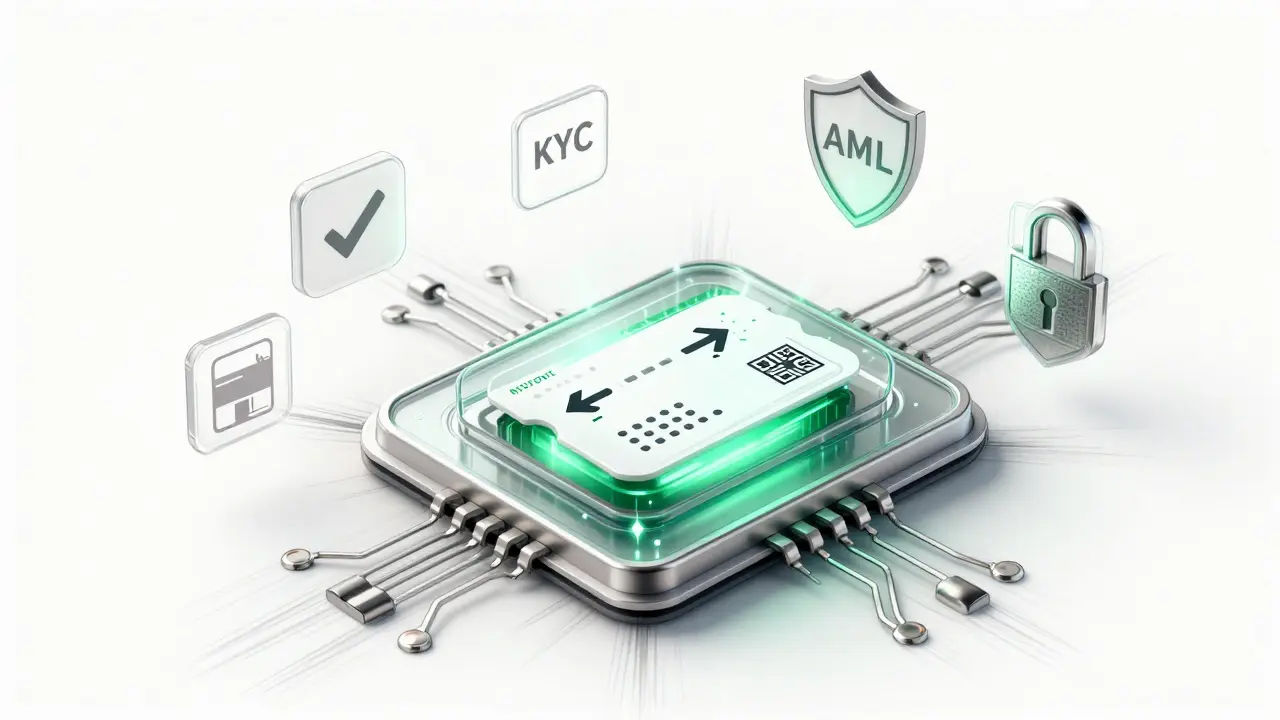
Imagine a life insurance policy that pays out automatically when a flight is canceled. Or a loan that releases funds only when a warehouse shipment is verified as delivered. That’s a smart contract-self-executing code stored on a DLT.
Traditional contracts rely on lawyers, notaries, and manual verification. Smart contracts remove all of that. They run on rules written in code. If condition A happens, then action B triggers. No human intervention needed.
Insurance companies like Allianz and AXA are using smart contracts for parametric insurance. If weather data from a trusted source shows rainfall below 50mm in a drought-prone region, farmers get paid instantly. No claims forms. No delays. No fraud.
Trade finance is another big win. Letters of credit used to take 5-10 days to process. Now, with DLT platforms like Marco Polo and we.trade, documents are uploaded once. The system verifies them automatically. Payment releases when all conditions are met. Settlement time? Under 24 hours.
Central Bank Digital Currencies (CBDCs)
Over 130 countries are exploring CBDCs-digital versions of national currencies issued by central banks. The European Central Bank, the Bank of England, and the People’s Bank of China are all in advanced testing. Unlike Bitcoin, CBDCs aren’t decentralized. They’re controlled by the state. But they use DLT for settlement and audit trails.
Why does this matter? Because CBDCs give central banks direct control over money flow. They can track inflation in real time. They can target stimulus payments to specific groups. They can prevent money laundering by embedding compliance rules into every transaction.
The Eurosystem’s 2025 pilot showed that CBDCs on DLT can settle across different blockchain networks. A German bank can send euros to a French retailer using a different ledger system-and it works. That interoperability is the holy grail. It means DLT isn’t creating silos. It’s connecting them.
Compliance, KYC, and AML: Less Paper, More Trust
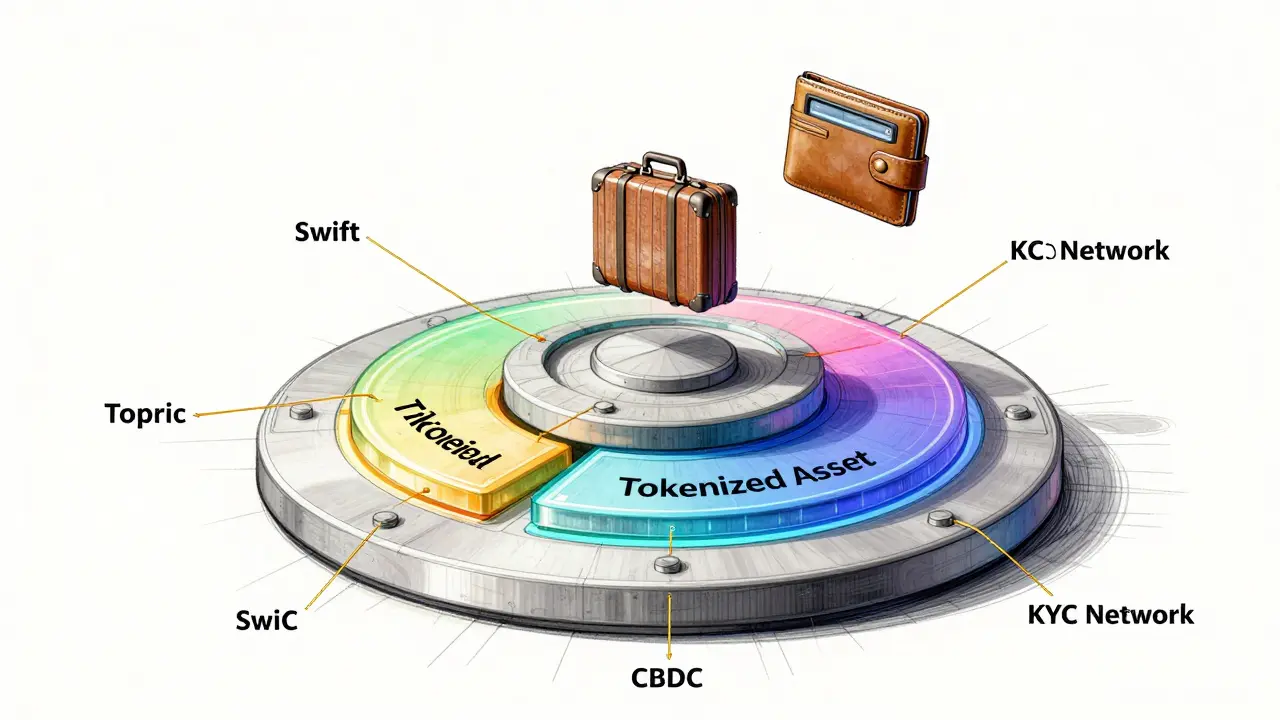
Know Your Customer (KYC) and Anti-Money Laundering (AML) checks are expensive. Banks spend $200 billion a year globally just on compliance. And most of it is repetitive. One bank verifies your ID. Then another does the same. Then another.
DLT changes that. With permissioned ledgers, a customer can upload verified identity data once. The bank controls who can access it. If another institution needs to verify you, they request access. You approve. No re-upload. No paperwork. No delays.
HSBC, JPMorgan, and Standard Chartered are all using DLT-based KYC networks. The result? Onboarding time dropped from 14 days to under 48 hours. Fraud detection improved by 37% because identity data can’t be altered after it’s recorded.
The Oracle Problem: Real-World Data on a Digital Ledger
Here’s the catch: DLT is great at recording data. But it can’t tell if that data is true. If a smart contract pays out when a stock price hits $100, how does it know the price? It can’t look at Bloomberg. It needs an external source. That’s the oracle problem.
DZ BANK and Google Cloud solved this by building a secure data pipeline. Instead of relying on one feed, they used multiple trusted sources-market data providers, regulatory feeds, and encrypted APIs-all verified by cryptographic proofs. The system only accepts a price if 3 out of 5 trusted sources agree. If one is hacked? It gets ignored.
This is now the industry standard. Without solving the oracle problem, DLT in finance would still be stuck in testing. Now, it’s live in production.
Why This Matters Now
In 2025, DLT is no longer “coming soon.” It’s here. Institutions that waited for perfect conditions are now behind. Swift’s move alone signals that the entire global payment infrastructure is shifting. CBDCs are no longer experiments-they’re national priorities. Tokenized assets are becoming mainstream. Smart contracts are replacing manual processes.
The winners aren’t the ones with the fanciest tech. They’re the ones who stopped asking, “Can we do this?” and started asking, “How fast can we deploy it?”
Is DLT the same as blockchain?
No. Blockchain is one type of distributed ledger technology. Think of blockchain as a chain of blocks-each containing a batch of transactions. DLT is the broader category that includes blockchains, but also other structures like directed acyclic graphs (DAGs) or hashgraphs. In finance, most systems use permissioned ledgers that aren’t public blockchains. They’re optimized for speed, privacy, and compliance-not decentralization.
Can DLT replace banks?
Not replace, but transform. Banks still manage risk, provide credit, and handle regulatory obligations. DLT automates settlement, reduces fraud, and speeds up processes. Think of it as upgrading the engine, not removing the driver. Banks using DLT are becoming more efficient, not obsolete. In fact, most are investing heavily in it-JPMorgan alone has over 1,200 engineers working on DLT projects.
What’s the biggest risk of using DLT in finance?
The biggest risk isn’t hacking-it’s integration. Many DLT systems fail because they’re bolted onto old infrastructure. Legacy core banking systems can’t talk to smart contracts. Data formats clash. Compliance rules don’t map cleanly. The real challenge is change management: training staff, rewriting policies, and aligning legal frameworks. Technology is the easy part.
Are DLT systems secure?
Yes-when designed right. The ledger itself is nearly impossible to tamper with because every node has a copy. But the weakest links are the endpoints: user wallets, APIs, and data oracles. A hacker doesn’t need to break the blockchain-they just need to compromise a single trusted data feed. That’s why institutions like DZ BANK use multi-source verification and encryption. Security isn’t in the ledger-it’s in how you connect it to the real world.
What’s next for DLT in finance?
The next frontier is interoperability. Right now, banks use different DLT platforms-Corda, Fabric, Quorum. The goal is to let them all talk. The Eurosystem’s 2025 cross-ledger settlement tests prove it’s possible. In 2026, expect to see tokenized assets moving seamlessly between CBDC networks, private blockchains, and trading platforms. The real innovation won’t be a new blockchain-it’ll be the bridges between them.


