
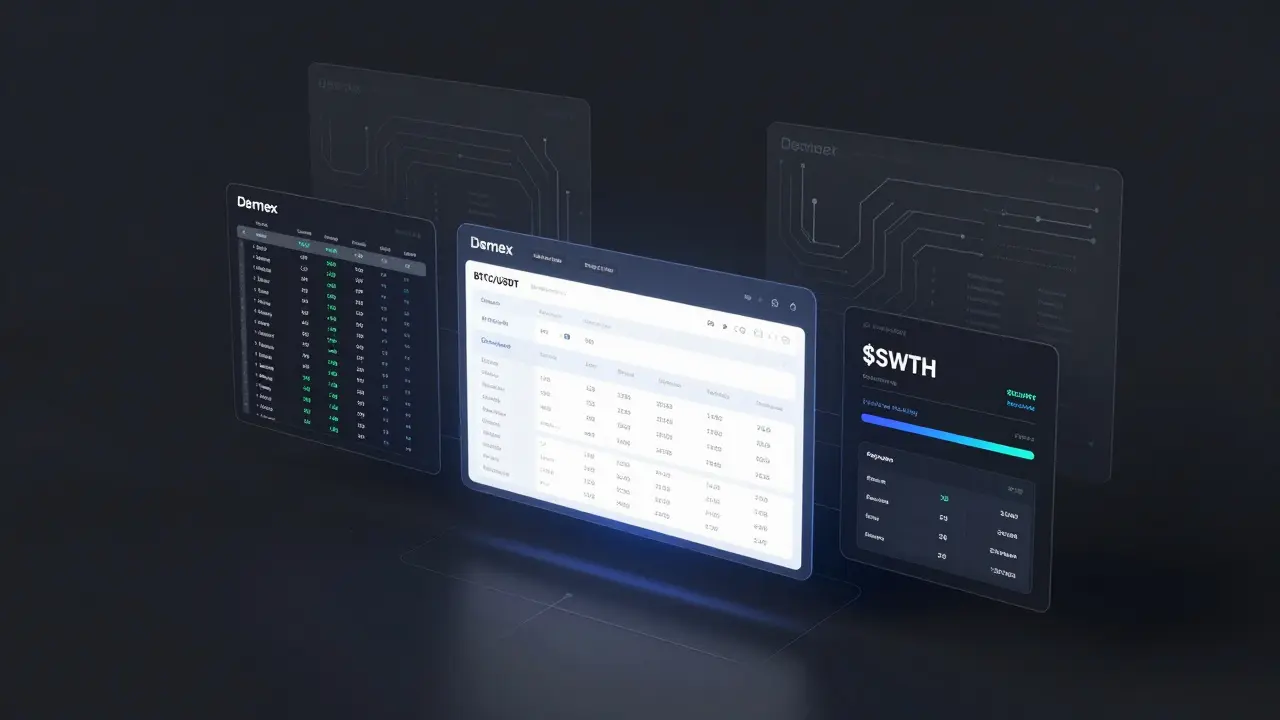
When you trade crypto on a decentralized exchange, you usually face a trade-off: either you get slow speeds or you sacrifice security. Most DEXs make you choose between a smooth, fast experience like Binance or the full on-chain control of something like Uniswap. Demex tries to break that pattern entirely. It’s not just another DEX. It’s built from scratch to deliver centralized exchange speed with decentralized exchange security - and it’s working.
What Makes Demex Different?
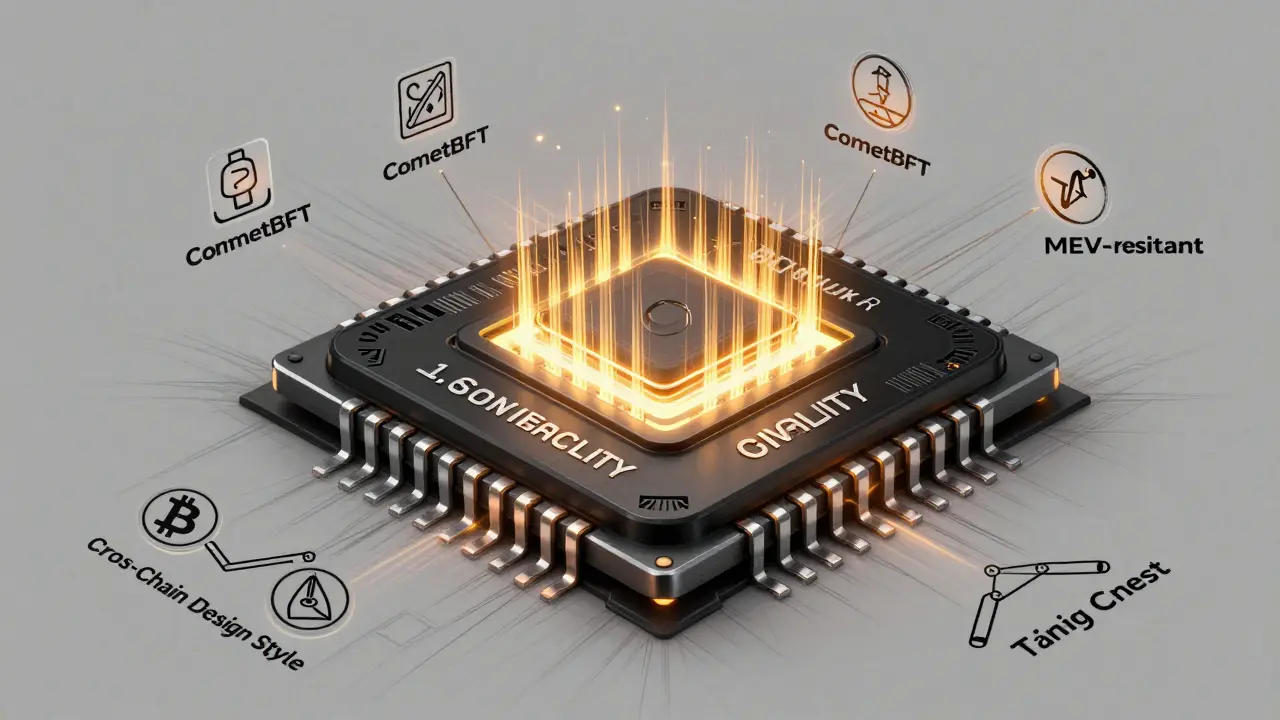
Demex isn’t just an upgrade to existing DEXs. It’s a Layer 1 blockchain built specifically for trading. Developed by the same team behind Switcheo, Demex runs on the Carbon blockchain - a custom network designed for high-frequency, low-latency financial transactions. While Ethereum might take 12-15 seconds to finalize a block, Demex finishes in just 1.6 seconds. That’s not a small improvement. It’s 400 times faster than Ethereum’s current finality time. This matters because in trading, milliseconds can mean the difference between profit and loss.
Most DEXs rely on Automated Market Makers (AMMs), where prices are set by algorithms and liquidity pools. But AMMs struggle with slippage on large trades and often lack depth. Demex solves this with a hybrid model: it combines a traditional order book with liquidity vaults and AMM pools. This means you get the precision of limit orders - like on a CEX - but with the transparency and control of a DEX. You’re not just trading against a pool. You’re matching directly with other traders’ orders, and every trade is settled on-chain.
How Fast Is It Really?
Demex claims to handle up to 50,000 orders per second. That’s not marketing fluff. It’s backed by the underlying architecture of the Carbon blockchain. Each block is finalized in 1.6 seconds, and the network uses a custom consensus algorithm based on CometBFT - the same engine behind Cosmos and Terra. This isn’t a Layer 2 solution bolted onto Ethereum. It’s a clean-slate chain built for trading from day one.
The speed isn’t just for show. It enables features you won’t find elsewhere. For example, Demex eliminates MEV (Miner Extractable Value). On most blockchains, validators can reorder transactions to profit from front-running. Demex doesn’t allow that. Every trade within a block gets the same timestamp and is matched at a single clearing price. No one gets an unfair advantage. That’s a big deal for institutional traders and anyone who’s lost money to sandwich attacks.
What Can You Trade?
Demex supports spot trading, perpetual contracts, and futures - all in one place. That’s rare. Most DEXs focus on one or two product types. dYdX is all about perpetuals. Uniswap is spot-only. Demex gives you all three, plus plans for options, bonds, and synthetic assets soon.
There are about 100 trading pairs available, including major coins like BTC, ETH, and USDT, as well as memecoins like Popcat and Bonk. Leverage goes up to 50x on perpetuals. That’s not for everyone, but for experienced traders, it’s a powerful tool. The platform supports both NEP-5 tokens (like BTC and ETH on Cosmos) and ERC-20 tokens (like ATOM, OSMO, and JUNO), so you’re not locked into one chain.
Security and Transparency
Every trade, every order, every liquidation - it’s all recorded on-chain. There’s no hidden layer. No off-chain matching. No black box. If you want to verify your trade history, you can look it up on a blockchain explorer. That’s transparency most CEXs can’t offer.
Demex also uses over 10 independent validators - none of them are controlled by the core team. That’s a strong signal of decentralization. The platform has been audited by QuillAudits, which confirmed that all operations are verifiable and tamper-resistant. No major vulnerabilities were found. That’s not a guarantee, but it’s a solid starting point.
How Do You Use It?
Getting started isn’t as simple as signing up with an email. You need a crypto wallet. Demex works with Keplr, Leap, and other Cosmos-compatible wallets. You connect it, deposit your assets (BTC, ETH, ATOM, USDC, etc.), and you’re ready to trade.
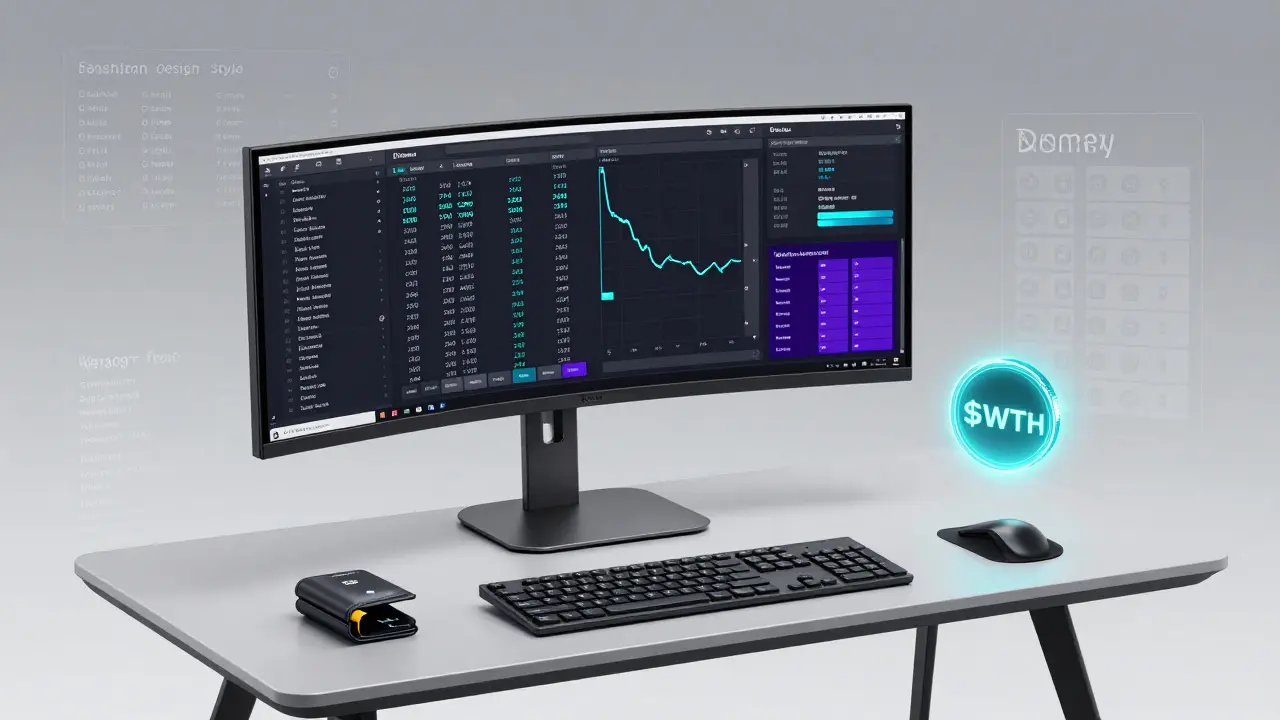
The interface is split into two main sections: Trade and Earn. The Trade section is where you place orders, set leverage, and manage positions. The Earn section lets you stake $SWTH - the platform’s native token - to earn a share of all trading fees. It’s a simple, effective incentive. The more you stake, the more you earn. And you can vote on governance proposals too.
The UI is clean, modern, and customizable. You can toggle between dark and light mode, adjust chart layouts, and enable real-time notifications. The mobile app is optimized for quick trades - no clunky menus. If you’re used to trading on Binance or Bybit, the layout will feel familiar. But the underlying tech? Totally different.
Who Is Demex For?
Demex isn’t for beginners who just want to buy Bitcoin and hold. If you’re new to crypto and still figuring out what a wallet is, this isn’t the place to start. The learning curve is real. You need to understand leverage, collateral, liquidation risk, and on-chain transactions.
But if you’re an active trader - someone who uses stop-losses, limit orders, and leverage - Demex is one of the most powerful tools in DeFi. It’s especially valuable if you trade across chains. No need to bridge assets between networks. You can trade BTC on Cosmos and ETH on Ethereum, all within the same interface.
It’s also great if you care about MEV protection. On other platforms, your trades can be front-run or sandwiched. On Demex, that’s impossible. Every trader gets treated equally.
Where It Falls Short
Demex isn’t perfect. It doesn’t have fiat on-ramps. You can’t deposit USD or EUR directly. You need to buy crypto elsewhere and transfer it in. That’s a barrier for many users. Compared to Coinbase or Kraken, the onboarding experience feels more technical.
The user base is still small. You won’t find the same liquidity as on Binance or OKX. Some markets, especially for lesser-known tokens, can have wide spreads. And while the documentation is solid, there’s still a lack of beginner tutorials or video guides. The community is growing, but it’s not as active as on Reddit or Discord for bigger platforms.
And yes - the interface, while modern, still assumes you know what you’re doing. If you’re not comfortable with margin trading or collateral management, you might feel overwhelmed.
What’s Next for Demex?
The roadmap is aggressive. Cross-margin and multi-collateral trading are coming soon. That means you can use your ETH as collateral to trade BTC perpetuals - without locking up your entire portfolio. That’s a huge step toward capital efficiency.
Options trading is on the horizon. That will make Demex one of the few DEXs offering the full suite of traditional financial instruments: spot, futures, options, and now bonds. If they pull it off, they’ll be the first DEX to truly compete with CEXs on product depth.
The $SWTH token staking rewards are already live. As trading volume grows, so will the yield. That creates a flywheel: more traders → more fees → higher rewards → more stakers → stronger network security.
Final Verdict
Demex isn’t trying to be everything to everyone. It’s laser-focused on one thing: giving advanced traders a fast, secure, transparent, and multi-chain trading experience. If that’s what you need, it’s one of the best options in DeFi right now.
It’s not for passive investors. It’s not for people who want to buy crypto with a credit card. But if you’re actively trading, using leverage, or managing complex positions - Demex delivers something no other DEX can: speed without sacrificing decentralization.
The market is shifting. More traders are leaving CEXs because of risk, opacity, and regulatory pressure. Demex is built for that future. It’s not just another exchange. It’s a new kind of financial infrastructure.
Is Demex a centralized or decentralized exchange?
Demex is a fully decentralized exchange (DEX). It runs on the Carbon blockchain, a Layer 1 network with no central authority. All trades are settled on-chain, and over 10 independent validators confirm transactions. There is no central server, no KYC, and no company controlling user funds.
Can I trade fiat to crypto on Demex?
No, Demex does not support fiat on-ramps. You cannot deposit USD, EUR, or any other government currency directly. You must first buy crypto on a centralized exchange like Binance or Coinbase, then transfer it to your wallet (like Keplr or Leap) before connecting to Demex.
What wallets work with Demex?
Demex supports wallets compatible with the Cosmos ecosystem, including Keplr, Leap, and Cosmostation. These wallets allow you to connect to Demex, sign transactions, and manage your assets securely. Wallets like MetaMask (Ethereum-based) are not supported because Demex runs on a different blockchain.
Is Demex safe to use?
Yes, Demex is designed with security as a core principle. All trades are recorded on-chain, and the platform has been audited by QuillAudits. It uses MEV-resistant matching, decentralized validators, and transparent liquidity pools. However, like all DeFi platforms, you are responsible for your own wallet security. If you lose your private key, you lose access to your funds.
How does Demex make money?
Demex earns revenue through trading fees, which are collected on every trade. Instead of going to a company, these fees are distributed to $SWTH token stakers. This creates a community-owned revenue model. The more trading activity there is, the more stakers earn. There are no hidden fees or corporate profits.
What’s the difference between Demex and dYdX?
dYdX is focused almost entirely on perpetual contracts and runs on Ethereum Layer 2. Demex supports spot, perpetuals, futures, and upcoming options - all on a Layer 1 chain. Demex has faster block finality (1.6s vs. dYdX’s ~10s), MEV resistance built in, and deeper cross-chain liquidity. dYdX has more users, but Demex offers broader instrument support and higher throughput.
Can I stake $SWTH on Demex?
Yes, you can stake $SWTH directly through the Demex platform in the Earn section. Staking locks your tokens to earn a share of all trading fees generated on the platform. You also gain voting rights in governance decisions. Rewards are distributed automatically and can be claimed at any time.


