
Imagine owning a piece of a company where you don't just get dividends-you actually get to vote on every major decision, from hiring executives to changing the product roadmap. Now imagine that this company has no CEO, no board of directors, and no physical office. This is the reality of Decentralized Autonomous Organizations, or DAOs. At the heart of these organizations lies a specific mechanism: governance tokens. Governance tokens are digital assets that act as voting tickets. They determine who gets to speak, how loudly they can speak, and ultimately, what happens next. But not all DAOs use the same system. Some treat one token as one vote, while others use complex math to ensure smaller holders have a voice. Understanding these models is crucial if you want to participate in the future of decentralized finance (DeFi) and community-owned platforms.
The Core Mechanism: What Is a Governance Token?
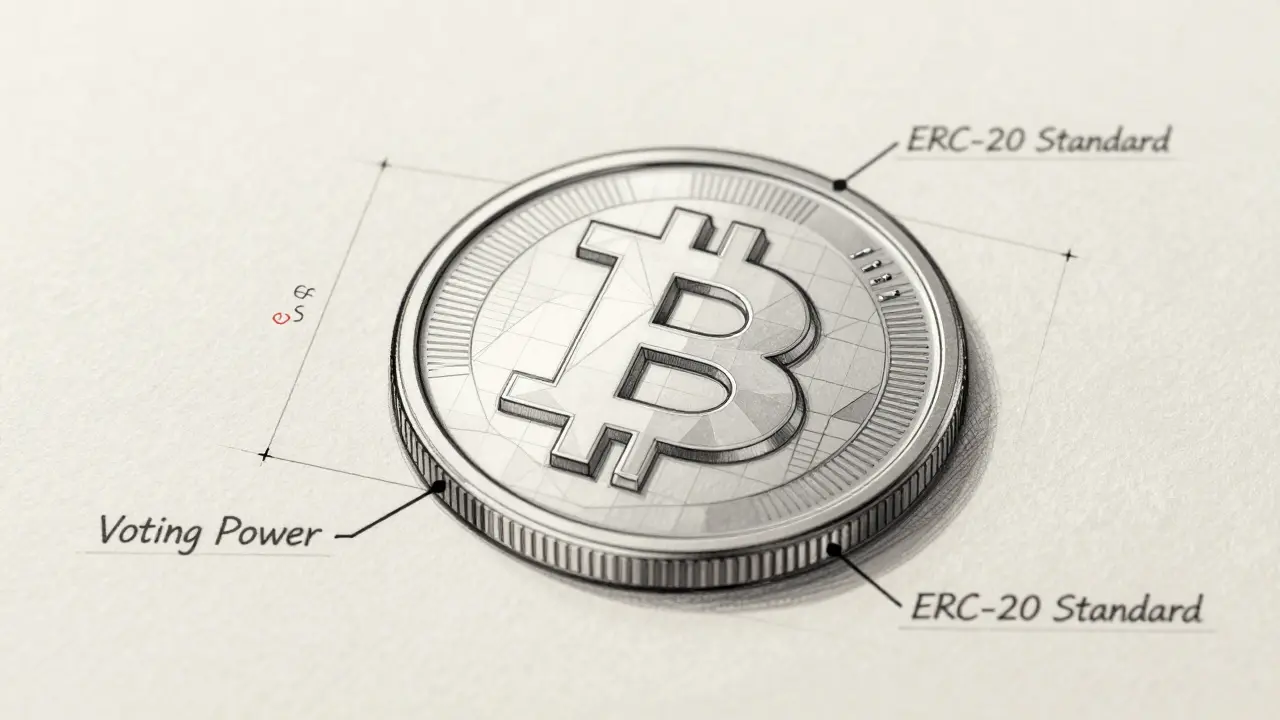
A governance token is more than just a speculative asset; it is a tool for influence. Unlike standard cryptocurrencies designed primarily for payment, governance tokens are engineered for decision-making. Most modern governance tokens are built on the ERC-20 standard, specifically utilizing ERC20Votes functionality to track voting power accurately over time.
When you hold these tokens, you gain three primary rights:
- Voting Rights: The ability to cast votes on proposals ranging from treasury allocations to protocol upgrades.
- Proposal Submission: The right to introduce new ideas for the community to consider, often requiring a minimum token threshold.
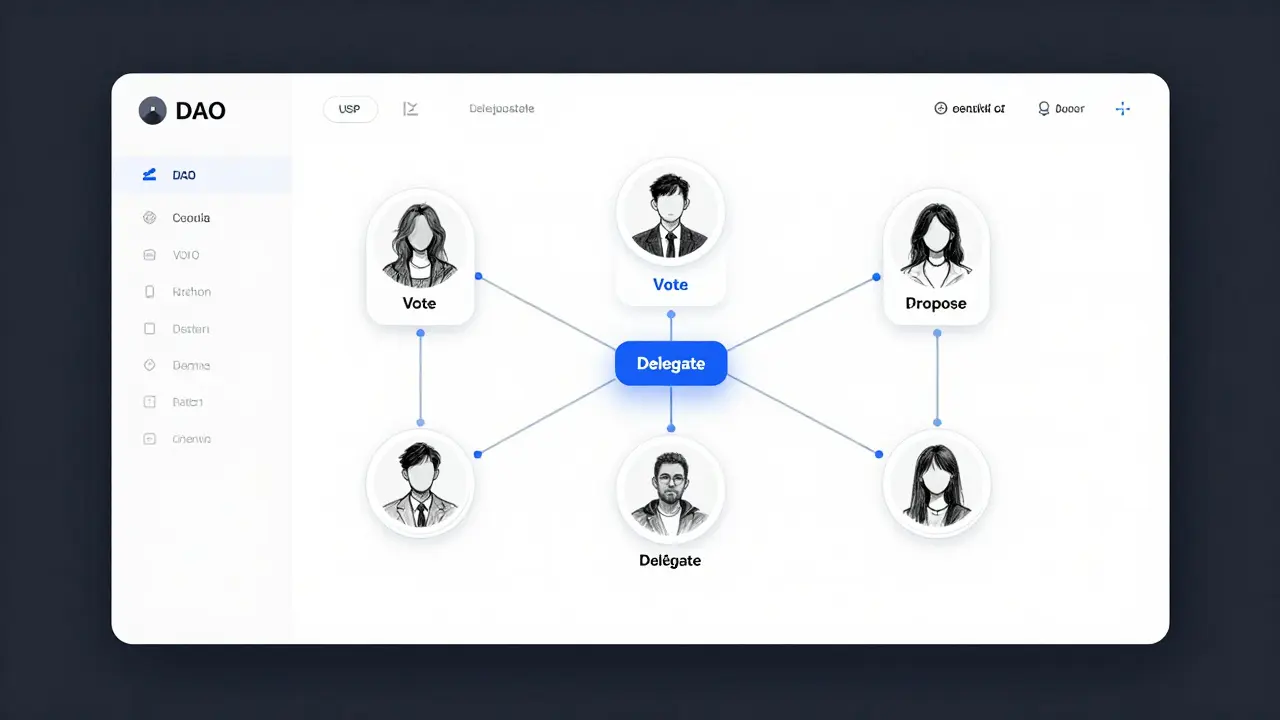
- Delegation: The option to assign your voting power to another address, allowing experts or trusted entities to vote on your behalf.
Modern implementations prioritize security and accessibility. For instance, many tokens now include Permit functionality (based on EIP-2612). This allows users to approve transactions using off-chain signatures rather than paying gas fees for every interaction. It significantly lowers the barrier to entry, making participation cheaper and faster. Additionally, robust governance tokens eliminate centralized controls like minting or pausing functions, ensuring that no single entity can manipulate the supply or freeze the network after deployment.
Token-Based Governance: The Plutocracy Model
The most common model is straightforward: one token equals one vote. This approach is used by giants like MakerDAO and Uniswap. In this system, your influence is directly proportional to your financial stake. If Alice holds 100 tokens, Bob holds 200, and Charlie holds 50, their voting power mirrors those exact numbers.
This model offers simplicity and clarity. It aligns incentives because those with the most to lose financially have the most say in protecting the protocol. However, it creates a plutocracy-a rule by the wealthy. Large holders, often referred to as "whales," can dominate decisions, potentially sidelining the interests of smaller participants. While efficient, this model risks concentrating power in the hands of a few, undermining the democratic ideals that attract many to the crypto space.
Reputation-Based Governance: Merit Over Money
To counter wealth concentration, some DAOs experiment with reputation-based systems. Here, voting power isn't bought; it's earned through contributions. Participants gain "reputation" scores based on their historical activity, such as code commits, forum discussions, or successful proposal submissions.
A classic example of this principle in action is Reddit’s r/CryptoCurrency, which distributed "moon tokens" based on upvotes received for posts and comments. In a DAO context, this rewards active builders and long-term contributors while deterring malicious actors who might otherwise buy tokens solely to attack the protocol. The downside? It can be complex to calculate fairly and may exclude valuable newcomers who haven't had time to build a track record.

Liquid Democracy and Quadratic Voting
Two other innovative models aim to balance efficiency and fairness:
Liquid Democracy (Delegative Voting): This hybrid approach allows token holders to either vote directly or delegate their power to trusted representatives. You can delegate your vote to an expert for technical proposals but keep control for financial ones. It combines the scalability of representative democracy with the inclusivity of direct participation.
Quadratic Voting: This model uses a mathematical formula to reduce the influence of large holders. Instead of buying votes linearly, the cost of additional votes increases quadratically. For example, buying one vote might cost $1, but buying ten votes costs $100. This amplifies the voices of smaller holders while still allowing whales to participate, creating a more balanced distribution of influence.
Comparing Governance Models
| Model | Primary Driver | Pros | Cons | Example |
|---|---|---|---|---|
| Token-Based | Wealth | Simplicity, clear incentives | Plutocracy, whale dominance | MakerDAO, Uniswap |
| Reputation-Based | Contribution | Rewards merit, deters attacks | Complexity, excludes newcomers | Reddit Moon Tokens |
| Liquid Democracy | Delegation | Flexibility, expertise utilization | Trust issues, coordination overhead | Various DAOs |
| Quadratic Voting | Mathematical Fairness | Balances small/large voices | Complex calculation, lower participation | Gitcoin Grants |
Practical Challenges in Participation
Despite the theoretical elegance of these models, real-world participation faces hurdles. Gas fees remain a significant barrier, especially on Ethereum mainnet. While Layer 2 solutions like Polygon and Arbitrum have reduced costs by up to 90%, many protocols still rely on off-chain polling tools like Snapshot for low-stakes decisions to save users money.
Another challenge is voter apathy and complexity. Evaluating technical proposals requires deep knowledge of smart contracts and cryptography. Many users find themselves overwhelmed, leading them to delegate votes blindly or abstain entirely. Documentation quality varies wildly; established protocols like Compound offer comprehensive guides, while newer projects often lack clear instructions, leaving participants confused about how to engage effectively.
The Future of DAO Governance
As the ecosystem matures, we're seeing a shift toward hybrid models that combine the strengths of multiple approaches. Regulatory clarity is also emerging, with jurisdictions like Switzerland and Singapore developing frameworks that recognize DAOs as legal entities. Institutional adoption is growing, bringing both capital and scrutiny to the table.
Machine learning tools are beginning to assist voters by analyzing proposals and predicting outcomes, lowering the expertise barrier. Meanwhile, advancements in on-chain execution ensure that once a decision is made, it happens automatically without human intervention, maintaining the trustless nature of blockchain technology. The goal is clear: create systems that are as fair and accessible as they are efficient.
What is the difference between a governance token and a utility token?
A utility token provides access to a service or product within a platform, such as paying for transaction fees. A governance token grants voting rights and decision-making power over the protocol's development and treasury management. While some tokens serve both purposes, their core functions differ significantly.
How do I start participating in DAO governance?
First, set up a compatible cryptocurrency wallet like MetaMask. Next, acquire the relevant governance tokens through exchanges or earning mechanisms. Finally, connect your wallet to the DAO's voting platform, such as Tally or Snapshot, to view and vote on active proposals. Familiarize yourself with the community forums and Discord channels to understand ongoing discussions.
Can anyone become a whale in a DAO?
Yes, anyone can purchase enough tokens to become a "whale"-a holder with significant voting power. However, this requires substantial capital investment. In reputation-based or quadratic voting models, simply buying tokens does not guarantee proportional influence, mitigating the risk of sudden whale dominance.
What is delegation in DAO governance?
Delegation allows token holders to assign their voting power to another address without transferring ownership of the tokens. This enables individuals to vote on behalf of others, often based on expertise or trust. Delegates can change their choices at any time, providing flexibility in representation.
Are DAO governance decisions legally binding?
Currently, legal status varies by jurisdiction. While on-chain executions are technically binding within the protocol, external legal enforceability depends on local laws. Countries like Switzerland and Singapore are developing frameworks to recognize DAOs, but many regions still lack clear regulations, creating uncertainty for participants.